
The best Japanese plays for low-budget productions are the ones that create pressure, atmosphere, and memorable actor work without depending on expensive scenery, large technical teams, or oversized casts.
If that is what your company, school, reading group, or festival slot needs, Japanese drama offers more options than many English-speaking theater makers realize.
The phrase "low-budget production" can sound apologetic, as if the artistic goal is simply to survive with less money. That is not how I mean it here. The stronger question is more useful:
Which Japanese plays still hit hard when you have limited money, limited build time, and limited stage space?
That question matters in real-world contexts:
- small independent companies programming a black-box season,
- school and university groups building a show between classes,
- actors mounting a rehearsal-room showcase,
- reading series that need text-forward scripts,
- and international companies exploring Japanese repertoire before committing to a larger translation or design process.
This guide focuses on 8 Japanese plays that can reward a resource-conscious production model. Some are already internationally known. Some are better described as hidden practical weapons inside the Japanese Play Library archive. Not all of them are "easy." But all of them can do meaningful theatrical work without demanding a giant production budget.
Quick Facts
| Item | Recommendation |
|---|---|
| Best first pick for a compact but intense production | THE BEE (ザ・ビー) |
| Best first pick for actor-centered rehearsal rooms | The Dressing Room (楽屋) |
| Best first pick for schools or universities | Boy B (少年B) |
| Best first pick for socially grounded realism | The Men Who Wanted to Sing (歌わせたい男たち) |
| Best first pick for two-actor intimacy | Tomodachi ga Kita (ともだちが来た) |
| Typical sweet spot for low-budget programming | 2-5 actors, 50-110 minutes, one dominant playing area |
| Best related English reading on Japanese Play Library | Best Japanese Plays for English-Speaking Theater Makers (2026), How to Choose Japanese Plays for Staged Readings in English (2026) |
What makes a play "low-budget" in practice?
For this list, I am not judging budget by ticket sales or prestige. I am judging it by production friction.
A script belongs here if it does most of the following:
- works with a cast that is realistically schedulable,
- can live inside one main room or one modular playing area,
- does not require heavy scenic transformation to become legible,
- gives actors enough dramatic material that design can stay spare,
- can travel well to studios, classrooms, fringe venues, or rehearsal-room presentations.
That does not mean these plays are aesthetically tiny. Some are fierce. Some are intellectually dense. Some need extremely precise acting. "Low-budget" should not be confused with "low ambition."
In fact, one of the pleasures of Japanese modern and contemporary drama is that many important works derive power from:
- conversational tension,
- unstable repetition,
- compressed social space,
- offstage pressure,
- and the actor's ability to make ordinary behavior feel dangerous.
That is good news for companies who cannot spend their way to scale.
1) THE BEE (THE BEE, ザ・ビー) — Hideki Noda (野田秀樹) / Colin Teevan
- Japanese Play Library: The Bee
- Cast: 3 men, 1 woman
- Runtime: about 80 minutes
- Why it works on a budget: It is a pressure-cooker play whose force comes from rhythm, escalation, and actor precision more than scenic luxury.
If you want one Japanese play that proves a small cast and controlled space can still feel explosive, start here.
THE BEE traps ordinary life inside a hostage-revenge nightmare and then keeps tightening the frame. That is exactly why it suits a low-budget production model. The script does not need visual excess to create terror. It needs performers who can manage rapid tonal shifts, clipped repetition, and moral acceleration.
For small companies, that is a practical advantage. You can invest in:
- exact rehearsal timing,
- sharp sound design,
- and clean blocking,
instead of sinking the budget into scenery changes that the play does not fundamentally need.
This is not a "cheap" play in the artistic sense. It is a high-demand acting play. But if your performers are strong, the return on investment is excellent. It feels bigger than its footprint.
Best use cases:
- fringe festivals,
- black-box seasons,
- actor-driven independent companies,
- international showcases looking for a hard-edged Japanese title.
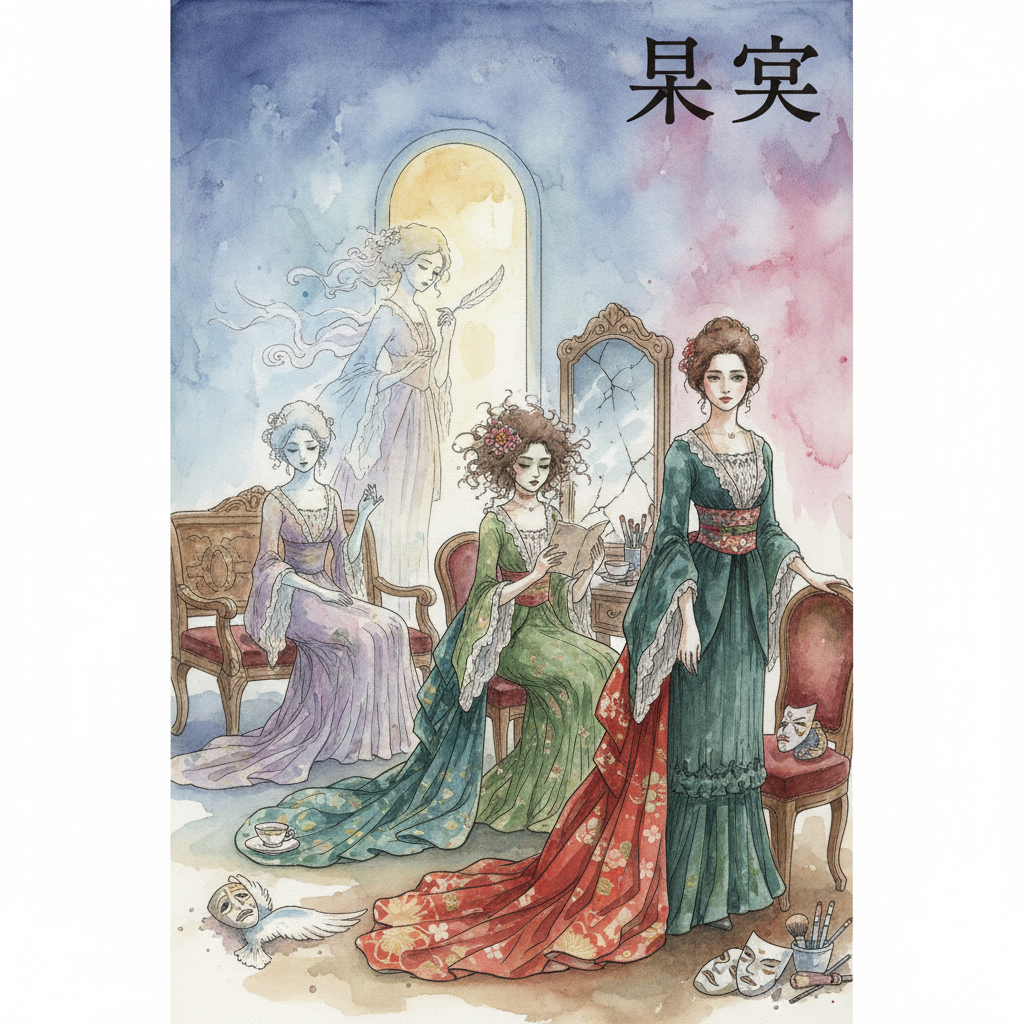
2) The Dressing Room (Gakuya, 楽屋〜流れ去るものはやがてなつかしき〜) — Kunio Shimizu (清水邦夫)
- Japanese Play Library: The Dressing Room
- Cast: 4 women
- Runtime: about 80 minutes
- Why it works on a budget: One room, four actresses, and a script that turns theatrical waiting into its own haunting world.
Some plays are inexpensive because they are slight. The Dressing Room is inexpensive because it is concentrated.
The backstage setting is already the production concept. If you have mirrors, tables, costume fragments, chairs, and carefully controlled light, you are not faking the world of the play. You are already inside it. That makes it one of the best Japanese scripts for:
- conservatories,
- women-led ensembles,
- rehearsal-room productions,
- and small theaters that want literary depth without building a large set.
The larger challenge is not money but tone. Kunio Shimizu's writing moves through comedy, vanity, repetition, memory, ghostliness, and theatrical self-consciousness. A thin production can still succeed if the acting is rich. A visually expensive production can still fail if the inner life is vague.
That is exactly what makes the script budget-friendly in the best sense: it rewards concentration over display.
Related reading: Play Spotlight: The Dressing Room (2026)
3) The Little Match Girl (Matchiuri no Shojo, マッチ売りの少女) — Minoru Betsuyaku (別役実)
- Japanese Play Library: The Little Match Girl
- Cast: 2 men, 2 women
- Runtime: about 90 minutes
- Why it works on a budget: Its power comes from deadpan absurdity, emotional coldness, and compositional control rather than physical scale.
If your team wants a script that feels literary, unsettling, and discussion-rich without requiring a heavy production apparatus, this is a strong choice.
Betsuyaku takes the familiar fairy-tale frame and drains it of sentimental comfort. That move matters for low-budget teams because the play does not rely on spectacle to transform audience expectations. The transformation happens in language, pacing, and ethical discomfort.
This makes the play especially good for:
- text-centered reading series,
- advanced student programs,
- minimalist studio productions,
- and companies exploring Japanese absurdist repertoire.
A spare production can actually help. The less decorative the environment becomes, the more the audience must sit inside the play's emotional weather. That is usually where Betsuyaku gets strongest.
If your budget cannot support visual excess but your ensemble can handle tonal precision, this is one of the smartest Japanese plays you can choose.
4) The Men Who Wanted to Sing (Utawasetai Otokotachi, 歌わせたい男たち) — Ai Nagai (永井愛)
- Japanese Play Library: The Men Who Wanted to Sing
- Cast: 3 men, 2 women
- Runtime: about 110 minutes
- Why it works on a budget: It turns institutional conflict into stage action, so the real engine is scene work, not scenic machinery.
Low-budget programming often benefits from scripts that feel socially immediate and structurally clear. Ai Nagai is especially strong there.
This play builds pressure around authority, conscience, public ritual, and workplace behavior in a school setting. That is helpful for production planning because the environment is legible without expensive visual information. A few desks, chairs, papers, and a carefully shaped spatial hierarchy can do a lot of the work.
Why it belongs on this list:
- the cast is modest,
- the social stakes are large,
- the language stays playable,
- and the setting can be realized with flexible institutional minimalism.
It is also a valuable choice if your audience responds better to recognizable realism than to abstraction. You can market it as a serious contemporary drama, yet still stage it without a giant build.
For schools, community venues, and civic-minded small companies, it offers one of the best balances between affordability and substance.
5) Boy B (Shonen B, 少年B) — Yukio Shiba (柴幸男)
- Japanese Play Library: Boy B
- Cast: 4 men, 1 woman
- Runtime: about 60 minutes
- Why it works on a budget: Short runtime, compact cast, and a youthful emotional register make it practical for schools, festivals, and double bills.
Some low-budget projects do not need a full evening. They need a sharp, memorable hour that is easy to schedule, rehearse, and pair with another event. Boy B is excellent in that zone.
Its premise carries a built-in sense of memory, regret, and interrupted possibility. That means you do not need elaborate production values to make the play land. What you need is:
- ensemble trust,
- clarity in transitions,
- and performers who understand how nostalgia and disappointment can share the same space.
For student groups and early-career companies, a 60-minute script has obvious practical benefits:
- fewer rehearsal weeks,
- easier festival programming,
- and lower front-of-house strain.
But the real reason to consider Boy B is artistic. It can feel intimate without becoming small. That is exactly the kind of scale many resource-conscious productions should be aiming for.
6) Tomodachi ga Kita (ともだちが来た) — Toshiro Suzue (鈴江俊郎)
- Japanese Play Library: Tomodachi ga Kita
- Cast: 2 actors
- Runtime: about 90 minutes
- Why it works on a budget: Two actors, one encounter, and a premise that thrives on tension rather than visual expansion.
Two-handers are often the fastest route to budget control, but they are only worth doing if the writing can actually sustain an evening. Tomodachi ga Kita is interesting because its compactness feels dramaturgical, not merely economical.
The setup is simple and odd: a friend comes over, but something about the encounter refuses ordinary social logic. That is useful for low-budget theater because ambiguity becomes an asset. You do not need to over-explain the world visually. You can let the atmosphere emerge through behavior, silence, and comic discomfort.
This kind of script can work well for:
- studio theaters,
- actor showcases,
- micro-company touring,
- and intimate audiences who enjoy slow-burn unease.
When a play already depends on interpersonal pressure, not set spectacle, every dollar you save on build can be redirected toward rehearsal time and actor coaching. That trade is often worth making.
7) Metamorphosis (Henshin, 変身) — Norihito Nakayashiki (中屋敷法仁)
- Japanese Play Library: Metamorphosis
- Cast: 1 man, 2 women
- Runtime: about 50 minutes
- Why it works on a budget: It is short, flexible, and inherently suited to stylized performance over material realism.
If your venue is tiny, your rehearsal window is short, or your program needs a compact but recognizable literary anchor, Metamorphosis is a very practical option.
The title alone gives you a clue: transformation is central. But transformation onstage does not have to mean technical overload. In a strong low-budget production, transformation can be achieved through:
- physical score,
- vocal contrast,
- costume fragments,
- and fast, symbolic staging choices.
This is especially useful for schools, workshop showcases, and mixed programs where you need a short script that still feels artistically ambitious.
Because the runtime is about 50 minutes, it also opens logistical possibilities:
- pair it with a post-show conversation,
- mount it alongside another short piece,
- or use it as a training-centered production for emerging actors.
Not every low-budget show should try to look large. Sometimes the wiser move is to embrace stylization completely. Metamorphosis supports that choice.
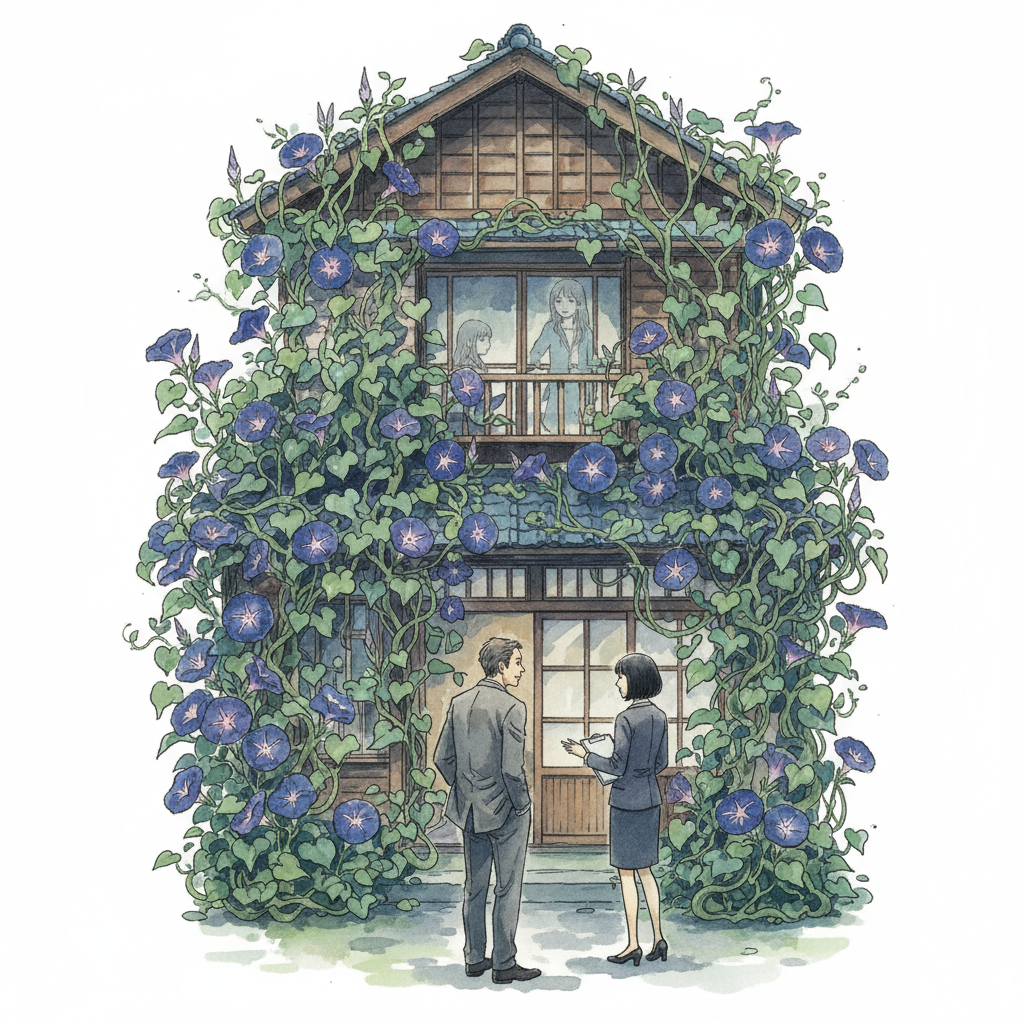
8) Asagao (朝顔, Morning Glory) — Norihiko Tsukuda (佃典彦)
- Japanese Play Library: Asagao
- Cast: 2 men, 1 woman
- Runtime: about 90 minutes
- Why it works on a budget: A compact cast and a reality-bending domestic premise make it suitable for single-set suspense with modest means.
Low-budget companies often need a script that can create mystery without requiring cinematic stage effects. Asagao is promising for exactly that reason.
The premise begins with a man returning home after a long absence and finding his domestic world subtly displaced. That is a strong structural advantage. The audience enters confusion immediately, and confusion is cheap to stage when the writing already supplies it.
You do not need elaborate illusion. You need a believable room, actors who can calibrate uncertainty, and direction that understands when not to explain too much too early.
That makes Asagao attractive for:
- independent companies that like psychological unease,
- schools that want something stranger than straightforward realism,
- and small venues looking for a contained narrative that still feels theatrical.
In budget terms, it sits in an excellent middle zone: large enough to feel like a full dramatic event, small enough to remain manageable.
Comparison Table: which script fits your budget reality?
| Play | Cast | Runtime | Best production context | Main strength |
|---|---|---|---|---|
| THE BEE | 4 | ~80 min | Fringe, black box, actor-driven company | Extreme pressure with minimal footprint |
| The Dressing Room | 4 | ~80 min | Conservatory, women-led ensemble, studio | One-room meta-theater with rich actor work |
| The Little Match Girl | 4 | ~90 min | Reading series, advanced students, minimalist company | Textual density and absurdist atmosphere |
| The Men Who Wanted to Sing | 5 | ~110 min | School, university, civic drama | Social realism without major build demands |
| Boy B | 5 | ~60 min | Festival slot, student show, double bill | Short, emotional, highly schedulable |
| Tomodachi ga Kita | 2 | ~90 min | Two-hander showcase, intimate studio | Interpersonal tension over spectacle |
| Metamorphosis | 3 | ~50 min | Workshop, training show, mixed bill | Stylized transformation with flexible staging |
| Asagao | 3 | ~90 min | Small suspense production, black-box company | Contained mystery in a compact space |
How to choose the right one
The cheapest script is not always the best script for your team. A 2-actor play can still fail if the performers do not have enough range. A 5-actor play can still be cheaper overall if it sells more clearly to your audience.
Use this quick filter:
Choose THE BEE if...
- you have strong actors,
- you want intensity,
- and you can sustain strict rhythmic rehearsal.
Choose The Dressing Room if...
- you want a literary, actor-centered show,
- your space is small,
- and you can trust performers to carry tonal complexity.
Choose The Little Match Girl if...
- you want something text-forward,
- your audience likes strange and serious theater,
- and you are comfortable with deliberate slowness or deadpan.
Choose The Men Who Wanted to Sing if...
- you want recognizable social realism,
- your venue can suggest an institution easily,
- and you want political pressure without scenic overload.
Choose Boy B or Metamorphosis if...
- your calendar is tight,
- you need a shorter runtime,
- or you want a piece that fits festivals, workshops, or educational settings.
Choose Tomodachi ga Kita or Asagao if...
- your budget is especially tight,
- you prefer contained interpersonal suspense,
- and you want to rely on atmosphere rather than technology.
Why Japanese plays often work well for resource-conscious staging
One reason this repertoire deserves more attention is that many Japanese modern and contemporary plays already assume an audience willing to watch:
- ordinary rooms become unstable,
- casual conversation become conflict,
- repetition become dread,
- and social roles become theatrical engines.
That is a gift for companies without Broadway-level resources.
In some theatrical cultures, directors feel pressure to solve everything visually. But Japanese drama often allows a different route. A museum lobby, a dressing room, a school ceremony conflict, a domestic threshold, a strange visit, a compressed memory structure: these are not signs of small ambition. They are signs of dramaturgy doing more of the work.
For low-budget teams, that can be liberating.
It means you can build seasons around:
- language,
- ensemble behavior,
- atmosphere,
- and careful space management.
That also tends to travel well internationally, especially when a company is testing Japanese repertoire for the first time.
Related reading: Best Japanese Plays for First-Time Readers
FAQ
What is the best Japanese play for a very small budget?
If you need the tightest practical model, start with Tomodachi ga Kita or Metamorphosis. They use 2-3 actors and can live comfortably in a limited space.
Which play on this list is best for strong actors?
THE BEE and The Dressing Room are the strongest actor showcases here. They demand precision, stamina, and tonal control, but they reward that labor.
Which plays are best for schools or universities?
Boy B, Metamorphosis, and The Men Who Wanted to Sing are especially useful in educational settings because they combine manageable scale with clear discussion value.
Do low-budget productions need minimalist aesthetics?
Not always. But these plays usually work best when the production chooses a clear visual logic instead of pretending to be more expensive than it is. Precision looks better than overcompensation.
Which Japanese play here is best for a staged reading or semi-staged version?
The Little Match Girl, The Dressing Room, and The Men Who Wanted to Sing are especially strong when language and actor relationships stay central.
Final recommendation
If you want the safest all-around starting point, choose The Dressing Room.
If you want the most thrilling small-footprint challenge, choose THE BEE.
If you want the most practical educational or festival option, choose Boy B or Metamorphosis.
The larger lesson is simple: low-budget theater does not have to think small. Japanese plays are often at their best when they turn limited space into concentrated dramatic pressure. If your company can value acting, rhythm, and atmosphere over scenic excess, this repertoire can serve you extremely well.
Sources
- Performing Arts Network Japan, THE BEE production page (English-language development, premiere context): https://performingarts.jpf.go.jp/en/article/6283/
- Seinendan official English page for Tokyo Notes (international circulation and translation context for compact Japanese contemporary drama): https://www.seinendan.org/eng/play/1994/tokyonotes/
- Performing Arts Network Japan, Minoru Betsuyaku profile (context for The Little Match Girl and postwar absurdist dramaturgy): https://performingarts.jpf.go.jp/en/article/6909/
- Asia Theatre Education Centre, The Dressing Room performance page (English-facing production context): https://atecnet.org/en/performances_more/533.html
この記事で紹介した戯曲






Written by
戯曲図書館 編集部
演劇経験者が運営する戯曲検索サービス「戯曲図書館」の編集チームです。 脚本選びのノウハウ、演劇業界の最新情報、公演レポートなどを発信しています。
関連記事
Best Japanese Plays for Staged Readings (2026): 8 Scripts That Sound Alive in the Room
A 2026 guide to 8 Japanese plays for staged readings, with cast size, runtime, and translation-friendly notes for directors and dramaturgs.
2026-09-02
If You Like The Crucible (2026 Guide): 4 Japanese Plays About Scapegoats, Panic, and Public Obedience
Love The Crucible? Read 4 Japanese plays about fear, scapegoats, conformity, and the cost of refusing the crowd.
2026-08-21
If You Like Hedda Gabler (2026 Guide): 4 Japanese Plays About Female Rage, Respectability, and the Need to Burn the Script
Love Hedda Gabler? Read 4 Japanese plays about boredom, control, female rage, and the social cost of living inside the wrong role.
2026-08-14
Best Japanese Plays for Dark Comedy Lovers (2026): 8 Scripts Where the Laughs Turn Cruel
A 2026 guide to 8 Japanese dark comedy plays, with cast size, runtime, and why each script works for readers, teachers, and theater makers.
2026-08-12