If you like The Crucible, the Japanese plays most worth reading next are the ones that understand how fear becomes social performance, how institutions reward obedience, and how communities invent scapegoats to protect themselves from doubt.
Arthur Miller's The Crucible premiered on January 22, 1953, and it still feels urgent in 2026 because it does not treat mass panic as historical costume. It shows panic as a system. A community under pressure chooses certainty over truth, confession over complexity, and punishment over self-examination. Once that machine starts moving, innocence matters less than usefulness.
That is exactly why the play remains such a powerful bridge into Japanese drama. Modern and contemporary Japanese theater repeatedly returns to the same territory through different forms: the outsider who becomes a vessel for collective fear, the institution that forces public compliance, the ordinary person crushed by the logic of accusation, and the social ritual that turns conscience into liability.
For English-speaking readers, teachers, directors, and dramaturgs, these four Japanese plays are not “similar” to The Crucible in a superficial plot sense. They are useful because they continue Miller's core argument: communities often call cruelty morality when they are frightened enough.
Quick Facts
| Item | Details |
|---|---|
| Western anchor text | The Crucible by Arthur Miller |
| Best Japanese matches here | Red Demon, The Men Who Want Us to Sing, The Elephant, The Bee |
| Shared concerns | Scapegoating, public fear, conformity, forced speech, institutional violence |
| Most practical cast range here | 4-5 actors |
| Best use case | Comparative drama courses, civic-theater programming, staged readings, actor training |
| Best first read | Red Demon if you want communal fear made theatrical; The Men Who Want Us to Sing if you want institutional pressure in realist form |
Why The Crucible still travels so well
People often reduce The Crucible to “the Salem witch trials play” or “the McCarthy allegory.” Both descriptions are true, but neither fully explains the play's durability.
What keeps it alive is the mechanism. Miller builds a world in which accusation becomes currency. Characters gain safety by naming others. Authorities protect legitimacy by escalating error rather than admitting it. Public rituals of confession become more valuable than private truth. The community calls this justice, but the audience watches it harden into something closer to administrative hysteria.
That mechanism does not belong only to seventeenth-century Massachusetts or mid-century America. It appears wherever people are rewarded for:
- saying the approved words in public,
- fearing contamination from outsiders,
- mistaking social unanimity for moral clarity,
- and treating refusal as guilt.
Japanese theater has produced exceptionally sharp versions of this pattern. Sometimes it appears as fable. Sometimes as social realism. Sometimes as absurdism. Sometimes as a pressure-cooker work designed for transnational performance. Across those forms, the question stays recognizable: what happens when a group needs a target more than it needs the truth?
That is the question guiding the recommendations below.
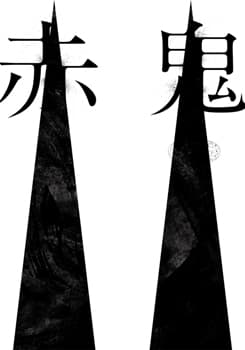
1. Red Demon (Aka Oni, 赤鬼) - Hideki Noda (野田秀樹)
- Japanese Play Library: Red Demon
- Cast: 4 actors
- Runtime: about 80 minutes
- Best for Crucible fans who love: outsider panic, rumor turning into policy, and the violence communities justify as self-defense
If what stays with you after The Crucible is not courtroom procedure but the sheer speed with which a frightened society manufactures a monster, start with Red Demon.
Hideki Noda's play begins when a stranger washes ashore in an isolated village. He cannot speak the villagers' language. That should create curiosity, maybe even care. Instead, it creates projection. The villagers decide what he must be before they know what he is. Fear hardens into folklore. Folklore hardens into social permission.
That makes the connection to The Crucible immediate. Miller shows a community deciding that ambiguity is intolerable. Noda shows a community deciding that difference is intolerable. In both plays, the target matters less than the function. Abigail and the court need witches. Noda's villagers need a demon. Once the category exists, ordinary hesitation becomes weakness.
This is where Red Demon becomes especially useful for English-speaking theater makers. It strips the mechanism down to something brutally clear:
- an outsider appears,
- a group narrates him into danger,
- and people who might have acted differently discover that the crowd has already chosen the story.
The result is more parable-like than Miller, but not less political. If anything, the fable form reveals the social logic even more nakedly. The play understands that panic does not need facts. It needs circulation. It needs repetition. It needs a shared performance of certainty.
For comparative teaching, this is one of the best Japanese companions to The Crucible because it lets you ask a sharp question: when does a community stop responding to a threat and start inventing itself through persecution?
Related reading: Best Japanese Plays in English (2026)
2. The Men Who Want Us to Sing (Utawasetai Otokotachi, 歌わせたい男たち) - Ai Nagai (永井愛)
- Japanese Play Library: The Men Who Want Us to Sing
- Cast: 5 actors
- Runtime: about 110 minutes
- Best for Crucible fans who love: institutional coercion, forced public speech, and the way conscience gets tested through ordinary workplace procedure
If your strongest response to The Crucible is to the court scenes and the terrifying public demand that people say the right thing to survive, this is the Japanese play to read next.
Ai Nagai sets her drama around a public school graduation ceremony and the controversy over singing the national anthem. That premise may sound smaller than Salem. It is not. The scale is narrower, but the social pressure is exact. Teachers, administrators, and workers are pulled into a ritual where “just do it” becomes the language of obedience and professionalism.
This is why the play belongs beside Miller. The Crucible is not only about false accusation. It is about compelled speech. People are asked to perform belief in public, and refusal becomes evidence against them. Nagai stages a version of the same trap in a recognizably modern institution. No one needs to invoke devils. The machinery of compliance is already built into policy, ceremony, and employment.
That shift is enormously useful for contemporary readers. It clarifies that witch-hunt logic does not always arrive through spectacular ideology. Sometimes it arrives through procedure:
- sign this,
- sing this,
- stand here,
- do not make trouble,
- prove that you are with us.
Nagai is also valuable because she keeps the conflict dramatically human. The play is not a tract. Characters are pulled by fear, pride, livelihood, irritation, civic identity, and exhaustion. That complexity makes it a better companion to Miller than a simpler “good dissenter vs bad authority” story would be.
For English-speaking directors and classrooms, The Men Who Want Us to Sing is a strong bridge text between historical allegory and present-day institutional drama. It asks what counts as free choice when public ritual has already been loaded with punishment.
Related reading: How to Choose Japanese Plays for Staged Readings in English (2026)
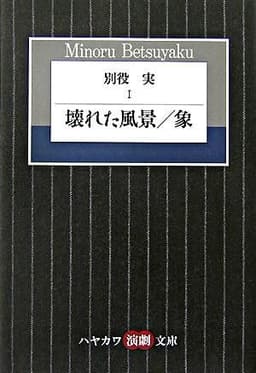
3. The Elephant (Zō, 象) - Minoru Betsuyaku (別役実)
- Japanese Play Library: The Elephant
- Cast: 10 actors
- Runtime: about 150 minutes
- Best for Crucible fans who love: absurd social cruelty, the politics of pity, and a society that turns a damaged person into a public function
Minoru Betsuyaku's The Elephant is the least literal comparison on this list and one of the most rewarding.
The play centers on an atomic-bomb survivor who wants to reveal the keloid scars on his back in public. Around that premise, Betsuyaku creates a world of uneasy spectatorship, awkward kindness, evasion, and emotional violence. The play is often discussed through absurdism, but what matters for Crucible readers is its diagnosis of social behavior under moral pressure.
Miller's Salem runs on accusation. Betsuyaku's world runs on another, quieter distortion: the conversion of suffering into role. The scarred body becomes something people are supposed to respond to correctly. Sympathy itself starts to feel scripted. Public decency becomes a performance that protects the bystander as much as the victim.
That is where the pairing becomes powerful. The Crucible asks how a community uses fear to authorize punishment. The Elephant asks how a community uses civility to avoid genuine encounter. The energies are different, but both plays understand that the group often cannot face reality without reshaping the person in front of it into a socially manageable symbol.
For English-speaking readers, Betsuyaku also widens the conversation beyond “mob violence” in the obvious sense. Sometimes persecution is loud. Sometimes it is polite, patronizing, and theatrical in its own way. A community does not need to scream in order to deny someone's full humanity. It can do the job through sentiment, distance, and ritualized understanding.
That makes The Elephant particularly rich for advanced study. It is not the easiest starting point, but it is one of the best texts for asking how public morality can become another mask for control, avoidance, or self-congratulation.
4. The Bee (THE BEE, ザ・ビー) - Hideki Noda (野田秀樹) / Colin Teevan
- Japanese Play Library: The Bee
- Cast: 4 actors
- Runtime: about 80 minutes
- Best for Crucible fans who love: escalation, moral panic, and the speed with which ordinary people become agents of cruelty
If The Crucible fascinates you because decent social language can collapse into reciprocal barbarity almost overnight, The Bee is the fiercest recommendation here.
Developed for English-language performance by Hideki Noda and Colin Teevan, The Bee begins with an apparently ordinary hostage crisis and turns it into a nightmare of imitation, revenge, and social contagion. Civility remains on the surface long after morality has curdled underneath. That tension is what makes the play so disturbing.
The relationship to The Crucible is not historical setting or courtroom logic. It is the contagiousness of brutality. In Miller, one accusation authorizes the next. In The Bee, one violation authorizes retaliation, which authorizes counter-retaliation, until behavior that once seemed unthinkable becomes procedural. People adapt to cruelty faster than they imagine they will.
This makes the play especially strong for contemporary comparative work. It helps shift the conversation from “how false accusations start” to “what social conditions make escalation feel normal.” Fear is only the beginning. The deeper horror is imitation. Once a person accepts the rules of the violent system, he may start reproducing them with frightening fluency.
For English-speaking companies, The Bee has another advantage: it already carries an international performance history in English. That makes it one of the most immediately legible Japanese-linked plays for rehearsal rooms interested in speed, pressure, dark comedy, and moral disintegration.
If The Crucible shows how quickly a society can learn to punish, The Bee shows how quickly a person can learn to become what he fears.
Comparison Table: If this is what you love in The Crucible, read this next
| If this is your Crucible obsession | Read this Japanese play next | Why it fits |
|---|---|---|
| A community inventing a monster to calm its fear | Red Demon | It turns outsider panic and group myth-making into pure theatrical pressure |
| Public rituals that force private conscience into submission | The Men Who Want Us to Sing | It shows institutional obedience operating through ordinary modern procedure |
| Social morality becoming a mask for distance and control | The Elephant | It exposes how public virtue can deform real human encounter |
| One act of cruelty normalizing the next | The Bee | It stages escalation as a contagious system rather than an individual exception |
Where should you start?
If you only read one Japanese play after The Crucible, the best choice depends on what you think Miller's real subject is.
- Start with Red Demon if you think the heart of The Crucible is collective fear attaching itself to an outsider.
- Start with The Men Who Want Us to Sing if you think the play's deepest terror lies in public institutions demanding visible agreement.
- Start with The Elephant if you are interested in the performance of morality rather than overt persecution alone.
- Start with The Bee if you want the fastest, darkest demonstration of how cruelty reproduces itself.
That is the most productive comparative question here. Do not ask which Japanese play is “the Japanese Crucible.” Ask which one continues the mechanism that most unsettles you.
Why these pairings matter for English-speaking theater makers
These are not only reading recommendations. They are practical programming tools.
1. They move beyond the obvious witch-hunt analogy
Too many discussions of The Crucible stop at “this is about moral panic.” These Japanese plays make the idea more precise by breaking panic into components: outsider fabrication, compelled public ritual, symbolic pity, and contagious retaliation.
2. They widen civic theater without flattening it into issue drama
Each of these plays is political, but none works only as a debate transcript. They remain theatrical: fable-like, absurdist, actor-driven, or formally pressurized. That matters for repertory planning because audiences remember structures and energies, not only themes.
3. They give actors pressure, not just positions
Miller survives because his characters are not abstract opinions. They are people cornered by social incentives. These Japanese plays offer the same gift. Characters are frightened, proud, compromised, impulsive, vain, dutiful, lonely, or exhausted. The politics land harder because the human tensions stay alive.
4. They make public conformity feel contemporary
One reason The Crucible still matters is that coerced belief did not vanish with the blacklist. It changed form. These Japanese plays help English-speaking readers see those new forms: workplace ritual, bureaucratic pressure, outsider myth, and self-replicating violence.
FAQ
What Japanese play is most like The Crucible?
The closest overall match is probably Red Demon, because it stages a frightened community inventing a threatening outsider and then organizing itself around that fiction.
Which play is best for a class on institutions and obedience?
Start with The Men Who Want Us to Sing. It is the strongest recommendation here for studying compelled public speech, modern bureaucracy, and conscience under procedural pressure.
Which play is easiest to stage in a small space?
Red Demon and The Bee are the most immediately practical choices. Both have compact casts, concentrated pressure, and strong black-box potential.
Which play is best if I care less about panic and more about public morality?
Read The Elephant next. It is the sharpest play here on how social virtue, pity, and correct behavior can become distancing performances.
Do these plays simply repeat Miller's McCarthy-era argument in Japanese form?
No. They extend it through different theatrical languages and different social situations, which is exactly what makes the comparison useful.
Final Take
If The Crucible matters to you because it shows how quickly fear can become ritual and how quickly ritual can become violence, Japanese drama offers powerful next steps.
These four plays do not imitate Miller. They sharpen different edges of his insight. They show a village inventing a demon, an institution demanding a song, a society turning suffering into public theater, and a person learning cruelty by surviving inside it. Together, they make one thing painfully clear: persecution is never only about belief. It is also about performance, participation, and the terrible relief of joining the crowd.
That is why these four Japanese plays are worth reading after The Crucible. They do not merely echo the warning. They update its machinery.
Sources
- Arthur Miller Society, "Guide to The Crucible"
https://arthurmillersociety.net/guide-to-the-crucible/ - Arthur Miller, "Why I Wrote The Crucible," The New Yorker
https://www.newyorker.com/magazine/1996/10/21/why-i-wrote-the-crucible - Performing Arts Network Japan, "Hideki Noda | The Red Demon (Akaoni)"
https://performingarts.jpf.go.jp/en/article/6241/ - Performing Arts Network Japan, "Ai Nagai | Utawasetai Otokotachi (Men Who Want Us to Sing)"
https://performingarts.jpf.go.jp/en/article/6247/ - Performing Arts Network Japan, "Minoru Betsuyaku"
https://performingarts.jpf.go.jp/en/article/6909/ - Performing Arts Network Japan, "Hideki Noda / Colin Teevan | THE BEE"
https://performingarts.jpf.go.jp/en/article/6283/
この記事で紹介した戯曲


Written by
戯曲図書館 編集部
演劇経験者が運営する戯曲検索サービス「戯曲図書館」の編集チームです。 脚本選びのノウハウ、演劇業界の最新情報、公演レポートなどを発信しています。
関連記事
If You Like Long Day's Journey Into Night (2026 Guide): 5 Japanese Plays About Family Secrets, Blame, and the Past That Won't Stay Buried
Love Long Day's Journey Into Night? Read 5 Japanese plays about family secrets, inherited grief, and the quiet violence of a past that refuses to stay buried.
2026-10-02
If You Like Hedda Gabler (2026 Guide): 4 Japanese Plays About Female Rage, Respectability, and the Need to Burn the Script
Love Hedda Gabler? Read 4 Japanese plays about boredom, control, female rage, and the social cost of living inside the wrong role.
2026-08-14
If You Like Top Girls: 4 Japanese Plays About Ambition, Work, and the Price of Female Success
Love Top Girls? Start with 4 Japanese plays about ambition, women’s work, class pressure, and the costs of survival.
2026-07-31
If You Like A Doll’s House: 4 Japanese Plays About Women, Marriage, and Refusing Assigned Roles
Love A Doll’s House? Discover 4 Japanese plays that explore marriage, female identity, social roles, and the cost of walking out of the script.
2026-07-24