
If you like Hedda Gabler, the Japanese plays most worth reading next are the ones that understand how boredom, status anxiety, and trapped intelligence can turn into cruelty, self-sabotage, or a refusal to stay decorative.
Henrik Ibsen's Hedda Gabler premiered on January 31, 1891, and it still feels startlingly modern because Hedda is not written as a simple victim, rebel, or villain. She is recently married, socially legible, materially protected, and spiritually trapped. She wants influence without submission, beauty without domestic boredom, and freedom without losing status. That impossible combination gives the play its voltage.
For English-speaking readers, directors, and dramaturgs, Japanese drama can be a particularly strong next step after Hedda Gabler because many Japanese plays are equally alert to women forced into roles that look respectable from the outside and unbearable from within. The best comparisons are not necessarily marriage plots. They are plays about women who have been cornered by scripts: scripts of femininity, scripts of adulthood, scripts of public calm, scripts of self-erasure, scripts of being useful or desirable on terms set by others.
That is what links these four Japanese plays to Hedda. They do not reproduce her exact story. They continue her pressure.
Quick Facts
| Item | Details |
|---|---|
| Western anchor text | Hedda Gabler by Henrik Ibsen |
| Best Japanese matches here | The Dressing Room, Frozen Beach, Tokyo Notes, Red Demon |
| Shared concerns | Female confinement, social performance, manipulation, boredom, respectability, destructive desire |
| Most practical cast range here | 4 actors |
| Best use case | Comparative drama courses, women-centered programming, black-box staging, actor training |
| Best first read | Frozen Beach if you want sharp contemporary female cruelty; The Dressing Room if you want women trapped inside performance itself |
Why Hedda Gabler still feels dangerous
Many famous plays about women ask whether a heroine can escape. Hedda Gabler asks something harder: what happens when someone is intelligent enough to see the trap, proud enough to hate it, and emotionally unequipped to build a life outside it?
That is why the play keeps returning.
Hedda is not crushed only by patriarchy in the abstract. She is crushed by a more precise mechanism:
- she has been raised to value status and aesthetic control,
- she has no socially acceptable outlet for power,
- intimacy feels like diminishment,
- and the world keeps offering her roles she experiences as vulgar, suffocating, or second-rate.
So she tries to act on the world anyway. She manipulates. She tests people. She aestheticizes destruction. She would rather scorch the room than settle into it.
Japanese drama often reaches this same territory through different theatrical temperatures. Sometimes it becomes ghostly and recursive. Sometimes it becomes black comedy. Sometimes it appears as quiet social drift. Sometimes it turns into parable. But the underlying question is familiar: what forms does female rage take when direct freedom is unavailable, unattractive, or already compromised by the terms on which it is offered?
That is the question guiding the recommendations below.
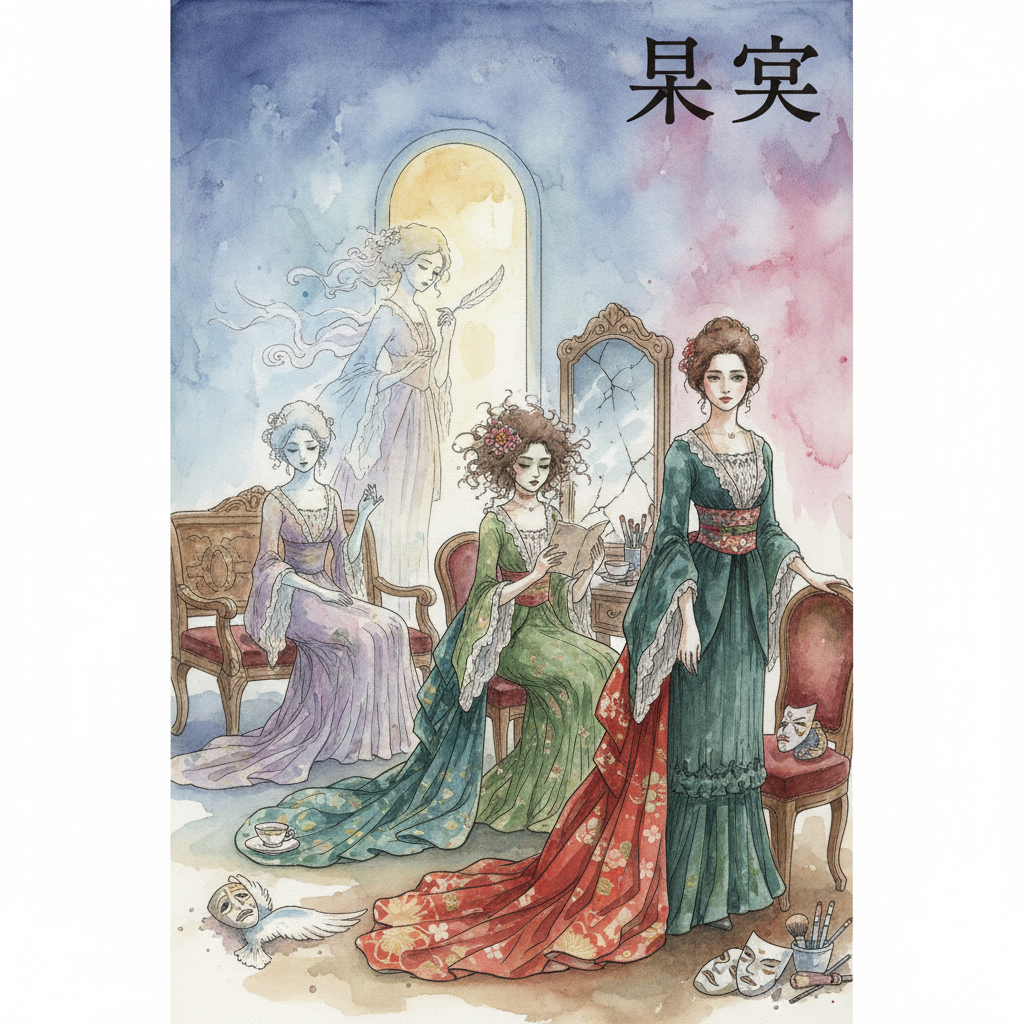
1. The Dressing Room (Gakuya, 楽屋 - 流れ去るものはやがてなつかしき -) - Kunio Shimizu (清水邦夫)
- Japanese Play Library: The Dressing Room
- Cast: 4 women
- Runtime: about 80 minutes
- Best for Hedda fans who love: role performance, frustration curdling into cruelty, and women trapped inside beauty, longing, and theatrical self-consciousness
If the most compelling part of Hedda Gabler for you is not the plot machinery but the sensation of a brilliant woman rotting inside a role, start here.
Shimizu's The Dressing Room places four actresses inside a backstage limbo orbiting Chekhov's The Seagull. Two of the women are already dead. All four remain bound to performance, memory, status, and the fantasy that the right role might finally make existence coherent. The result is funny, bitter, haunted, and exquisitely claustrophobic.
This makes it one of the strongest Japanese companions to Ibsen because Hedda, too, is trapped in a stylized interior. She is surrounded by furniture, expectations, inherited taste, and the humiliating realization that she has become part of someone else's set design. In The Dressing Room, the women are not imprisoned by marriage in a literal sense, but by a similarly brutal logic: they exist in relation to being cast, seen, chosen, remembered, and ranked.
That connection matters for actors and directors. Hedda's violence is often a violence of frustrated authorship. She cannot create a life, so she tries to edit other people's lives. Shimizu's actresses live in that same damaged ecosystem of validation. Their identities are made of repetition. Their desires are filtered through theatrical hierarchy. Recognition never arrives in a form that heals them.
For English-speaking readers, the payoff is immediate. If Ibsen shows a woman who experiences domestic respectability as a suffocating performance, The Dressing Room shows women whose whole selves have fused with performance to the point that there may be nothing stable beneath it. That is not a weaker version of Hedda's problem. It is a stranger, more theatrical extension of it.
Related reading: Best Japanese Plays for Women-Led Ensembles
2. Frozen Beach (Furozun Bichi, フローズン・ビーチ) - Keralino Sandorovich / KERA (ケラリーノ・サンドロヴィッチ)
- Japanese Play Library: Frozen Beach
- Cast: 4 women
- Runtime: about 130 minutes
- Best for Hedda fans who love: elegant cruelty, female rivalry, emotional gamesmanship, and the feeling that charm can become a weapon
If what you admire in Hedda Gabler is the frightening glamour of a woman who turns intelligence into strategy and emotional life into a battlefield, Frozen Beach is the sharpest recommendation on this list.
KERA sets the play around four women connected by family, money, concealment, resentment, and violence. The atmosphere is at once comic and poisonous. People lie, test one another, perform affection, stage tiny coups, and keep trying to control the emotional temperature of the room. The play won the Kishida Kunio Drama Award, and it is easy to see why: it feels entertaining and unstable at the same time.
The connection to Hedda is not that Ai or the other women are replicas of Ibsen's heroine. It is that the play understands a Hedda-like pleasure in manipulation. Socially damaged people often do not express power directly. They create situations. They bait reactions. They reshape reality through insinuation, timing, and performed innocence. Frozen Beach knows that language extremely well.
There is another important parallel. Hedda is terrified of banality. She would rather move toward disaster than settle for a life she experiences as dull and second-hand. KERA's women, in a very different key, also live as if ordinary honesty were intolerable. Everything has to be triangulated through secret knowledge, old injury, class texture, and sexual-political leverage. That gives the play a live-wire quality that many Hedda productions strive for.
For English-speaking companies, this is also one of the most practical crossover titles available on Japanese Play Library. Four major roles. Tonal range from black comedy to dread. Excellent material for actresses who want contradiction rather than symbolic "strong woman" writing. If Hedda fascinates you because she is intelligent, cruel, trapped, funny, and half in love with catastrophe, Frozen Beach is very likely your best Japanese next read.
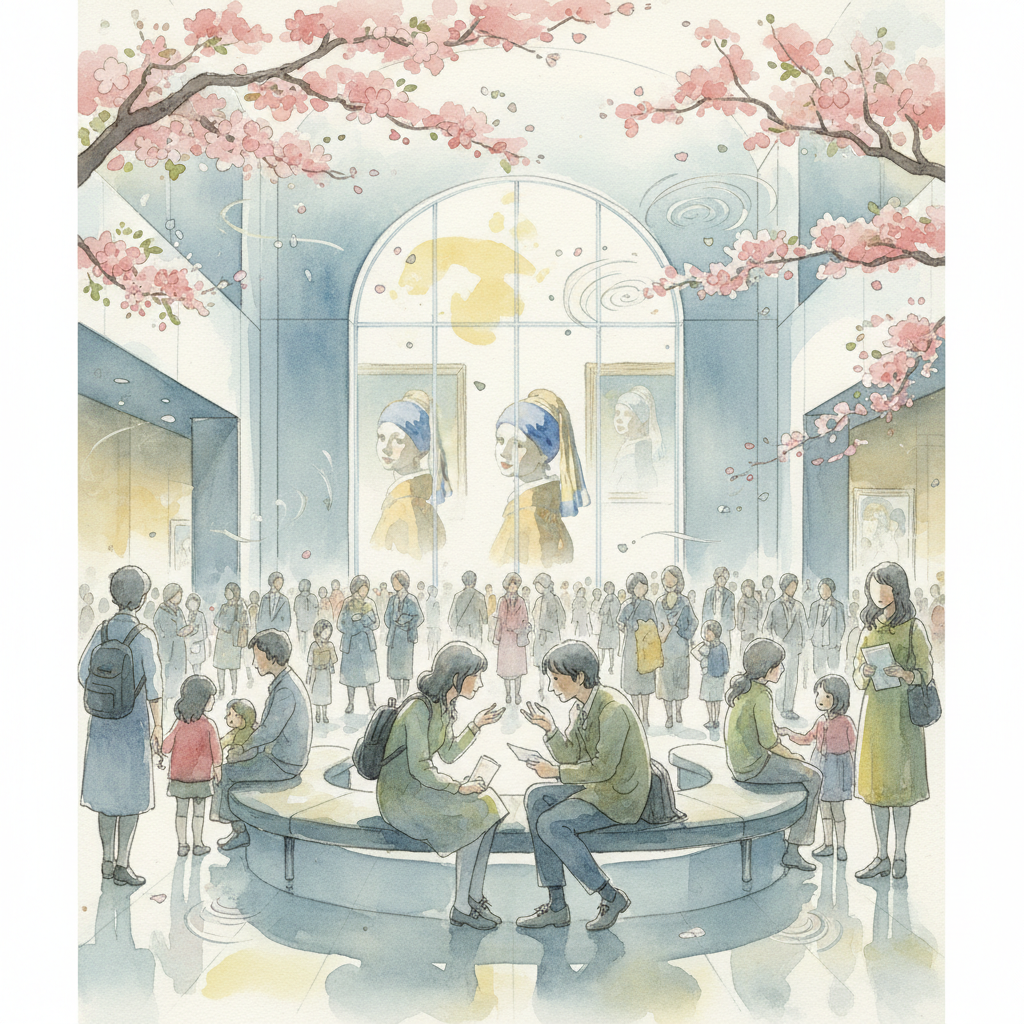
3. Tokyo Notes (Tokyo Noto, 東京ノート) - Oriza Hirata (平田オリザ)
- Japanese Play Library: Tokyo Notes
- Cast: 12
- Runtime: about 100 minutes
- Best for Hedda fans who love: polite surfaces, emotional suffocation, bourgeois unease, and the way social order survives long after meaning has drained out of it
At first glance, Tokyo Notes may seem too quiet for this list. There are no pistols, no spectacular manipulations, no overtly destructive heroine. But if your deepest interest in Hedda Gabler is its diagnosis of respectable emptiness, Hirata's play becomes essential.
Set in a museum lobby while war takes place elsewhere in Europe, Tokyo Notes tracks people talking about family, work, art, travel, memory, and practical arrangements. The conversation seems casual. The unease is everywhere. Everyone remains civilized. That civility is the point.
Why pair it with Hedda? Because both plays expose a world where decorum has survived passion. Hedda lives in a beautifully arranged environment that has no room for the kind of intensity she craves. The people in Tokyo Notes inhabit a similarly over-civilized zone, one where social behavior still functions but conviction has thinned out. Anxiety circulates in polite form. History presses at the edges. Nobody quite says the thing beneath the thing.
That makes the play unusually useful for readers who understand Hedda not only as a woman in crisis but as a symptom of an entire class culture. Hedda is a creature of interiors, etiquette, surfaces, and managed talk. So are Hirata's characters. Their violence is not literal in the same way, but there is a clear family resemblance in the atmosphere: people going on performing normality even when normality no longer deserves their faith.
For directors and dramaturgs, the comparison is especially rich because it shifts the problem of confinement from melodramatic event to social rhythm. If Hedda Gabler shows what happens when a person detonates inside the bourgeois room, Tokyo Notes shows the room after detonation has been indefinitely postponed. That quieter form of suffocation may feel even more contemporary.
Related reading: Playwright Profile: Oriza Hirata (2026)
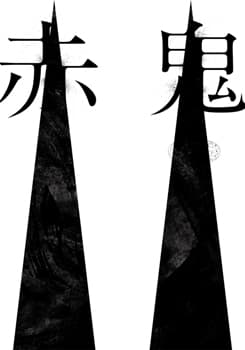
4. Red Demon (Aka Oni, 赤鬼) - Hideki Noda (野田秀樹)
- Japanese Play Library: Red Demon
- Cast: 4
- Runtime: about 80 minutes
- Best for Hedda fans who love: social ostracism, impossible desire, pressure from community judgment, and women pushed into morally volatile positions
This is the boldest lateral move on the list, but it earns its place.
Hideki Noda's Red Demon is not a drawing-room tragedy. It is a parable about a woman already ostracized by her community, an outsider who washes ashore, and a society that decides fear matters more than understanding. The Woman, Mizukane, Tombi, and Akaoni move through rumor, spectacle, desire, and betrayal in a story that keeps asking who gets named monstrous and why.
The link to Hedda Gabler lies in the politics of enclosure. Hedda is trapped by respectable society; Noda's Woman is trapped by a village that needs someone expendable. In both plays, the heroine occupies a position where direct agency is warped from the start. She is watched, interpreted, and reduced by other people's stories. Any action she takes will already be misread through the structure surrounding her.
There is also a more emotional connection. Hedda is drawn toward dangerous intensity because ordinary social life feels dead to her. Red Demon stages a similarly explosive attraction to otherness. The Woman's recognition of Akaoni becomes inseparable from her own estrangement from the community. She sees what others refuse to see, and that act of recognition is both ethical and destabilizing.
For English-speaking theater makers, this pairing is valuable because it widens Hedda's argument beyond marriage and salon realism. Sometimes a woman is not destroyed because she cannot fit the role of wife. Sometimes she is destroyed because the collective needs a figure onto whom fear, gossip, fantasy, and punishment can be projected. Noda's theatrical language is more parabolic and muscular than Ibsen's, but the social mechanism is brutally familiar.
If your favorite Hedda productions are the ones that make her feel less like a single difficult woman and more like a person warped by the gaze of a whole social order, Red Demon is the Japanese play that will most productively scramble your expectations.
Comparison Table: If this is what you love in Hedda Gabler, read this next
| If this is your Hedda obsession | Read this Japanese play next | Why it fits |
|---|---|---|
| Women trapped inside roles that become prisons | The Dressing Room | It turns identity, recognition, and femininity into theatrical haunting |
| Stylish cruelty and manipulation as survival | Frozen Beach | It gives you women who weaponize charm, secrecy, and emotional timing |
| Bourgeois calm that feels spiritually dead | Tokyo Notes | It shows a social world still functioning after conviction has drained away |
| A woman marked as dangerous by the community around her | Red Demon | It explores ostracism, projection, and volatile recognition under social fear |
Where should you start?
If you only read one Japanese play after Hedda Gabler, the best first choice depends on what kind of Hedda reader you are.
- Start with Frozen Beach if you respond most strongly to Hedda's intelligence, cruelty, and appetite for emotional control.
- Start with The Dressing Room if you are fascinated by performance, femininity as role, and the feeling of being trapped inside an identity that has become theatrical.
- Start with Tokyo Notes if what lingers for you is the dead air of respectable society rather than the sensational ending.
- Start with Red Demon if your main interest is how women become distorted by collective fear, surveillance, and exclusion.
That is the most useful comparative question here. Do not ask which Japanese play is "the Japanese Hedda Gabler." Ask which one continues the version of Hedda's problem that matters most to you.
Why these pairings matter for English-speaking theater makers
These are not only reading suggestions. They are programming tools.
1. They widen the feminist canon without flattening it
English-speaking theaters often move from Ibsen to Churchill to contemporary Anglophone work and stop there. These Japanese plays open different routes: ghostly meta-theater, black-comic female warfare, quiet conversational suffocation, and social parable.
2. They give actresses contradictory material
One reason Hedda remains irresistible is that she is not morally tidy. Neither are the women in these Japanese plays. They strategize, withhold, desire badly, perform composure, misread one another, and sometimes help create the conditions that hurt them. That is good acting material because it respects adult contradiction.
3. They help directors stage confinement in more than one style
Not every trapped woman needs a realistic living room. The Dressing Room stages confinement as theatrical recurrence. Frozen Beach stages it as emotional predation. Tokyo Notes stages it as atmosphere. Red Demon stages it as communal mythmaking. That range is useful for anyone building a season, a syllabus, or a rehearsal process.
4. They make Hedda harder, not easier
The best comparative work should not domesticate Ibsen. It should complicate him. These pairings do that by pushing beyond the idea that Hedda is merely "ahead of her time" or "unable to fit into marriage." They show how social scripts can deform people differently depending on the structures around them: art worlds, families, class codes, polite institutions, and fearful communities.
FAQ
What Japanese play is most like Hedda Gabler?
The closest emotional match is probably Frozen Beach, because it combines female intelligence, manipulation, resentment, and social damage in a way that feels genuinely dangerous.
Which recommendation is best for women-led ensembles?
Start with The Dressing Room or Frozen Beach. Both center women, both offer strong ensemble dynamics, and both give performers contradiction rather than token empowerment.
Which play is easiest to stage in a small space?
The Dressing Room and Red Demon are the most immediately practical. Each can work strongly in a black-box setting and both have a concentrated actor-centered structure.
Which play is best if I care most about social respectability in Hedda?
Read Tokyo Notes next. It is the strongest recommendation here for readers interested in decorum, bourgeois drift, and spiritual suffocation rather than overt melodrama.
Do these plays portray women as simple victims of patriarchy?
No. Their women are often damaged, complicit, strategic, funny, frightening, and painfully self-aware. That complexity is exactly why the comparison to Hedda is worthwhile.
Final Take
If Hedda Gabler matters to you because it captures the violence that can grow inside a person who feels trapped by beauty, status, and the wrong life, Japanese drama has powerful next steps to offer.
These four plays do not imitate Hedda. They refract her. They place female confinement inside rehearsal rooms, island houses, museum lobbies, and fearful communities. They ask what happens when a woman is made into a role, a spectacle, a rumor, a decorative success, or a problem to be managed. And they understand that rage does not always arrive as open rebellion. Sometimes it arrives as polish, delay, manipulation, estrangement, or the desire to burn the script rather than keep performing it.
That is why these four Japanese plays are worth reading after Ibsen. They do not shrink Hedda's world. They give it more rooms.
Sources
- National Theatre at Home, Hedda Gabler overview
https://www.ntathome.com/hedda-gabler - Performing Arts Network Japan, "Keralino Sandorovich | Frozen Beach"
https://performingarts.jpf.go.jp/en/article/6251/ - Performing Arts Network Japan, "Hideki Noda | The Red Demon (Akaoni)"
https://performingarts.jpf.go.jp/en/article/6241/ - Seinendan official English page, Tokyo Notes
https://www.seinendan.org/eng/play/1994/tokyonotes/ - Asia Theatre Education Centre, The Dressing Room production page
https://atecnet.org/en/performances_more/533.html
この記事で紹介した戯曲

Written by
戯曲図書館 編集部
演劇経験者が運営する戯曲検索サービス「戯曲図書館」の編集チームです。 脚本選びのノウハウ、演劇業界の最新情報、公演レポートなどを発信しています。
関連記事
If You Like A Doll’s House: 4 Japanese Plays About Women, Marriage, and Refusing Assigned Roles
Love A Doll’s House? Discover 4 Japanese plays that explore marriage, female identity, social roles, and the cost of walking out of the script.
2026-07-24
If You Like Top Girls: 4 Japanese Plays About Ambition, Work, and the Price of Female Success
Love Top Girls? Start with 4 Japanese plays about ambition, women’s work, class pressure, and the costs of survival.
2026-07-31
If You Like Hedda Gabler: 5 Japanese Plays of Social Confinement, Performance, and Controlled Destruction
Love Hedda Gabler? Try 5 Japanese plays about control, performance, social confinement, and destructive desire.
2026-07-17
If You Like The Crucible (2026 Guide): 4 Japanese Plays About Scapegoats, Panic, and Public Obedience
Love The Crucible? Read 4 Japanese plays about fear, scapegoats, conformity, and the cost of refusing the crowd.
2026-08-21