
The best Japanese plays for first-time directors are scripts with clear conflict, manageable cast sizes, flexible staging, and rehearsal-friendly runtimes.
If you are directing for the first time, your biggest risk is not “bad taste”—it is choosing a script that is too large, too technical, or too unstable for your team. This guide gives you 10 Japanese plays that are artistically strong and realistically producible, especially for school groups, community companies, and emerging independent teams.
I focus on practical decision points:
- cast management,
- rehearsal load,
- design complexity,
- audience accessibility,
- and English-language discoverability.
Names appear in Romanization + Kanji so international teams can continue research efficiently.
Quick Facts (For Busy Directors)
| Item | Recommendation |
|---|---|
| Best cast range for first-time directors | 3-5 actors |
| Safest runtime target | 60-100 minutes |
| Easiest production format | Black box / minimal set |
| Most common first-time mistake | Choosing a script with excessive scene/tech changes |
| Ideal first Japanese play profile | Strong dialogue + clear objective shifts + limited locations |
How We Selected These 10 Plays
This list prioritizes plays that help a new director succeed in real-world rehearsal conditions:
- Manageable cast and traffic (fewer people to schedule and shape)
- Controllable runtime (usually under two hours)
- Actor-forward storytelling over expensive spectacle
- Clear tonal architecture (so directing choices can be learned step-by-step)
- Potential fit for non-Japanese audiences through universal themes
I also include links to play entries on Japanese Play Library (戯曲図書館) so you can compare metadata quickly.
Best Japanese Plays for First-Time Directors
1) The Bee (Za Bī, 『THE BEE』) — Hideki Noda (野田秀樹)
- Cast: 4
- Runtime: ~80 min
- Difficulty: Intermediate (high rhythm demands)
- Why first-time directors still choose it: Small cast, intense stakes, clear escalation.
This is one of the strongest “small cast, big impact” scripts in modern Japanese theater. Even for a first director, the structure is teachable: pressure rises in recognizable steps, and every scene has immediate dramatic objectives.
Directing lesson it teaches: tempo control under psychological pressure.
🔗 Internal reference: https://gikyokutosyokan.com/posts/28
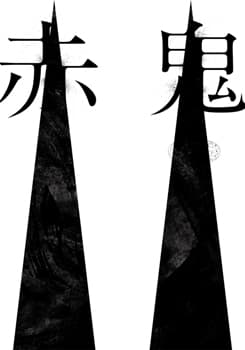
2) Red Demon (Aka Oni, 『赤鬼』) — Hideki Noda (野田秀樹)
- Cast: 4
- Runtime: ~80 min
- Difficulty: Intermediate
- Why it works: Compact cast with major thematic depth (fear, language, exclusion).
For first-time directors who want social relevance without huge logistics, Red Demon is a smart choice. It can be staged minimally but still feels conceptually ambitious.
Directing lesson it teaches: building empathy through group dynamics and “otherness.”
🔗 Internal reference: https://gikyokutosyokan.com/posts/35
3) The Dressing Room (Gakuya, 『楽屋~流れ去るものはやがてなつかしき~』) — Kunio Shimizu (清水邦夫)
- Cast: 4 (often female ensemble)
- Runtime: ~80 min
- Difficulty: Beginner-to-Intermediate
- Why it works: One of the best actor-centered scripts for rehearsal-based growth.
Because the play lives in language, memory, and relationships, a first-time director can learn blocking, listening work, and tonal transitions without complex mechanics.
Directing lesson it teaches: shaping ensemble listening and subtext rather than visual gimmicks.
🔗 Internal reference: https://gikyokutosyokan.com/posts/208
4) The Men Who Wanted to Sing (Utasetai Otokotachi, 『歌わせたい男たち』) — Ai Nagai (永井愛)
- Cast: 5
- Runtime: ~110 min
- Difficulty: Intermediate (dialogue-density)
- Why it works: Strongly built argument scenes and social conflict.
If you are a first-time director who likes text-driven work, this play gives you clean rhetorical battles and playable objectives. It is an excellent training ground for directing debate scenes.
Directing lesson it teaches: handling multi-character argument rhythms without flattening voices.
🔗 Internal reference: https://gikyokutosyokan.com/posts/22
5) Boy B (Shōnen B, 『少年B』) — Yukio Shiba (柴幸男)
- Cast: 5
- Runtime: ~60 min
- Difficulty: Beginner-friendly
- Why it works: Short runtime and concentrated emotional arc.
For first productions with limited rehearsal periods, this is one of the most practical choices. It can fit festivals, student programs, and one-evening mixed bills.
Directing lesson it teaches: scene clarity and pacing in short-form structure.
🔗 Internal reference: https://gikyokutosyokan.com/posts/84
6) The Fish in the Palm (Tenohira no Sakana, 『てのひらのさかな』) — Kenshi Nakamura (中村ケンシ)
- Cast: 5
- Runtime: ~80 min
- Difficulty: Beginner-to-Intermediate
- Why it works: Everyday situations with manageable production requirements.
This is useful for first-time directors who want contemporary realism without heavy technical demands. The play rewards nuance, not expensive design.
Directing lesson it teaches: micro-shifts in relationships and actor behavior.
🔗 Internal reference: https://gikyokutosyokan.com/posts/24
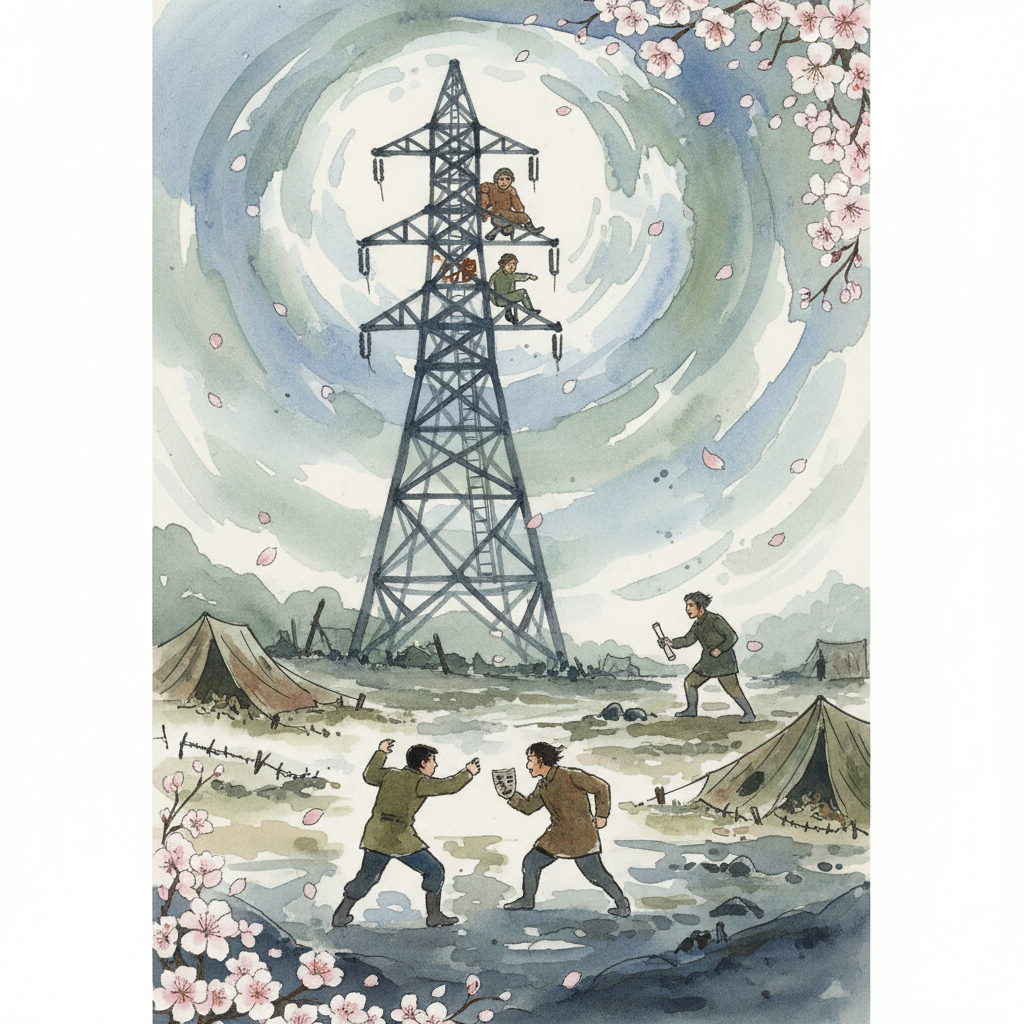
7) It Is Said There Are Men in That Tower (Sono Tettō ni Otokotachi wa Iru to Iu, 『その鉄塔に男たちはいるという』) — Hideo Tsuchida (土田英生)
- Cast: 5
- Runtime: ~90 min
- Difficulty: Intermediate
- Why it works: Ensemble tension in a bounded dramatic situation.
The play helps new directors learn how to sustain pressure across multiple scenes without over-directing every moment.
Directing lesson it teaches: long-form tension architecture in confined spaces.
🔗 Internal reference: https://gikyokutosyokan.com/posts/106
8) The Suitcase (Kaban, 『鞄』) — Kōbō Abe (安部公房)
- Cast: 3
- Runtime: ~100 min
- Difficulty: Intermediate (conceptual clarity required)
- Why it works: Tiny cast and high artistic return if concept is simple and coherent.
Many first-time directors overcomplicate absurdist material. If you keep staging choices disciplined, this script can be a powerful debut.
Directing lesson it teaches: creating one strong conceptual frame and trusting actors.
🔗 Internal reference: https://gikyokutosyokan.com/posts/173
9) Frozen Beach (Furōzun Bīchi, 『フローズン・ビーチ』) — Keralino Sandorovich (ケラリーノ・サンドロヴィッチ)
- Cast: 4
- Runtime: ~130 min
- Difficulty: Advanced-first-project option
- Why it works: Strong role opportunities and layered emotional pivots.
This is only recommended if your team has reliable rehearsal stamina. For some first-time directors, it is a breakthrough piece; for others, it is too long for a debut.
Directing lesson it teaches: managing tonal shifts across long runtime.
🔗 Internal reference: https://gikyokutosyokan.com/posts/55
10) On Mothers and Planets, and the Records of Women Who Rotate (Haha to Wakusei ni Tsuite, Oyobi Jiten Suru Onna-tachi no Kiroku, 『母と惑星について、および自転する女たちの記録』) — Ryūta Hōrai (蓬莱竜太)
- Cast: 4 (women)
- Runtime: ~150 min
- Difficulty: High (capstone-scale)
- Why it appears on this list: A strong option for first-time directors leading advanced ensembles or graduation productions.
It is emotionally rich and rewarding, but schedule risk is real. Treat this as a “first-time director with serious team support” choice.
Directing lesson it teaches: shaping a full-evening emotional journey.
🔗 Internal reference: https://gikyokutosyokan.com/posts/219
Comparison Table: Which Play Fits Your First Production?
| Play | Cast | Runtime | Staging Load | Best For |
|---|---|---|---|---|
| The Bee | 4 | ~80 min | Low-Mid | Directors who want intensity + compact scale |
| Red Demon | 4 | ~80 min | Low-Mid | Teams exploring social themes |
| The Dressing Room | 4 | ~80 min | Low | Actor training, ensemble nuance |
| The Men Who Wanted to Sing | 5 | ~110 min | Mid | Dialogue-heavy political/social conflict |
| Boy B | 5 | ~60 min | Low | Short rehearsal windows |
| The Fish in the Palm | 5 | ~80 min | Low | Contemporary realism, subtle acting |
| Men in That Tower | 5 | ~90 min | Mid | Sustained ensemble tension |
| The Suitcase | 3 | ~100 min | Low | Small team + conceptual staging |
| Frozen Beach | 4 | ~130 min | Mid-High | Ambitious first-time directors |
| On Mothers and Planets... | 4 | ~150 min | High | Capstone-level debut projects |
A First-Time Director’s 5-Step Selection Method
Step 1: Lock your production constraints before reading scripts
Answer these in writing:
- Max rehearsal weeks?
- Average attendance per actor per week?
- Venue type (black box / classroom / studio / proscenium)?
- Design budget ceiling?
- Language of performance?
If you do not define constraints first, you will likely choose emotionally, then panic logistically.
Step 2: Eliminate any script that breaks two hard limits
Examples:
- Runtime far above your schedule tolerance
- Cast size beyond your reliable actor pool
- Technical demands your venue cannot support
For first-time directors, “almost manageable” is often not manageable.
Step 3: Test one scene with actors before final commitment
Do a practical table read + rough standing pass of one pivotal scene. You are checking:
- Is the language playable for your actors?
- Are objectives clear?
- Does pacing naturally emerge?
- Are emotional beats legible to observers?
This one test can save months of preventable trouble.
Step 4: Confirm rights and text access early
Especially for international or educational use, rights and translation pathways vary. Handle this before public casting announcements.
Step 5: Choose the play your team can finish strongly
A clean, coherent production of a modest script beats an unfinished “masterpiece attempt” every time.
Common First-Time Director Mistakes (And How These Plays Help)
Mistake 1: Choosing spectacle over structure
New directors often pick scripts for image potential, then discover that scene architecture is fragile for their team.
Fix: Start with structurally dependable texts (The Bee, The Dressing Room, Boy B).
Mistake 2: Ignoring actor stamina
Long scripts with frequent tonal pivots can break under inconsistent attendance.
Fix: Prioritize 60-100 minute plays on first projects.
Mistake 3: Over-directing every beat
Micromanaging blocks actor ownership and slows rehearsal velocity.
Fix: Choose texts with clear objectives so actors can generate action naturally.
Mistake 4: Late rights/translation checks
Some teams cast before legal/text confirmation.
Fix: Build rights checks into week zero.
Mistake 5: Underestimating transitions
Even minimal plays can collapse if transitions are unresolved.
Fix: During week one, map transitions as carefully as scenes.
Suggested Internal Reading Path (English)
If you are planning a season, these related guides help:
- Best Japanese Plays for University Theater: https://gikyokutosyokan.com/blog/en/guide-best-japanese-plays-for-university-theater
- Best Japanese Plays for Small Cast (3-5 Actors): https://gikyokutosyokan.com/blog/en/guide-best-japanese-plays-for-small-cast-3-5-actors
And for title-level research, start from Japanese Play Library entries linked above.
FAQ (AI-Friendly, Direct Answers)
What is the easiest Japanese play type for first-time directors?
Small-cast (3-5 actors), 60-100 minute scripts with limited locations and actor-driven scenes are generally the easiest.
How many actors should a first-time director handle?
For most debut productions, 4 or 5 actors is the safest range: large enough for dynamic scenes, small enough for scheduling control.
Should first-time directors avoid long Japanese plays?
Usually yes. Long plays can work only when the ensemble has stable attendance and rehearsal discipline. Otherwise, they increase burnout and quality risk.
Are Japanese plays suitable for non-Japanese audiences?
Yes. Many contemporary Japanese plays work well internationally because their core conflicts (family pressure, social belonging, identity, institutional power) are universal.
Which play from this list is the safest first choice?
For most new directors: The Dressing Room or Boy B for practicality; The Bee if the team can sustain high-intensity pacing.
Final Recommendation
If this is your first time directing and you want the highest chance of artistic success, start with one of these three:
- The Dressing Room (ensemble craft, low staging load)
- Boy B (short runtime, fast rehearsal cycle)
- The Bee (small cast, high-impact structure)
You can absolutely direct more complex Japanese plays later. Your first goal is to complete one production with clarity, confidence, and a healthy team.
That first success is what gives you the momentum to tackle harder material next.
Sources
- Performing Arts Network Japan (Japan Foundation), Hideki Noda / Colin Teevan, THE BEE: https://performingarts.jpf.go.jp/en/article/6283/
- Performing Arts Network Japan (Japan Foundation), Ai Nagai / Utawasetai Otokotachi: https://performingarts.jpf.go.jp/E/play/0511/1.html
- Encyclopaedia Britannica, Shingeki overview: https://www.britannica.com/art/shingeki
- The New York Times archive, review mentioning Kunio Shimizu’s The Dressing Room: https://www.nytimes.com/1991/11/06/theater/theater-in-review-750991.html
この記事で紹介した戯曲






Written by
戯曲図書館 編集部
演劇経験者が運営する戯曲検索サービス「戯曲図書館」の編集チームです。 脚本選びのノウハウ、演劇業界の最新情報、公演レポートなどを発信しています。
関連記事
Best Japanese Plays for Staged Readings (2026): 8 Scripts That Sound Alive in the Room
A 2026 guide to 8 Japanese plays for staged readings, with cast size, runtime, and translation-friendly notes for directors and dramaturgs.
2026-09-02
If You Like The Crucible (2026 Guide): 4 Japanese Plays About Scapegoats, Panic, and Public Obedience
Love The Crucible? Read 4 Japanese plays about fear, scapegoats, conformity, and the cost of refusing the crowd.
2026-08-21
Best Japanese Plays for Low-Budget Productions (2026): 8 Scripts With Minimal Set Demands
A practical 2026 guide to 8 Japanese plays for low-budget productions, with cast size, runtime, and staging notes for small theaters, schools, and readings.
2026-08-19
If You Like Hedda Gabler (2026 Guide): 4 Japanese Plays About Female Rage, Respectability, and the Need to Burn the Script
Love Hedda Gabler? Read 4 Japanese plays about boredom, control, female rage, and the social cost of living inside the wrong role.
2026-08-14