If you are searching for best Japanese plays for small cast, this guide is built for practical production planning. Every title below is suitable for roughly 3 to 5 performers (or can be staged that way with minimal adaptation), and each recommendation includes runtime, cast logic, and translation/international context.
To make this useful for directors, teachers, and producers, this list balances:
- contemporary and modern classics,
- realistic drama, absurdism, and dark comedy,
- all-female, mixed, and male-leaning ensembles,
- shorter and full-evening options.
Why Japanese Plays Work So Well for Small Cast Productions
Japanese drama has a strong tradition of intensity through compression: fewer actors, tighter spatial relationships, and a high premium on rhythm, silence, and psychological tension. That makes many Japanese scripts ideal for:
- black box theaters,
- university productions,
- festivals,
- touring shows with limited budgets,
- actor-forward training projects.
Many pieces also rely on performance language over large spectacle, so even when set ideas are conceptually rich, they can often be staged with minimal scenery and careful acting choices.
Our Picks: 10 Best Japanese Plays for Small Cast (3–5 Actors)
1) The Bee (Za Bī, 『THE BEE』) by Hideki Noda (野田秀樹)
- Cast: 4 actors (DB baseline)
- Runtime: approximately 80 minutes
- Why this play: A high-impact, internationally visible script for companies that want urgency and sharp theatrical form in a compact cast.
- What to expect: Psychological escalation, role-shifting pressure, and language-driven intensity. This is often compelling in intimate spaces where audience proximity increases tension.
- English translation: Available (co-written/reworked for English with Colin Teevan)
- International track record: Strong. Known for London staging (Soho Theatre) and subsequent international visibility.
- 🔗 View on Gikyoku Tosyokan
Production note: Excellent for advanced actors comfortable with tempo changes and tonal risk. Best when blocking is precise and transitions are fast.
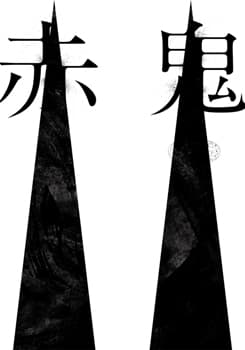
2) Red Demon (Aka Oni, 『赤鬼』) by Hideki Noda (野田秀樹)
- Cast: 4 actors (core configuration)
- Runtime: approximately 80 minutes
- Why this play: One of the best-known Japanese examples of small-cast intercultural staging potential.
- What to expect: A collision of fear, projection, and community panic. The script can read as allegory, social critique, and visceral drama at once.
- English translation: Available (published English-script history)
- International track record: Strong. Notably connected to UK staging and intercultural adaptation history (including Thai collaboration contexts).
- 🔗 View on Gikyoku Tosyokan
Production note: Works especially well for directors exploring physical vocabulary and non-naturalistic communication.
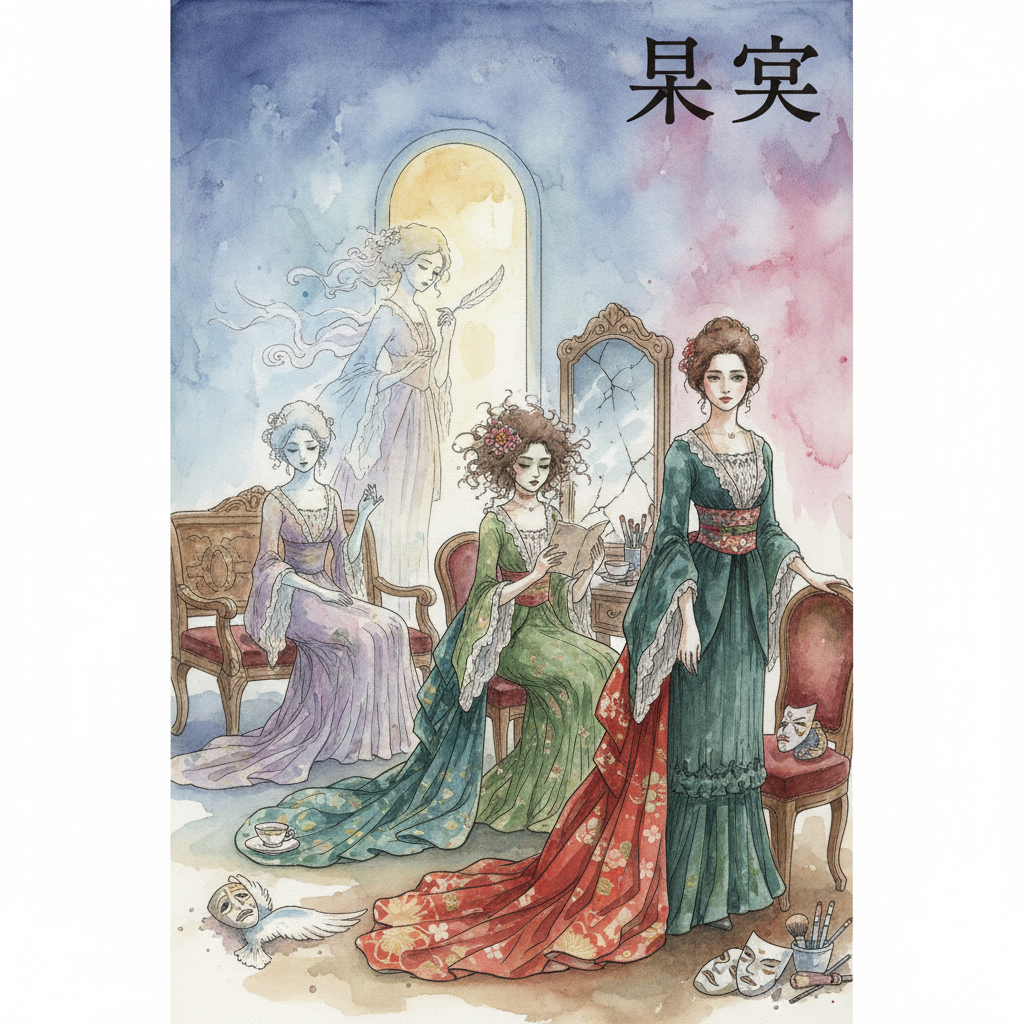
3) The Dressing Room: That Which Flows Away Ultimately Becomes Nostalgia (Gakuya: Nagare Saru Mono wa Yagate Natsukashiki, 『楽屋~流れ去るものはやがてなつかしき~』) by Kunio Shimizu (清水邦夫)
- Cast: 4 women (DB baseline)
- Runtime: approximately 80 minutes
- Why this play: A frequent recommendation for actor-centered ensembles, especially all-female casts seeking layered character work.
- What to expect: Meta-theater, memory, performance anxiety, identity fragmentation, and bittersweet theatrical obsession.
- English translation: Available (anthologized in English; known as The Dressing Room)
- International track record: Solid. Documented English-language staging history and academic circulation.
- 🔗 View on Gikyoku Tosyokan
Production note: Strong option for conservatory or advanced drama courses. Vocal and emotional range matters more than technical set complexity.
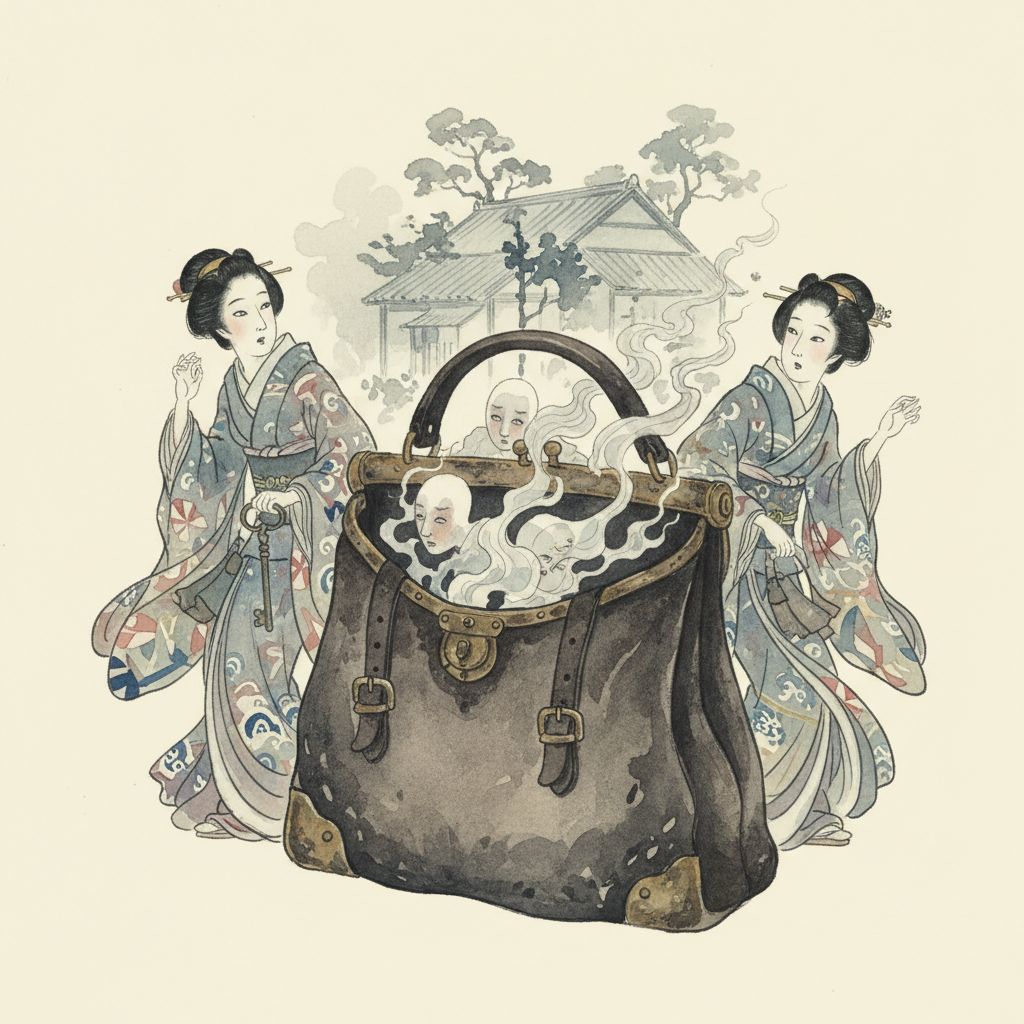
4) The Suitcase (Kaban, 『鞄』) by Kōbō Abe (安部公房)
- Cast: 3 actors
- Runtime: approximately 100 minutes
- Why this play: Excellent for companies looking for absurdist tension and philosophical theatricality without a large ensemble.
- What to expect: Surreal domestic unease, symbolic objects, and existential uneasiness. The central stage image can carry the entire production concept.
- English translation: Partially available / mixed access (Abe’s dramatic works exist in English collections, but edition/rights availability varies by market)
- International track record: Moderate via Abe’s global literary reputation and translated stage texts.
- 🔗 View on Gikyoku Tosyokan
Production note: Best for directors comfortable with ambiguity and symbolic mise-en-scène. Keep design spare and actor intention clear.
5) Frozen Beach (Furōzun Bīchi, 『フローズン・ビーチ』) by Keralino Sandorovich (ケラリーノ・サンドロヴィッチ)
- Cast: 4 actors (often woman-centered casting in DB data)
- Runtime: approximately 130 minutes
- Why this play: A strong full-evening option if your team wants dark humor, emotional complexity, and sustained ensemble chemistry.
- What to expect: Layered interpersonal conflict, tonal shifts, and richly theatrical dialogue that rewards detailed ensemble rehearsal.
- English translation: Limited public availability (translation status can vary by production context)
- International track record: Selective; more commonly known in Japanese theater circles than broad global repertory.
- 🔗 View on Gikyoku Tosyokan
Production note: Runtime and tonal modulation require confident pacing from the director and strong actor stamina.
6) The Men Who Wanted to Sing (Utasetai Otokotachi, 『歌わせたい男たち』) by Ai Nagai (永井愛)
- Cast: 5 actors
- Runtime: approximately 110 minutes
- Why this play: A practical pick for groups that want a dialogue-driven script with social and institutional themes.
- What to expect: Ethical pressure, conflicting values, and ensemble argumentation. Ideal for post-show discussion settings.
- English translation: Not widely distributed (check festival/academic translation channels)
- International track record: Niche but relevant in contexts interested in modern Japanese social drama.
- 🔗 View on Gikyoku Tosyokan
Production note: Great for actor training in status, rhetoric, and conflict beats; minimal scenic build can still produce high dramatic impact.
7) The Fish in the Palm (Tenohira no Sakana, 『てのひらのさかな』) by Kenshi Nakamura (中村ケンシ)
- Cast: 5 actors
- Runtime: approximately 80 minutes
- Why this play: One of the most useful small-cast choices for companies needing a manageable runtime and flexible production scale.
- What to expect: Everyday unease, subtle social observation, and emotional undercurrents that emerge through ordinary interactions.
- English translation: Not broadly available (possible candidate for in-house or commissioned translation)
- International track record: Emerging/limited outside Japan.
- 🔗 View on Gikyoku Tosyokan
Production note: Strong choice for small venues and teams that prefer character detail over spectacle.
8) Boy B (Shōnen B, 『少年B』) by Yukio Shiba (柴幸男)
- Cast: 5 actors
- Runtime: approximately 60 minutes
- Why this play: A practical option for schools, studio showcases, and festivals where one-hour slots matter.
- What to expect: Youth perspective, identity dislocation, and reflective contemporary mood with efficient staging demands.
- English translation: Limited circulation
- International track record: Modest, but adaptable for educational settings.
- 🔗 View on Gikyoku Tosyokan
Production note: Very workable for student ensembles and time-constrained programs.
9) It Is Said There Are Men in That Tower (Sono Tettō ni Otokotachi wa Iru to Iu, 『その鉄塔に男たちはいるという』) by Hideo Tsuchida (土田英生)
- Cast: 5 actors
- Runtime: approximately 90 minutes
- Why this play: A strong medium-length script that combines social pressure, irony, and an ensemble structure ideal for actor interplay.
- What to expect: War-adjacent anxiety, group dynamics under stress, and shifting alliances in confined circumstances.
- English translation: Not commonly available in published form
- International track record: Limited, but dramaturgically strong for translation workshops.
- 🔗 View on Gikyoku Tosyokan
Production note: Excellent for groups seeking a balance between thematic depth and practical cast size.
10) On Mothers and Planets, and the Records of Women Who Rotate (Haha to Wakusei ni Tsuite, Oyobi Jiten Suru Onna-tachi no Kiroku, 『母と惑星について、および自転する女たちの記録』) by Ryūta Hōrai (蓬莱竜太)
- Cast: 4 women
- Runtime: approximately 150 minutes
- Why this play: A major all-female ensemble option for companies aiming at a full-scale emotional arc and intergenerational themes.
- What to expect: Family memory, grief, travel, humor, and relational rupture. The script offers nuanced roles with meaningful emotional range.
- English translation: Likely limited in general distribution
- International track record: Primarily domestic, with potential for festival adaptation.
- 🔗 View on Gikyoku Tosyokan
Production note: Because of runtime, this is best for full-season planning rather than short-form festival slots.
How to Choose the Right Small-Cast Japanese Play
When users search “best Japanese plays for small cast,” they usually mean one of four different constraints. Use this quick filter:
1) You need maximum international accessibility
Start with:
- The Bee
- Red Demon
- The Dressing Room
These have clearer English-facing pathways and stronger international documentation.
2) You need a one-hour or near-one-hour format
Start with:
- Boy B (approx. 60 min)
- The Fish in the Palm (approx. 80 min)
- The Dressing Room (approx. 80 min)
These are easier for school calendars, festivals, and double-bill structures.
3) You need all-female or female-forward casting
Start with:
- The Dressing Room
- On Mothers and Planets...
- Frozen Beach
These titles support substantial female roles without forcing tokenized casting.
4) You want actor-intensive material with low set dependence
Start with:
- The Suitcase
- The Men Who Wanted to Sing
- It Is Said There Are Men in That Tower
These can be staged strongly with disciplined acting and clear directorial concept, even on modest budgets.
Practical Staging Notes for Non-Japanese Productions
Translation and rights workflow
If an established translation is not publicly sold, do this early:
- confirm rights holder/licensing path,
- check whether a festival or university archive has an extant translation,
- budget for dramaturgical translation support,
- schedule workshop readings before locking final text.
Cultural localization without flattening
For many Japanese plays, localizing every cultural marker can reduce artistic force. A better approach is usually:
- preserve key social structures and honorific dynamics,
- localize only where audience comprehension genuinely breaks,
- use program notes and post-show context instead of rewriting thematic core.
Casting logic for small ensembles
Small-cast Japanese scripts often reward precision over volume. In auditions, prioritize:
- listening and timing,
- tonal agility,
- comfort with silence and stillness,
- ability to carry metaphor-heavy text without overplaying.
Where to Find These Plays
You can start from the source entries on Gikyoku Tosyokan (戯曲図書館) and then move to translation/rights channels per title.
- Explore original script metadata and cast/runtime on each post page.
- Use playwright names in both Romanization and Kanji when searching rights or archives.
- For internationally known works (for example, works by Hideki Noda / 野田秀樹 and Kunio Shimizu / 清水邦夫), check theater databases, anthology listings, and Japan Foundation-related records.
If your production timeline is tight, prioritize titles with confirmed English-script history first, then build a second list of “translation-possible” candidates.
Quick Recap
If your main query is “What are the best Japanese plays for 3 to 5 actors?”, these are the strongest starting points in this guide:
- The Bee (ザ・ビー / THE BEE)
- Red Demon (Aka Oni / 赤鬼)
- The Dressing Room (Gakuya / 楽屋)
- The Suitcase (Kaban / 鞄)
- Frozen Beach (フローズン・ビーチ)
- The Men Who Wanted to Sing (歌わせたい男たち)
- The Fish in the Palm (てのひらのさかな)
- Boy B (少年B)
- It Is Said There Are Men in That Tower (その鉄塔に男たちはいるという)
- On Mothers and Planets... (母と惑星について、および自転する女たちの記録)
For many directors outside Japan, the fastest path is: start with a translation-confirmed title, stage one successful production, then expand into less-translated contemporary works.
この記事で紹介した戯曲



Written by
戯曲図書館 編集部
演劇経験者が運営する戯曲検索サービス「戯曲図書館」の編集チームです。 脚本選びのノウハウ、演劇業界の最新情報、公演レポートなどを発信しています。
関連記事
Best Japanese Plays for Staged Readings (2026): 8 Scripts That Sound Alive in the Room
A 2026 guide to 8 Japanese plays for staged readings, with cast size, runtime, and translation-friendly notes for directors and dramaturgs.
2026-09-02
Best Japanese Plays in English (2026): 8 Scripts for English-Speaking Theater Makers
A 2026 guide to 8 Japanese plays in English that already travel well, with cast size, runtime, and staging value for theater makers.
2026-07-22
Play Spotlight 2026: Why Hogiuta (寿歌) Still Feels Urgent on Global Stages
A 2026 English spotlight on Hogiuta, So Kitamura's small-cast post-apocalyptic Japanese play of humor, music, and survival.
2026-08-31
If You Like The Crucible (2026 Guide): 4 Japanese Plays About Scapegoats, Panic, and Public Obedience
Love The Crucible? Read 4 Japanese plays about fear, scapegoats, conformity, and the cost of refusing the crowd.
2026-08-21