If you are searching for the best Japanese plays for university theater, you probably do not need abstract theory—you need scripts that can survive real campus conditions:
- limited rehearsal hours,
- mixed-experience actors,
- tight budgets,
- changing venue availability,
- and audiences that include both theater majors and first-time viewers.
This guide is built for exactly that situation.
All 10 recommendations below are selected from Japanese play data with practical production metadata in mind (cast scale, runtime, and staging demands), and then evaluated from a student-company perspective: what can actually be staged successfully in a university environment.
To keep this useful for international readers, Japanese names are shown in Romanization + Kanji.
Why Japanese Plays Fit University Theater So Well
University theater sits in an interesting zone between training and public performance. Japanese drama is often ideal for that zone because many scripts prioritize:
- Actor relationships over expensive spectacle
- Strong thematic identity (so student teams can discuss something real)
- Flexible staging language (realism, absurdism, meta-theater, documentary style)
- Rich ensemble work in medium cast sizes
In other words, Japanese plays can challenge student actors and directors artistically without requiring Broadway-scale resources.
Our Picks: Best Japanese Plays for University Theater
1) The Bee (Za Bī, 『THE BEE』) by Hideki Noda (野田秀樹)
- Cast: 4 actors (baseline)
- Runtime: around 80 minutes
- Why it works on campus: Compact cast, high theatrical impact, and excellent training value for rhythm, escalation, and physical precision.
- What to expect: Psychological pressure, identity inversion, dark humor, and stylized verbal intensity.
- English access: Strong compared to many contemporary Japanese plays; the work is known for English-language development history.
- 🔗 View on Gikyoku Tosyokan
University staging tip: This play rewards disciplined ensemble timing. It is ideal for advanced student actors and directors exploring non-naturalistic pacing.
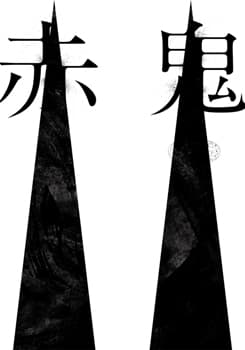
2) Red Demon (Aka Oni, 『赤鬼』) by Hideki Noda (野田秀樹)
- Cast: 4 actors (core format)
- Runtime: around 80 minutes
- Why it works on campus: Strong thematic clarity (fear of the “other”), compact ensemble, and excellent potential for intercultural discussion in university contexts.
- What to expect: Allegory, violence of misunderstanding, and emotionally charged group dynamics.
- English access: Relatively favorable by Japanese contemporary-drama standards.
- 🔗 View on Gikyoku Tosyokan
University staging tip: Works well in black box spaces. Great choice for departments combining performance with social or cultural studies.
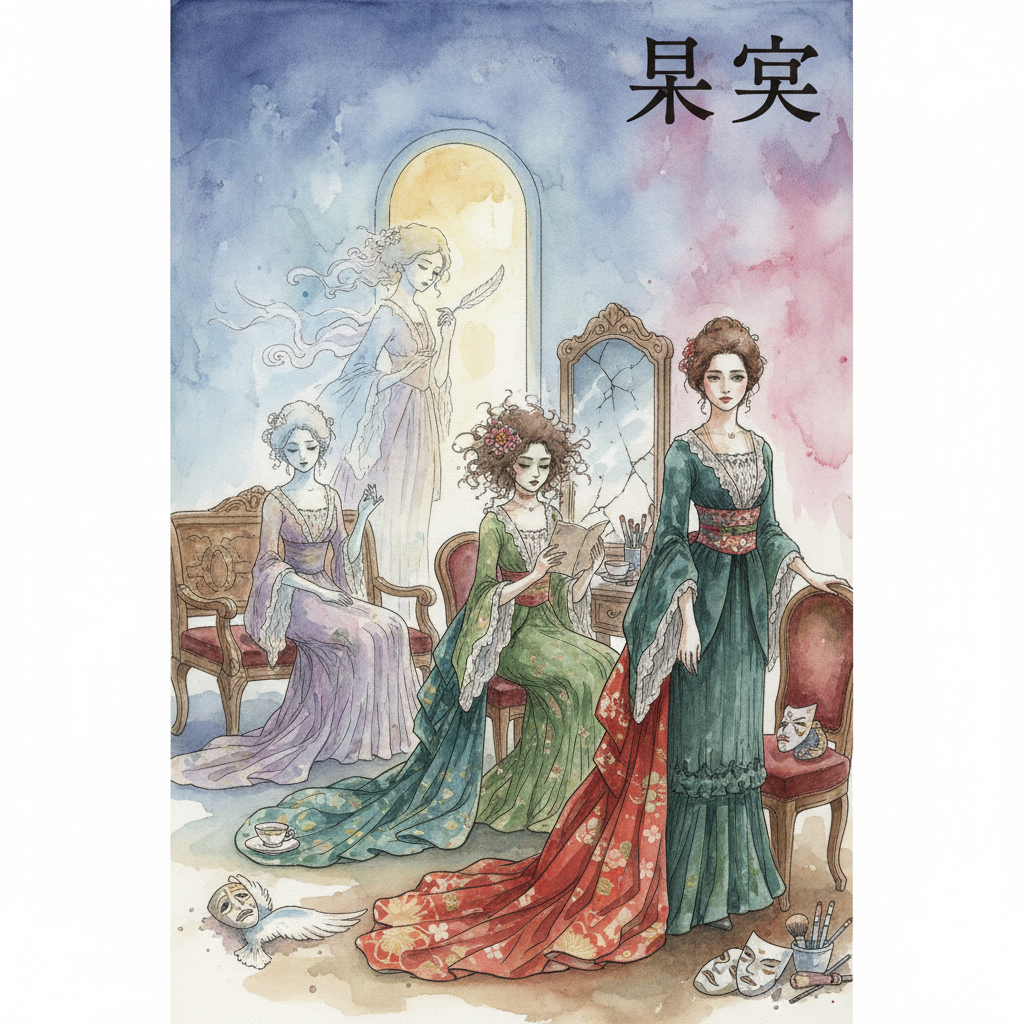
3) The Dressing Room: That Which Flows Away Ultimately Becomes Nostalgia (Gakuya: Nagare Saru Mono wa Yagate Natsukashiki, 『楽屋~流れ去るものはやがてなつかしき~』) by Kunio Shimizu (清水邦夫)
- Cast: 4 women
- Runtime: around 80 minutes
- Why it works on campus: A classic actor-centric text for scene work, character layering, and theatrical self-reflection.
- What to expect: Meta-theater, memory, jealousy, role anxiety, and a blend of irony and melancholy.
- English access: Good in academic/theater circles; known in English under The Dressing Room.
- 🔗 View on Gikyoku Tosyokan
University staging tip: Excellent for women-centered ensembles and acting programs focused on text analysis.
4) The Men Who Wanted to Sing (Utasetai Otokotachi, 『歌わせたい男たち』) by Ai Nagai (永井愛)
- Cast: 5 actors
- Runtime: around 110 minutes
- Why it works on campus: Dialogue-rich structure makes it ideal for institutions that want classroom discussion to continue after the performance.
- What to expect: Institutional pressure, conflicting ethics, and rhetoric-driven conflict.
- English access: Less standardized internationally than Noda/Shimizu works, but highly suitable for university dramaturgy projects.
- 🔗 View on Gikyoku Tosyokan
University staging tip: Strong fit for campuses where theater is linked to history, politics, or education studies.
5) The Fish in the Palm (Tenohira no Sakana, 『てのひらのさかな』) by Kenshi Nakamura (中村ケンシ)
- Cast: 5 actors
- Runtime: around 80 minutes
- Why it works on campus: Moderate runtime + manageable cast + flexible staging profile = practical semester production.
- What to expect: Everyday settings, subtle social tension, and emotional shifts that emerge through ordinary interactions.
- English access: Limited formal circulation; suitable for translation workshops or bilingual campus projects.
- 🔗 View on Gikyoku Tosyokan
University staging tip: Great option when your student company wants contemporary tone without large technical demands.
6) Boy B (Shōnen B, 『少年B』) by Yukio Shiba (柴幸男)
- Cast: 5 actors
- Runtime: around 60 minutes
- Why it works on campus: One-hour length is ideal for student festivals, repertory pairings, and showcase schedules.
- What to expect: Youth perspective, identity frustration, and the gap between aspiration and reality.
- English access: Limited, but structurally easy to workshop in educational contexts.
- 🔗 View on Gikyoku Tosyokan
University staging tip: One of the most practical picks if your rehearsal period is short or actors are balancing heavy coursework.
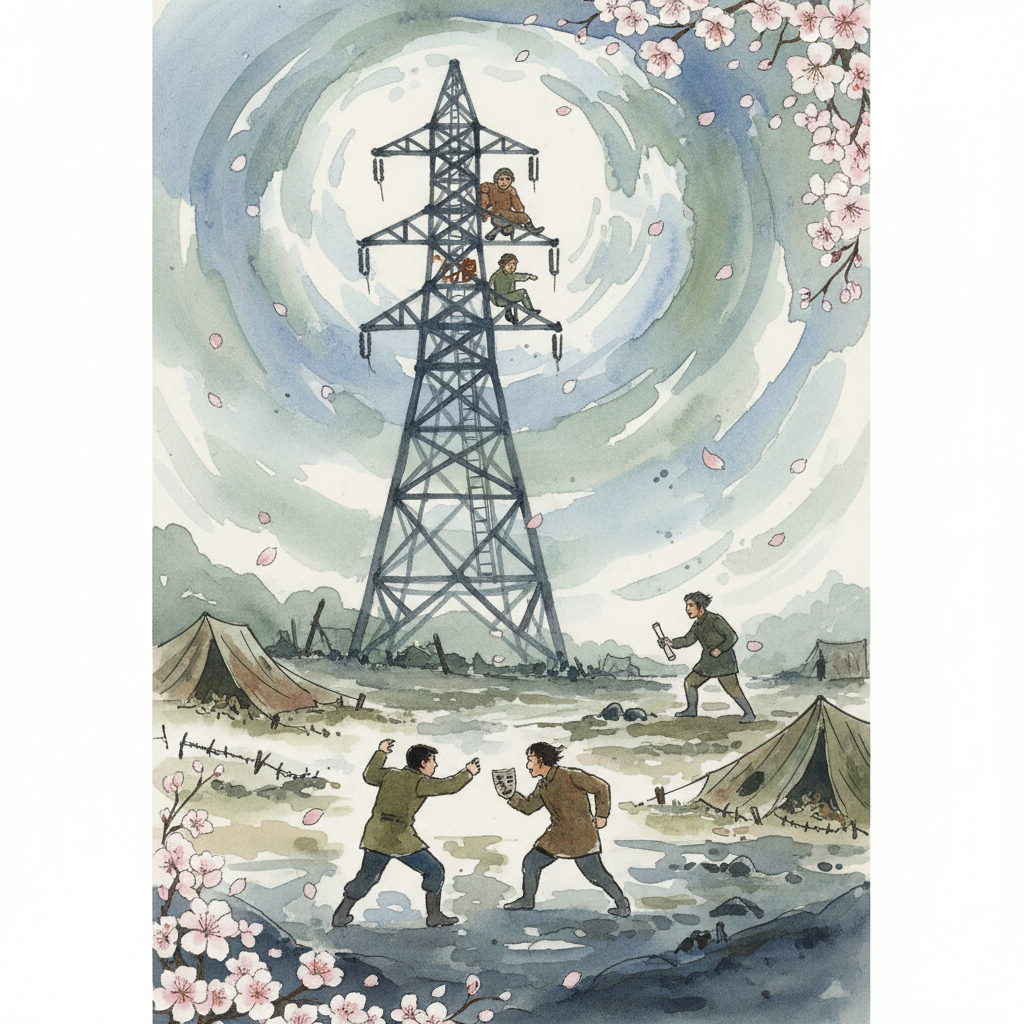
7) It Is Said There Are Men in That Tower (Sono Tettō ni Otokotachi wa Iru to Iu, 『その鉄塔に男たちはいるという』) by Hideo Tsuchida (土田英生)
- Cast: 5 actors
- Runtime: around 90 minutes
- Why it works on campus: Ensemble-heavy conflict structure gives each performer meaningful dramatic function.
- What to expect: Moral hesitation under wartime pressure, shifting alliances, and tension in confined space.
- English access: Not broadly standardized, but very suitable for dramaturgical translation labs at universities.
- 🔗 View on Gikyoku Tosyokan
University staging tip: Strong material for directors practicing sustained tension and ensemble rhythm.
8) The Suitcase (Kaban, 『鞄』) by Kōbō Abe (安部公房)
- Cast: 3 actors
- Runtime: around 100 minutes
- Why it works on campus: Brilliant for departments teaching absurdism, postwar modernism, or symbolic stage language.
- What to expect: Unstable domestic logic, existential dread, and object-centered theatrical metaphor.
- English access: Better than many modern works because Kōbō Abe’s dramatic writing has international publication history.
- 🔗 View on Gikyoku Tosyokan
University staging tip: Keep design minimal and conceptually coherent. The acting and directorial framing carry the production.
9) Frozen Beach (Furōzun Bīchi, 『フローズン・ビーチ』) by Keralino Sandorovich (ケラリーノ・サンドロヴィッチ)
- Cast: 4 actors (often female-forward in production practice)
- Runtime: around 130 minutes
- Why it works on campus: Ideal for advanced student ensembles who want a longer-form challenge beyond one-act structures.
- What to expect: Dark comedy, relational collapse, emotional pivots, and sustained ensemble chemistry.
- English access: More limited than canonical internationally translated Japanese texts.
- 🔗 View on Gikyoku Tosyokan
University staging tip: Choose this when your team has enough rehearsal capacity for long-form tonal control.
10) On Mothers and Planets, and the Records of Women Who Rotate (Haha to Wakusei ni Tsuite, Oyobi Jiten Suru Onna-tachi no Kiroku, 『母と惑星について、および自転する女たちの記録』) by Ryūta Hōrai (蓬莱竜太)
- Cast: 4 women
- Runtime: around 150 minutes
- Why it works on campus: A major all-female ensemble piece for universities seeking emotionally complex, full-evening repertory.
- What to expect: Grief, family memory, sisterhood tension, humor, and travel-frame storytelling.
- English access: Limited in general global circulation, but excellent for high-level student dramaturgy and adaptation work.
- 🔗 View on Gikyoku Tosyokan
University staging tip: Best for capstone-style productions rather than quick festival slots.
Which Play Should Your University Group Pick? (Fast Decision Matrix)
If you need an internationally recognized title
Choose:
- The Bee
- Red Demon
- The Dressing Room
These are easier to contextualize for non-Japanese audiences and faculty reviewers.
If you need a short or medium runtime
Choose:
- Boy B (about 60 min)
- The Bee (about 80 min)
- The Fish in the Palm (about 80 min)
- The Dressing Room (about 80 min)
These options are realistic for semester production timelines.
If you need women-centered casting
Choose:
- The Dressing Room
- On Mothers and Planets...
- Frozen Beach
All three provide substantial female roles with strong dramatic architecture.
If you need actor training value over visual spectacle
Choose:
- The Suitcase
- The Men Who Wanted to Sing
- It Is Said There Are Men in That Tower
These scripts challenge listening, argument rhythm, and ensemble decision-making.
Practical University Production Workflow (What Actually Helps)
1) Start with rights and text access before auditions
Many student productions lose time by casting first and securing text later. Reverse that order.
Checklist:
- Confirm rights path
- Confirm script/translation availability
- Confirm adaptation permissions (if needed)
- Confirm expected language of performance
2) Cast to rehearsal reality, not ideal fantasy
Campus theater often competes with exams, part-time jobs, and club obligations. Pick the play your team can actually rehearse properly.
3) Use dramaturgy sessions as part of rehearsal
Japanese plays often gain depth when actors understand social context, period, and language nuance. Even 30-minute weekly dramaturgy sessions can dramatically improve performance quality.
4) Keep staging language coherent
Especially with Japanese modern/contemporary works, too many disconnected visual ideas can dilute the text. Pick one clear staging logic and commit.
5) Build audience access tools
If your audience is mixed (theater and non-theater students), use:
- concise program notes,
- pre-show glossary (very short),
- post-show conversation.
This increases comprehension without flattening the script.
About English Translation and International Use
For university readers outside Japan: translation access is not equal across all titles.
- Some works (especially by Hideki Noda (野田秀樹) and Kunio Shimizu (清水邦夫)) have clearer international traces.
- Others are better approached through faculty-supervised translation workshops, bilingual readings, or adaptation collaborations.
At the selection stage, separate plays into three buckets:
- English-ready now (known translated pathway)
- English-possible soon (rights + translation effort needed)
- Research-only for now (great text, unclear practical access)
This prevents your production team from committing to a script you cannot legally or practically stage in time.
Where to Start Researching These Scripts
Begin with each play entry on Gikyoku Tosyokan (戯曲図書館) for practical metadata and author information.
Then, for university production planning:
- Search playwright name in Romanization and Kanji (e.g., Hideki Noda / 野田秀樹).
- Check theater journals, anthology indexes, and educational repositories.
- Contact rights holders early if translation/licensing status is unclear.
For campus teams, this early research step saves weeks of preventable confusion.
Final Recommendation
If your university company wants one script to start with this season, pick based on your immediate goal:
- Training and intensity → The Bee (THE BEE)
- Intercultural and social discussion → Red Demon (赤鬼)
- Women-centered actor showcase → The Dressing Room (楽屋)
- Short schedule practicality → Boy B (少年B)
- Capstone full-evening challenge → On Mothers and Planets... (母と惑星について、および自転する女たちの記録)
Japanese plays can be some of the strongest material for university theater—not because they are “exotic,” but because they are structurally rich, actor-driven, and intellectually alive under real production constraints.
If your campus team chooses wisely, even a small student company can produce work that feels artistically ambitious and professionally focused.
この記事で紹介した戯曲





Written by
戯曲図書館 編集部
演劇経験者が運営する戯曲検索サービス「戯曲図書館」の編集チームです。 脚本選びのノウハウ、演劇業界の最新情報、公演レポートなどを発信しています。
関連記事
If You Like Long Day's Journey Into Night (2026 Guide): 5 Japanese Plays About Family Secrets, Blame, and the Past That Won't Stay Buried
Love Long Day's Journey Into Night? Read 5 Japanese plays about family secrets, inherited grief, and the quiet violence of a past that refuses to stay buried.
2026-10-02
Best Japanese Plays for Staged Readings (2026): 8 Scripts That Sound Alive in the Room
A 2026 guide to 8 Japanese plays for staged readings, with cast size, runtime, and translation-friendly notes for directors and dramaturgs.
2026-09-02
If You Like The Crucible (2026 Guide): 4 Japanese Plays About Scapegoats, Panic, and Public Obedience
Love The Crucible? Read 4 Japanese plays about fear, scapegoats, conformity, and the cost of refusing the crowd.
2026-08-21
Best Japanese Plays for Low-Budget Productions (2026): 8 Scripts With Minimal Set Demands
A practical 2026 guide to 8 Japanese plays for low-budget productions, with cast size, runtime, and staging notes for small theaters, schools, and readings.
2026-08-19