
Tennessee Williams’s A Streetcar Named Desire is one of those plays people do not merely “admire.” They carry it. Directors return to it. Actors test themselves against it. Audiences remember specific textures: heat, sweat, fantasy, humiliation, the sound of a cramped apartment swallowing people whole.
If you love Streetcar, it is usually not only because of Blanche DuBois, Stanley Kowalski, and Stella. It is because the play refuses comfort. It is erotic and violent, lyrical and ugly, psychologically precise and theatrically heightened. It asks what happens when desire becomes survival, when class slips, and when intimacy turns into a weapon.
Japanese theater offers many plays that hit those same nerves, but through different social contexts, speech rhythms, and staging traditions. In modern Japanese drama, you can find similarly intense collisions between private desire and public shame; similarly claustrophobic rooms where people negotiate power; similarly unsettling blends of tenderness, cruelty, and self-performance.
This guide is not about saying these Japanese plays are “the same” as Streetcar. They are not. The point is to build a meaningful bridge: if Streetcar has shaped your theatrical appetite, these works can extend it.
Below are five Japanese plays that Streetcar fans should read, stage, and argue about.
What Makes A Streetcar Named Desire So Enduring?
Before moving to Japan, let’s be specific about why this Williams play keeps returning.
First, Streetcar treats desire as social force, not just private feeling. Sexual attraction in the play is bound to money, class, status, and bodily risk. Stella’s desire for Stanley is inseparable from her economic life and domestic reality. Blanche’s attempts at refinement are inseparable from her precarity and fear.
Second, the play is relentlessly attentive to performance. Blanche performs femininity, gentility, innocence, and “magic” in order to survive. Stanley performs blunt masculinity and class resentment as authority. Everyone is acting, but not in the same way, and not with the same stakes.
Third, violence in Streetcar is not an isolated event. It is structural. The apartment itself stages power: who belongs, who is tolerated, who gets pushed to the edge. That is why the play still feels modern. The cruelty is social, not just individual.
Finally, Williams combines psychological realism with poetic theatricality. Music, light, and stage texture do not decorate the drama; they expose inner states. The language is lush, but the world is hard.
The Japanese plays below resonate with these same qualities—while sharply diverging in tone, politics, and theatrical method.
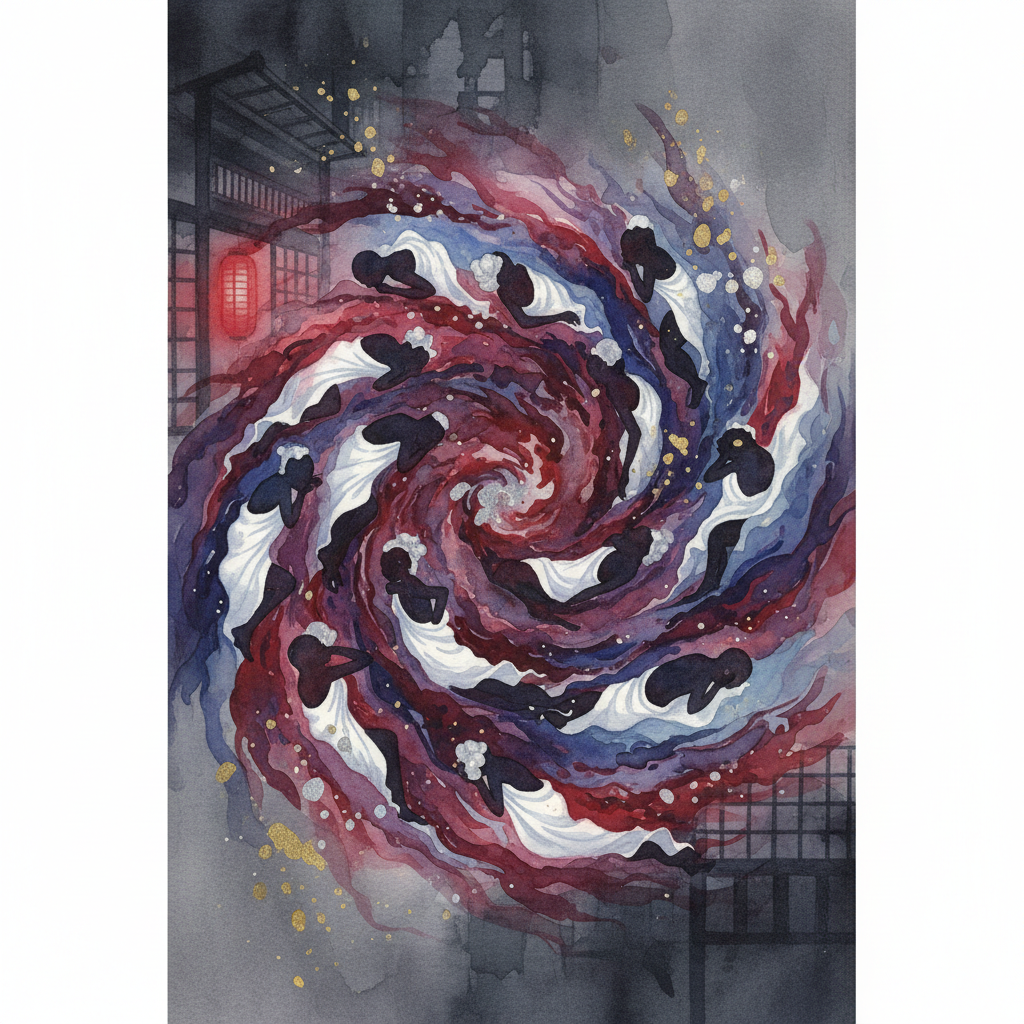
1) Ai no Uzu (愛の渦, Love’s Whirlpool) by Miura Daisuke (三浦大輔)
- The connection: Desire as transaction, desire as hierarchy, desire as self-exposure
- What’s different: More stripped social framing, less nostalgia, colder class and gender observation
- Cast & runtime: Listed as approx. 120 minutes (cast data variable in archive)
- 🔗 View on Gikyoku Tosyokan
If Streetcar shows desire tearing through a household, Ai no Uzu places desire in an explicitly transactional space and watches social masks collapse. Characters gather for sex, but what emerges is not liberation. It is ranking, humiliation, competition, and the panic of being seen too clearly.
This is where Streetcar fans will immediately feel at home: not in plot, but in moral temperature. Miura Daisuke (三浦大輔) is interested in the same unstable boundary Williams explores—the point where intimacy becomes power play.
In Streetcar, Blanche tries to choreograph the terms on which she can be desired. In Ai no Uzu, characters also attempt self-curation, but in a setting that strips away respectable language quickly. Status markers reappear inside supposedly anonymous erotic space. The room becomes a social laboratory: class, confidence, age, beauty capital, and shame all surface.
What makes this a strong crossover recommendation is its refusal of easy moral framing. Like Williams, Miura does not hand audiences a clean “victim/villain” map. People wound each other while remaining vulnerable themselves. Nobody is outside the system; everyone is caught in it.
For performers, both plays demand careful handling of erotic material without reducing characters to symbols. For directors, both plays require control of rhythm: pauses, awkward shifts, sudden humiliations, and tiny reversals of dominance are where the dramatic voltage lives.
If you admire Streetcar for its unsparing treatment of desire under social pressure, Ai no Uzu is essential.
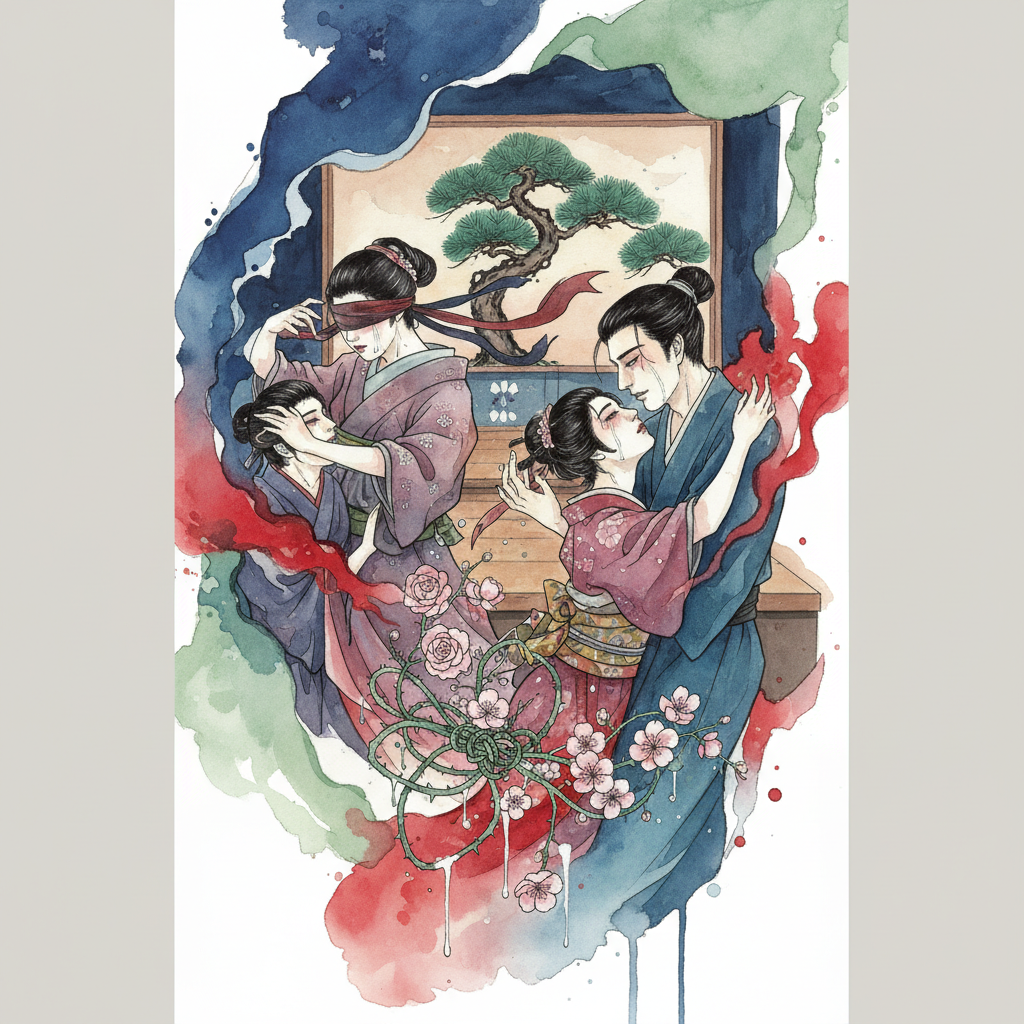
2) Mashiin Nikki (マシーン日記, Machine Diary) by Matsuo Suzuki (松尾スズキ)
- The connection: Domestic cruelty, coercive intimacy, and the grotesque underside of “family”
- What’s different: Darker comic grotesque, sharper absurd edge, more overt stylization
- Cast & runtime: 4 actors, approximately 120 minutes
- 🔗 View on Gikyoku Tosyokan
In Streetcar, domestic space becomes an arena where violence is normalized. Mashiin Nikki pushes that logic into a more grotesque theatrical register. Matsuo Suzuki (松尾スズキ) creates a world where abuse, dependency, and desire are entangled so tightly that ordinary ethical categories begin to buckle.
For Streetcar readers, this can feel like stepping from humid realism into a nightmare mirror. You still get power struggle, erotic domination, and social cruelty—but expressed through Matsuo’s specific blend of brutality and black humor.
Thematically, both works interrogate what “home” means when the home is not safe. In Williams, Stella’s apartment is too small to absorb conflict; in Matsuo, confined space becomes a mechanism of control and degradation. In both cases, gendered vulnerability and bodily threat structure the action.
Where Matsuo diverges is tonal audacity. Williams gives us lyrical ruin; Matsuo gives us corrosive satire and grotesque embodiment. Yet the emotional effect can converge: audiences are forced to ask why characters remain in harmful structures, and what social conditions make leaving so difficult.
This is a particularly good recommendation for Streetcar fans who are less interested in Southern Gothic atmosphere and more interested in dramatic anatomy: how playwrights map violence onto everyday relations.
3) Akuryō (悪霊, Evil Spirits) by Matsuo Suzuki (松尾スズキ)
- The connection: Four-person relational warfare, erotic jealousy, emotional volatility
- What’s different: More compressed structure, sharper ensemble confrontations, irony-heavy emotional register
- Cast & runtime: 4 actors, approximately 130 minutes
- 🔗 View on Gikyoku Tosyokan
If your favorite parts of Streetcar are not the social-historical references but the knife-fight intensity of intimate scenes, Akuryō is a compelling next read.
Matsuo’s four-character framework recalls the concentrated pressure that makes Williams’s confrontations unforgettable: language is tactical, affection is unstable, and humiliation can pivot to desire in seconds. This is theater of nerves.
One way to read Streetcar is as a contest over narrative authority: whose version of reality wins? Blanche’s? Stanley’s? The world’s? Akuryō similarly thrives on contested perception. Characters interpret each other badly, strategically, or too late. Emotional truth appears and disappears.
What is “Streetcar-like” here is not mimicry but risk. Both plays trust that audiences can sit inside contradiction without immediate moral resolution. Both ask spectators to notice how social scripts (gender roles, romantic expectations, class assumptions) are reproduced in everyday speech.
Staging-wise, directors can use Akuryō after Streetcar as an experiment in concentration. The emotional circuitry is comparably hot, but the theatrical language is distinctively Japanese contemporary drama: leaner in setup, jagged in turn-taking, unsentimental in fallout.
4) Senjō no Pikunikku (船上のピクニック, Shipboard Picnic) by Iwamatsu Ryō (岩松了)
- The connection: Claustrophobic ensemble space, unsaid tensions, emotional predation beneath ordinary conversation
- What’s different: Quieter surface, elliptical dialogue, unease built through omission rather than operatic eruption
- Cast & runtime: 12 actors, approximately 150 minutes
- 🔗 View on Gikyoku Tosyokan
Some Streetcar fans love the play most for its explosive confrontations. Others love the creeping dread—the sense that people are talking around the truth until speech itself becomes pressure. If you are in the second camp, Iwamatsu Ryō (岩松了) is your playwright.
Senjō no Pikunikku does not imitate Williams’s rhetorical flourish. It works through drift, interruption, and uneasy social choreography. But the underlying fascination is similar: how groups absorb, enable, and redirect cruelty.
In Streetcar, we often read conflict through named oppositions: old South/new urban order, fragility/brutality, illusion/reality. Iwamatsu complicates binaries through conversational fog. Characters evade direct declaration; motives leak sideways. The effect can be devastatingly contemporary: violence is diffused through social interaction rather than announced.
For actors trained on high-emotion texts, this play is a useful corrective. It asks for precision in underplaying and listening. For audiences, it offers a different route to the same destination Streetcar reaches: an awareness that intimacy can fail without anyone saying “this is the moment it failed.”
Read this play if you want to explore what Streetcar’s emotional architecture looks like when translated into a cooler, more oblique theatrical climate.
5) Itoko Dōshi (いとこ同志, Cousins) by Sakate Yōji (坂手洋二)
- The connection: Identity instability, memory pressure, emotional dependency, danger inside close relationships
- What’s different: More overtly mysterious and surreal atmosphere, stronger political and structural undertones
- Cast & runtime: 4 actors, approximately 120 minutes
- 🔗 View on Gikyoku Tosyokan
Sakate Yōji (坂手洋二) is often associated with politically alert theater, but Itoko Dōshi also rewards reading as intimate psychological drama. As in Streetcar, people try to stabilize identity under pressure—through story, memory, and relational control.
Where Williams writes Blanche’s collapsing social self against the force of Stanley’s fact-checking aggression, Sakate creates a more fluid, uncanny field. Memory and perception become unstable terrain. The result is less “realist showdown,” more haunted negotiation.
Yet Streetcar fans will still recognize the core pleasure: watching characters fight over who gets to define reality and who gets reduced to an object within someone else’s narrative.
The play’s compressed cast also makes it attractive for companies looking for intense ensemble work. Like Streetcar, it rewards actors who can switch rapidly between tenderness, strategic concealment, and sudden cruelty. Emotional dependency is never simple; power keeps moving.
If you value Streetcar as a drama of narrative control and psychological survival, Itoko Dōshi offers a potent Japanese counterpart.
How These Plays Converse with Streetcar—Without Becoming Derivatives
A weak crossover article says, “This is Japan’s version of X.” That flattens everyone involved. A better approach is to compare dramatic functions.
Across Streetcar and the five Japanese works above, you can trace at least six shared functions:
-
Room as pressure vessel
Interiors are not neutral settings. They concentrate social violence. -
Desire as social grammar
Attraction reveals hierarchy: who can ask, who can refuse, who pays, who is exposed. -
Identity as performance under threat
Characters build personas for survival, then watch those personas fracture. -
Speech as weapon and shield
Conversation is tactical. Silence is tactical too. -
Ambiguous sympathy
Plays resist giving audiences morally simple comfort. -
Embodied power
Gendered, classed, and sexual power appears in bodies, not only ideas.
The differences matter just as much. Williams’s language is famously lyrical and symbolic. Japanese contemporary playwrights like Miura, Matsuo, Iwamatsu, and Sakate often lean toward different tonal systems: awkward realism, grotesque satire, conversational opacity, or political surreal tension. Those differences are exactly why this comparative journey is fruitful.
In practice, reading these plays together helps directors and dramaturgs avoid narrow canon habits. It broadens what we mean by “intimate realism” and “psychological theater.” It also pushes English-language theater communities to move beyond a token “global theater” shelf toward actual repertoire thinking.
Notes for Directors, Translators, and Educators
If you are programming for audiences who know Streetcar, here are practical pathways:
- Programming pair: Stage Streetcar and pair it with a staged reading of Ai no Uzu (愛の渦) or Mashiin Nikki (マシーン日記) in the same season under a “Desire and Domestic Power” umbrella.
- Acting pedagogy: Use Blanche/Stanley scenes alongside selected scenes from Akuryō (悪霊) to compare rhetorical intensity versus jagged contemporary rhythm.
- Dramaturgy seminars: Build a module on “room dramaturgy,” comparing spatial pressure in Williams and Iwamatsu.
- Translation workshops: Explore how class-coded language and erotic implication shift between English and Japanese performance traditions.
Most importantly: avoid forcing one-to-one equivalence. Let each play keep its local specificity while still participating in transnational conversation.
Start Here: One Entry Point Based on Your Streetcar Obsession
If you are unsure where to begin, choose according to what you love most in Streetcar.
- You love social cruelty and sexual hierarchy: Start with Ai no Uzu (愛の渦).
- You love domestic violence analysis in a darker comic key: Start with Mashiin Nikki (マシーン日記).
- You love concentrated four-person emotional warfare: Start with Akuryō (悪霊).
- You love uneasy subtext and conversational dread: Start with Senjō no Pikunikku (船上のピクニック).
- You love unstable identity and narrative control battles: Start with Itoko Dōshi (いとこ同志).
If I had to pick one first recommendation for most Streetcar devotees, I would start with Ai no Uzu (愛の渦). It captures, with bracing clarity, the feeling that desire is never just desire—it is class, shame, power, and theater all at once.
And that is exactly why it belongs in the same conversation as Tennessee Williams.
Works and Critical Context Consulted
To build this crossover map, I referenced critical materials and reviews around:
- A Streetcar Named Desire criticism and major revival reviews (including New York production reception emphasizing violence, power, and gender conflict)
- Japanese reception and commentary on Ai no Uzu (愛の渦), including discussion of hyper-real social observation
- Production and critical references for Mashiin Nikki (マシーン日記), including archival performance documentation
- Commentary and archival notes on Itoko Dōshi (いとこ同志) and Sakate Yōji’s dramatic style
These sources support the key comparative frame used here: intimate desire as a social battlefield.
この記事で紹介した戯曲


Written by
戯曲図書館 編集部
演劇経験者が運営する戯曲検索サービス「戯曲図書館」の編集チームです。 脚本選びのノウハウ、演劇業界の最新情報、公演レポートなどを発信しています。
関連記事
If You Like True West (2026 Guide): 5 Japanese Plays About Brothers, Masculinity, and the Myth You Can't Outrun
Love Sam Shepard's True West? Read 5 Japanese plays about brothers, inherited violence, failed masculinity, and the self you cannot shake off — from Matsuo Suzuki to Yu Miri.
2026-10-09
If You Like Long Day's Journey Into Night (2026 Guide): 5 Japanese Plays About Family Secrets, Blame, and the Past That Won't Stay Buried
Love Long Day's Journey Into Night? Read 5 Japanese plays about family secrets, inherited grief, and the quiet violence of a past that refuses to stay buried.
2026-10-02
If You Like The Crucible (2026 Guide): 4 Japanese Plays About Scapegoats, Panic, and Public Obedience
Love The Crucible? Read 4 Japanese plays about fear, scapegoats, conformity, and the cost of refusing the crowd.
2026-08-21
If You Like Hedda Gabler (2026 Guide): 4 Japanese Plays About Female Rage, Respectability, and the Need to Burn the Script
Love Hedda Gabler? Read 4 Japanese plays about boredom, control, female rage, and the social cost of living inside the wrong role.
2026-08-14