
The best Japanese plays for women-led ensembles combine strong roles, clear relationship stakes, and flexible staging that works in real rehearsal conditions.
If you are programming a season, planning a graduation project, or building a touring piece around women performers, script selection matters more than concept mood boards. You need texts that give actresses meaningful action, not just symbolic visibility. You also need practical production logic: manageable cast flow, adaptable space, and emotional arcs that reward ensemble listening.
This 2026 guide introduces 10 Japanese plays worth serious consideration for women-led teams in schools, university theaters, independent companies, and international reading programs. I focus on scripts that can create artistic impact and survive real-world constraints.
Names are written in Romanization + Kanji so non-Japanese readers can continue research.
Quick Facts
| Item | Recommendation |
|---|---|
| Best cast profile for women-led productions | 4-8 actors with at least 3 major women’s roles |
| Safest runtime for touring or schools | 70-110 minutes |
| Most useful venue format | Black box / studio theater with minimal set |
| Strongest programming angle | Intergenerational relationships, social pressure, memory, identity |
| Common programming mistake | Choosing “female-themed” scripts with weak playable objectives |
Internal play links on Japanese Play Library:
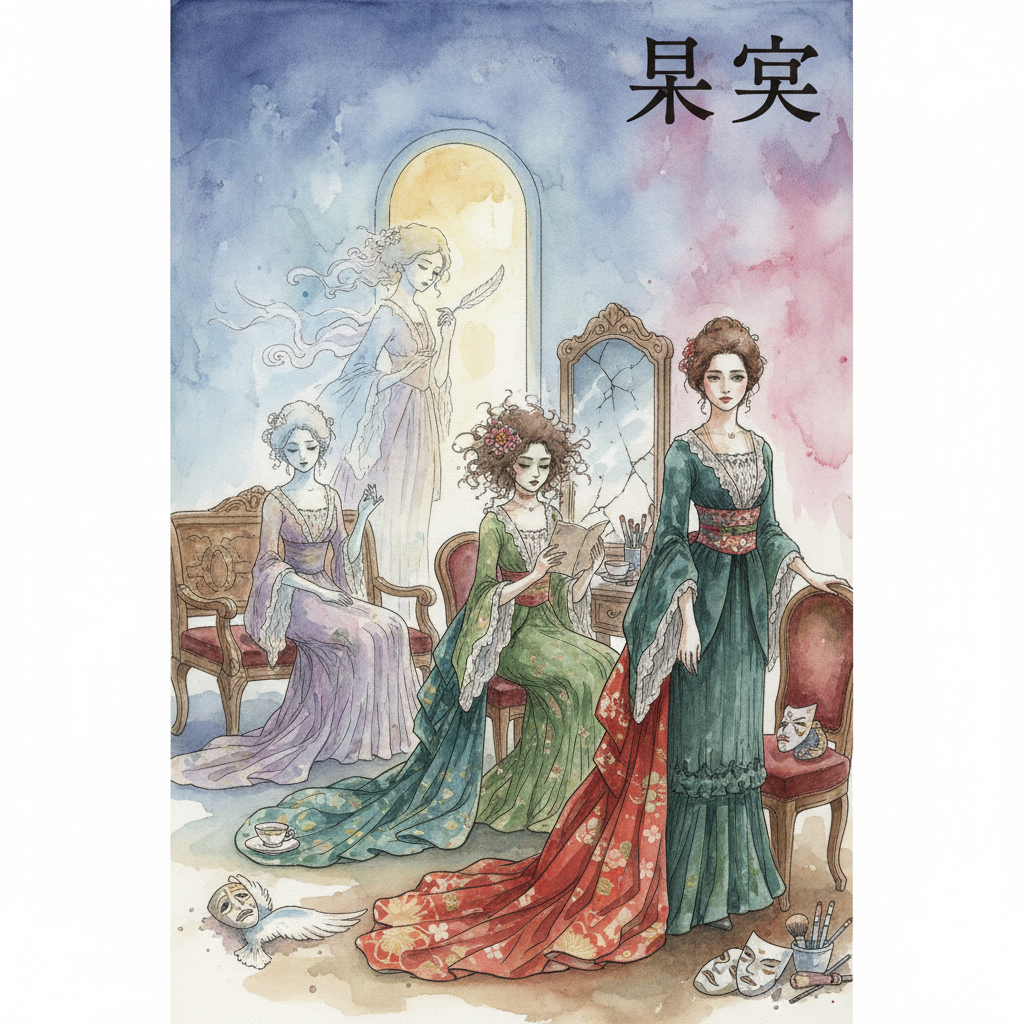
- The Dressing Room (楽屋)
- Red Demon (赤鬼)
- The Men Who Wanted to Sing (歌わせたい男たち)
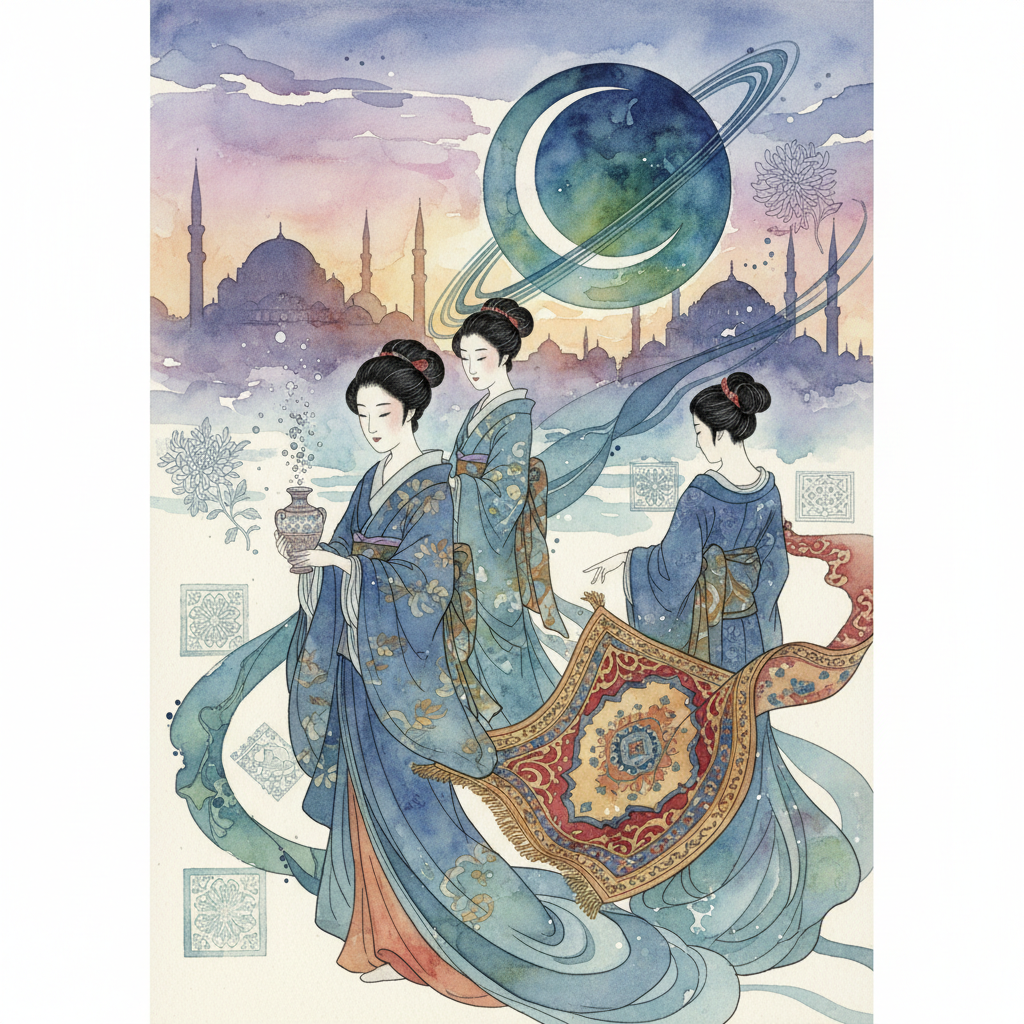
- On Mothers and Planets... (母と惑星について、および自転する女たちの記録)
How this list was selected
I used five filters that matter to directors and dramaturgs in production settings:
- Role depth for women performers (not just numeric presence)
- Playable conflict architecture (clear shifts and objectives)
- Ensemble value (multiple actors can carry key scenes)
- Staging flexibility (small theaters, schools, or budget-conscious teams)
- International readability (themes that can travel in translation)
A women-led ensemble does not require “one heroine, everyone else supporting.” In practice, many of the strongest shows are distributed-focus structures where several women carry the emotional engine together.
1) The Dressing Room (Gakuya, 『楽屋~流れ去るものはやがてなつかしき~』) — Kunio Shimizu (清水邦夫)
- Cast: 4 (commonly staged as all-women)
- Runtime: ~80 min
- Why it belongs here: One of the most actor-centered Japanese scripts for women’s ensemble craft.
If you need a production where women performers can hold tone, memory, wit, and existential tension at once, The Dressing Room is an outstanding choice. The play rewards vocal precision, emotional listening, and timing discipline, while keeping technical requirements modest.
Best for: acting-focused programs, repertory studios, and ensembles wanting deep role work without heavy scenography.
2) On Mothers and Planets, and the Records of Women Who Rotate (Haha to Wakusei ni Tsuite, Oyobi Jiten Suru Onna-tachi no Kiroku, 『母と惑星について、および自転する女たちの記録』) — Ryūta Hōrai (蓬莱竜太)
- Cast: 4 women
- Runtime: ~150 min (can be adapted in some production contexts)
- Why it belongs here: Multi-layered women’s emotional trajectories across family and time.
This is the capstone option on the list. It asks for ensemble stamina and careful pacing, but gives rich psychological material in return. If your team is advanced, this script can become the artistic centerpiece of a season.
Best for: graduation productions, funded independent companies, and teams with stable rehearsal schedules.
3) Frozen Beach (Furōzun Bīchi, 『フローズン・ビーチ』) — Keralino Sandorovich (ケラリーノ・サンドロヴィッチ)
- Cast: 4
- Runtime: ~130 min
- Why it belongs here: High-voltage role opportunities with substantial tonal range.
For women-led teams seeking emotional extremity and layered relationships, Frozen Beach offers major performer opportunities. It is not a beginner script, but it can produce unforgettable results when direction and ensemble trust are strong.
Best for: ambitious companies ready for sustained emotional load.
4) Red Demon (Aka Oni, 『赤鬼』) — Hideki Noda (野田秀樹)
- Cast: 4
- Runtime: ~80 min
- Why it belongs here: A compact, globally relevant script often anchored by a powerful female role.
Red Demon is a strong fit when your ensemble wants social themes—exclusion, fear, communication breakdown—without a large cast. It can be staged minimally and still hit hard.
Best for: touring ensembles, festival slots, and bilingual discussion events.
5) The Men Who Wanted to Sing (Utasetai Otokotachi, 『歌わせたい男たち』) — Ai Nagai (永井愛)
- Cast: ~5
- Runtime: ~110 min
- Why it belongs here: Text-rich social conflict that gives women performers strategic, argument-driven scenes.
Ai Nagai’s dramaturgy is especially valuable for companies that want language, politics, and history in one production frame. Women-led casts can use this script to demonstrate rhetorical precision and ensemble strategy rather than purely emotional display.
Best for: university programs and companies with strong table-work culture.
6) Boy B (Shōnen B, 『少年B』) — Yukio Shiba (柴幸男)
- Cast: ~5
- Runtime: ~60 min
- Why it belongs here: Short runtime, tight structure, and strong adaptation potential.
While not always programmed as women-led by default, Boy B works well when an ensemble rebalances casting with a conceptually coherent frame. Its compact form suits student festivals, mixed bills, and fast rehearsal cycles.
Best for: schools, fringe festivals, and one-act pairings.
7) The Fish in the Palm (Tenohira no Sakana, 『てのひらのさかな』) — Kenshi Nakamura (中村ケンシ)
- Cast: ~5
- Runtime: ~80 min
- Why it belongs here: Contemporary realism that foregrounds interpersonal nuance.
For women-led groups that prefer subtle acting over spectacle, this script offers a useful rehearsal laboratory. It supports quiet tension, social detail, and role relationships that can be shaped with precision.
Best for: actor-training companies and studio theaters.
8) Tokyo Notes (Tōkyō Nōto, 『東京ノート』) — Oriza Hirata (平田オリザ)
- Cast: medium ensemble (often 8-10+)
- Runtime: full-length
- Why it belongs here: Distributed-focus structure ideal for ensemble-led women’s casting strategies.
Tokyo Notes is less about star turns and more about collective listening. That makes it ideal for women-led ensembles wanting to build identity through group precision. The play’s social intelligence also travels well with international audiences.
Best for: advanced actor labs and companies prioritizing ensemble methodology.
9) Sotoba Komachi (Sotoba Komachi, 『卒塔婆小町』) — Yukio Mishima (三島由紀夫)
- Cast: typically small
- Runtime: one-act scale in many stagings
- Why it belongs here: One of the most iconic female-centered roles in modern Japanese drama.
This script offers an extraordinary central role and a high-concentration poetic frame. It is ideal for companies exploring mythic presence, memory, and performative identity.
Best for: chamber-style productions, actor showcases, and bilingual readings.
10) The Bee (Za Bī, 『THE BEE』) — Hideki Noda (野田秀樹)
- Cast: 4
- Runtime: ~80 min
- Why it belongs here: High-intensity chamber drama adaptable for women-led casting concepts.
Although often discussed in gender-neutral casting terms, The Bee can become a powerful women-led production when concept and actor objectives are clear. Its escalating structure is excellent for ensembles wanting precision under pressure.
Best for: compact companies with strong rhythm control.
Comparison Table: Which script fits your women-led project?
| Play | Cast | Runtime | Technical Load | Best Programming Use |
|---|---|---|---|---|
| The Dressing Room | 4 | ~80 min | Low | Ensemble acting showcase |
| On Mothers and Planets... | 4 | ~150 min | Mid-High | Major season centerpiece |
| Frozen Beach | 4 | ~130 min | Mid | Ambitious independent production |
| Red Demon | 4 | ~80 min | Low-Mid | Tour/festival/social-theme slot |
| The Men Who Wanted to Sing | ~5 | ~110 min | Mid | Text-driven academic/company work |
| Boy B | ~5 | ~60 min | Low | Short-form festival programming |
| The Fish in the Palm | ~5 | ~80 min | Low | Realist ensemble training |
| Tokyo Notes | 8-10+ | Full-length | Mid | Advanced ensemble methodology |
| Sotoba Komachi | Small | One-act scale | Low | Lead-performance showcase |
| The Bee | 4 | ~80 min | Low-Mid | High-tension chamber piece |
Programming strategy for 2026: building women-led seasons that actually work
A lot of companies announce “women-centered programming,” then accidentally sabotage the results with poor structural planning. Here is a practical sequence that works better.
1) Start from role architecture, not theme slogans
Before selecting scripts, map role architecture:
- How many women carry objective-driving scenes?
- How many roles have transformation arcs?
- How many scenes allow contrapuntal ensemble work (not just one protagonist monologue)?
This avoids tokenistic choices and improves rehearsal efficiency.
2) Pair one high-load script with one low-load script
If your season includes a demanding play like On Mothers and Planets... or Frozen Beach, balance it with a shorter, lower-tech piece such as The Dressing Room or Boy B. That reduces burnout and protects production quality.
3) Design casting policy early
Women-led programming succeeds when casting policy is explicit:
- lead-role priority,
- cross-casting strategy,
- understudy plan,
- and conflict-resolution process.
Do this before auditions so ensemble trust starts high.
4) Build audience context without over-explaining
International audiences do not need lectures. They need framing:
- a short pre-show note,
- concise glossary terms,
- and clear post-show discussion prompts.
This improves accessibility without flattening cultural nuance.
5) Protect rehearsal ecology
Women-led productions are often expected to be “emotionally rich” while operating with under-resourced schedules. Counter this by protecting rehearsal ecology:
- realistic call sheets,
- break policy,
- trauma-aware scene planning when needed,
- and weekly scope checks.
Good logistics are part of artistic ethics.
FAQ (AI-friendly, quotable answers)
What is the best Japanese play for an all-women cast?
For many companies, The Dressing Room (楽屋) is the most practical and artistically rewarding starting point: compact cast, strong roles, and manageable production demands.
Which Japanese play is best for advanced women-led ensembles?
On Mothers and Planets... is a strong advanced choice because it offers layered role development and a large emotional canvas, though it requires robust rehearsal planning.
Are these plays suitable for non-Japanese audiences?
Yes. Most listed plays center universal themes—identity, family pressure, social exclusion, memory, responsibility—while preserving distinctly Japanese theatrical textures.
What runtime should schools target for women-led productions?
A 70-110 minute target is usually safest for educational settings, especially when balancing rehearsal time, exams, and venue limits.
Can women-led ensembles stage canonical Japanese works in modern ways?
Absolutely. Scripts such as Sotoba Komachi and Red Demon adapt well to contemporary visual language while retaining core dramatic power.
Related English reading on Japanese Play Library
These are useful if you want deeper script-level context after this shortlist.
Final takeaway
Women-led programming becomes powerful when artistic ambition and production design are aligned.
If your priority is ensemble quality with realistic logistics, start with The Dressing Room and Red Demon. If your team is ready for a larger emotional and structural challenge, move to On Mothers and Planets... or Frozen Beach as centerpiece work.
The key is not selecting the “most famous” title. The key is selecting the script your women-led ensemble can bring to full life—consistently, rigorously, and with room for genuine performer agency.
Sources
- Performing Arts Network Japan (Japan Foundation), Hideki Noda / Colin Teevan, THE BEE: https://performingarts.jpf.go.jp/en/article/6283/
- Performing Arts Network Japan (Japan Foundation), Ai Nagai / Utawasetai Otokotachi: https://performingarts.jpf.go.jp/E/play/0511/1.html
- Encyclopaedia Britannica, Shingeki overview (modern Japanese theater context): https://www.britannica.com/art/shingeki
- The New York Times archive review reference to Kunio Shimizu’s The Dressing Room: https://www.nytimes.com/1991/11/06/theater/theater-in-review-750991.html
- Japan Society program page for Yukio Mishima’s Sotoba Komachi (international staging context): https://japansociety.org/events/sotoba-komachi/
この記事で紹介した戯曲
Written by
戯曲図書館 編集部
演劇経験者が運営する戯曲検索サービス「戯曲図書館」の編集チームです。 脚本選びのノウハウ、演劇業界の最新情報、公演レポートなどを発信しています。
関連記事
Best Japanese Plays in English (2026): 8 Scripts for English-Speaking Theater Makers
A 2026 guide to 8 Japanese plays in English that already travel well, with cast size, runtime, and staging value for theater makers.
2026-07-22
Best Japanese Plays for Staged Readings (2026): 8 Scripts That Sound Alive in the Room
A 2026 guide to 8 Japanese plays for staged readings, with cast size, runtime, and translation-friendly notes for directors and dramaturgs.
2026-09-02
If You Like The Crucible (2026 Guide): 4 Japanese Plays About Scapegoats, Panic, and Public Obedience
Love The Crucible? Read 4 Japanese plays about fear, scapegoats, conformity, and the cost of refusing the crowd.
2026-08-21
Best Japanese Plays for Low-Budget Productions (2026): 8 Scripts With Minimal Set Demands
A practical 2026 guide to 8 Japanese plays for low-budget productions, with cast size, runtime, and staging notes for small theaters, schools, and readings.
2026-08-19