
目次9項目開く
10 Best Japanese Plays for One-Act Theater Festivals and Short Showcases
A one-act theater festival needs a play that can create a complete world in a limited amount of time, space, and rehearsal. The best Japanese plays for this format are not simply “short”; they have a strong theatrical engine, a manageable cast, and an ending that leaves an audience with something to discuss.
This guide recommends ten Japanese plays from the Japanese Play Library for one-act festivals, black-box programs, student showcases, and multi-bill evenings. The list is organized for directors and theater-makers who need to compare scripts before committing to a production. It focuses on plays with listed runtimes of approximately 60–100 minutes and casts that can work in an intimate venue. Runtime and cast information are catalog data; the actual requirements should be confirmed with the rights holder and the script before production.
Quick Facts
| Question | Answer |
|---|---|
| Best audience | Directors, actors, student companies, and festival programmers |
| Typical format | One-act bills, short showcases, black-box performances, and staged readings |
| Recommended runtime | 60–100 minutes |
| Recommended venue | Small or flexible studio theater |
| Number of plays | 10 |
| Rights note | Check performance rights, translation rights, and adaptation permission before rehearsal |
Why one-act festivals suit Japanese plays
A festival program changes how a script is experienced. The audience may see three or four works in one evening, so every play needs a distinct identity. A production cannot depend on a long exposition period or a large scenic build. It must establish its rules quickly, make the room feel different, and give the performers a precise shared task.
That is one reason short-form theater has an important place in Japan. The Kyobun Short Theater Festival in Sapporo describes a continuing festival culture built around short works, workshops, and applications from companies across Japan. The long-running INDEPENDENT festival, based in Osaka, has developed a national network around solo performance. Tokyo’s One Act Musical Festival has also shown how separate companies can share a common stage and present different original works in a single program. These formats are not identical, but they demonstrate the practical value of a compact theatrical form: artists can test an idea, audiences can compare approaches, and a venue can host several complete worlds without changing its architecture.
For an international director, the one-act format also offers a useful translation advantage. A shorter script gives the creative team a contained unit to translate, dramaturgically analyze, workshop, and perform. That does not make the work easy. Japanese dialogue often carries rhythm, social distance, implied history, and wordplay that cannot be transferred word for word. But the production problem is easier to define when the script has a clear boundary.
For background, see How to Find Japanese Plays to Stage and How Japanese Play Readings Work.
How to choose a play for a festival
Before looking at individual titles, decide what kind of festival slot you are filling.
1. Check the shape of the bill
A 60-minute intimate dialogue play will feel different when placed next to a 90-minute ensemble piece. If the program includes several works, vary the emotional temperature and visual language. Do not schedule three domestic realism plays that all use the same kind of room, even if each script is strong.
2. Separate cast size from casting flexibility
A catalog entry may list a total cast of five, but the script may require performers to double roles, change status quickly, or remain on stage for most of the performance. Conversely, a ten-person play may be practical for a student ensemble if the characters share the stage and the set is simple. Read the casting notes, not only the number.
3. Treat runtime as a production estimate
A listed runtime is a useful comparison point, not a guarantee. Translation, pauses, music, movement, and audience interaction can change the length. Build a workshop schedule that includes a timed reading before you announce the program.
4. Ask what the play makes possible
The strongest festival choice is not necessarily the easiest script. It is the play that gives your company a specific artistic problem: how to make an ordinary room unstable, how to let silence carry a relationship, or how to move from comedy into danger without changing the set.
10 recommended Japanese plays
1. Huckleberry ni Sayonara o (ハックルベリーにさよならを) — Yutaka Narui (成井豊)
Catalog profile: 8 actors; approximately 60 minutes.
Read the catalog entry for Huckleberry ni Sayonara o
This is a strong choice for a festival that wants emotional clarity without a heavy technical burden. The play begins with two sixth-grade boys and a woman connected to one boy’s family. A seemingly small encounter becomes a story about independence, family change, and the moment when children begin to understand that adults are not fully in control of their own lives.
The script offers a useful balance between youthful energy and adult uncertainty. It can work particularly well for a company that wants to foreground actors rather than spectacle. The director should resist making the boys’ world overly cute. The emotional movement depends on the characters’ partial understanding of what is happening around them.
For a short showcase, the main question is pace. The early scenes need to feel active and specific, while the later emotional turns need room to land. A simple domestic environment can be enough if the actors make the relationships legible.
2. Nanabun no Ichi no Hiketsu (七分の一の秘訣) — Toshiro Suzue (鈴江俊郎)
Catalog profile: 5 actors; approximately 60 minutes.
Read the catalog entry for Nanabun no Ichi no Hiketsu
This compact play is built around two people who continue talking after emotional damage has made ordinary comfort impossible. The result is not a conventional recovery story. Conversation becomes a way of remaining present when neither person has a satisfying explanation for what happened.
It is an excellent option for a festival looking for a concentrated actor-led work. The production can remain visually spare, but the dialogue must not become flat. The pauses, evasions, changes of subject, and attempts to control the conversation are part of the action.
The play may suit a bill about intimacy, loneliness, or contemporary relationships. It also gives translators a clear dramaturgical challenge: preserve the awkwardness without making the exchanges sound unnatural in English. A polished translation that removes every hesitation would weaken the play’s human texture.
3. Panorama Beer no Yoru (パノラマビールの夜) — Nami Kuno (久野那美)
Catalog profile: 6 actors; approximately 60 minutes.
Read the catalog entry for Panorama Beer no Yoru
A traveler arrives at an almost empty observation deck with a large box and a song that he cannot finish. A woman working at the concession stand invites him to share a beer, and a group connected to an astronomy club enters the night. The play’s situation is simple, but its atmosphere is open-ended and gently strange.
This is a good selection for a festival that needs a change of temperature after a more confrontational work. The observation deck can be created with light, sound, and a few objects rather than a literal scenic build. The night sky should not become a decorative projection that explains the mood; it is more interesting as an unseen space that changes how the characters speak.
Directors should pay attention to the play’s ensemble rhythm. The group arrival is not merely an increase in cast size. It changes the social geometry of the scene, turning an apparently private encounter into a temporary community.
4. Tenohira no Sakana (てのひらのさかな) — Kenshi Nakamura (中村ケンシ)
Catalog profile: 5 actors; approximately 80 minutes.
Read the catalog entry for Tenohira no Sakana
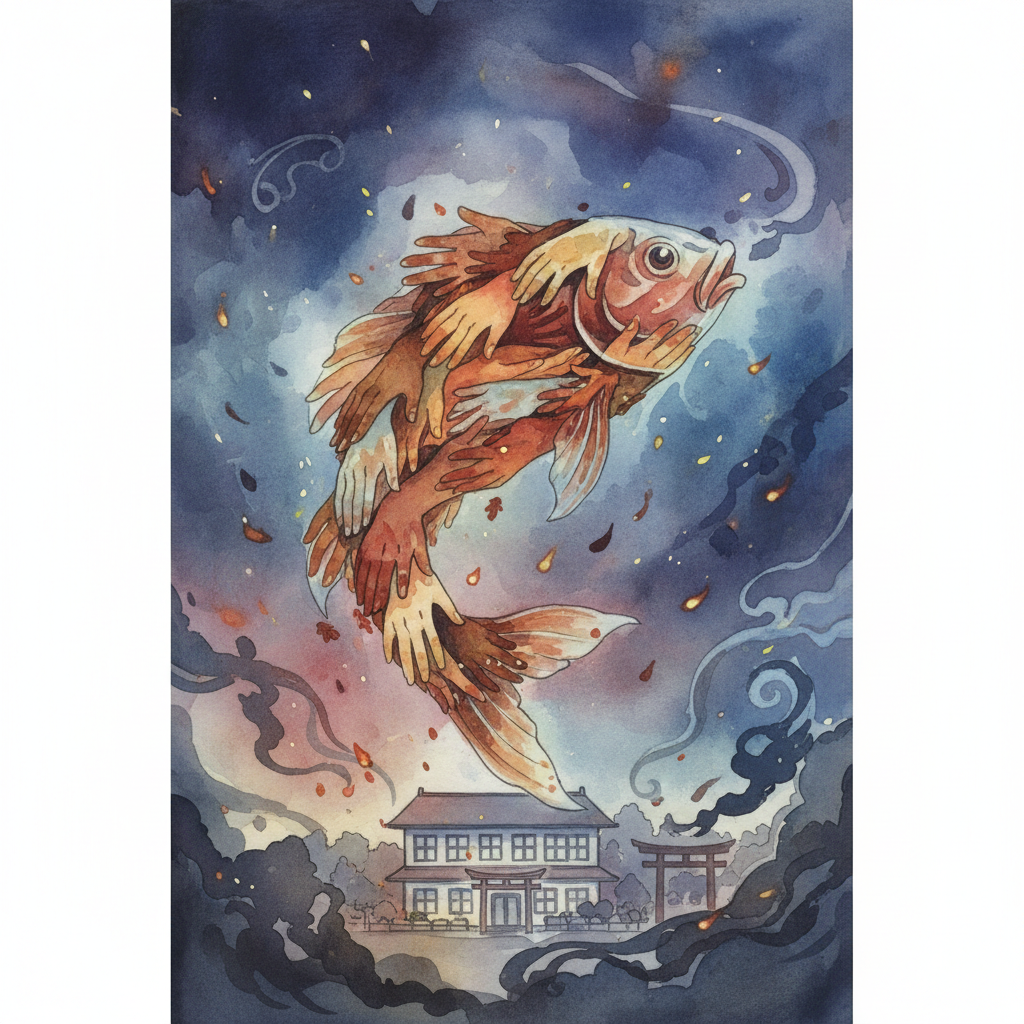
Set after a kindergarten presentation festival, this play allows ordinary institutional life to become unsettling. A small fire and reports of a suspicious person disturb the environment, while the characters’ private concerns begin to surface. The image of the hand gives the play a physical and symbolic center.
It is especially suitable for a festival interested in how a familiar community can become unstable. The setting does not need to be reproduced literally. A few traces of the recently completed event—paper decorations, a table, leftover materials—can suggest a whole social world that is already beginning to come apart.
The script offers actors a useful tension between recognizable behavior and unexplained pressure. Avoid turning the disturbing elements into a genre thriller. The more carefully the production observes everyday behavior, the more forcefully the underlying unease can emerge.
5. Omote ni Deroi! (表にでろいっ!) — Hideki Noda (野田秀樹)
Catalog profile: 3 actors; approximately 80 minutes.
Read the catalog entry for Omote ni Deroi!
This is the most compact casting proposition on the list. A family’s intense attachments—to an amusement park, an idol, and fast food—become a comic pressure cooker. The play examines the point at which preference begins to resemble belief, using speed, exaggeration, and verbal play.
Three actors can make this a powerful festival piece, but the small cast does not mean a small performance. The production needs a shared rhythm and a clear escalation. If every line is played at maximum volume, the structure disappears. The actors should establish ordinary family habits before allowing the obsessions to take over.
For an English-language production, wordplay is a major translation issue. The goal is not to reproduce every Japanese pun. The goal is to reproduce the collision between speed, conviction, and family irritation. A dramaturgical translation may be more useful than a literal one, provided the rights holder approves the process.
6. Amae (甘え) — Yukiko Motoya (本谷有希子)
Catalog profile: 5 actors; approximately 90 minutes.
Read the catalog entry for Amae
This relationship drama uses five people to explore dependence, self-protection, and the uncomfortable boundary between asking for care and demanding it. The title refers to a culturally specific idea that is often translated too quickly as “dependence” or “spoiling.” In performance, the word is better treated as a field of behavior rather than a single English equivalent.
The play is a strong fit for a festival centered on contemporary relationships, gender, or social performance. Its value for actors lies in the fact that no character needs to be reduced to a single position. People can be needy, manipulative, frightened, generous, and perceptive in the same scene.
The director should keep the social stakes visible even when the dialogue becomes funny. Comedy is not a release from the tension; it is one of the ways the characters negotiate it. A naturalistic set can work, but the blocking should reveal who is seeking the center of the room and who is trying to escape it.
7. Inu ga Nishi Mukya Shippo wa Higashi (犬が西向きゃ尾は東) — Minoru Betsuyaku (別役実)
Catalog profile: 6 actors; approximately 100 minutes.
Read the catalog entry for Inu ga Nishi Mukya Shippo wa Higashi
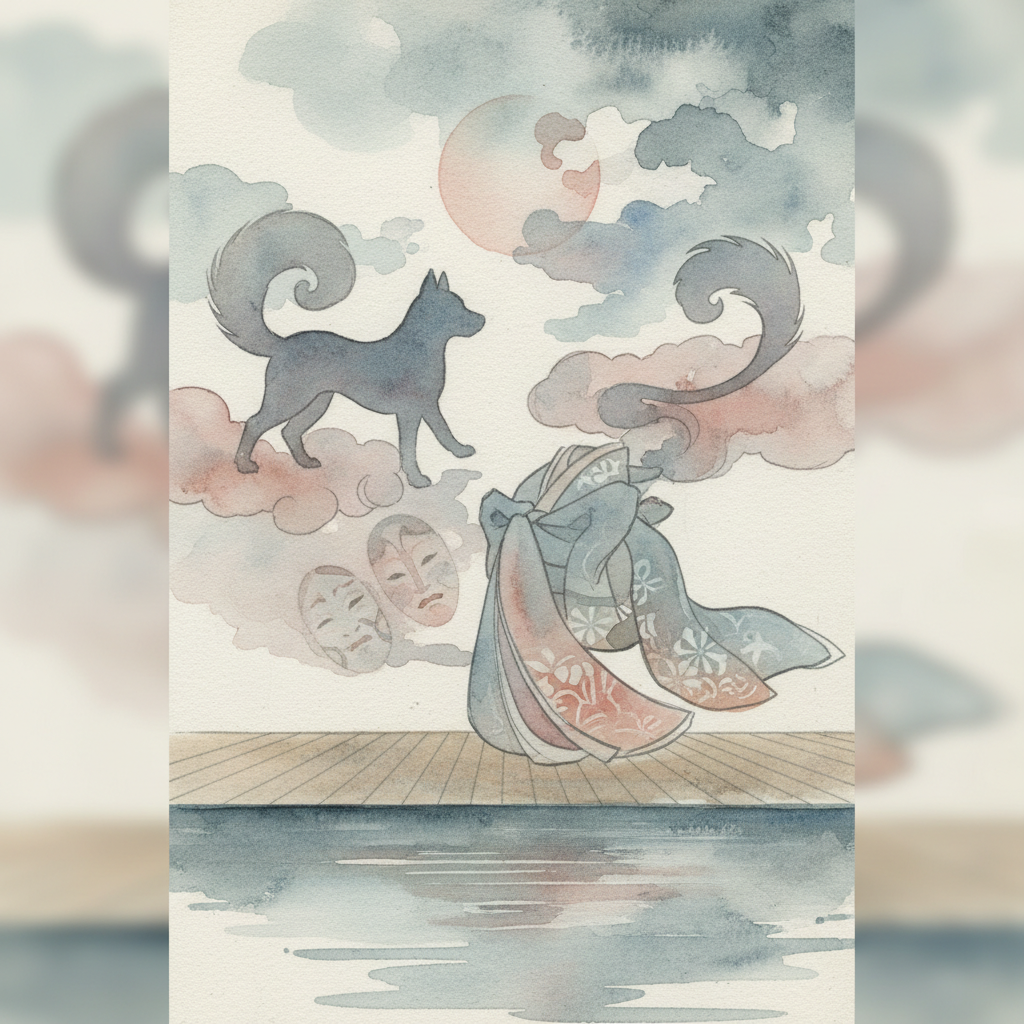
The title invokes an obvious relationship—if a dog faces west, its tail faces east—then allows that obviousness to become unstable. As with much of Betsuyaku’s work, the ordinary world is not destroyed by a spectacular event. It becomes strange because familiar relationships no longer behave as expected.
At approximately 100 minutes, this is one of the longer choices here, so it may be better for a headline slot than for a crowded rapid-fire program. Its festival strength is its ability to make a small venue feel philosophically off-balance. The audience does not need a large set; it needs a precise set of rules that the production can gradually violate.
The key rehearsal task is listening. Actors must play the language as if the characters are trying to solve a practical problem, even when the logic of the world keeps slipping. If the performers announce the absurdity, the audience has nowhere to discover it.
8. Kowareta Fūkei (壊れた風景) — Minoru Betsuyaku (別役実)
Catalog profile: 7 actors; approximately 90 minutes.
Read the catalog entry for Kowareta Fūkei
This is another Betsuyaku recommendation, but it offers a different festival experience from Inu ga Nishi Mukya Shippo wa Higashi. The central image is a familiar daily landscape that begins to break. The production challenge is to show collapse without relying on expensive destruction or literal transformation.
A director might place it in a bill about unstable reality, memory, or the failure of shared language. The cast of seven is large enough to create shifting social formations while remaining practical for a studio company. Ensemble attention matters: the audience should feel that the landscape is breaking for everyone, not only for the character who first notices it.
The most effective design may be almost invisible at first. A repeated sound, a misplaced object, or a change in how actors cross the room can make the environment increasingly unreliable. The play rewards a production that trusts accumulation.
9. Danshiko ni wa Ijime ga Sukunai? (男子校にはいじめが少ない?) — Mariko Ono (オノマリコ)
Catalog profile: 10 actors; approximately 60 minutes.
Read the catalog entry for Danshiko ni wa Ijime ga Sukunai?
Set in a boys’ dormitory, this short ensemble play follows teenagers whose joking, fantasies, self-questioning, and sense of time create a dense portrait of adolescence. The title is deliberately framed as a question rather than a conclusion. That distinction matters: the play is not a simple statement about bullying or school culture.
This is a useful choice for a youth theater, university theater, or festival with a larger ensemble. Ten actors can create the feeling of a group without requiring a complicated set. The director should avoid assigning every character a fixed psychological label. The energy comes from the group’s ability to shift between play, cruelty, intimacy, and boredom.
Because the characters are young, an international production should take safeguarding and rehearsal culture seriously. Establish clear boundaries around physicality, insults, and improvisation. A strong production can preserve the roughness of adolescent interaction without asking performers to reproduce harmful behavior casually.
10. Gōfu Taifūn (富豪タイフーン) — SaliNGROCK (サリngROCK)
Catalog profile: 6 actors; approximately 100 minutes.
Read the catalog entry for Gōfu Taifūn
A wealthy household becomes the site of a fast-moving comic disturbance. The work is useful for a festival that wants a broad, high-energy ensemble piece after several more inward-looking dramas. Its theatrical engine is clear: a confined social environment, strong character types, and a chain of events that can accelerate without requiring a large set.
The production challenge is to make the comedy precise rather than merely loud. Give each character a different relationship to status, money, and the household. The audience should understand why each person remains in the room even when leaving would seem sensible. That pressure turns farce into structure.
At around 100 minutes, it is better suited to a main program slot or a two-work bill than to a five-play sampler. It can also provide a useful contrast with a quiet piece such as Nanabun no Ichi no Hiketsu: one depends on conversational fragility, the other on social collision.
Suggested festival groupings
| Festival theme | Possible program |
|---|---|
| Family and growing up | Huckleberry ni Sayonara o + Omote ni Deroi! |
| Unstable everyday life | Kowareta Fūkei + Tenohira no Sakana |
| Intimacy and dependence | Nanabun no Ichi no Hiketsu + Amae |
| Night, chance, and community | Panorama Beer no Yoru + Kowareta Fūkei |
| Youth ensemble | Danshiko ni wa Ijime ga Sukunai? + a short staged reading |
These are programming suggestions, not claims that the plays share the same rights status or production requirements. Confirm permissions separately for every title.
Translation and performance-rights checklist
Before announcing a festival production, confirm the following:
- Who controls the performance rights? The catalog entry is a discovery tool, not a substitute for permission.
- Is an English translation available? If not, ask whether a new translation may be commissioned.
- Can the translation be adapted for local performers? Discuss cuts, cultural references, names, and wordplay before rehearsal.
- Are subtitles or surtitles allowed? This may affect the timing and layout of the performance.
- Can the play be performed in a double or triple bill? Some agreements treat festival presentation differently from a standalone production.
- What must be credited? Include the playwright, translator, original title, and any required adaptation credit.
- What changes the runtime? A translated line may take longer to speak; songs, movement, and pauses may add time.
The Agency for Cultural Affairs’ National Arts Festival shows the breadth of contemporary and traditional performance supported in Japan, while international programs such as Tokyo Festival’s English-language listings demonstrate that Japanese work can be presented with useful access information for audiences outside Japan. Those examples are encouraging, but they do not remove the need to negotiate rights title by title.
FAQ
What is the best Japanese play for a first one-act festival?
For a company seeking a contained starting point, Huckleberry ni Sayonara o and Nanabun no Ichi no Hiketsu are practical candidates because their listed runtimes are approximately 60 minutes and their dramatic centers are clear. The best choice still depends on your performers, translation resources, and rights situation.
Are these plays in the public domain?
Do not assume that any title is public domain. Modern Japanese plays generally require permission for performance and translation. Contact the relevant rights holder before copying, translating, adapting, or staging a script.
Can I perform a Japanese play in English?
Often, but permission is required. You may need separate authorization for performance, translation, adaptation, recording, and streaming. Ask for written confirmation of the permitted use.
Which recommendation is best for a small cast?
Omote ni Deroi! has a listed cast of three and is the clearest small-cast option in this guide. Nanabun no Ichi no Hiketsu is also attractive for a compact production, although the catalog lists five actors.
Which play works best for a larger student ensemble?
Danshiko ni wa Ijime ga Sukunai? lists ten actors and is built around group energy. Kowareta Fūkei and Panorama Beer no Yoru can also support ensemble-focused staging, but the director should study how the characters share space before casting.
Does “one-act” always mean under 60 minutes?
No. “One-act” describes the structure, not one universal runtime. A one-act work may be 30 minutes, 60 minutes, or longer. For a festival, use the catalog runtime as a planning estimate and confirm it through a timed reading.
Final recommendation
Start with the needs of your festival rather than with a famous name. Choose the script whose cast, rhythm, translation problem, and design constraints give your company a clear artistic task. A good one-act play does not feel like a shortened full-length play. It feels complete because every entrance, silence, object, and turn of language is working toward the same pressure point.
The Japanese Play Library is a useful place to compare titles, authors, cast information, and estimated runtimes. Use it to build a shortlist, then read the scripts and contact the rights holders. For an international production, the most respectful process is also the most practical: understand the original, negotiate the permission, credit the creative chain, and let the new performance become a conversation rather than a replacement.
Sources and further reading
この記事で紹介した戯曲



戯曲図書館 編集部・公開日 2026/11/04
演劇経験者が運営する戯曲検索サービスの編集チームです。脚本選びのノウハウ、演劇の最新情報、公演レポートなどを書いています。
関連記事
- How to Choose Japanese Plays for Staged Readings in English (2026 Practical Guide)A practical 2026 guide to choosing Japanese plays for staged readings in English, from cast size and rights to translation fit and audience appeal.2026/07/21
- Best Japanese Plays for High School Drama Clubs: 10 Practical Scripts by Cast Size, Runtime, and ThemeA practical English guide to 10 Japanese plays for high school drama clubs, with cast breakdowns, runtime fit, staging tips, and notes on English translation or international visibility.2026/04/06
- Play Spotlight: A Parched Mirage (渇いた蜃気楼) by Tsuyoshi Tanabe (田辺剛)Discover Tsuyoshi Tanabe's A Parched Mirage, a three-person Japanese drama about water scarcity, marital silence, and the politics of everyday survival.2026/11/02
- How to Find Japanese Plays to Stage in English (2026): A Practical Workflow for DirectorsA practical 2026 workflow for finding Japanese plays, checking cast size, translation, rights, and developing an English-language production.2026/10/27