目次14項目開く
- 1.Quick facts
- 2.1. Start with a production brief, not a famous name
- 3.2. Use a database as a discovery tool, not as a rights guarantee
- 4.3. Filter by cast size and runtime before falling in love with the text
- 5.4. Read the synopsis for dramatic behavior, not only subject matter
- 6.5. Separate translation access from translation quality
- 7.6. Treat translation as dramaturgy and rehearsal, not clerical conversion
- 8.7. Check performance rights and translation rights separately
- 9.8. Choose the right first format
- 10.9. Build an international audience without flattening the play
- 11.10. A 30-day shortlist workflow
- 12.Frequently asked questions
- 13.Final checklist
- 14.Sources and further research
How to Find Japanese Plays to Stage in English (2026): A Practical Workflow for Directors
The most reliable way to find a Japanese play for an English-language production is to treat discovery, translation, rights, and development as four connected tasks—not as four separate searches.
That distinction matters. A play may look perfect in a catalogue but be difficult to license. A synopsis may sound easy to translate while the dialogue depends on social registers that disappear in English. A script may have a manageable cast but require a production structure that your company cannot support. Conversely, a play with no ready-made English translation may become an excellent project if you build the right collaboration around it.
This guide is for directors, producers, dramaturgs, translators, university companies, and small theaters outside Japan who want to explore contemporary Japanese drama in 2026. It focuses on a practical workflow: how to build a shortlist, what information to collect, how to test a script before committing, and how to avoid the most common rights and translation mistakes.
Quick facts
| Question | Practical answer |
|---|---|
| Best first step | Build a shortlist from a reliable Japanese play database |
| Minimum information to collect | Playwright, title, year, cast estimate, runtime, genre, synopsis, rights contact |
| Translation assumption to avoid | A Japanese script is not automatically available for English production |
| Best low-risk development format | Private table read, workshop, or staged reading with permission |
| Rights issue to check first | Performance rights and translation/adaptation rights |
| Useful planning horizon | Begin rights and translation inquiries several months before rehearsal |
| Best final test | Hear a representative scene aloud with actors and a dramaturg |
1. Start with a production brief, not a famous name
Before searching for titles, write a one-page production brief. This prevents the catalogue from deciding your project for you.
Your brief should answer seven questions:
- How many performers can you actually cast?
- What is the maximum running time?
- What kind of space will you use?
- Is the project a reading, workshop, full production, or festival presentation?
- Who is the audience?
- What translation resources do you have?
- What is your rights and rehearsal budget?
A company with three actors, one translator, and a black-box venue should not begin by searching for “the most important Japanese play.” It should search for plays that can survive its actual conditions. A two-hander with a concentrated setting may be more valuable than a celebrated ensemble work that cannot be translated or staged within the available resources.
This is also where you decide whether “Japanese play” means a play written in Japanese, a play set in Japan, a play by a Japanese playwright, or a text connected to a specific theatrical tradition. Those are different searches. Shingeki (新劇, modern drama influenced by Western realism), angura (アングラ, underground theater), contemporary colloquial drama, documentary theater, and traditional forms adapted for modern stages will produce very different shortlists.
2. Use a database as a discovery tool, not as a rights guarantee
The Japanese Play Library is useful for discovering scripts and playwrights through practical information such as cast size, estimated runtime, categories, and thematic descriptions. For an international director, that metadata is valuable because it allows an initial search before you can read every Japanese-language page fluently.
The Playtext Digital Archives operated by the Japan Playwrights Association has a related but distinct purpose. Its stated goals include preserving playtexts and clarifying access and rules for obtaining performance permission. That makes it especially useful when you move from “What exists?” to “How do I investigate access?”
Neither kind of database should be treated as a statement that a work is free to perform. A listing tells you that a play exists and may provide a route toward the relevant author, publisher, company, or rights organization. It does not replace permission.
For each candidate, create a research sheet with these fields:
- Japanese title and romanized title
- Playwright’s name in romanization and kanji
- Original language
- First performance or publication year, if available
- Estimated runtime
- Cast size and whether doubling appears practical
- Gender or age notes in the casting requirements
- Setting and technical demands
- Genre or theatrical lineage
- Availability of a Japanese script
- Availability of an authorized English translation
- Rights holder or contact route
- Whether a workshop or reading is already documented
- Your reason for considering the play
The last field is essential. “It is famous” is not a production reason. “The pauses create a playable score for three actors,” “the structure matches our festival theme,” or “the play can be tested through a reading before a full design commitment” is a production reason.
3. Filter by cast size and runtime before falling in love with the text
Cast size is not just a budget category. It changes the dramatic architecture of a play.
A script listed as having four characters may still require four distinct bodies on stage. Another play may have six named roles that can be doubled. A large ensemble may be reducible, but only if the doubling is theatrically meaningful and permitted by the rights holder. Do not assume that a smaller cast is automatically an acceptable adaptation.
Use a first-pass filter like this:
| Production condition | What to look for | What to ask next |
|---|---|---|
| One or two actors | Concentrated relationship, monologue structure, clear role separation | Can the translation preserve the rhythm without adding explanatory text? |
| Three to five actors | Flexible doubling, limited locations, strong scene transitions | Are role changes clear to an English-speaking audience? |
| Six to ten actors | Ensemble relation, manageable design, distinct group functions | Does the play depend on Japanese social hierarchy or group speech? |
| Large ensemble | Chorus, community, historical scale, multiple viewpoints | Is a licensed adaptation possible, or is the original scale essential? |
| Short festival slot | One-act structure or modular scenes | Can the text stand without a long cultural introduction? |
| Full evening | Sustained conflict, transformation, or formal development | Does the middle of the play remain active in translation? |
Runtime also deserves caution. A Japanese listing may describe only the approximate performance length, not the total event duration. A traditional production may include an explanation, intermission, or multiple pieces. A contemporary play may expand or contract in workshop. For planning, mark runtime as an estimate until you have a script and a reading.
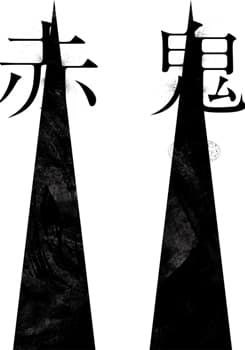
If you want a concrete example of a practical first reading, compare the database information for Human Pavilion (人類館, Jinruikan), Shintoku-maru (身毒丸), and Red Demon (赤鬼, Aka Oni). These works belong to very different theatrical worlds. The point is not that one is “best,” but that a director can compare scale, form, historical context, and likely translation questions before choosing a project.
4. Read the synopsis for dramatic behavior, not only subject matter
A synopsis tells you what happens. It does not always tell you how the play behaves in performance.
When screening a Japanese play for English production, ask the following questions:
Does the play depend on silence?
Silence can be structural, psychological, social, or comic. In Japanese, a pause may carry a relationship that English speakers would normally express through a sentence. A translator should not automatically fill every pause with explanation.
Does the play depend on levels of address?
Japanese distinguishes relationships through speech choices, honorifics, pronouns, sentence endings, and omissions. English has fewer direct equivalents. A good translation may need to distribute that information across syntax, rhythm, vocabulary, physical behavior, or staging.
Does the play depend on shared cultural knowledge?
The answer is not “reject it.” Cultural specificity is often the reason to stage a work. The practical question is whether the audience can encounter that specificity through context, program notes, design, or performance rather than through a lecture inserted into the dialogue.
Does the play depend on a company’s established style?
Some Japanese playwrights write closely with a particular company, director, or group of performers. The published text may be only one layer of the theatrical event. Find out whether the play has a stable script, a production-specific version, or a history of adaptation.
Does the play create meaning through sound?
Puns, repeated syllables, dialect, verbal hesitation, and shifts in register may be central. Mark these passages early. They are not problems to solve at the end of translation; they are design questions for the whole development process.
5. Separate translation access from translation quality
“An English translation exists” is not enough information. You need to know what kind of translation it is.
Possible situations include:
- an authorized published translation;
- a translation commissioned for one production;
- a reading translation that has not been licensed for performance;
- a draft translation shared privately for development;
- a scholarly translation intended for study;
- a machine-assisted or fan translation with unclear provenance;
- a partial sample translation rather than a complete script.
These categories are not interchangeable. A published translation may have territorial restrictions. A reading translation may require a new agreement for a public production. A scholarly translation may be accurate for study but awkward to speak. A sample translation can help you decide whether to proceed, but it is not a full production text.
The Japan Foundation’s theatrical translation and publication work demonstrates why the distinction matters. Its program has supported translations of works by Japanese playwrights including Ichihara Satoko (市原佐都子), Kuwabara Yuko (桑原裕子), Maekawa Tomohiro (前川知大), Maeda Shiro (前田司郎), and Yokoyama Takuya (横山拓也), among others. Such projects make particular plays more visible internationally, but they do not mean that every Japanese play has a ready-made English edition.
If no authorized translation exists, your next step is not to translate the entire script on speculation. Commission a short sample—often a synopsis, character list, and representative scene—under an agreement that defines who may use it and for what purpose. This gives the artistic team enough material to test the play while protecting the author, translator, and producer.
6. Treat translation as dramaturgy and rehearsal, not clerical conversion
A stage translation has to be speakable, playable, and culturally responsible. Those goals overlap, but they are not identical.
The Performing Arts Network Japan interview with Polly K. Carl about the U.S.–Japan playwright exchange offers a useful model. The process described there included translated biographies and synopses, sample script translation, Japanese and American translators, dramaturgs, workshops, and public staged readings. The work required substantially more time because the development happened across Japanese and English at every stage.
That is a realistic model for international production. A translator should not be left alone with the script until the final week. Invite the translator into table work. Ask actors where a line feels impossible to say, where a relationship becomes unclear, and where the English rhythm creates an unintended character. Ask the dramaturg which cultural information must be preserved, which can be contextualized, and which should remain unexplained.
A useful development sequence is:
- Translate the synopsis and character information.
- Translate one representative scene.
- Hold a private table read.
- Record questions from actors and director.
- Revise the sample scene.
- Confirm the rights route before expanding the translation.
- Hold a workshop or staged reading with permission.
- Decide whether a full production is artistically and practically justified.
This sequence is slower than downloading a script and announcing a season. It is much faster than discovering during technical rehearsals that the play’s central engine cannot survive the chosen translation.
For a deeper look at this development format, see How Japanese Play Readings Work (2026) and How to Choose Japanese Plays for Staged Readings (2026).
7. Check performance rights and translation rights separately
Copyright questions are often compressed into one vague question—“Can we perform this?”—but several permissions may be involved.
The Agency for Cultural Affairs explains that Japanese copyright includes stage performance rights and translation or adaptation rights. A production may therefore need permission not only to perform the original work, but also to use an English translation, adapt the text, change the number of characters, cut scenes, or alter the setting.
Before you spend money on a full translation, ask the rights contact:
- Who controls the performance rights?
- Who controls the translation and adaptation rights?
- Is there an authorized English translation already available?
- Is the permission territorial or worldwide?
- Is it limited to a reading, workshop, festival, or full production?
- Is the permission limited to a number of performances?
- Are cuts, doubling, gender changes, or localization allowed?
- Must the author approve the translation or rehearsal changes?
- What credit wording is required?
- Are recording, streaming, archival, or educational uses covered?
- What fees, royalties, or reporting obligations apply?
Do not infer permission from public availability. A playtext online may be readable but not freely performable. A translation posted on a website may be unauthorized. A past production in another country may have had a specific agreement that does not extend to your company.
Keep a written rights record. Save the contact name, date, exact permission scope, approved script version, and any conditions. If the answer is unclear, pause the project rather than filling the gap with an assumption.
8. Choose the right first format
A full production is not always the best first public encounter with an unfamiliar Japanese play.
Private table read
Best when you are still testing language, character relationships, and basic theatrical viability. Keep the group small and make the purpose explicit: exploration, not an informal performance.
Workshop
Best when the translation needs physical testing. A workshop can reveal whether a repeated gesture, silence, spatial pattern, or role doubling survives outside the original production context.
Staged reading
Best when you want an audience response without committing to full design. It can also create a meaningful event around a translated play, especially when the author, translator, or dramaturg can join a discussion.
Full production
Best when rights, translation, rehearsal time, design requirements, and audience framing are all secure. A full production should be the result of development, not a substitute for it.
The format should match the question you are trying to answer. If the question is “Can this dialogue work in English?”, hold a reading. If the question is “Can this play’s physical world be built in our venue?”, hold a workshop. If the question is “Will a public audience understand the cultural frame?”, present a carefully contextualized reading before designing a full production.
9. Build an international audience without flattening the play
English-language presentation does not require turning a Japanese play into a generic global play.
Provide the audience with useful access points:
- a concise English synopsis;
- playwright biography with romanization and kanji;
- a short note about the theatrical tradition or social context;
- a pronunciation guide for names that matter;
- clear information about captions, surtitles, or language use;
- a program note that identifies adaptation or translation choices;
- a post-show conversation when the format supports it.
Avoid two opposite mistakes. The first is exoticizing the play as a window into an abstract “Japanese culture.” The second is erasing the work’s local conditions until it sounds like an interchangeable English-language drama.
A strong production lets the audience understand enough to enter the work while preserving what is unfamiliar. If a character’s indirectness, social rank, family obligation, or historical reference matters, make it legible through the total event—not by forcing every explanation into a line of dialogue.
10. A 30-day shortlist workflow
If you are beginning from zero, use this schedule.
Days 1–3: Define the project
Write the production brief. Set cast, runtime, venue, audience, budget, and format limits. Decide whether you are seeking a contemporary play, a postwar work, a traditional-form adaptation, or a specific theme.
Days 4–7: Generate 15 candidates
Search the Japanese Play Library, Playtext Digital Archives, playwright profiles, festival programs, and translation projects. Record every candidate in the same spreadsheet. Do not rely on memory or browser bookmarks.
Days 8–10: Reduce to six
Remove works with an obvious mismatch in cast, runtime, technical demands, or audience. Keep a range: two easy candidates, two ambitious candidates, and two works that are artistically surprising.
Days 11–15: Investigate access
Check the Japanese script route, rights contact, translation status, previous international activity, and whether a short sample can be commissioned. Contact rights holders before announcing the project publicly.
Days 16–20: Read samples aloud
Do not evaluate only on the page. Hear representative scenes. Test the opening, a scene of conflict, a quiet scene, and a scene with culturally specific language.
Days 21–24: Consult collaborators
Ask a translator, dramaturg, actor, and producer to assess the same sample. Have each person identify one strength, one risk, and one unanswered question.
Days 25–27: Select the development format
Choose a table read, workshop, or staged reading. Draft a budget that includes translation labor, rights fees, dramaturgy, rehearsal time, and audience materials.
Days 28–30: Make the rights inquiry
Send a clear message with the title, proposed language, territory, format, dates, number of performances, venue type, audience, translation plan, and recording intentions. A precise inquiry is easier to answer than “Can we perform this in English?”
Frequently asked questions
Can I perform a Japanese play in English if I found the script online?
Not automatically. Online access and performance permission are different. Confirm performance rights and translation or adaptation rights with the relevant rights holder.
Do I need an authorized English translation?
For a public production, you need a lawful route to use an English text. That may mean licensing an existing translation or commissioning a new translation with the required permissions.
Is a staged reading always easier to license?
It may be a smaller and more manageable request, but it is not automatically exempt from permission. Describe the format accurately and obtain written approval.
How much of a play should I translate before choosing it?
Start with a synopsis, character list, and representative scene. A short sample can expose rhythm, cultural assumptions, and casting problems before you commit to a full translation.
Should I change the setting from Japan to my own country?
Only after discussing the adaptation with the rights holder and collaborators. Localization may clarify a structure, but it can also remove the social conditions that make the play what it is.
What if I cannot find a rights contact?
Start with the publisher, producing company, playwright’s agency, Japan Playwrights Association resources, or the organization listed in the relevant archive. Keep a record of your search. Do not treat silence as permission.
Is a play with no existing English translation too difficult?
Not necessarily. It is a larger development project. The right question is whether you have the time, translator, dramaturgical support, and budget to develop the work responsibly.
Final checklist
Before announcing an English-language Japanese play project, confirm that you can answer “yes” to these questions:
- Do we know why this play fits our artists and audience?
- Do we have the correct Japanese title and playwright information?
- Do we understand the cast and runtime requirements?
- Do we know whether an English translation exists and who made it?
- Do we know who controls performance and translation rights?
- Have we tested representative scenes aloud?
- Is the chosen development format covered by written permission?
- Have we budgeted translation, dramaturgy, rights, and access materials?
- Can we explain the cultural context without reducing the play to a stereotype?
- Do we have a plan for crediting the playwright, translator, and source archive?
The strongest international productions do not begin with the claim that a Japanese play is “universal.” They begin with close attention: to the text, to the language, to the author’s conditions, to the rights, and to the specific bodies that will speak the work in another place. That attention is not an obstacle to exchange. It is the practical foundation that makes exchange possible.
Sources and further research
- Playtext Digital Archives — About, Japan Playwrights Association.
- The Japan Foundation — Translation and Publication of Theatrical Plays.
- Performing Arts Network Japan — Polly K. Carl and the U.S.–Japan playwright exchange.
- Agency for Cultural Affairs — Overview of the Copyright System.
- Japanese Play Library, for play and playwright discovery.
この記事で紹介した戯曲

戯曲図書館 編集部・公開日 2026/10/27
演劇経験者が運営する戯曲検索サービスの編集チームです。脚本選びのノウハウ、演劇の最新情報、公演レポートなどを書いています。
関連記事
- How to Choose Japanese Plays for Staged Readings in English (2026 Practical Guide)A practical 2026 guide to choosing Japanese plays for staged readings in English, from cast size and rights to translation fit and audience appeal.2026/07/21
- How Japanese Play Readings Work in 2026: A Practical Culture Guide for Theater Fans and DirectorsA practical 2026 guide to Japanese play readings: what they are, how they differ from full productions, and why they matter for translation, festivals, and new-play development.2026/07/18
- Best Japanese Tragedy and Serious Drama PlaysPowerful Japanese tragedies and serious dramas. These plays tackle weighty themes with artistic ambition and emotional intensity.2026/04/28
- Best Japanese Plays for 1-2 ActorsCurated list of Japanese plays that can be performed with just 1 or 2 actors. Perfect for intimate performances and auditions.2026/04/28