The best Japanese plays for staged readings in English are usually the ones with clear speech rhythm, manageable cast size, strong script-first impact, and a realistic path to translation and rights.
If you are a director, dramaturg, teacher, festival curator, or literary manager outside Japan, that sentence matters more than “famous title” or “canon status.” A staged reading is not a museum display. It is a live test of whether a Japanese script can speak, travel, and hold attention in your room, with your actors, for your audience.
That means the smartest first question is not “What is the greatest Japanese play?” It is:
“What Japanese play can this particular reading do well?”
This 2026 practical guide is built for people who want a usable answer. It will help you choose scripts more intelligently, avoid the most common selection mistakes, and build a shortlist that fits English-language reading contexts rather than fighting them.
Quick Facts
| Item | Practical answer |
|---|---|
| Best first reading profile | 2–6 actors, 70–100 minutes, text-centered structure |
| Hardest issue for non-Japanese teams | Translation and performance rhythm, not only plot comprehension |
| Safest genres for first attempt | Contemporary drama, absurdist chamber work, focused ensemble plays |
| Higher-risk first choices | Very large casts, spectacle-dependent scripts, deeply music-driven forms |
| Best use case | Festivals, classrooms, dramaturgy labs, new audience introduction |
| Year focus | 2026 |
If you only remember one thing, remember this: a strong reading choice is a production choice made under reduced conditions.
Why staged readings are the right entry point for Japanese plays
A full production in translation asks for a lot: money, rehearsal time, rights coordination, cultural framing, design decisions, and audience trust. A reading asks a more useful first question:
Does the script actually work in our language, with our actors, in front of our audience?
That is why readings have mattered so much in the international circulation of Japanese drama. The Japan Foundation has explicitly supported the translation and publication of Japanese plays in multiple languages so that those works can circulate abroad. Performing Arts Network Japan has also documented how readings function as real laboratories for script exchange, revision, and cross-border testing rather than mere placeholders.
For English-language programmers, readings are especially valuable because they let you test three things at once:
- translation viability
- actor access
- audience legibility
If those three fail, a full production usually gets harder, not easier.
Start with the real goal, not the title
Before you shortlist any play, define what kind of reading you are actually building.
| Your goal | Best script profile |
|---|---|
| Introduce Japanese drama to a general audience | Clear premise, strong scene-level momentum, modest cast |
| Run a translation lab | Language-rich play with audible social nuance |
| Program an academic or festival discussion | Historically important script with strong thematic hooks |
| Give actors a challenge | Tonally precise text with clear listening demands |
| Scout for future full production | Script that survives minimalism and suggests further staging depth |
This matters because one play can be brilliant for a translation workshop and weak for a public reading. Another can be excellent in front of a broad audience but too blunt for a dramaturgical lab.
The mistake I see most often is choosing by prestige alone. A famous script may carry too many characters, too much contextual explanation, or too much scenic dependence for a first reading in English. Prestige is not useless—but it is not the same thing as fit.
The five best filters for choosing a Japanese play
1) Cast size: smaller is usually smarter
For a first English-language reading, smaller casts usually travel better.
That does not mean every excellent Japanese play is intimate. It means readings work best when listeners can quickly track voices, relationships, and tonal shifts without costume, scenery, or elaborate movement doing explanatory work.
A useful starting range is:
- 2–4 actors for classrooms, labs, and portable festival slots
- 5–6 actors for richer ensemble texture without overload
- 7+ actors only if the reading has clear institutional support and excellent casting resources
This is one reason scripts like Tokyo Notes (東京ノート) can be artistically rewarding but require careful handling: the play is extraordinary, but its large ensemble and subtle conversational weave ask for precise casting and rhythm control.
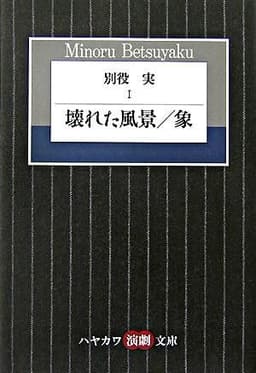
By contrast, a tighter structure such as Zō / The Elephant (象) or a chamber piece like The Dressing Room (楽屋) can give a reading more immediate shape.
Good rule of thumb
If your audience will need a printed relationship chart, your first reading choice may be too ambitious.
2) Script-first strength: can it work without design rescue?
A staged reading removes many of the tools directors rely on in full production:
- full set design
- costume storytelling
- visual metaphor at scale
- spectacle rhythm
- choreographed image systems
So the question becomes brutally simple:
If actors stand with scripts, does the play still generate pressure?
Strong reading scripts often have one or more of these qualities:
- tension built through conversation rather than scenic event
- scenes that turn clearly through language
- memorable tonal contrast
- a central formal hook that can be heard
- emotional logic that survives minimal presentation
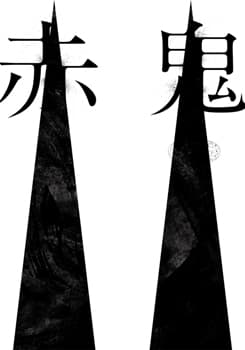
This is why Aka Oni / Red Demon (赤鬼) remains such a useful cross-cultural reading candidate. Even in reduced conditions, the fable-like social cruelty, outsider figure, and unstable moral frame are legible.
If you are unsure whether a script has enough reading strength, ask this:
Would I still want to hear this if the room were almost empty?
If the answer is no, it may be a production text rather than a reading text.
3) Translation texture: does the play survive the move into English?
This is where many otherwise intelligent choices fail.
A Japanese script may be powerful because of register, silence, rhythm, indirectness, or social positioning that becomes flatter in rushed translation. That does not make the play untranslatable. It means you must choose with your translation ecosystem in mind.
The best reading scripts in English are not always the simplest Japanese scripts. They are the ones whose dramatic engine remains audible after transfer.
Strong signs of translation-friendly reading material
- conflict can be heard in speech pattern, not only cultural reference
- repetition has theatrical force
- pauses and evasions do real work
- image systems survive without footnotes
- humor is playable, not merely explainable
Performing Arts Network Japan’s documentation of Tomohiro Maekawa’s international development process is useful here. Maekawa describes English drafts being read by local actors in London, discussed, rewritten, and read again. That is exactly the right model: translation is not a one-time conversion but a performance test.
Warning signs
- too much depends on wordplay that has no performance equivalent
- scenes require heavy explanatory preface
- social stakes disappear unless the audience already knows the context
- the translation reads clearly but sounds inert in actors’ mouths
If you can arrange even a 15-minute internal sample read before committing publicly, do it. That small test can save months of programming regret.
4) Audience entry: can newcomers follow the invitation?
A public reading is also an audience-design problem.
If your audience is largely new to Japanese drama, choose scripts with at least one strong entry point:
- family pressure
- outsider conflict
- institutional absurdity
- ghostly theatricality
- war anxiety
- social performance and shame
That does not mean simplifying Japan for outsiders. It means giving audiences a usable door.
For example:
- Tokyo Notes offers family drift, museum stillness, and war-at-a-distance tension.
- The Dressing Room offers theater ghosts, repetition, and role anxiety.
- Zō / The Elephant offers absurd social behavior and historical wound.
- Aka Oni / Red Demon offers fear of the stranger and group cruelty in a clear dramatic frame.
These are not “easy” plays. They are plays with legible dramatic invitations.
For programming context, it also helps to pair your reading with one related English guide such as How Japanese Play Readings Work in 2026 or a playwright-focused piece such as Playwright Profile: Oriza Hirata (平田オリザ).
5) Rights and access: can you actually do the reading?
This is the least glamorous filter and one of the most important.
Before falling in love with a title, confirm the practical pathway:
- Is there an existing English translation?
- Is the translator identifiable?
- Is the rights holder clear?
- Is the reading educational, developmental, or public-ticketed?
- Is the script publication or archive access realistic in your timeframe?
The Japan Foundation’s translation and publication work is helpful because it has expanded the pool of Japanese plays available in multiple languages. But availability is still uneven. Some plays are easy to study and hard to license. Others are known in scholarship but not practically ready for your timeline.
A useful pre-shortlist checklist
| Question | Why it matters |
|---|---|
| Do I know who controls rights? | Prevents late collapse |
| Do I have a readable English text? | You cannot evaluate from summary alone |
| Is the translation performable? | Literary translation is not always stage-ready |
| Can my team pronounce names and terms confidently? | Avoids avoidable friction |
| Is this reading private, educational, or public? | Rights expectations may differ |
If you cannot answer at least the first three questions, the play is not yet a practical choice.
Four strong starting categories for 2026
Instead of hunting for one mythical “best” Japanese play, it is smarter to choose by category.
Category A: Quiet contemporary ensemble drama
Best for:
- literary festivals
- university departments
- dramaturgy labs
- audiences already comfortable with subtle acting
Why it works: These plays reward listening. They often look modest on the page but become rich when actors handle interruption, drift, and silence well.
Best caution: Do not underestimate rehearsal needs. Quiet drama is not low-skill drama.
Typical example path: Tokyo Notes (東京ノート)
Category B: Absurdist or anti-realist chamber plays
Best for:
- adventurous audiences
- actor training contexts
- compact reading series
- post-show discussions
Why it works: Absurd or semi-absurd scripts often survive minimal conditions well because their dramatic logic is already carried by speech, pattern, and tonal dislocation rather than realism-heavy production support.
Typical example path: Zō / The Elephant (象)
Best caution: Make sure the actors understand the social logic beneath the absurdity. Deadpan without pressure becomes flat very fast.
Category C: Meta-theatrical and ghostly plays
Best for:
- theater communities
- actor-centered events
- repertory side programming
- audiences that enjoy performance-about-performance structures
Why it works: These pieces often gain from visible scripts and visible theatricality. The reading form can actually support the play’s self-awareness rather than weaken it.
Typical example path: The Dressing Room (楽屋)
Best caution: If the rhythm gets too generalized, the atmosphere disappears.
Category D: Social allegory and outsider plays
Best for:
- general public audiences
- intercultural festivals
- discussion-driven programming
- anti-xenophobia or ethics-centered events
Why it works: The core dramatic invitation is often instantly legible, even when the cultural texture stays distinctly Japanese.
Typical example path: Aka Oni / Red Demon (赤鬼)
Best caution: Do not over-universalize the script into bland “humanity” language. The cultural edge is part of the point.
How to build a shortlist in one afternoon
If you need a realistic process, use this one.
Step 1: Pick a programming lane
Choose one:
- subtle contemporary realism
- absurdist chamber work
- actor-centered theatrical text
- socially legible allegory
Do not mix all four at the start.
Step 2: Limit yourself to 3–5 candidate plays
More than that usually becomes fake productivity. Read deeply, not widely.
Step 3: Run a three-column test
| Test | What to ask |
|---|---|
| Hearing test | Can I imagine this alive with scripts in hand? |
| Resource test | Can my current team cast and rehearse this well? |
| Audience test | Will the room know how to enter it? |
Any play that fails two columns should drop.
Step 4: Read 8–12 pages aloud
Never choose only from synopsis and reputation. Read scenes aloud. If the room comes alive, you will know quickly.
Step 5: Decide whether the event is a reading, a workshop, or a teaser for full production
Those are not the same event. Your play choice should match the format honestly.
Common mistakes people make
Mistake 1: choosing by fame alone
A canonical title can still be wrong for your actors, your audience, or your timeline.
Mistake 2: confusing “important” with “performable”
A historically essential play may be better for study than for a first public English reading.
Mistake 3: underestimating quiet plays
Subtle drama is often harder to read well than louder work.
Mistake 4: over-explaining Japan before the reading starts
If your introductory talk is longer than the opening scene, your script choice may not be doing enough on its own.
Mistake 5: treating translation as a technical step
Translation is part of the dramaturgy. If the language does not play, the event does not play.
A practical “first reading” recommendation set
If I were advising an English-language theater team in 2026 that wanted four different entry options, I would start here:
| Need | Recommended starting point | Why |
|---|---|---|
| Quiet modern conversation drama | Tokyo Notes | Internationally traveled, text-centered, excellent for serious ensembles |
| Compact absurdist pressure | Zō / The Elephant | Strong verbal architecture, minimal scenic dependence |
| Actor-centered theatricality | The Dressing Room | Reading form can support its meta-theatrical energy |
| Broad public discussion value | Aka Oni / Red Demon | Clear outsider allegory with real dramatic force |
That is not a canon list. It is a starter kit for intelligent reading practice.
FAQ
What are the best Japanese plays for a staged reading in English?
Usually the best choices are text-centered plays with manageable casts, strong speech rhythm, and a clear dramatic hook that survives minimal staging.
Should I start with a famous Japanese playwright?
Only if the specific script fits your reading format. Fame helps discovery, but fit matters more.
Are Japanese plays too culture-specific for English-language readings?
No. But some are more translation-dependent than others. Choose plays whose pressure survives in speech, silence, and structure.
What cast size is best for a first reading?
For most teams, 2–6 actors is the safest range.
Is a staged reading a good first step before a full production?
Yes. It is often the smartest first step because it tests translation, actor access, and audience response before larger commitment.
Final takeaway
Choosing a Japanese play for an English-language staged reading is not mainly a canon question. It is a fit question.
Pick the script that your actors can hear, your audience can enter, your translation can sustain, and your practical setup can support.
That is usually the play with the best chance of traveling well—not because it becomes less Japanese, but because its dramatic engine remains alive across the crossing.
And that is exactly what a good staged reading is supposed to discover.
Sources
- The Japan Foundation, Translation and Publication of Theatrical Plays — outlines its multilingual publication support for contemporary Japanese playwrights and the international circulation of translated plays.
https://www.jpf.go.jp/e/project/culture/perform/exchange_perform/2021/11-01.html - Performing Arts Network Japan, Tomohiro Maekawa and Six Translators: How do Maekawa’s Plays Read on the International Stage? — documents the read-discuss-rewrite cycle used in international development and translation testing.
https://performingarts.jpf.go.jp/en/article/68062/ - Performing Arts Network Japan, Polly K. Carl / The Playwrights’ Center of Minneapolis — describes the Japan-U.S. exchange model and public staged readings of translated plays.
https://performingarts.jpf.go.jp/en/article/6627/ - Seinendan, Tokyo Notes — provides production history, staged reading history in Cardiff and London, running time, cast size, and translation availability.
https://www.seinendan.org/eng/play/1994/tokyonotes/
この記事で紹介した戯曲
Written by
戯曲図書館 編集部
演劇経験者が運営する戯曲検索サービス「戯曲図書館」の編集チームです。 脚本選びのノウハウ、演劇業界の最新情報、公演レポートなどを発信しています。
関連記事
How Japanese Play Readings Work in 2026: A Practical Culture Guide for Theater Fans and Directors
A practical 2026 guide to Japanese play readings: what they are, how they differ from full productions, and why they matter for translation, festivals, and new-play development.
2026-07-18
Senshuraku Explained (2026): A Cultural Guide to Japan's Theater Closing Nights for International Visitors
A practical English guide to senshuraku (千秋楽)—the final performance of a Japanese theater run. Learn its origin, why closing nights feel special, and how to plan a trip around one.
2026-09-26
2.5D Theater in Japan (2026): A Practical Guide for International Theater Fans
A practical 2026 guide to Japan’s 2.5D theater scene for international fans, from tickets and subtitles to what makes the genre work live.
2026-08-22
Open-Air and Outdoor Theater in Japan in 2026: Where to Go, What to Expect, and How to Plan
A practical 2026 guide to open-air and outdoor theater in Japan, with festival examples, ticketing tips, weather planning, and beginner-friendly play recommendations.
2026-08-15