
Oriza Hirata (平田オリザ, Hirata Oriza) is the Japanese playwright-director most closely associated with “quiet theater”: drama built from everyday speech, social distance, and the almost invisible pressure of history inside ordinary conversation.
For English-speaking readers, Hirata matters because he offers a practical answer to a basic question in contemporary drama: how do you make a stage feel politically alive without relying on melodrama, monologue, or overt theatrical violence? His answer is not abstraction. It is precision. Families talk past one another. Colleagues hesitate. A war stays offstage. A room fills with unfinished thought. That is where his theater lives.
If you are looking for Japanese plays in English, building a university syllabus, searching for contemporary ensemble pieces, or trying to understand modern Japanese theater beyond the loudest avant-garde names, Hirata is one of the best writers to start with in 2026.
Quick Facts
| Item | Detail |
|---|---|
| Japanese name | 平田オリザ (Hirata Oriza) |
| Born | November 8, 1962, Tokyo, Japan |
| Main roles | Playwright, director, educator, cultural policy leader |
| Company | Founder and leader of Seinendan (青年団), established in 1983 |
| Signature method | “Contemporary colloquial theater” (現代口語演劇) |
| Breakthrough play | Tokyo Notes (東京ノート), premiered 1994 |
| Major award | 39th Kishida Kunio Drama Award for Tokyo Notes (1995) |
| Later award | 22nd Tsuruya Nanboku Drama Award for History of the Rise and Fall of Japanese Literature (2019) |
| International profile | Productions, translations, and collaborations across Europe and Asia |
| Why he matters globally | He turned ordinary speech into a powerful dramaturgy for contemporary social life |
Why Oriza Hirata Matters in 2026
Hirata is important not just because he is famous in Japan, but because his work keeps getting more useful outside Japan. Many international artists are now looking for plays that can do at least three things at once:
- feel contemporary without becoming disposable,
- give actors rich ensemble material rather than one-star vehicles,
- engage politics through human behavior rather than slogans.
Hirata does all three.
His work is often described as “quiet,” but that word can mislead new readers. Quiet in Hirata does not mean passive, decorative, or emotionally empty. It means the drama is transferred from overt action to social vibration. Status shifts happen in half-finished sentences. Family structures show up in who answers whom. Public history enters not as speechifying but as background pressure. That is why his plays travel so well: the local details are Japanese, but the tension is global.
He also matters because he changed practice, not just taste. His theory of contemporary colloquial theater reshaped acting, directing, and playwriting in Japan after the 1990s. Critics abroad often group this influence under the label “Quiet Theatre,” but the deeper point is methodological: Hirata made everyday language stageworthy without flattening it into realism alone.
Biography and Career Arc
Early formation
Born in Tokyo in 1962, Hirata studied at International Christian University and founded Seinendan (青年団) while still a student. From the beginning, he was interested in what theater could do that everyday life could not—while still sounding like everyday life.
That distinction matters. Hirata did not simply put casual talk on stage. He carefully shaped pauses, overlap, omission, and indirectness until they became a dramatic system.
The rise of Seinendan
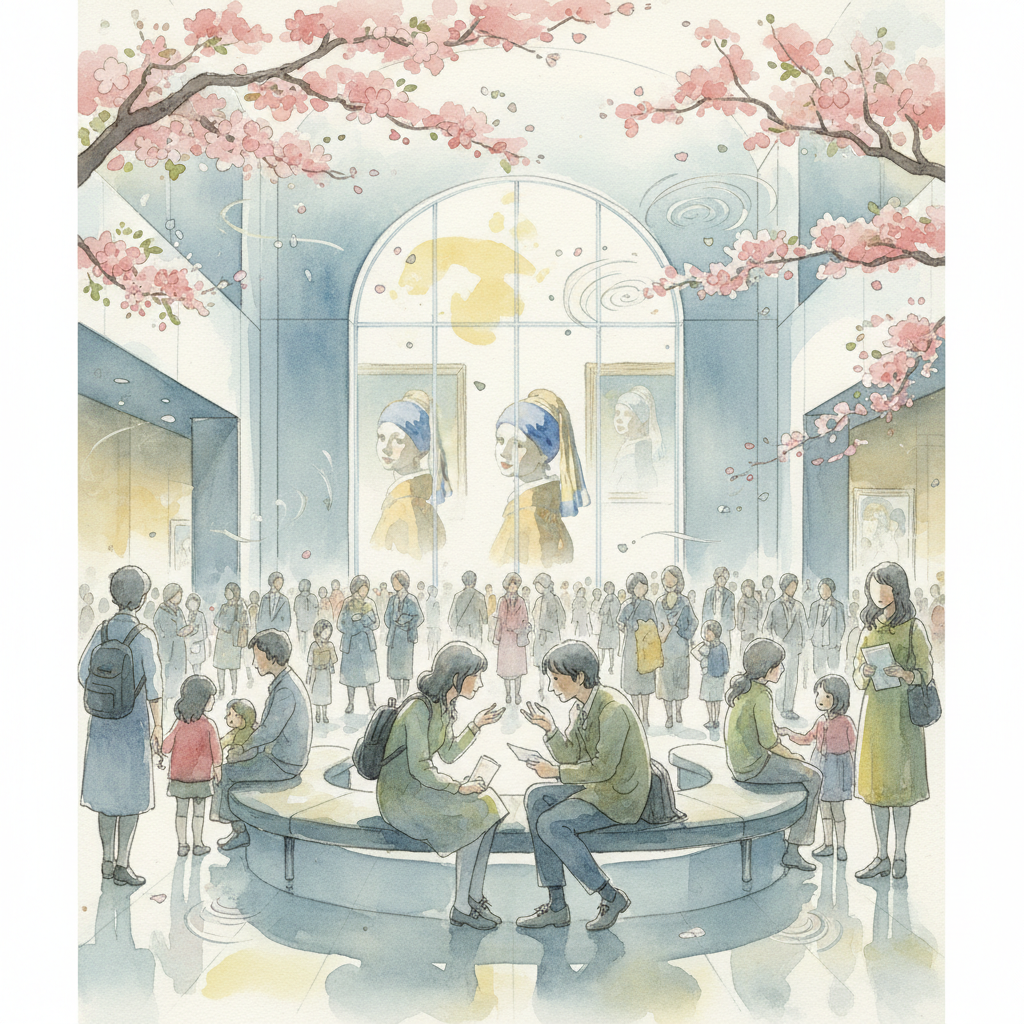
By the late 1980s and 1990s, Seinendan had become one of the most influential companies in Japanese contemporary theater. Hirata’s breakthrough came with Tokyo Notes (東京ノート), which premiered in 1994 and won the Kishida Kunio Drama Award in 1995. That play remains the clearest entry point into his dramaturgy: a museum lobby, a distant war in Europe, siblings and visitors talking, and a society quietly revealing its fractures.
Beyond playwriting
Hirata’s career then widened in unusual ways. He became not only a playwright-director but also an institution builder, teacher, festival leader, and public intellectual on arts policy. The official Seinendan profile notes a long list of roles across theater management, education, regional culture, and international collaboration. Performing Arts Network Japan similarly describes him as a rare figure active as playwright, director, theater manager, university professor, and arts-policy voice.
That broader ecosystem work is part of why his writing matters. Hirata has consistently treated theater as a civic form, not only an aesthetic one.
International development
His plays and methods have traveled widely through France, South Korea, China, Belgium, and beyond. Seinendan’s English page for Tokyo Notes reports that the play has been presented in 18 cities across 14 countries and translated into 10 languages. That is not a minor export record. It places Hirata among the Japanese playwrights whose works have been seriously tested in international performance contexts, not just discussed academically.
2026 position
In 2026, Hirata remains a living bridge between rehearsal room craft and larger cultural infrastructure. He is still relevant to artists who care about translation, touring, civic theater, actor training, and cross-border collaboration.
What Makes Hirata’s Writing Distinct
1) Everyday speech as structure
Hirata’s most famous contribution is often summarized as “contemporary colloquial theater,” but the phrase is more exact than it first appears. He does not simply imitate natural conversation. He composes it. Interruptions, detours, unfinished thoughts, and apparent triviality become the architecture of the play.
For actors, this means the lines must sound unforced without becoming shapeless. For directors, it means rhythm is everything.
2) Social distance instead of dramatic declaration
Many Western dramatic traditions rely on confession, confrontation, or decisive revelation. Hirata often works the other way. Characters reveal themselves through what they avoid saying directly. Emotional pressure sits between lines rather than inside big speeches.
3) History in the background
One of Hirata’s recurring strengths is his ability to keep large historical forces slightly off-center. In Tokyo Notes, war matters deeply, but not because characters explain it at length. It matters because ordinary people keep living in relation to it. This indirectness can feel startlingly contemporary.
4) Ensemble over protagonist
Hirata is extremely useful for companies that want true ensemble drama. The point is rarely a single hero’s journey. The point is a social field.
5) Theater as thought, not lecture
His plays are intellectually rich, but they do not usually function as essay-drama. Instead, they ask audiences to infer systems from behavior.
Essential Works: 5 Entry Points
1) Tokyo Notes (東京ノート)
Hirata’s most internationally recognized play remains the best first stop. Set in the lobby of an art museum while a major war continues elsewhere in Europe, the play watches relatives, museum-goers, and staff move through ordinary conversation. On the official Seinendan English page, Hirata explains that he was inspired in part by Yasujirō Ozu’s Tokyo Story.
Why start here:
- prize-winning breakthrough work,
- strong introduction to quiet dramaturgy,
- excellent for comparative drama and ensemble study.
Internal link: Tokyo Notes on Japanese Play Library
2) Seoul Citizens (ソウル市民 / Sōru Shimin)
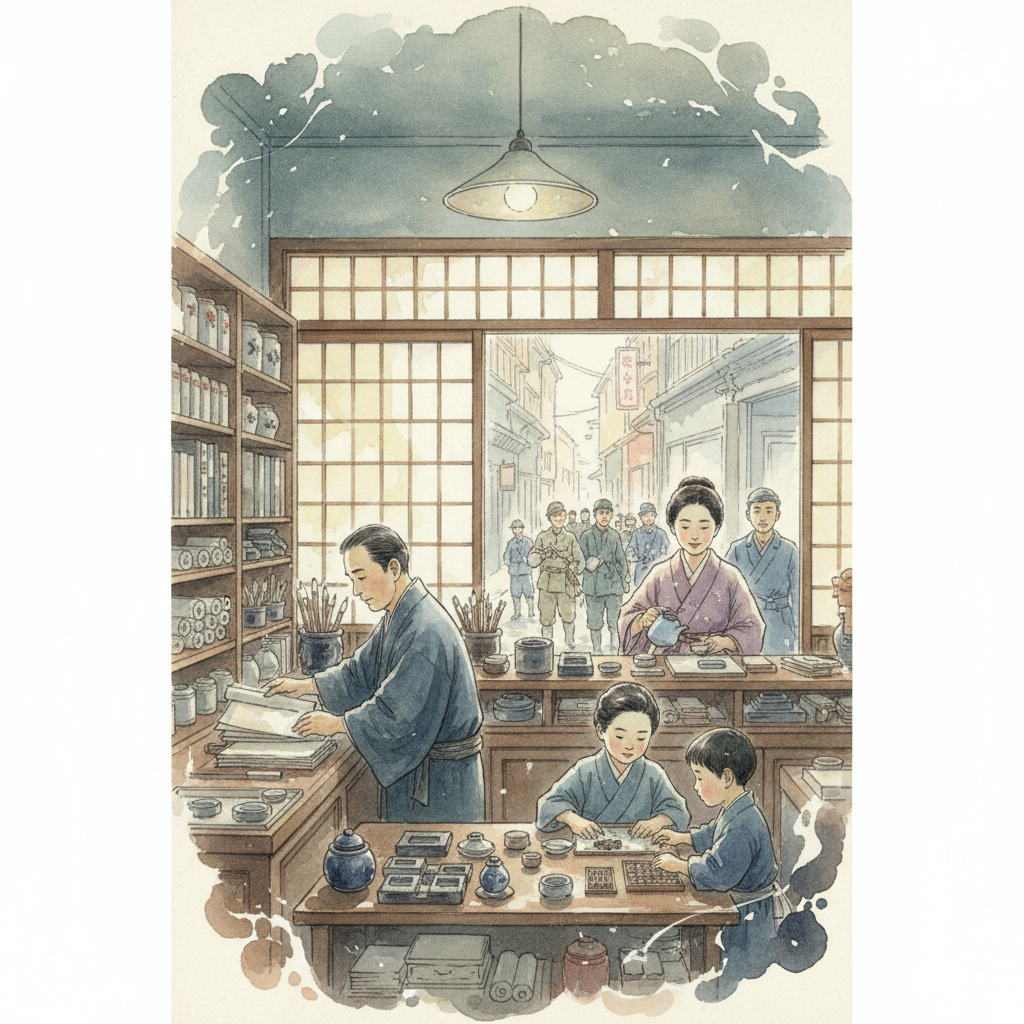
This work is essential if you want to see how Hirata handles historical memory more directly. Set in colonial Korea, it is one of the clearest examples of how his apparently calm dramatic surface can hold political unease and layered historical perspective.
Why it matters:
- expands Hirata beyond “minimalism,”
- useful for postcolonial and East Asian theater studies,
- shows how quiet conversation can expose structural violence.
Internal link: Seoul Citizens on Japanese Play Library
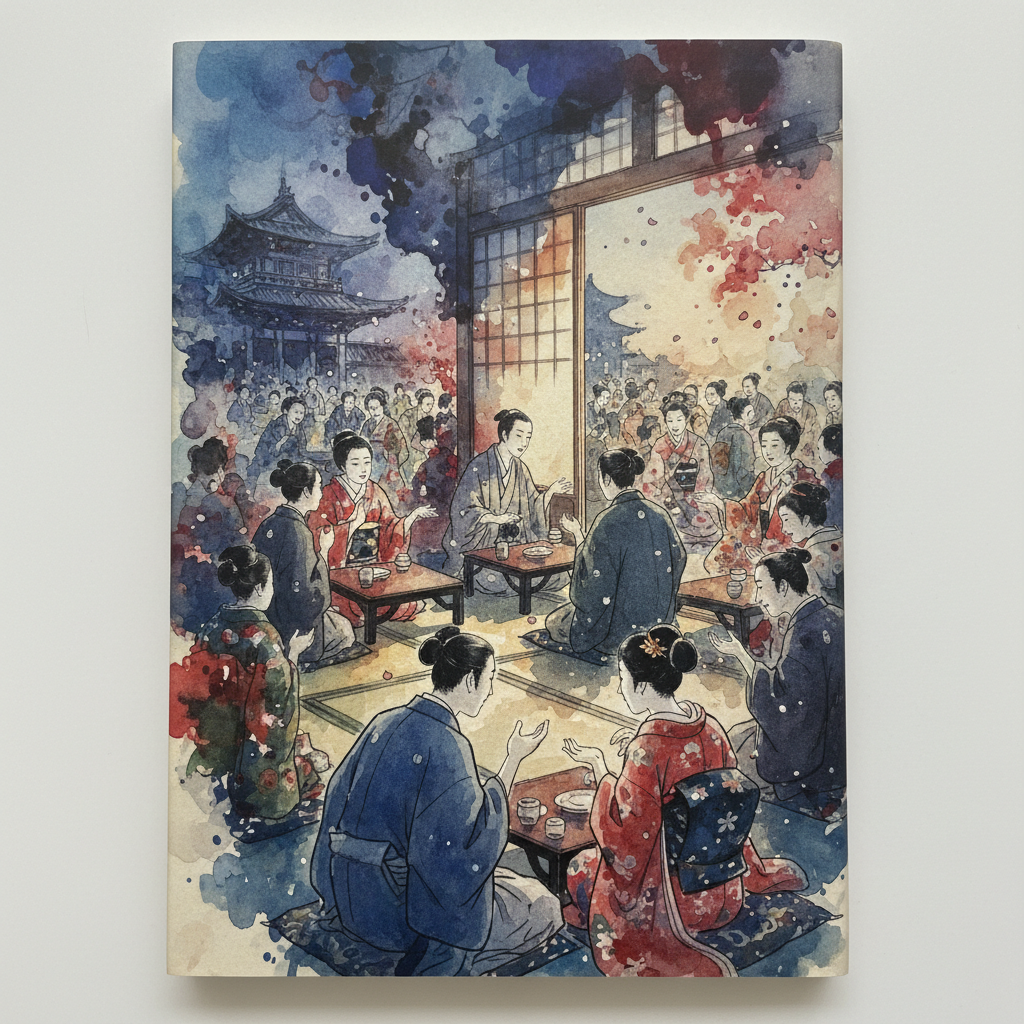
3) History of the Rise and Fall of Japanese Literature (日本文学盛衰史)
This later major work won the Tsuruya Nanboku Drama Award and shows Hirata at a larger literary and historical scale. It is especially useful for readers who want to see that he is not limited to small, contemporary interior scenes.
Why it matters:
- award-winning later-career landmark,
- blends literary history with theatrical form,
- good evidence of his range beyond museum-lobby realism.
Internal link: History of the Rise and Fall of Japanese Literature on Japanese Play Library
4) No Sleepless Night (眠れない夜なんてない / Nemurenai Yoru Nante Nai)
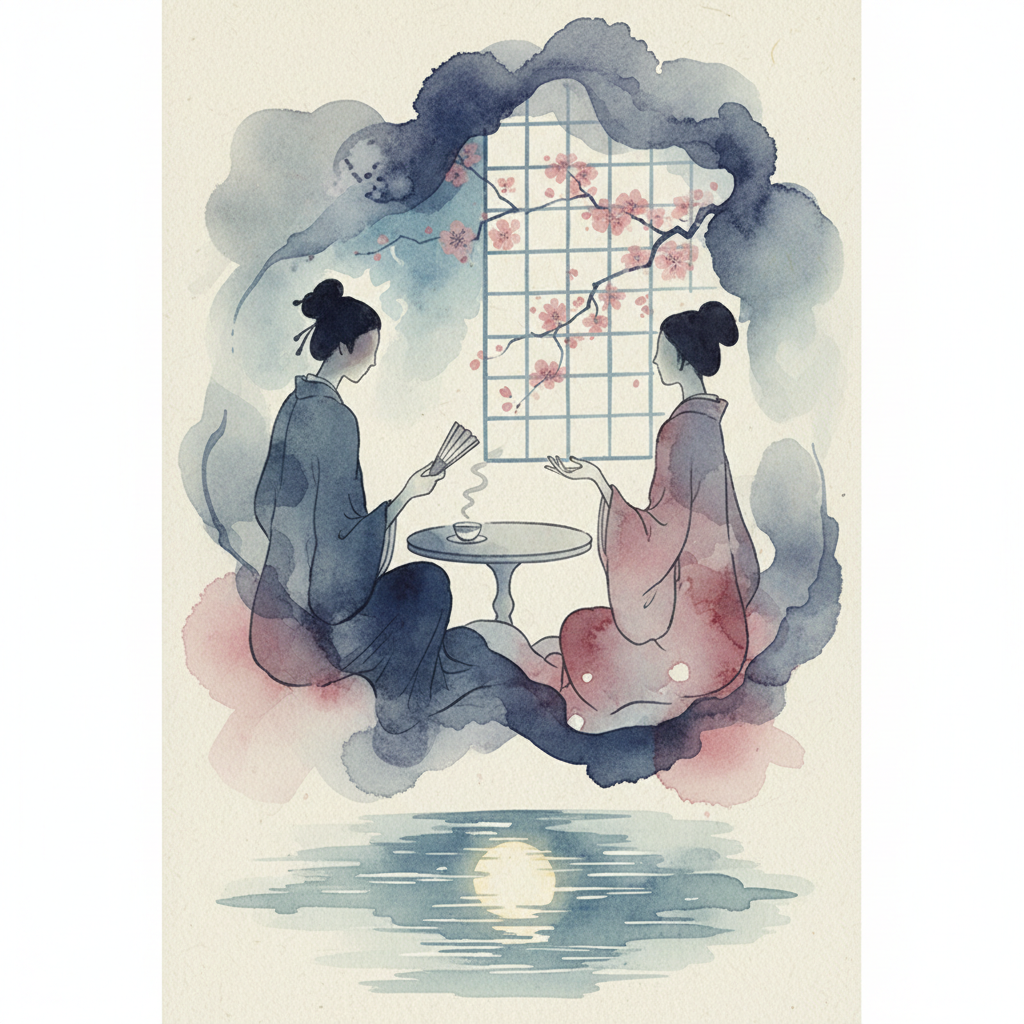
This is a strong example of Hirata’s ability to make ordinary coexistence dramatically resonant. Readers interested in intimate ensemble work, domestic space, and subtle relational writing should spend time here.
Why it matters:
- practical option for readers exploring chamber-scale Hirata,
- excellent for actor training in subtext and listening,
- useful for companies drawn to understated relationship drama.
Internal link: No Sleepless Night on Japanese Play Library
5) This Life Is Hard to Accept (この生は受け入れがたし / Kono Sei wa Ukeiregatashi)
A valuable pick for directors and dramaturgs interested in compact contemporary ensemble work. It appears frequently in casting-based recommendation contexts because it offers a manageable scale while still carrying Hirata’s signature tonal delicacy.
Why it matters:
- accessible for smaller companies,
- rich in conversational tension,
- a good bridge between study and production.
Internal link: This Life Is Hard to Accept on Japanese Play Library
Oriza Hirata in Global Context
| Dimension | Oriza Hirata | Anton Chekhov | Annie Baker |
|---|---|---|---|
| Dialogue texture | Colloquial, indirect, socially calibrated | Layered realism with emotional drift | Hyper-attentive everyday speech and silence |
| Dramatic engine | Social vibration and relational distance | Longing, class decline, stalled desire | Observation, duration, private awkwardness |
| Historical pressure | Often off-center but persistent | Tied to class transition and modernity | Usually intimate rather than geopolitical |
| Ensemble use | Strong social-field dramaturgy | Strong ensemble with more explicit emotional arcs | Intimate ensemble and behavioral detail |
| Staging challenge | Precision without deadness | Elegiac rhythm without sentimentality | Duration without flatness |
This comparison is not about influence claims. It is a practical map for programmers and teachers. If Chekhov helps explain how social change can sit inside domestic scenes, and Annie Baker helps explain contemporary silence and observation, Hirata offers another path: social intelligence as dramatic event.
What International Directors Should Know Before Staging Hirata
Treat conversation as choreography
Hirata’s scenes can look easy on the page. They are not. Timing, overlap, eye-line, and attention flow are part of the meaning. If actors overemphasize “subtext,” the play can become mannered. If they flatten the text into casual chatter, it dies.
Resist the urge to speed up the silence
Many first-time productions get nervous and try to make Hirata more obviously dramatic. That usually weakens the work. The tension should be discovered in relation, not added from outside.
Context helps, but over-explaining hurts
A short note on contemporary colloquial theater, postwar Japanese social life, or the historical setting of a specific play can help audiences. But heavy framing can smother the plays’ delicacy.
Cast listeners, not presenters
Hirata actors need patience, accuracy, and shared tempo. Listening is a visible skill in these plays.
Why Readers, Teachers, and Dramaturgs Keep Returning to Hirata
Hirata is unusually valuable in the classroom because one playwright opens several doors at once:
- modern Japanese theater history,
- acting and listening practice,
- translation studies,
- comparative realism,
- theater and public policy,
- international collaboration.
The University of Chicago Press description of Citizens of Tokyo calls the volume the first English collection of plays by one of Japan’s most important contemporary playwrights and notes that his work helped create one of the most important trends in Japanese theater since the 1990s: Quiet Theatre. That description is useful because it captures both the literary and historical stakes. Hirata is not just a playwright to “sample.” He is a playwright through whom an entire movement becomes legible.
How to Read Hirata in Translation
English-speaking readers sometimes bounce off Hirata the first time because they expect dramatic emphasis to arrive in familiar places. If you read him like a thriller, he can seem “too small.” If you read him like social music, he opens up quickly.
A few practical tips help:
Read for alignment, not plot twist
Ask who is aligned with whom in each scene, who avoids commitment, and who changes the subject. In Hirata, that is often where the plot really is.
Track the background pressure
A Hirata play often has a secondary layer that is larger than the room: war, colonial history, institutional change, family obligation, or national memory. The characters may not name it directly, but the play is shaped by it.
Notice who gets to speak casually
Casualness is never neutral. Some characters can ramble because they are secure. Others speak carefully because they are navigating status. That difference matters.
Re-read before judging emotional intensity
The first reading often feels cooler than the second. Once you know where the pressure points are, the emotional life becomes much clearer.
For teachers, one good exercise is to stage the same short scene twice: first as flat realism, then with extreme attention to hesitation, interruption, and silent response. Students usually discover very quickly that Hirata’s writing is not “low emotion”; it is highly calibrated emotion.
FAQ
Is Oriza Hirata a good first Japanese playwright for English-speaking readers?
Yes—especially if you are more interested in contemporary realism, ensemble acting, and subtle political texture than in spectacle-heavy or highly stylized writing.
Which play should I start with?
Start with Tokyo Notes if you want the canonical choice. Move to Seoul Citizens if you want more explicit historical tension.
Is Hirata difficult to stage outside Japan?
Yes, but in a productive way. The challenge is less about cultural access than about rhythmic accuracy. Companies that value ensemble listening usually do well with him.
Why is he often called a “quiet” playwright?
Because his drama rarely depends on explosive confrontation. But the quietness is deceptive: the plays are full of pressure, social hierarchy, ethical hesitation, and historical resonance.
Best Next Reads on Japanese Play Library
- Play Spotlight: Tokyo Notes (東京ノート) by Oriza Hirata
- Tokyo Notes vs The Cherry Orchard: How Two Quiet Plays Stage Social Change
Final Take
Oriza Hirata remains one of the most important contemporary Japanese playwrights for global readers because he proves that restraint can be radical. He makes conversation dramatic, silence social, and history palpable without pushing it to the front of the stage. In 2026, when many artists are searching for repertoire that is intelligent, playable, and internationally resonant, Hirata still feels less like a niche discovery and more like essential reading.
If you want to understand why modern Japanese theater changed after the 1990s—and why that change still matters—start with Hirata.
Sources
- Seinendan official profile for Oriza Hirata (biography, awards, institutional roles): https://www.seinendan.org/hirata-oriza
- Seinendan official English page for Tokyo Notes (premiere year, synopsis, international production history, translation count): https://www.seinendan.org/eng/play/1994/tokyonotes/
- Performing Arts Network Japan, “Speaking with Oriza Hirata, a new opinion leader in the world of contemporary theater” (career overview, arts-policy and education context): https://performingarts.jpf.go.jp/en/article/6917/
- University of Chicago Press, Citizens of Tokyo: Six Plays (English publication context, Quiet Theatre framing, international performance note): https://press.uchicago.edu/ucp/books/book/distributed/C/bo28489132.html
- Japanese Play Library author page for Oriza Hirata (internal database context): https://gikyokutosyokan.com/authors/26
この記事で紹介した戯曲

Written by
戯曲図書館 編集部
演劇経験者が運営する戯曲検索サービス「戯曲図書館」の編集チームです。 脚本選びのノウハウ、演劇業界の最新情報、公演レポートなどを発信しています。
関連記事
Playwright Profile: Toshiki Okada (岡田利規) in 2026 — Why chelfitsch Changed Contemporary Japanese Theater
An English guide to Toshiki Okada’s career, major plays, style, and why chelfitsch remains vital for global theater in 2026.
2026-08-13
Playwright Profile: Kobo Abe (安部公房) in 2026 — Why Friends and The Suitcase Still Feel Unsettling
A 2026 English guide to Kobo Abe's theatrical career, major plays, style, and why his stage work still matters for global theater artists.
2026-08-20
History of the Rise and Fall of Japanese Literature vs Arcadia: A 2026 Guide to Literature, Time, and National Imagination
Compare Oriza Hirata's History of the Rise and Fall of Japanese Literature with Arcadia through time, authorship, and modernity.
2026-08-16
Play Spotlight: Why History of the Rise and Fall of Japanese Literature (日本文学盛衰史) Belongs on Global Stages
An English spotlight on Oriza Hirata’s award-winning play about Meiji writers, ensemble scale, and why it speaks to theater-makers now.
2026-08-10