Minoru Betsuyaku (別役実, Betsuyaku Minoru) is one of the essential postwar Japanese playwrights because he turned ordinary conversation, silence, and social discomfort into a distinctly Japanese form of absurdist theater.
For English-speaking readers in 2026, Betsuyaku matters not just as "Japan's Beckett." He matters because he shows how absurd drama changes when it passes through postwar Japanese history, hibakusha memory, everyday politeness, and the pressure to endure without complaint. If you are programming world drama, teaching modern theater, building a staged-reading season, or simply looking for Japanese plays that travel intellectually and theatrically, Betsuyaku is one of the most rewarding names to know.
Quick Facts
| Item | Detail |
|---|---|
| Japanese name | 別役実 (Betsuyaku Minoru) |
| Born | April 6, 1937, Xinjing, Manchukuo (present-day Changchun, China) |
| Died | March 3, 2020 |
| Main roles | Playwright, essayist, children's writer, critic |
| Core reputation | Foundational figure in Japanese absurdist theater |
| Early breakthrough plays | Zō (The Elephant, 1962), The Little Match Girl (1966) |
| Key artistic influence | Samuel Beckett, filtered through Japanese postwar social experience |
| Typical theatrical traits | Sparse settings, indirect speech, repetition, social unease, moral deflection |
| Scale of output | Around 140 plays across his career |
| Why he matters globally | He proves that absurdism can be historically specific, socially observant, and theatrically playable at the same time |
Why Minoru Betsuyaku Matters in 2026
Betsuyaku is one of the best playwrights to read when you want to understand that absurdism is not one international style with one center. In English-language theater history, absurd drama is often introduced through Beckett, Ionesco, Genet, and Pinter. That map is useful, but incomplete. Betsuyaku shows what happens when absurdity is built not from abstract metaphysical void alone, but from postwar social habits: hesitation, indirectness, pity, fatigue, silence, and the strange violence hidden inside "reasonable" speech.
That is one reason his plays still feel contemporary.
In 2026, artists across many countries are again asking how theater can show:
- public numbness toward suffering,
- moral exhaustion in everyday life,
- communities that normalize what should remain shocking,
- the distance between sympathy and responsibility.
Betsuyaku spent decades writing those questions. He did not usually answer them through speeches or manifestos. He answered them through pauses, misaligned conversations, incomplete recognition, and the way people subtly push pain to the edge of the room.
For international readers, that makes him unusually practical. He is not only "important in Japanese theater history." He is also useful for rehearsal rooms now.
Biography and Formation
Early displacement and postwar experience
According to Waseda University's Tsubouchi Memorial Theatre Museum, Betsuyaku was born on April 6, 1937 in Xinjing, Manchukuo, and lost his father in 1945. In 1946 he was evacuated to Kochi, later lived in Shimizu, and then moved to Nagano. That early experience of displacement, interrupted schooling, and postwar instability matters when reading him. Betsuyaku's theater is full of people who endure quietly, live at social margins, or struggle to make ordinary life feel morally coherent.
Waseda's exhibition on Betsuyaku also stresses how early he became absorbed in literature and painting. That childhood attentiveness to small details shows up clearly in the plays. He notices not only crisis, but the tiny gestures around crisis: who looks, who hesitates, who speaks with pity, who keeps moving.
Waseda and the road to theater
Performing Arts Network Japan reports that Betsuyaku entered Waseda University, dropped out of the School of Political Science and Economics, and became active in theater there. He later worked with Suzuki Tadashi and helped found Waseda Shogekijo. PANJ's interview is especially useful because it shows Betsuyaku not as a purely literary figure, but as a theater-maker formed inside the turbulent ecology of the 1960s: student politics, anti-establishment energy, and dissatisfaction with existing realism.
In that same interview, Betsuyaku describes the impact of Kafka and then Beckett on his generation. Yet he is equally clear that he was not simply importing a European model. He understood absurd drama through Japanese conditions and through the limitations of contemporary political realism on the stage around him.
A long career beyond one label
PANJ's author page says that by 2013 Betsuyaku had completed 138 works, including plays, children's stories, and humorous essays. Waseda's exhibition describes him as having given the world "more than 140 plays." Those figures matter because they correct a common simplification. Betsuyaku was not only the writer of a few famous early absurdist texts. He was a major long-form career artist whose output extended across decades and genres.
He also won major awards across that long span, including the Kishida Drama Award, the Kinokuniya Theater Award, the Yomiuri Literature Award, and the Minister of Education Award for the Arts. That breadth shows both artistic longevity and institutional recognition.
What Makes Betsuyaku's Theater Distinct
1) Absurdism grounded in everyday Japanese speech
Betsuyaku is often linked to Beckett, and the connection is real. PANJ notes his direct encounter with Beckett's theater of the absurd and his attraction to stripped-down stage space. But the result is not imitation. Betsuyaku's dialogue is typically quieter, socially calibrated, and rooted in the small frictions of Japanese daily life. His characters do not merely confront cosmic nothingness. They navigate implication, politeness, guilt, shame, and avoidance.
That difference is decisive for directors and actors. The pressure in Betsuyaku often emerges not from theatrical grandness, but from how modestly a line is said.
2) Silence as resistance and as wound
Waseda's exhibition frames "silence" as one of Betsuyaku's lifelong artistic concerns. That does not mean his plays are empty or minimalist in a decorative sense. It means he was deeply interested in how people remain silent, what silence protects, and how silence can become both dignity and social sentence.
This makes his drama especially valuable for performers. Silence in Betsuyaku is active. It can mean refusal, exhaustion, self-protection, shame, or a rejection of cheap sympathy.
3) Sparse stages, dense moral pressure
PANJ's interview discusses Betsuyaku's fascination with what he called "Beckett space": a nearly bare stage organized by one strong visual marker, like a tree or a telephone pole. But he adapted that idea to Japanese theatrical conditions, thinking carefully about horizontal space, localized realism, and how a small concrete detail could imply a wider world.
For contemporary productions, this is liberating. Betsuyaku does not require elaborate design to generate atmosphere. He requires accurate social tension.
4) The socially marginal as dramatic center
Waseda's welcome message for the Betsuyaku exhibition describes his attention to "the quiet voices of those who live modestly on the peripheries of society." That is a strong key to his oeuvre. Many Betsuyaku characters are not heroic leaders or psychologically inflated protagonists. They are vulnerable, displaced, minor, overlooked, or quietly humiliated.
That is part of why his work still lands hard. He stages what respectable society would prefer to absorb without fully acknowledging.
Essential Works: 5 Entry Points
1) Zō (象, The Elephant, 1962)
This is the clearest first stop for many English-speaking readers. New National Theatre Tokyo calls it an early work that became one of Betsuyaku's signature plays, and the theater's synopsis explains the core image: a hibakusha survivor shows the keloid scar on his back to passersby while his nephew argues that such pain should now be endured quietly because society will only "kindly tolerate" atomic-bomb survivors.
That is a brutal premise, and a revealing one. The play is not only about memory or victimhood. It is about how society manages memory when sympathy has thinned out.
Why start here:
- It is one of his canonical early masterpieces.
- It introduces his postwar ethics of witnessing.
- It works extremely well for minimalist staging and classroom discussion.
Internal link: Zō / The Elephant on Japanese Play Library
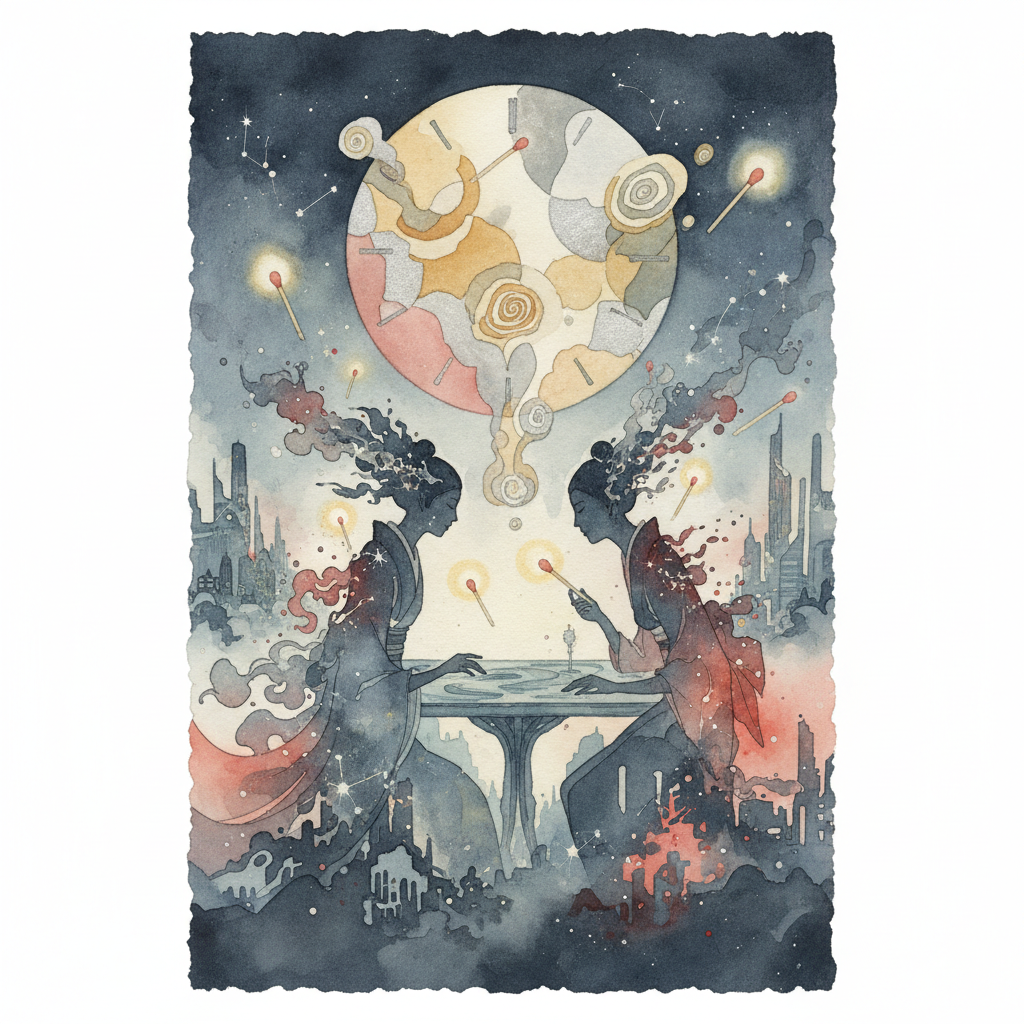
2) The Little Match Girl (マッチ売りの少女, 1966)
This play helped secure Betsuyaku's reputation and is one of the titles most often used to introduce his absurdist social logic. PANJ lists it among the plays that were "highly acclaimed" in his early career. Like much of his best work, it takes a recognizable reference point and turns it into an unsettling study of obligation, intrusion, and moral unease.
Why it matters:
- Strong small-cast option for readers and directors.
- A key example of Betsuyaku's reworking of familiar narrative material.
- A practical gateway into his conversational style.
Internal link: The Little Match Girl on Japanese Play Library
3) Nishi Muku Samurai (にしむくさむらい)
This is a crucial play if you want to understand Betsuyaku beyond the most internationally cited early absurdist titles. In the PANJ interview, he reflects on the play's famous setting under a telephone pole and on the question of Japanese middle-class life, family structure, and the hollowing-out of social foundations. The play helps show that Betsuyaku was never just writing abstract absurdism. He was also writing about the changing texture of Japanese common life.
Why it matters:
- Strong example of his "localized space" idea.
- Useful for family/social-structure readings.
- Expands the image of Betsuyaku beyond postwar emblematic trauma.
Internal link: Nishi Muku Samurai on Japanese Play Library
4) A Town and an Airship (街と飛行船)
PANJ lists this among the works that won Betsuyaku the Kinokuniya Theater Award in 1971. Waseda's exhibition also highlights it as a play that now feels almost prophetic in its relation to social unease and isolation. This is a good title for readers who want a broader view of his middle period and his ability to turn civic atmosphere into theatrical form.
Why it matters:
- Award-winning evidence of range beyond the "classic early absurdist" box.
- Useful for tracking how his social imagination evolves.
- A reminder that he was productive across many decades, not only the 1960s.
5) Yattekita Godot (Godot Has Come, 2007)
This later play shows Betsuyaku in direct conversation with Beckett after a lifetime of writing. PANJ's profile page notes the play as part of his late-career output and awards recognition. What matters here is not only literary reference. It shows Betsuyaku still testing comedy, waiting, theatrical inheritance, and absurd form deep into the 2000s.
Why it matters:
- A late-career answer to the Beckett relationship that shaped his beginning.
- Useful for comparing early and late Betsuyaku.
- A strong example of how he kept renewing his absurdist method rather than freezing it.
Betsuyaku in Global Context
| Dimension | Minoru Betsuyaku | Samuel Beckett | Eugène Ionesco |
|---|---|---|---|
| Core dramatic pressure | Social discomfort, moral deflection, everyday estrangement | Existential waiting, reduction, endurance | Linguistic breakdown, public absurdity, group distortion |
| Dialogue texture | Indirect, polite, evasive, deceptively plain | Compressed, rhythmic, stripped down | Circular, comic, escalating |
| Historical grounding | Strongly tied to postwar Japanese experience | Often abstracted from specific national trauma in performance reception | Often read through European ideological crisis |
| Best acting skill | Listening and social calibration | Precision under reduction | Comic escalation and tonal volatility |
| Best first staging context | Black box, reading festival, actor-centered ensemble | Minimalist or formalist setting | Ensemble-based anti-naturalist production |
This comparison is not meant to collapse difference. Quite the opposite. It helps English-speaking readers see what Betsuyaku contributes that the canonical European absurdists do not. He makes absurdism answerable to postwar Japanese history and to the ethics of everyday interaction.
What International Directors and Dramaturgs Should Know
Do not overplay the "strangeness"
The temptation with Betsuyaku is to lean hard into stylized weirdness because the plays are labeled absurdist. That can flatten them. The better path is often to play the social behavior truthfully and let the unease emerge from how characters normalize the intolerable.
Cast actors who can listen, not just declare
Much of Betsuyaku's force depends on timing, implication, and subtle refusal. Actors need to hear the shifts in pressure, not simply present philosophical ideas.
Let the design stay exact but light
A Betsuyaku production usually gains more from one accurate image than from a crowded conceptual set. A pole, a room edge, a chair, a street corner, a scar, a repeated object: these can be enough if the social architecture is clear.
Historical framing helps, but essays onstage do not
Context about hibakusha, postwar theater, the 1960s small-theater movement, or Beckett's influence can help audiences. But Betsuyaku does not need to be over-explained into relevance. His situations become legible quickly when staged with confidence.
Why Teachers and English-Language Readers Should Return to Him
Betsuyaku is especially valuable in classrooms because he opens several conversations at once:
- Japanese postwar culture
- absurdist dramaturgy outside Europe
- the ethics of spectatorship
- silence and indirect language
- small-cast staging practice
- adaptation and cross-cultural comparison
He is also a strong corrective to shallow comparative habits. Calling him "Japan's Beckett" may help orient first-time readers, but it can become misleading if repeated too lazily. Betsuyaku's real importance is not that he resembles a European master. It is that he built a durable Japanese theatrical language of his own.
That is why his work still helps directors, actors, scholars, and programmers in 2026. He offers a repertoire that is intellectually rich, theatrically practical, and politically resonant without becoming slogan theater.
FAQ
Who was Minoru Betsuyaku?
Minoru Betsuyaku (1937-2020) was a major Japanese playwright, essayist, and children's writer, widely regarded as one of the foundational figures of Japanese absurdist theater.
Why is Minoru Betsuyaku important?
He transformed absurd drama into a specifically Japanese postwar form, using silence, indirect speech, and everyday social tension to explore memory, marginalization, and moral fatigue.
What is Betsuyaku's most famous play?
Zō (The Elephant, 1962) is one of his best-known and most internationally useful plays, especially for readers interested in postwar memory and the ethics of witnessing.
Was Betsuyaku only influenced by Beckett?
No. Beckett mattered greatly, but Betsuyaku also drew on Japanese theatrical space, postwar history, and his own sustained interest in how ordinary people endure isolation, pity, and social pressure.
Is Betsuyaku good for staged readings?
Yes. His plays are often excellent for staged readings because the tension lives in rhythm, relation, and speech rather than heavy scenic machinery.
Where should beginners start?
Start with Zō, then move to The Little Match Girl and one later or socially broader work such as Nishi Muku Samurai.
Internal Links (Japanese Play Library)
- Play database: Zō / The Elephant (象)
- Play database: The Little Match Girl (マッチ売りの少女)
- Play database: Nishi Muku Samurai (にしむくさむらい)
- Related English article: Play Spotlight: Zō (象) / The Elephant by Betsuyaku Minoru
- Related English article: Zō vs Rhinoceros: A 2026 Guide to Absurdism, Conformity, and the Politics of Looking Away
Sources
- Performing Arts Network Japan, "Minoru Betsuyaku" and interview profile — biography, awards, Beckett influence, Waseda Shogekijo context, and output scale: https://performingarts.jpf.go.jp/en/article/6909/
- Performing Arts Network Japan, author page for Minoru Betsuyaku — career summary and works count: https://performingarts.jpf.go.jp/en/article/person/minoru-betsuyaku/
- New National Theatre, Tokyo, The Elephant page — synopsis, signature-work framing, and historical reception: https://www.nntt.jac.go.jp/english/play/e20000633_play.html
- Waseda University Tsubouchi Memorial Theatre Museum, "Making of Minoru Betsuyaku" exhibition — early life, silence, and long-term artistic concerns: https://enpaku.w.waseda.jp/online-betsuyaku-etop/
- SPAC, The Elephant page — contemporary institutional framing of Betsuyaku as a major playwright still being handed down to new generations: https://spac.or.jp/en/au2024-sp2025/elephant
Final Take
Minoru Betsuyaku remains essential in 2026 because he understood something many playwrights miss: societies rarely reveal their deepest failures through spectacular collapse alone. More often, they reveal them through ordinary speech, tired sympathy, redirected attention, and the quiet demand that other people suffer more neatly.
That is why his theater still works. It is spare without being thin, absurd without being abstract, and historical without becoming museum drama. For English-speaking readers who want Japanese theater that is both intellectually serious and theatrically alive, Betsuyaku is not optional reading. He is core repertoire.
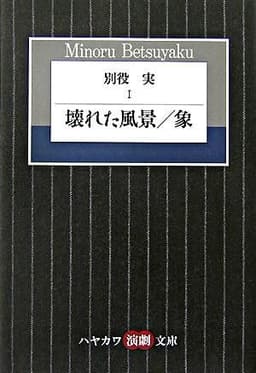
この記事で紹介した戯曲
Written by
戯曲図書館 編集部
演劇経験者が運営する戯曲検索サービス「戯曲図書館」の編集チームです。 脚本選びのノウハウ、演劇業界の最新情報、公演レポートなどを発信しています。
関連記事
Playwright Profile: Kobo Abe (安部公房) in 2026 — Why Friends and The Suitcase Still Feel Unsettling
A 2026 English guide to Kobo Abe's theatrical career, major plays, style, and why his stage work still matters for global theater artists.
2026-08-20
Tomodachi vs No Exit: A 2026 Guide to Friendly Invasion, Hellish Rooms, and the Violence of Other People
Compare Tomodachi and No Exit through confinement, coercion, group pressure, and the politics of being trapped with others.
2026-08-30
Play Spotlight 2026: Tomodachi (Friends, 友達) by Kobo Abe (安部公房)
A 2026 English spotlight on Tomodachi, Kobo Abe's invasive dark comedy about loneliness, conformity, and kindness as violence.
2026-08-24
Playwright Profile: Toshiki Okada (岡田利規) in 2026 — Why chelfitsch Changed Contemporary Japanese Theater
An English guide to Toshiki Okada’s career, major plays, style, and why chelfitsch remains vital for global theater in 2026.
2026-08-13