
目次15項目開く
- 1.Quick Facts
- 2.What makes a play good for actor training?
- 3.1. Repetition and Continuation (Hantō ka Tsuzoku, 反復かつ連続) — Yukio Shiba (柴幸男)
- 4.2. A Kiss Scene Now (Imasara Kiss Scene, いまさらキスシーン) — Norihito Nakayashiki (中屋敷法仁)
- 5.3. A Glass of Spilled Milk (Tatoeba Koboreta Miruku no Yō ni, たとえば零れたミルクのように) — Nami Kuno (久野那美)
- 6.4. Pears Tossed Back (Nashi no Tsubute no Nashi, 梨の礫の梨) — Takuya Yokoyama (横山拓也)
- 7.5. Tomodachi ga Kita (Tomodachi ga Kita, ともだちが来た) — Toshiro Suzue (鈴江俊郎)
- 8.6. Song of Celebration (Hōka, 寿歌) — Sō Kitamura (北村想)
- 9.7. The Dressing Room (Gakuya, 楽屋〜流れ去るものはやがてなつかしき〜) — Kunio Shimizu (清水邦夫)
- 10.8. Human Pavilion (Jinruikan, 人類館) — Seishin Chinen (知念正真)
- 11.How to use these plays in a workshop sequence
- 12.Choosing the right play for your group
- 13.Frequently Asked Questions
- 14.Further reading
- 15.Sources and research notes
The best Japanese plays for actor training and ensemble workshops are scripts that make performers listen, repeat, transform, and share responsibility for the stage—not merely recite lines.
That makes them useful far beyond a conventional production. A workshop leader may need a text for a one-day laboratory, a conservatory may need material that reveals how actors build relationships, and an international company may want to test a Japanese play before committing to translation, rights, and a full rehearsal process. In each case, the right script is not necessarily the most famous one. It is the play that creates a productive question for the room.
This 2026 guide selects eight works listed in the Japanese Play Library for actor training, ensemble laboratories, staged readings, and text-based devising. The list includes solo pieces, two-hander plays, and compact ensemble works. Some are realistic; others use repetition, compressed time, direct address, or theatrical transformation. Each one trains a different set of skills.
The recommendations are especially useful for international theater makers who want to work with Japanese drama in English. A workshop can begin with a Japanese text, a published translation, or a permission-based working translation. It should not be treated as a shortcut around performance rights. A reading, workshop, translation, and public production may require different permissions, so contact the relevant rights holder before presenting the work publicly.
Quick Facts
| Question | Practical answer |
|---|---|
| Best play for repetition and timing | Repetition and Continuation (Hantō ka tsuzoku, 反復かつ連続) |
| Best play for a two-actor listening lab | Tomodachi ga Kita (ともだちが来た) |
| Best play for an ensemble exploring space | The Dressing Room (Gakuya, 楽屋) |
| Best play for a short first workshop | A Kiss Scene Now (Imasara Kiss Scene, いまさらキスシーン) |
| Cast range in this guide | 1–4 performers, with flexible workshop doubling |
| Runtime range in the Japanese Play Library | About 15–90 minutes |
| Strongest shared skills | Listening, rhythm, repetition, point of view, transformation, and vocal clarity |
| Safest first format | A private table reading or closed workshop with permission |
| Important rights reminder | A catalogue listing does not automatically grant translation or performance rights |
What makes a play good for actor training?
A workshop script should produce work for the actor. A short play can still be technically demanding, and a small cast can require more concentration than a large one.
For this guide, a useful training text has at least two of the following qualities:
- It makes listening visible. Actors must respond to changes in breath, status, silence, or rhythm rather than wait for their cue.
- It creates a repeatable structure. Repetition gives the group something precise to score, vary, and compare.
- It allows more than one point of view. A performer can shift between narrator, character, witness, or chorus.
- It treats space as active. The room, distance, entrances, exits, and shared focus become part of the composition.
- It can survive a reading. The text has enough theatrical information to generate an event without a full set or finished design.
- It rewards process. The script raises questions that actors can investigate instead of prescribing one correct psychological result.
This is one reason Japanese contemporary theater is valuable in an international workshop. The text may not behave like a naturalistic scene study. It may ask the group to organize time, voice, movement, or memory collectively. That difference is not an obstacle; it is the training material.
1. Repetition and Continuation (Hantō ka Tsuzoku, 反復かつ連続) — Yukio Shiba (柴幸男)
- Japanese Play Library: Repetition and Continuation
- Cast listed by the library: 1 performer
- Runtime: approximately 15 minutes
- Best workshop focus: repetition, vocal layering, role assignment, and time structure
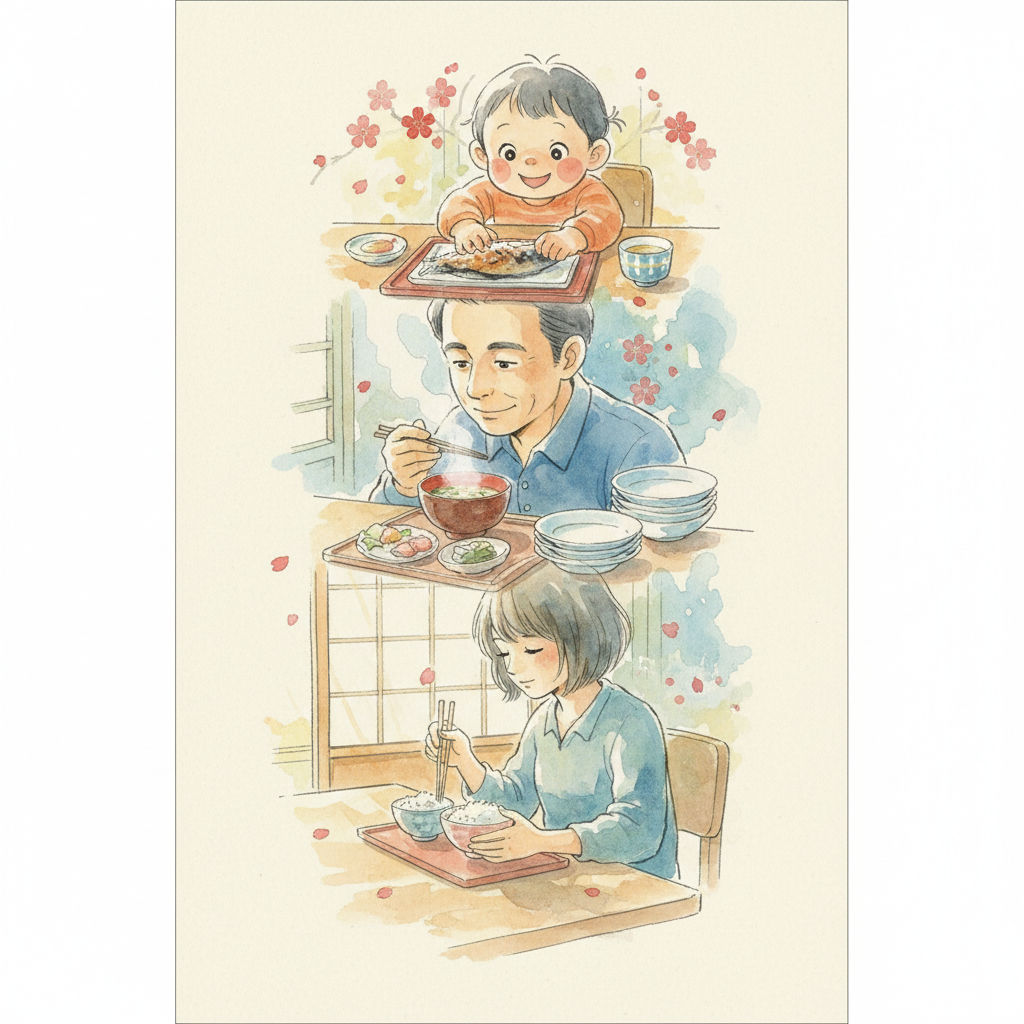
Yukio Shiba's short play begins with an ordinary family breakfast and turns that familiar situation into a formal investigation of repetition. The Japanese Play Library describes it as a one-person play in which a family morning is accumulated one person at a time. That simple premise makes it an excellent first text for a workshop on how form changes perception.
The key exercise is not to ask one actor to imitate an entire family realistically. Instead, let the group test how a single body can carry several positions in time. One actor can speak, move, or redirect attention while recorded voices, live chorus, or changing spatial orientation create the sense of a larger household. The workshop can then compare three versions: one performer alone, one performer with a supporting chorus, and several performers sharing the material.
Shiba has explained that the work grew from an interest in overlapping time and repeated situations. In an interview with Performing Arts Network Japan, he describes Repetition and Continuation as a one-person performance in which a family story is layered through looping time. The interview also makes clear that the structure can be difficult for actors: the performer must track who is speaking, where the scene is located, and how the repetition is changing.
That difficulty is exactly its value. The piece trains actors to make a score rather than depend only on private motivation. Ask the group to mark every repetition, then identify what changes: tempo, breath, point of focus, physical distance, or emotional temperature. The script becomes a compact lesson in variation.
Try it in a workshop: Divide the text into beats and assign a different physical action to each repeated unit. Then perform the scene without changing the words. Discuss whether the audience experiences the family as a group of characters or as one consciousness expanding through time.
2. A Kiss Scene Now (Imasara Kiss Scene, いまさらキスシーン) — Norihito Nakayashiki (中屋敷法仁)
- Japanese Play Library: A Kiss Scene Now
- Cast listed by the library: 1 performer, with the listing using a flexible “other” category
- Runtime: approximately 30 minutes
- Best workshop focus: direct address, physical storytelling, youth culture, and rapid shifts of scale
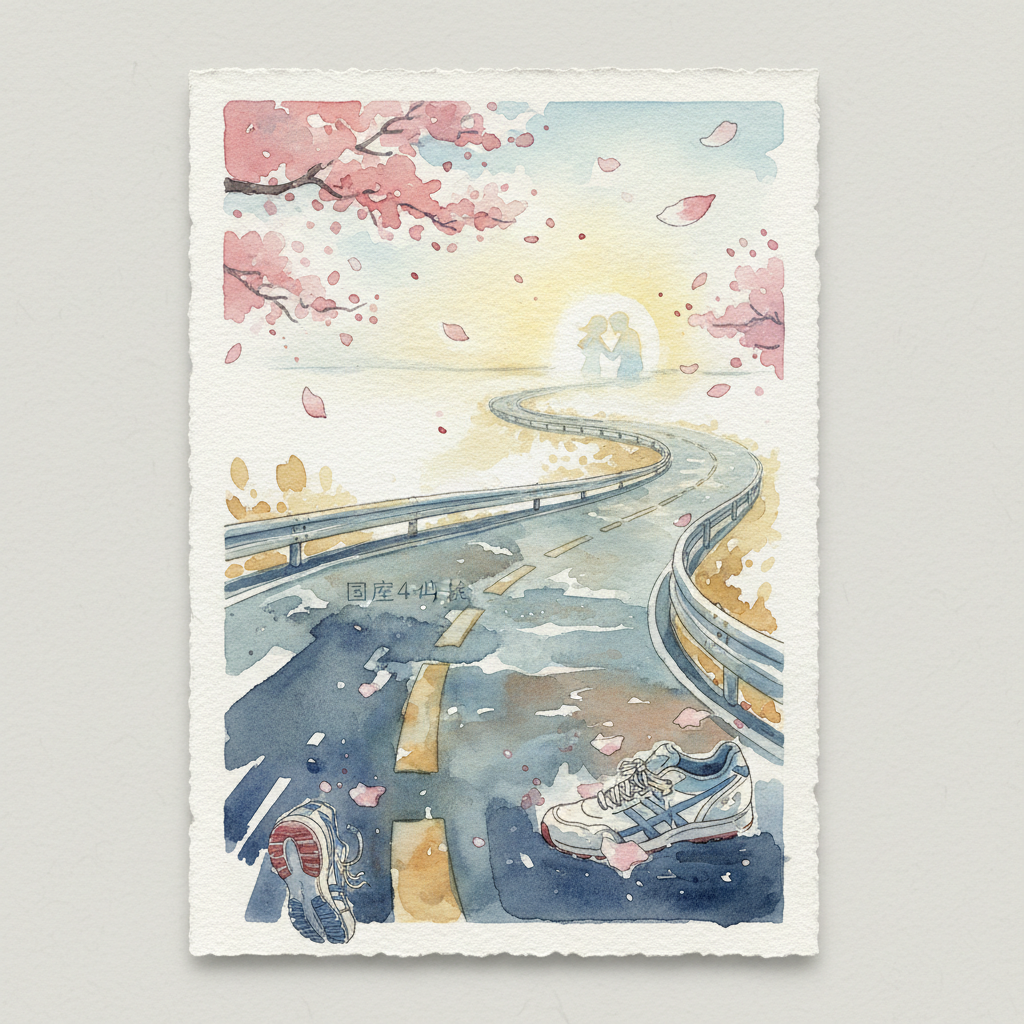
The library synopsis follows a high-school girl running along National Route 4 as she hopes to meet a senior student. The play's compressed premise makes it useful for actors working on the relationship between physical action and imagined narrative. A performer may be moving through a very specific world while the audience receives the journey through language, rhythm, and the body.
This is a good choice for a workshop that wants to examine how an actor can make a large social environment from limited means. The group can ask: What does the audience need to see? What can be heard? When does a run become a memory, a fantasy, or a ritual? The answers do not need to be supplied by scenery.
The play also offers a route into scale. A performer can begin with a small, private intention and gradually let the body carry the pressure of school, desire, status, and time. Directors can test whether the actor's physical score remains legible when the text is translated into English. If a cultural reference is difficult to carry over, the group can compare literal translation, contextual adaptation, and action-based interpretation.
For an international workshop, this is particularly useful because it prevents “Japanese” from becoming a decorative category. The central training question is universal but not culturally empty: how does a young person move through a social world when a single encounter feels enormous?
Try it in a workshop: Have the actor perform the same passage three times: once as private thought, once as a public confession, and once as a physical route remembered years later. Keep the words constant and change only the relationship with the audience.
3. A Glass of Spilled Milk (Tatoeba Koboreta Miruku no Yō ni, たとえば零れたミルクのように) — Nami Kuno (久野那美)
- Japanese Play Library: A Glass of Spilled Milk
- Cast listed by the library: 2 performers
- Runtime: approximately 60 minutes
- Best workshop focus: partner listening, absence, memory, and the pressure of unfinished speech
A two-person play is not automatically a good listening exercise. The strongest two-handers make every pause consequential, so actors cannot hide behind a crowd, scene change, or busy design. Nami Kuno's A Glass of Spilled Milk is a useful text for that kind of concentrated work.
The title suggests an image of loss that cannot simply be reversed. For actors, that image can become a practical question: what does a person do with an event that has already happened but has not been emotionally completed? The scene can be approached through action, avoidance, repetition, or silence rather than through a single explanatory backstory.
In an international rehearsal room, a two-hander like this is also a good test for translation. When a line sounds unnatural in English, ask whether the problem is vocabulary, rhythm, social distance, or an assumption about what must remain unsaid. The translator and actors should listen together. A line that is “accurate” on the page may still be unplayable if it destroys the turn-taking that gives the scene its tension.
The workshop should resist the urge to fill every silence with psychology. Instead, score what the actors actually do: where they look, when they stop listening, how they occupy the same room, and whether they accept or refuse the other's version of the past.
Try it in a workshop: Rehearse a scene once with no movement and once with a strict spatial pattern. Compare how the same words change when distance, orientation, and the possibility of leaving become physical facts.
4. Pears Tossed Back (Nashi no Tsubute no Nashi, 梨の礫の梨) — Takuya Yokoyama (横山拓也)
- Japanese Play Library: Pears Tossed Back
- Cast listed by the library: 2 performers
- Runtime: approximately 60 minutes
- Best workshop focus: conversational rhythm, dialect, comic timing, and buried history
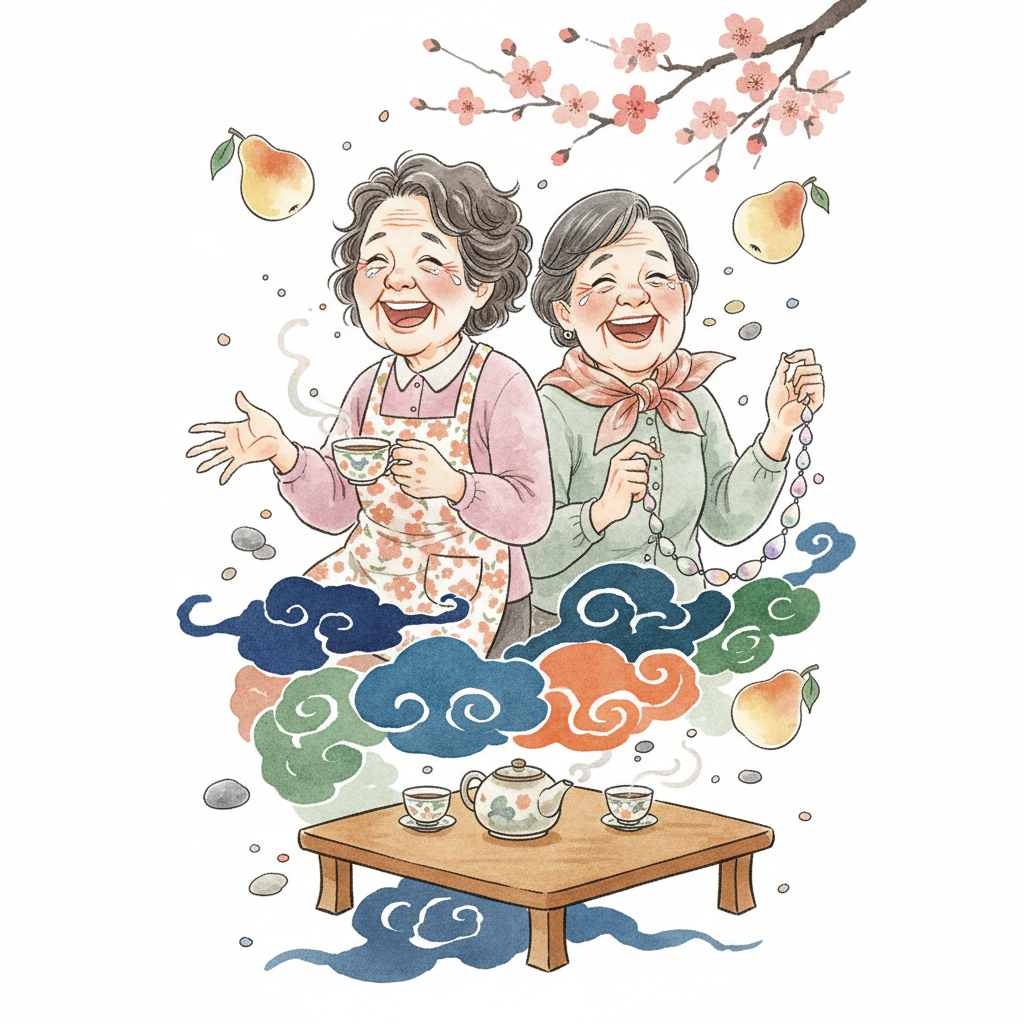
The Japanese Play Library describes this as a two-person play in Kansai dialect. It begins comically, with the distinctive conversational texture of two older women, and gradually draws out regret, memory, and unresolved feeling. That movement from everyday talk toward emotional disclosure makes it excellent for actors who need to practice tonal transition without announcing the transition.
Dialect should be handled carefully in an English-language workshop. The goal is not to imitate a generic “regional” accent. First identify the dramatic work the dialect performs: intimacy, social identity, comic timing, resistance, or a shared history. Then decide whether the English version should use a regional variety, a marked rhythm, a vocabulary pattern, or simply a heightened relationship between the speakers.
The piece is also a strong text for teaching subtext. The actors can play the first pass as a realistic conversation, then repeat it while marking the moment each character changes the subject, tests the other person, or turns a joke into an accusation. The audience should feel the past arriving through ordinary speech.
Try it in a workshop: Create two translations of a short exchange: one close to the Japanese syntax and one designed for playable English. Perform both without changing the blocking. Ask which version preserves the social action of the scene, not merely the dictionary meaning.
5. Tomodachi ga Kita (Tomodachi ga Kita, ともだちが来た) — Toshiro Suzue (鈴江俊郎)
- Japanese Play Library: Tomodachi ga Kita
- Cast listed by the library: 2 men
- Runtime: approximately 90 minutes
- Best workshop focus: atmosphere, waiting, status, and the behavior of the unspoken
The premise is spare: a friend arrives, but he does not drink water even though the weather is oppressively hot. That small irregularity can generate a large amount of actor work. What does the host notice? What does the visitor refuse to explain? How does politeness become pressure?
This is a valuable text for performers who rush toward the “meaning” of a scene. The workshop can begin with the observable facts and postpone interpretation. The actors should track offers, refusals, changes of temperature, and the moment an ordinary visit becomes uncanny. A director can keep the design nearly empty and let the audience's attention settle on behavior.
The play is also useful for status work because the social positions are not fixed. The person who owns the room may not control the encounter. The guest's silence may become the most active force onstage. Actors can exchange roles or rehearse the scene with different assumptions about who has invited whom.
For a staged reading, the script offers a clear lesson: a reading is not a lesser production if the performers make the listening visible. Tokyo Festival's 2026 TANAOROSHI Reading Festa describes staged reading as a live collaboration between actors in which simple lighting, sound, and words invite the audience to complete the theatrical world. That principle suits a play built on what is present, absent, and withheld.
Try it in a workshop: Rehearse the opening with one actor secretly knowing the visitor's reason for coming and the other actor not knowing it. Reverse the information and compare how the audience reads the same pauses.
6. Song of Celebration (Hōka, 寿歌) — Sō Kitamura (北村想)
- Japanese Play Library: Song of Celebration
- Cast listed by the library: 2 men, 1 woman
- Runtime: approximately 80 minutes
- Best workshop focus: ensemble contrast, post-apocalyptic imagery, comedy under pressure, and shared world-building
Sō Kitamura's Song of Celebration places traveling performers in a world after nuclear war. The Japanese Play Library synopsis follows Gesaku and Kyōko as they pull a cart through the landscape before Yasuo joins them. Their attempt to perform for money, even under threat, creates a strong foundation for ensemble work.
The play asks actors to build a world that the script does not need to show literally. What does the cart mean? What does the audience imagine beyond the playing area? How can a performer make danger present without producing a spectacle of destruction? These are practical questions for a workshop working with minimal objects.
The contrast between performance and survival is especially productive. The characters are entertainers, but entertainment is not separate from their material conditions. A rehearsal can explore the moment when a comic routine stops being a routine and becomes a survival strategy. It can also ask how a group protects a shared story when the world around it has broken apart.
This is a good text for three performers because the relationships are structurally uneven. Two people already have a history; the third person changes the balance. Let the actors map alliances, interruptions, and shifts in who gets to define reality.
Try it in a workshop: Give the ensemble one chair, one bag, and one piece of fabric. Build the post-war landscape without adding objects. Then remove the objects and repeat the scene using only rhythm, gaze, and vocal image.
7. The Dressing Room (Gakuya, 楽屋〜流れ去るものはやがてなつかしき〜) — Kunio Shimizu (清水邦夫)
- Japanese Play Library: The Dressing Room
- Cast listed by the library: 4 women
- Runtime: approximately 80 minutes
- Best workshop focus: ensemble composition, theatrical memory, backstage behavior, and shared focus
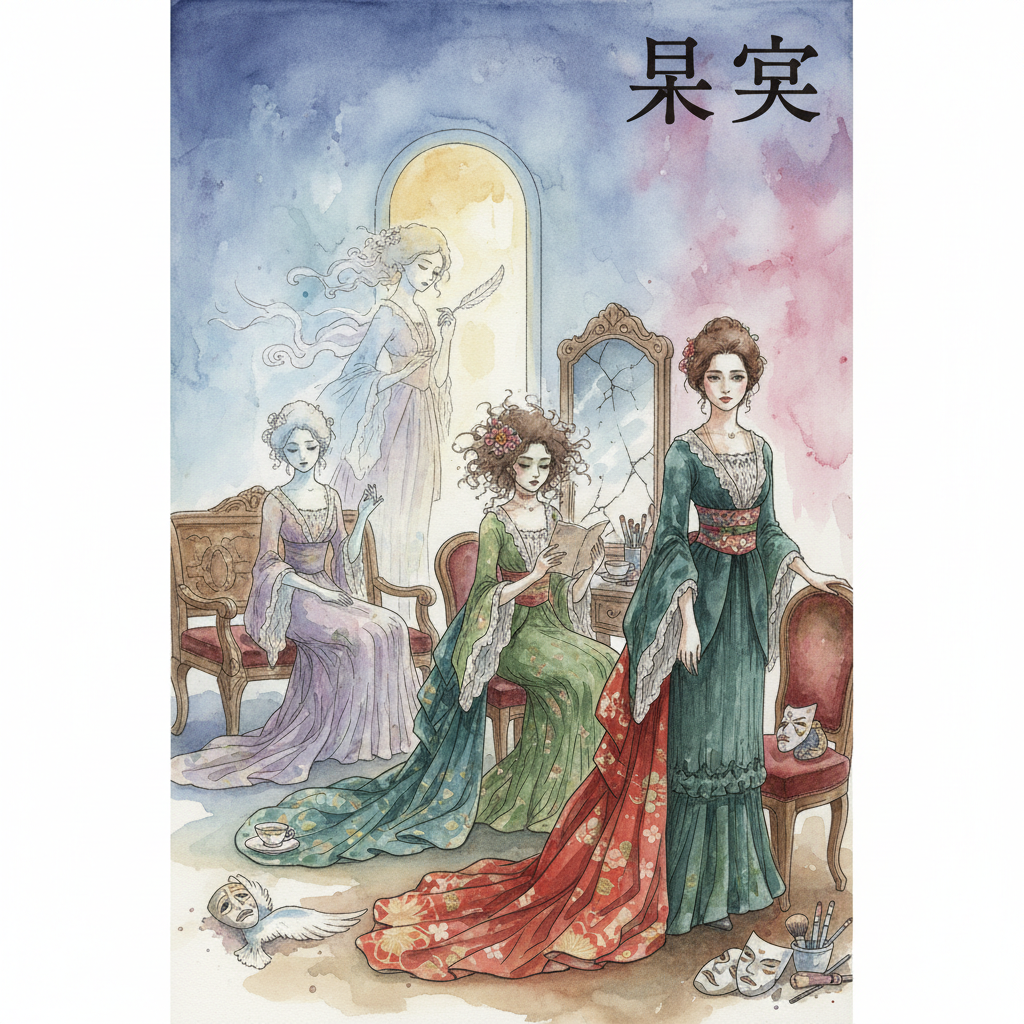
Kunio Shimizu's The Dressing Room is one of the clearest choices for a group workshop. Its backstage setting places actors in a world already organized around performance, waiting, costume, memory, and the presence of absent audiences. The Japanese Play Library lists four women, making the piece a practical option for an ensemble that wants to study group dynamics without a large cast.
A dressing room is a naturally layered space. A performer can be herself, a character, an actor remembering a role, or a ghostly trace of someone who once occupied the room. The workshop should not flatten these layers into a single supernatural explanation. Instead, let the actors test how much can be communicated by costume fragments, mirrors, entrances, and the difference between public and private voice.
This work is also useful for discussing theatrical labor. The audience sees performance, but the dressing room contains the waiting, repair, rivalry, preparation, and self-invention that support it. Actors can examine how a group behaves when the official performance is not happening yet—and whether “not happening” is actually possible.
A related English-language spotlight on the Japanese Play Library discusses the play's concentrated setting and four-woman ensemble. For a workshop, begin with a table reading, then assign each actor a repeated task such as powdering a face, repairing a costume, checking a mirror, or waiting for a cue. The tasks should remain simple enough that the relationships become visible.
Try it in a workshop: Stage the same conversation three times: before a performance, after a performance, and in a dressing room that may no longer belong to the living. Do not change the lines; change the actors' relationship to the room.
8. Human Pavilion (Jinruikan, 人類館) — Seishin Chinen (知念正真)
- Japanese Play Library: Human Pavilion
- Cast listed by the library: 3 performers
- Runtime: approximately 90–120 minutes
- Best workshop focus: chorus, language politics, historical perspective, and the ethics of spectatorship
Seishin Chinen's Human Pavilion is a demanding choice for an advanced ensemble workshop. It begins from the history of the 1903 Human Pavilion incident and turns the stage into a contested site where colonial display, Okinawan identity, language, memory, and spectatorship collide.
The play should not be used as a quick cultural exercise. Its value lies in the questions it forces the ensemble to confront: Who is looking? Who is being displayed? Which language carries authority? When does comedy expose violence, and when does it allow an audience to remain comfortable?
Three performers can create a surprisingly large field of perspectives if the group works with careful vocal and physical transitions. One actor may hold a historical position, then become a commentator, witness, or target of the audience's gaze. The workshop can map these shifts without assuming that a single actor “owns” one identity throughout the performance.
The language question is central for English-speaking companies. The Japanese version can involve Standard Japanese, Okinawan Japanese, and Okinawan language. An English production should consult translators and cultural dramaturgs rather than treating those distinctions as interchangeable accents. The correct training goal is not perfect imitation; it is ethical clarity about what the translation makes audible and what it risks erasing.
Try it in a workshop: Ask each performer to identify who has the power to name the scene at every moment. Then repeat the sequence with the naming power redistributed. Discuss what changed in the audience's position.
How to use these plays in a workshop sequence
A useful sequence moves from formal control to relational complexity. You do not need to stage all eight works. Choose one text as a laboratory and borrow exercises from the others.
A 90-minute introductory session
- 10 minutes: Read the synopsis and agree on the rights and translation boundaries.
- 15 minutes: Read the text once without interpretation.
- 15 minutes: Mark repetitions, silences, entrances, and changes of address.
- 20 minutes: Repeat one section with a new spatial score.
- 20 minutes: Test a literal translation and a playable translation.
- 10 minutes: Share observations and identify questions for the next rehearsal.
A three-session ensemble laboratory
Session one: text and rhythm. Start with Repetition and Continuation or A Kiss Scene Now. Focus on how an actor makes time visible.
Session two: relationship and withholding. Use A Glass of Spilled Milk, Pears Tossed Back, or Tomodachi ga Kita. Focus on listening, interruption, and the pressure beneath ordinary conversation.
Session three: shared world. Use Song of Celebration, The Dressing Room, or Human Pavilion. Focus on space, chorus, perspective, and the ethics of representing a world beyond the rehearsal room.
This progression also works for an English-language company. Begin with what the actors can do physically and vocally, then return to cultural specificity with better questions. Translation is not only a language problem. It is an acting problem, a dramaturgical problem, and sometimes a rights problem.
Choosing the right play for your group
Choose Repetition and Continuation if your group wants a compact formal challenge. Choose A Kiss Scene Now if one actor needs to expand a personal journey into a social world. Choose a two-hander when the workshop's central concern is listening and withheld information. Choose The Dressing Room when you have four performers who want to investigate performance itself. Choose Human Pavilion only when the group has enough time, research support, and cultural dramaturgy to work responsibly with its historical material.
The Japanese Play Library's catalogue is a starting point, not a substitute for reading the script. Confirm cast information, runtime, translation status, and rights directly. A database entry may provide useful production metadata, but the rehearsal room must discover whether the text fits your particular actors.
Frequently Asked Questions
Are these Japanese plays available in English?
Availability varies by title. Some Japanese plays have published translations, festival translations, or prior international productions; others may require a new translation. Do not assume that an English synopsis means an English performance text exists. Ask the playwright, publisher, rights holder, or authorized representative before translating or presenting the work.
Can I use one of these plays for a public staged reading?
Only after checking permission. A private educational exercise, a closed workshop, a ticketed reading, and a full production may have different rights requirements. Treat the Japanese Play Library as a discovery resource and obtain permission for the format you intend to use.
Which play is best for beginners?
For a short first session, A Kiss Scene Now is a practical starting point because its runtime is about 30 minutes and its central physical journey is easy to test. Repetition and Continuation is also short, but its repeated structure may be more demanding than its length suggests.
Which play is best for a staged reading?
Tomodachi ga Kita and A Glass of Spilled Milk are strong options for a text-centered reading because the relationship between voices, pauses, and withheld information can remain visible without a full set. The Dressing Room is a good choice when the performers can make the backstage space through objects and shared attention.
How should I approach dialect and culturally specific language?
Begin by identifying what the language does in the scene: intimacy, status, humor, exclusion, memory, or authority. Then work with a translator and dramaturg to decide what can be carried into English through vocabulary, rhythm, syntax, accent, or performance form. Avoid replacing a specific Japanese language variety with a casual stereotype.
What is the best way to compare translations?
Read the same passage aloud in at least two versions. Listen for turn-taking, breath, interruption, and the action of each line. The best workshop translation is not always the most literal one; it is the one that preserves the play's relationships and theatrical pressure while remaining honest about what has changed.
Further reading
- Play Spotlight 2026: Human Pavilion (人類館)
- Best Japanese Plays for Low-Budget Productions (2026)
- How to Find Japanese Plays to Stage in English (2026)
Sources and research notes
- Japanese Play Library entries for the eight recommended plays, used for titles, authors, cast information, runtimes, and catalogue synopses.
- Performing Arts Network Japan: “Yukio Shiba: Playing with Theatre Like a Child”, an interview discussing Repetition and Continuation, looping time, and rehearsal difficulty.
- EPAD (Eternal Performing Arts Data): Yukio Shiba, used to cross-check the formal description and performance history of Repetition and Continuation.
- Tokyo Festival: “TANAOROSHI Reading Festa”, used for the description of staged reading as a live collaboration between actors and audience imagination.
- Kyoto Experiment: “Asian Playwright Project”, consulted as a current example of Japanese and Asian play texts presented through staged readings with surtitles.
この記事で紹介した戯曲



戯曲図書館 編集部・公開日 2026/10/28
演劇経験者が運営する戯曲検索サービスの編集チームです。脚本選びのノウハウ、演劇の最新情報、公演レポートなどを書いています。
関連記事
- 8 Best Japanese Science Fiction Plays (2026): From Time Travel to Android FamiliesExplore 8 Japanese science fiction plays for English-speaking readers, directors, and theater makers—from cosmic family dramas to time travel, androids, and post-disaster worlds.2026/10/28
- If You Like The Bald Soprano: 5 Japanese Plays Where Language Goes WrongIf Eugène Ionesco's The Bald Soprano fascinates you, discover five Japanese plays that turn broken language, social ritual, and theatrical repetition into sharp comedy and unease.2026/10/23
- If You Like True West (2026 Guide): 5 Japanese Plays About Brothers, Masculinity, and the Myth You Can't OutrunLove Sam Shepard's True West? Read 5 Japanese plays about brothers, inherited violence, failed masculinity, and the self you cannot shake off — from Matsuo Suzuki to Yu Miri.2026/10/09
- If You Like Long Day's Journey Into Night (2026 Guide): 5 Japanese Plays About Family Secrets, Blame, and the Past That Won't Stay BuriedLove Long Day's Journey Into Night? Read 5 Japanese plays about family secrets, inherited grief, and the quiet violence of a past that refuses to stay buried.2026/10/02