
If you like Eugène Ionesco’s The Bald Soprano, the best Japanese plays to read next are works that make ordinary speech, manners, and social roles collapse in public—often while the audience is still laughing.
Ionesco’s 1950 play is famous for its apparently simple domestic setup: two couples exchange banalities until language loses its ability to connect one person to another. The jokes become mechanical, repetition becomes frightening, and the theater itself begins to show through the polite conversation. Japanese playwrights have explored similar territory, but not by making “Japanese versions” of Ionesco. They use absurdity to register different pressures: postwar memory, family obligation, institutional violence, theatrical identity, and the fear of being excluded from a group.
This guide introduces five Japanese plays for readers, actors, directors, and translators who love The Bald Soprano’s verbal vertigo. The closest connections are formal rather than plot-based. These plays share an appetite for failed conversation, social performance, tonal instability, and the comic power of a rule that no longer makes sense.
Quick Facts
| Question | Answer |
|---|---|
| Western starting point | The Bald Soprano by Eugène Ionesco (1950) |
| Best first Japanese play | The Little Match Girl by Betsuyaku Minoru (別役実) |
| Best for social coercion | Tomodachi / Friends by Abe Kōbō (安部公房) |
| Best for meta-theater | The Dressing Room / Gakuya by Shimizu Kunio (清水邦夫) |
| Best for historical pressure | The Elephant / Zō by Betsuyaku Minoru |
| Best for a post-apocalyptic comic register | Hogiuta by Kitamura Sō (北村想) |
| Typical reason to compare them | Language and ritual stop producing stable meaning |
What Makes The Bald Soprano a Useful Starting Point?
In The Bald Soprano, the Smiths and Martins appear to be having a conversation, but the conversation is gradually revealed as a machine that produces sound without understanding. Domestic politeness becomes a trap. Facts contradict one another. Names and identities become interchangeable. The Fire Chief’s visit does not restore order; it adds another performance of social usefulness. By the end, the play can restart with a different couple speaking the same lines.
That circularity is central. Ionesco does not simply say that people are foolish or that language is meaningless. He shows how language can continue functioning socially after it has stopped carrying reliable thought. People speak because the situation demands speech. They repeat formulas because formulas make a room feel inhabited. They perform certainty because uncertainty would expose the fragility of the group.
Japanese absurdist and experimental theater offers several powerful variations on this problem. Some plays use clipped, almost ordinary exchanges. Others build pressure through a crowd, a family, a backstage community, or survivors moving through a damaged landscape. The surface may be quieter than Ionesco’s verbal fireworks, but the underlying question is close: what happens when people keep following a social script after the script has lost its world?
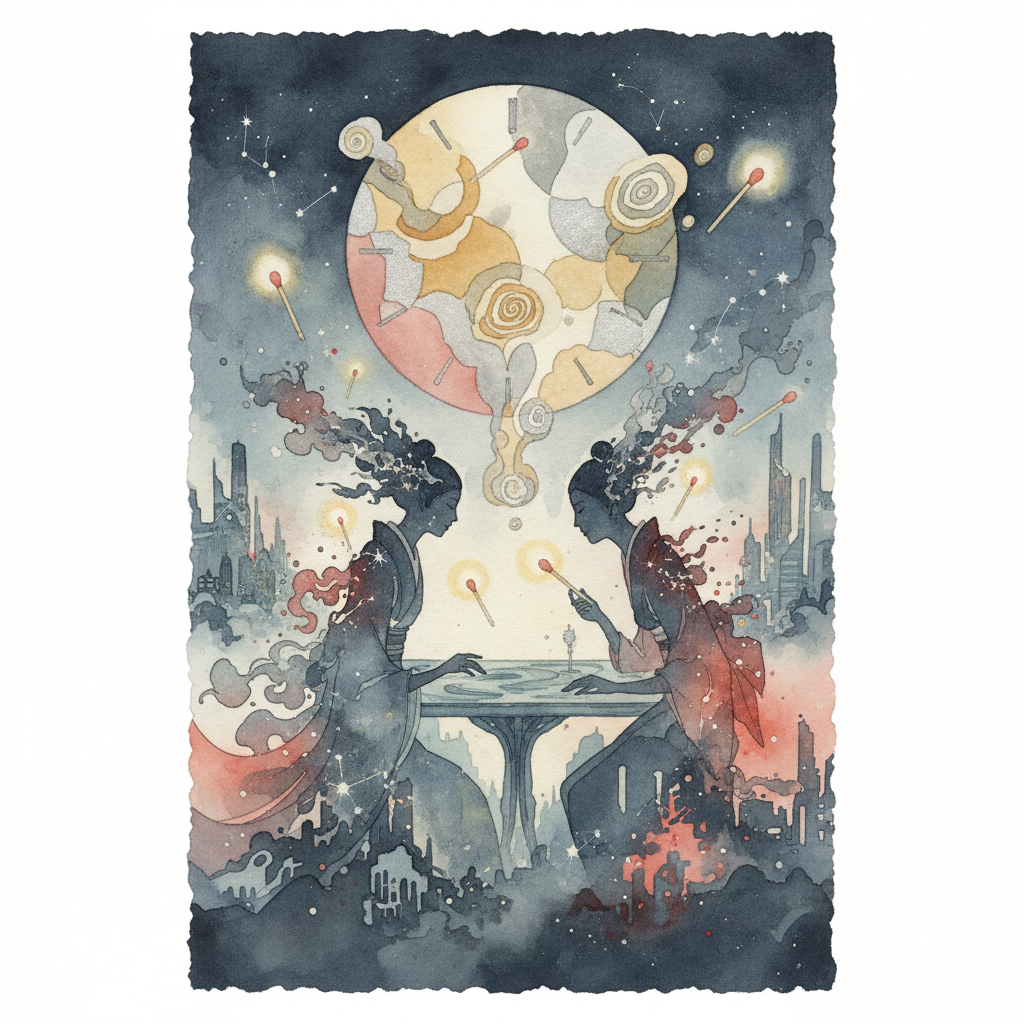
1. The Little Match Girl (Macchi-uri no Shōjo, マッチ売りの少女) — Betsuyaku Minoru
- Connection to Ionesco: familiar speech becomes a fragile ritual around an absent or damaged reality
- What changes: the absurdity is quieter, more poetic, and deeply marked by postwar memory
- Best for: readers who like the melancholy beneath Ionesco’s jokes
- Japanese Play Library: The Little Match Girl
Betsuyaku Minoru is one of the essential figures in postwar Japanese theater. His work is often associated with fujōri-geki (不条理劇, theater of the absurd), but the label can be misleading if it suggests weightless philosophical play. Betsuyaku’s absurd worlds are filled with historical residue. People speak in small, practical ways while something enormous and unresolved presses against the edges of the scene.
The Little Match Girl is a particularly strong bridge for Bald Soprano readers because it understands how a simple social situation can become uncanny without announcing the transition. The play draws on Hans Christian Andersen’s fairy tale, yet it is not a straightforward adaptation. As the New National Theatre, Tokyo has noted, the work places an image of postwar Japanese history alongside the fairy-tale atmosphere of the original. The result is a one-act structure in which fantasy, memory, and everyday behavior overlap.
Where Ionesco makes domestic conversation explode into verbal nonsense, Betsuyaku often lets the ordinary remain almost intact. That restraint can make the disturbance sharper. A request, a recollection, or an apparently courteous exchange may carry several incompatible realities at once. Characters do not necessarily shout their way out of social convention. They remain inside it, and the audience begins to hear the pressure in the pauses.
For an English-speaking director, the useful comparison is not “both plays are surreal.” It is more specific:
- Ionesco exposes the emptiness of bourgeois formulas by accelerating them toward breakdown.
- Betsuyaku exposes historical and emotional absence by allowing formulas to continue around what cannot be comfortably said.
That makes The Little Match Girl an excellent next text if you respond to the sadness inside The Bald Soprano. Both plays understand that comedy can be a protective coating. The laugh arrives because the characters are trying to keep the world manageable. The unease arrives when we notice what the performance is protecting.
The New National Theatre describes The Little Match Girl as a major early work by Betsuyaku and a landmark in postwar drama. The Performing Arts Network Japan also identifies it, alongside The Elephant, as one of the plays that established his reputation. Those descriptions matter because Betsuyaku’s absurdism is not an isolated stylistic experiment: it belongs to a larger transformation in Japanese theater after the 1960s.
2. The Elephant (Zō, 象) — Betsuyaku Minoru
- Connection to Ionesco: public behavior becomes a ritual that conceals moral failure
- What changes: the social absurdity is explicitly historical and political
- Best for: readers who want absurd comedy with ethical and postwar weight
- Japanese Play Library: The Elephant / Zō
If The Bald Soprano asks what happens when conversation becomes social noise, The Elephant asks what happens when public recognition becomes a cruel performance. A man who survived the atomic bombing displays the keloid scar on his back to people in the street, soliciting cheers and applause. His nephew urges him to stop. The nephew’s argument is not simple compassion or simple cruelty: survivors, he says, have been reduced to a category that society can tolerate politely, provided they do not insist on making their pain visible.
The premise is grotesque, but it is not grotesque for decoration. The New National Theatre’s English-language description emphasizes the contrast between the two men, the marginalization of hibakusha, and the anguish created by social tolerance without genuine feeling. The play premiered in 1962 and became one of Betsuyaku’s signature works.
The connection to Ionesco lies in the way public language manages discomfort. In The Bald Soprano, people keep using conversational conventions even as those conventions detach from meaning. In The Elephant, social conventions remain intelligible—kindness, dignity, restraint, public decorum—but their moral logic has become unstable. Everyone knows the correct words. The problem is that the correct words may be another way of refusing to see.
This is a useful distinction for performers. Ionesco often gives actors a score of escalating vocal and semantic disintegration. Betsuyaku may require a different precision: the characters must sound as though they are making reasonable arguments. The horror grows from the fact that the unreasonable world can be defended in calm, socially acceptable language.
Read beside The Bald Soprano, The Elephant also complicates the idea that absurdism is merely universal. Both plays show people trapped in structures they did not invent. But Betsuyaku asks whose history is being compressed when theater speaks about “the human condition.” The answer is not abstract. It includes bodies, scars, cities, institutions, and the pressure to turn suffering into something publicly acceptable.
For theater makers, the play is especially valuable as a companion text to Ionesco because it demonstrates that a sparse or concentrated dramatic situation can contain a large social world. The stage does not need a crowd to show collective behavior. A nephew and an uncle can become an entire culture’s argument with itself.
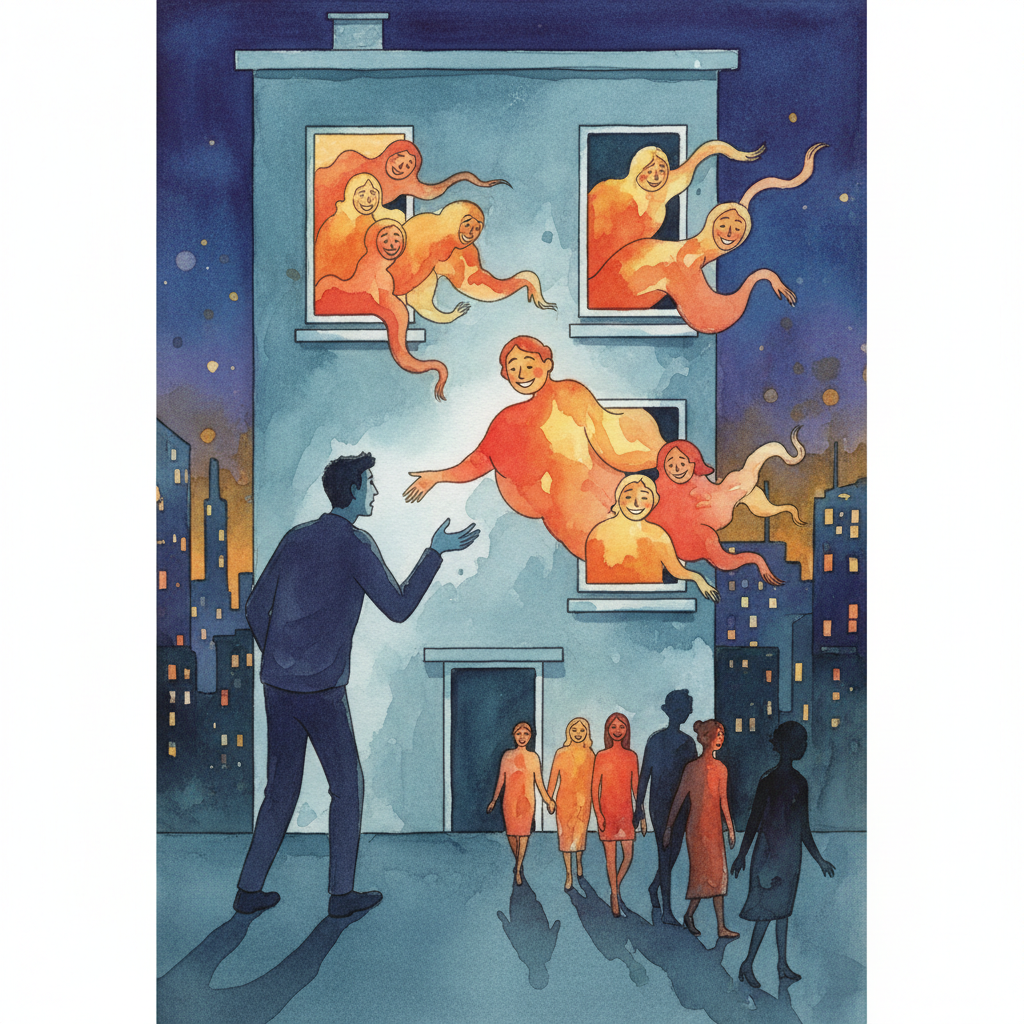
3. Tomodachi / Friends (Tomodachi, 友達) — Abe Kōbō
- Connection to Ionesco: politeness becomes a weapon; a social script invades private life
- What changes: the breakdown is spatial and collective rather than primarily verbal
- Best for: readers who like the threat hidden inside ordinary hospitality
- Japanese Play Library: Tomodachi / Friends
Abe Kōbō’s Tomodachi begins with a situation that sounds almost harmless. A family arrives at a man’s home and insists on calling themselves his friends. They enter, remain, rearrange the space, and gradually override his refusal. What begins as awkward social contact turns into an occupation of private life.
This is one of the clearest Japanese companions for The Bald Soprano if your favorite element is the violence of etiquette. Ionesco’s couples are trapped in a world where conversation must continue even when no meaningful exchange is possible. Abe’s protagonist is trapped in a world where friendliness must be accepted even when it has become coercion. In both cases, the social form protects itself. The question is not simply whether a person wants to participate. The question is whether refusal can still count as a valid social act.
The title Tomodachi is crucial. “Friends” sounds warm, voluntary, and reciprocal. The family’s behavior makes the word oppressive precisely because it is presented as benevolent. The more insistently they claim intimacy, the less space the protagonist has to define the relationship for himself.
Compared with Ionesco, Abe builds absurdity through accumulation. The family’s behavior may be funny at first because it is excessive and socially awkward. Then the excess becomes a pattern. A pattern becomes a system. The system becomes a threat. This progression is useful for actors and directors because the production should not begin by announcing horror. It should allow normal social energy—smiles, introductions, reassurance, small talk—to become impossible to escape.
The play also offers a different relation between language and power. In The Bald Soprano, language collapses into repetition and contradiction. In Tomodachi, language can remain perfectly recognizable while its ownership changes. “Friend,” “welcome,” and “we mean no harm” are not meaningless. They are meaningful phrases being used to block another person’s meaning.
That makes Tomodachi a strong choice for readers interested in contemporary social anxiety: compulsory belonging, group pressure, and the fear that saying no will make you appear abnormal. Abe’s theater can feel Kafkaesque, but the stage situation remains intensely physical. Doors, furniture, proximity, and the right to remain alone all become dramatic material.
If Ionesco’s domestic room becomes a linguistic machine, Abe’s home becomes a machine for producing consent. The comparison is uncomfortable—and theatrically productive.
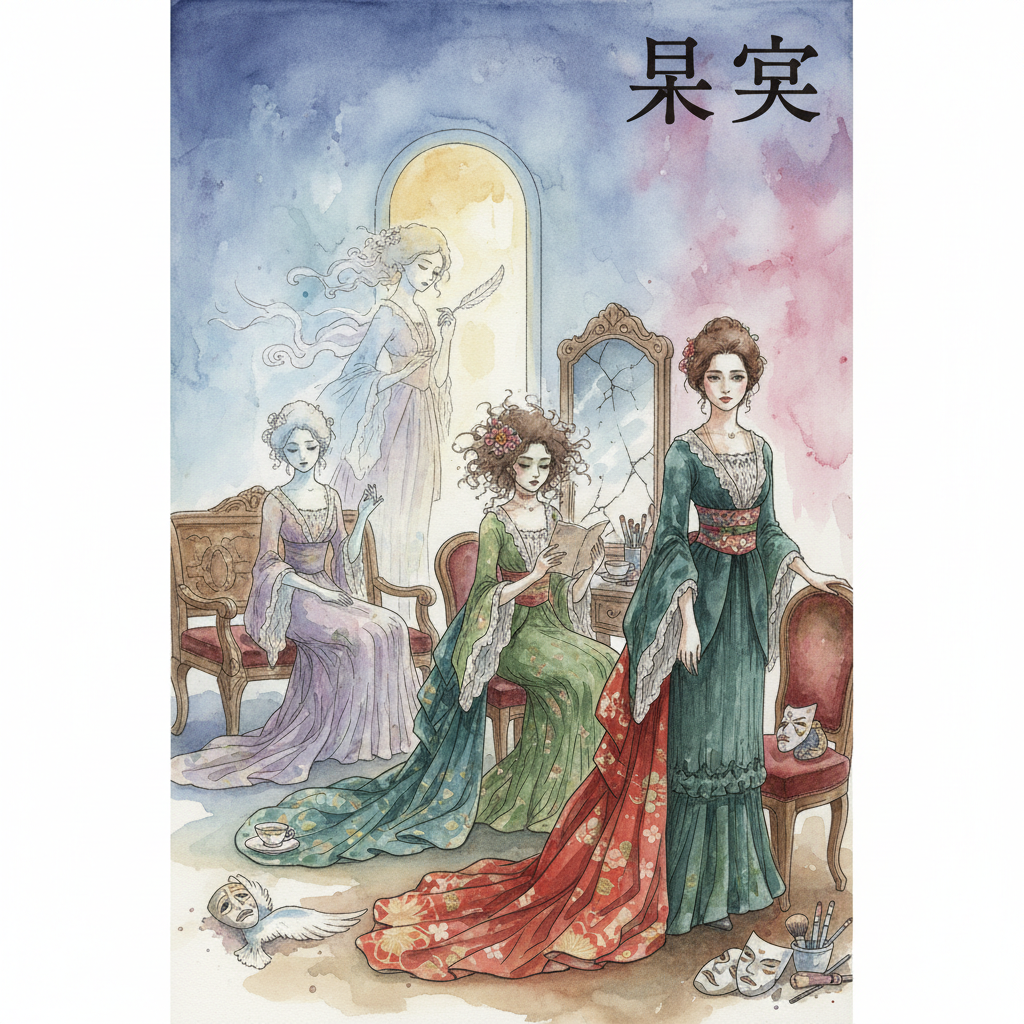
4. The Dressing Room (Gakuya, 楽屋) — Shimizu Kunio
- Connection to Ionesco: identities are performed, repeated, and exchanged until reality becomes theatrical
- What changes: the absurdity is meta-theatrical and driven by women’s backstage lives
- Best for: actors, directors, and readers fascinated by theater about theater
- Japanese Play Library: The Dressing Room / Gakuya
In The Dressing Room, the stage is a backstage room inhabited by actresses, memories, roles, resentments, and theatrical ghosts. The play’s setting immediately creates a double perspective: the characters are people in a dressing room, but they are also performers who cannot easily separate their working identities from their private ones.
This makes The Dressing Room a compelling route from The Bald Soprano for anyone drawn to theatrical self-awareness. Ionesco’s play reveals that social life already resembles performance. Shimizu Kunio asks what happens when the performers know this too well. Costumes, roles, entrances, exits, and remembered lines are not metaphors added by the director; they are the characters’ material environment.
The connection is especially clear in the treatment of repetition. In Ionesco, repeated phrases lose their promise of communication and become evidence that the social world is running on automatic. In The Dressing Room, repetition can suggest professional discipline, emotional entrapment, memory, and the persistence of roles after the performance should have ended. A character does not simply remember a part. She may continue to live inside the part, or use the part to speak what ordinary identity cannot admit.
For English-speaking theater makers, this play offers a rich comparison with The Bald Soprano because it shifts absurdist pressure from the bourgeois living room to the theatrical workplace. The backstage room is intimate but public, private but observed, practical but haunted by the history of performance. That unstable space makes every conversation potentially double-coded.
The play also broadens the gender texture of the comparison. The Bald Soprano is often discussed through its married couples and its critique of domestic convention. The Dressing Room puts women’s professional bodies, rivalries, memories, and theatrical labor at the center. Its absurdity is not only about language failing. It is about the roles available to people—and about what happens when a performer has been asked to become a role for too long.
A production should resist treating the backstage setting as mere realism. The room is a machine for transformation. A mirror can be a practical object, a witness, a trap, or another audience. A costume can identify a character, erase her, or summon a previous performance. Like Ionesco, Shimizu understands that a familiar room becomes strange when its rules are followed too precisely.
5. Hogiuta (Hogiuta, 寿歌) — Kitamura Sō
- Connection to Ionesco: comedy survives after the world that supported ordinary language has collapsed
- What changes: the play uses fable, road-story movement, and post-apocalyptic theatricality
- Best for: readers who want absurd survival rather than domestic absurdity
- Japanese Play Library: Hogiuta
Kitamura Sō’s Hogiuta moves the absurdist conversation beyond the living room. The play is associated with a damaged or post-apocalyptic landscape in which characters continue moving, speaking, bargaining, and trying to make a future out of fragments. Its tone can be comic, strange, and unexpectedly tender. The world may have broken, but theatrical behavior has not disappeared.
That is the key connection to The Bald Soprano. Ionesco’s characters continue speaking because speech is the ritual that keeps social existence from becoming visible as emptiness. In Hogiuta, characters continue performing recognizable human actions after the larger structures of certainty have become unreliable. Celebration, exchange, companionship, and storytelling do not restore the old world. They become provisional tools for surviving without it.
The title itself carries a tension between festivity and ruin. A congratulatory song normally confirms a shared social order: someone has arrived, something has been achieved, a community knows how to mark the occasion. In an absurd world, the song may continue even when no one can agree what is being celebrated. This is close to Ionesco’s method, but the emotional temperature is different. Hogiuta often makes room for endurance and imaginative recombination where The Bald Soprano emphasizes the terror of social repetition.
For a production, the play invites a flexible relation between realism and fable. Objects can be practical and symbolic at the same time. A road can be a route, a stage convention, or a promise that movement still matters. The dialogue may appear simple, but its rhythm carries the weight of a world that has lost its guarantees.
Readers coming from Ionesco should pay attention to how the two playwrights treat “normality.” In The Bald Soprano, normal domestic behavior becomes impossible to sustain because its language reveals its own emptiness. In Hogiuta, normality is already gone, so the characters improvise ceremonies from whatever remains. The result is not less absurd. It is a different answer to the same theatrical problem: how can people act together when the shared script has been damaged?
How These Plays Differ from Ionesco
It is tempting to describe any Japanese play with strange dialogue as “Japanese absurdism.” That shortcut hides the most interesting differences. Read these works beside The Bald Soprano through four comparison points:
| Comparison point | Ionesco | Japanese plays in this guide |
|---|---|---|
| Social setting | Bourgeois domestic routine | Home, street, backstage, road, postwar public life |
| Main pressure | Language loses semantic stability | Language, memory, belonging, and history compete |
| Repetition | A machine that exposes emptiness | A ritual that can preserve, conceal, or weaponize memory |
| Emotional aftertaste | Comic panic and ontological unease | Unease mixed with historical grief, coercion, or endurance |
The point is not to rank the plays by similarity. The point is to use Ionesco as a lens and then allow the Japanese texts to change what the lens can see.
If you want the most direct path, begin with The Little Match Girl. If you want the clearest study of social coercion, choose Tomodachi. If your interest is performance itself, read The Dressing Room. If you want absurdism with explicit postwar historical pressure, read The Elephant. If you want a fable of survival after ordinary reality has cracked, try Hogiuta.
For another route through Japanese absurdist theater, see the Japanese Play Library’s Playwright Profile: Minoru Betsuyaku. You can also continue with If You Like The Crucible: Japanese Plays About Scapegoats and Social Pressure, which follows a more political path through theatrical coercion.
FAQ
Is The Bald Soprano a Japanese play?
No. The Bald Soprano (La Cantatrice chauve) was written by Romanian-French playwright Eugène Ionesco and first performed in Paris in 1950. It is one of the defining works of European theater of the absurd.
Which Japanese play is closest to The Bald Soprano?
There is no single equivalent, but The Little Match Girl by Betsuyaku Minoru is the strongest first comparison in this guide. It shares Ionesco’s interest in ordinary behavior becoming uncanny, while grounding its atmosphere in postwar Japanese history and memory.
Are these plays comedies?
They can be staged as comedies, but none is comedy in the narrow sense of a work designed only to produce laughter. Their humor often exposes fear, coercion, historical trauma, loneliness, or the fragility of social agreement. The tonal shift is part of the form.
Which play is best for a small ensemble?
The Elephant is a concentrated two-character work. The Dressing Room is also attractive for an ensemble interested in a contained backstage setting, though its casting and production needs depend on the chosen translation and adaptation.
Can English-speaking theater companies perform these plays?
That depends on translation rights, licensing, and the specific edition. A database listing is a discovery resource, not a statement that performance rights are automatically available. Companies should verify the translation, rights holder, and territorial permissions before planning a public production.
Why compare Japanese plays with Ionesco?
Because comparison makes form visible. Ionesco helps readers notice repetition, failed dialogue, ritual, and social performance. Japanese plays then show that absurd theatrical strategies can carry different histories and different ethical pressures. The comparison should open the repertoire, not reduce it to imitation.
Sources and Further Reading
- New National Theatre, Tokyo, The Elephant — production synopsis and historical framing.
- New National Theatre, Tokyo, Match Uri no Shojo (The Little Match Girl) — English-language context for Betsuyaku’s play.
- Performing Arts Network Japan, Minoru Betsuyaku profile — biography, major works, awards, and the playwright’s relationship to absurd theater.
- New National Theatre, Tokyo, Waiting for Godot — context for the reception of Beckett in Japan and his influence on Betsuyaku.
- Japanese Play Library entries for The Little Match Girl, The Elephant, Tomodachi, The Dressing Room, and Hogiuta.
この記事で紹介した戯曲

Written by
戯曲図書館 編集部
演劇経験者が運営する戯曲検索サービス「戯曲図書館」の編集チームです。 脚本選びのノウハウ、演劇業界の最新情報、公演レポートなどを発信しています。
関連記事
If You Like True West (2026 Guide): 5 Japanese Plays About Brothers, Masculinity, and the Myth You Can't Outrun
Love Sam Shepard's True West? Read 5 Japanese plays about brothers, inherited violence, failed masculinity, and the self you cannot shake off — from Matsuo Suzuki to Yu Miri.
2026-10-09
If You Like Long Day's Journey Into Night (2026 Guide): 5 Japanese Plays About Family Secrets, Blame, and the Past That Won't Stay Buried
Love Long Day's Journey Into Night? Read 5 Japanese plays about family secrets, inherited grief, and the quiet violence of a past that refuses to stay buried.
2026-10-02
Best Japanese Plays for Staged Readings (2026): 8 Scripts That Sound Alive in the Room
A 2026 guide to 8 Japanese plays for staged readings, with cast size, runtime, and translation-friendly notes for directors and dramaturgs.
2026-09-02
If You Like The Crucible (2026 Guide): 4 Japanese Plays About Scapegoats, Panic, and Public Obedience
Love The Crucible? Read 4 Japanese plays about fear, scapegoats, conformity, and the cost of refusing the crowd.
2026-08-21