
目次15項目開く
- 1.Quick Facts
- 2.What makes Japanese science fiction theater distinctive?
- 3.1. My Star (わたしの星)
- 4.2. Our Planet (わが星)
- 5.3. A New World Worth Coming To (来てけつかるべき新世界)
- 6.4. Harm (害悪)
- 7.5. Galactic Melody (銀河旋律)
- 8.6. The Sun (太陽)
- 9.7. The Invader (散歩する侵略者)
- 10.8. What a Wide and Wonderful Universe (広くてすてきな宇宙じゃないか)
- 11.Comparison table: choose your science-fiction entry point
- 12.Three ways to stage Japanese SF in English
- 13.Frequently asked questions
- 14.Final recommendation
- 15.Research sources
Japanese science fiction plays use impossible futures to make ordinary human problems visible: family conflict, memory, loneliness, technology, disaster, and the question of what makes a person human.
Science fiction on stage does not need a spaceship, a wall of screens, or a realistic robot. In Japanese theater, an SF premise may appear as a family living under a transparent barrier, a lover whose past has been rewritten, a town where androids have replaced the dead, or a group of ordinary people looking at the life cycle of a star. The speculative idea matters, but the theater remains close to bodies, voices, relationships, and the audience’s imagination.
This 2026 guide recommends eight Japanese science fiction plays in the Japanese Play Library collection. They range from compact, lyrical works to large-cast social dramas. Some are useful for readers discovering contemporary Japanese drama; others are demanding choices for directors interested in technology, catastrophe, memory, or theatrical world-building.
The list is for English-speaking theater fans, translators, directors, dramaturgs, teachers, and performers. It is not a claim that any title is automatically available for performance in English. Always confirm copyright, translation, adaptation, and performance permissions with the rights holder or authorized representative.
Quick Facts
| Item | Recommendation |
|---|---|
| Best first Japanese SF play | My Star (わたしの星) |
| Best cosmic family drama | Our Planet (わが星) |
| Best near-future social comedy | A New World Worth Coming To (来てけつかるべき新世界) |
| Best android-and-family drama | What a Wide and Wonderful Universe (広くてすてきな宇宙じゃないか) |
| Best time-travel romance | Galactic Melody (銀河旋律) |
| Best dystopian political fable | The Sun (太陽) |
| Best alien-invasion premise | Before We Vanish / The Invader (散歩する侵略者) |
| Best women-centered SF tragedy | Harm (害悪) |
| Related English reading | Japanese Plays in English for Theater Makers (2026); If You Like The Crucible: 5 Japanese Plays About Belief and Accusation |
What makes Japanese science fiction theater distinctive?
On film, speculative fiction can show its world through locations, visual effects, editing, and sound design. Theater has different resources. A stage can show a future city with almost no scenery, but the audience must agree to imagine it with the performers. That limitation creates a particular kind of SF: less interested in displaying technology than in testing what technology does to human behavior.
Japanese playwrights often use SF premises as social instruments. A time machine becomes a way to ask whether love depends on shared memory. An android becomes a way to ask whether care is defined by origin or by action. An alien becomes a way to remove a familiar human concept and watch a community panic. A changed climate, a nuclear accident, or a divided population becomes a way to stage the politics of forgetting.
The eight plays below were selected for four reasons:
- The speculative premise changes the dramatic relationship. It is not decorative background.
- The work is theatrically imaginable. A director can build the world through performance as well as design.
- The central question can travel across languages. The plays remain culturally specific without becoming inaccessible.
- The titles offer different scales of SF. The list includes intimate chamber pieces, ensemble works, comedy, family drama, and dystopia.
1. My Star (わたしの星)
By Yukio Shiba (柴幸男)
Library record: 10 actors; approximately 90 minutes
Read the Japanese Play Library entry for My Star
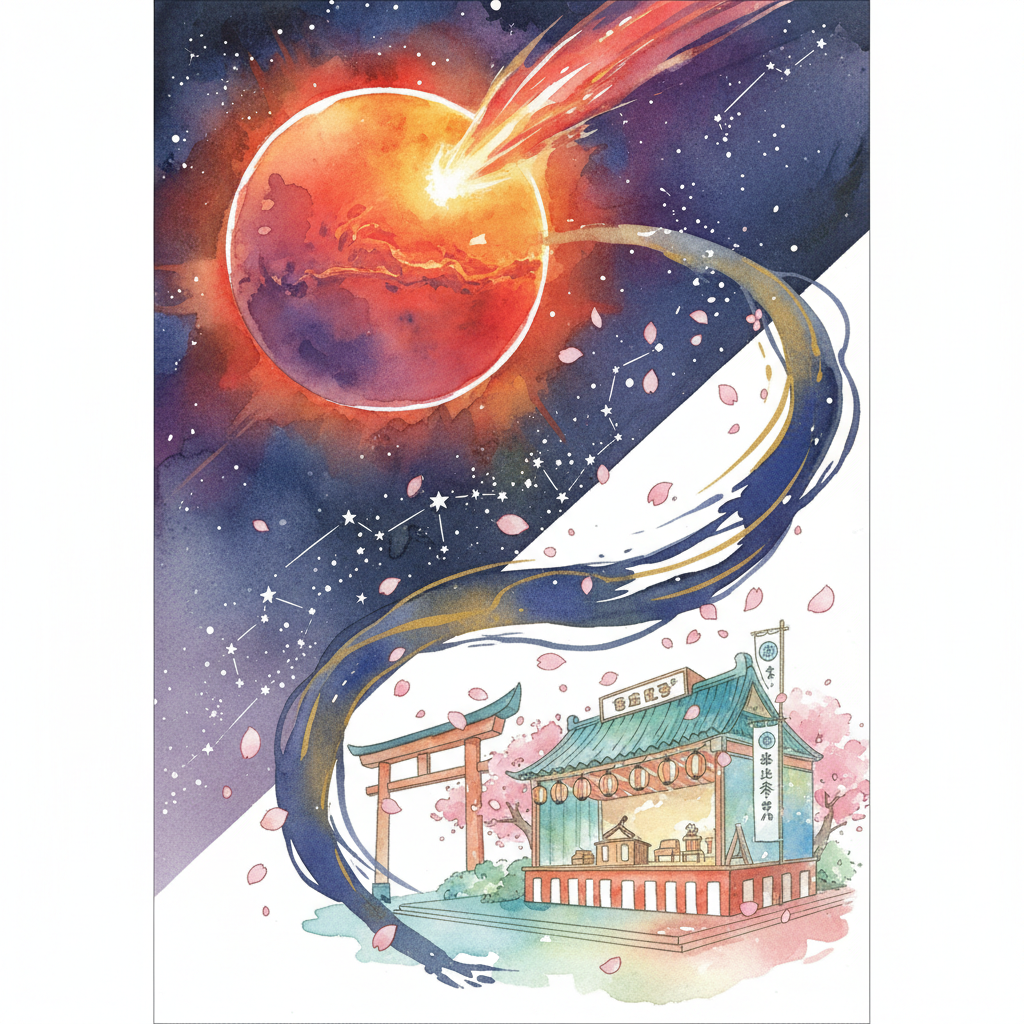
A high school cultural-festival presentation is interrupted by a cosmic fact: one of the students is preparing to transfer to Mars. That simple situation gives My Star its unusual emotional scale. The characters are dealing with ordinary adolescent concerns—friendship, performance, embarrassment, and the fear of separation—while the audience understands that the departure is not merely a move to another town.
The play is an ideal entry point for readers who want Japanese science fiction without beginning with a heavily technical dystopia. Its speculative world is not primarily about engineering. Mars changes the meaning of a school day. A rehearsal becomes a farewell. A casual conversation becomes a last chance. The science-fiction element works because it intensifies the value of everyday time.
For directors, the challenge is to avoid over-explaining the future. A schoolroom, a few objects, sound, and a disciplined ensemble may be more effective than a literal space-age design. The production can treat Mars as a physical destination, an emotional distance, or an image that gradually takes over the students’ language.
The play also has a useful connection to school theater culture. The culture festival, or bunkasai (文化祭), is not just scenery; it is a structure in which students publicly make something together. The play asks what a group chooses to present when one member is about to leave. That question is understandable even when the audience knows nothing about Japanese school life.
Best for: readers who want lyrical coming-of-age SF, student ensembles, and productions that make the ordinary feel astronomical.
2. Our Planet (わが星)
By Yukio Shiba (柴幸男)
Library record: 8 actors; approximately 90 minutes
Read the Japanese Play Library entry for Our Planet
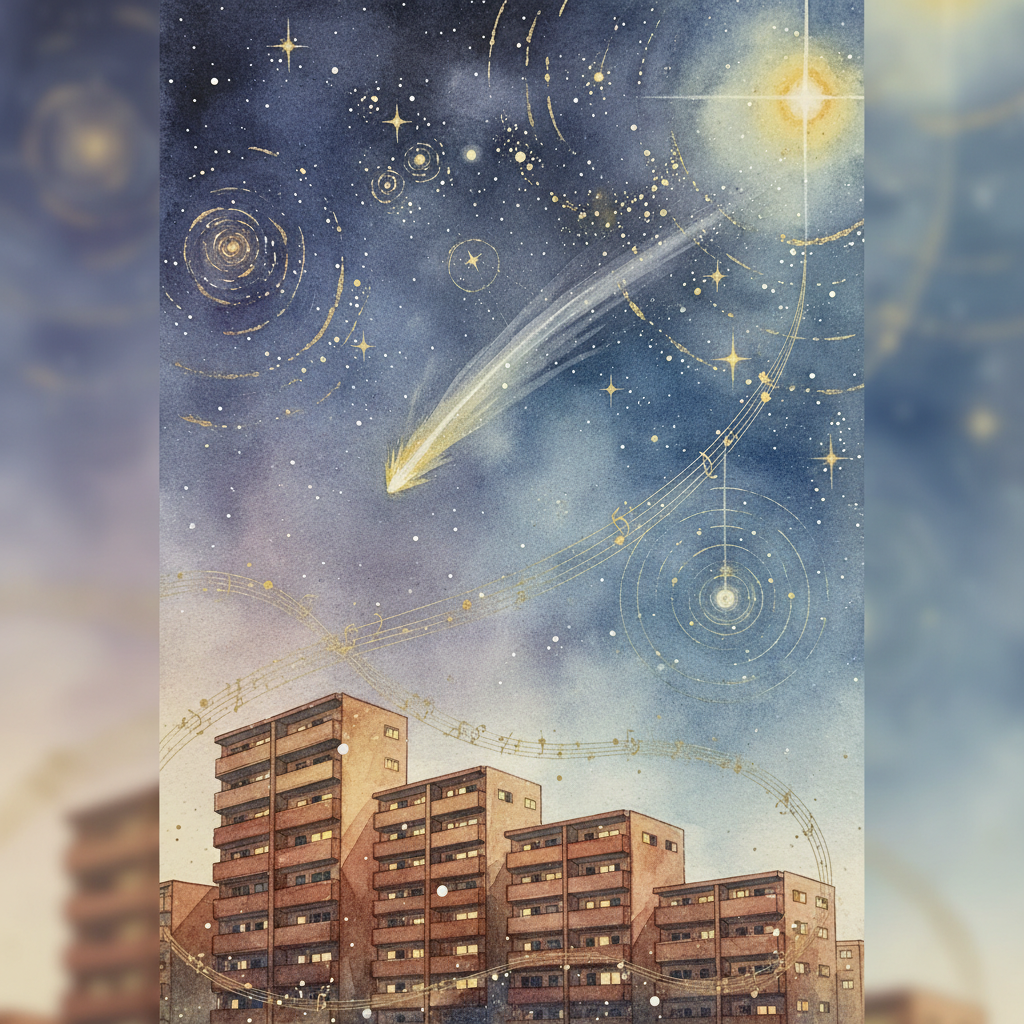
Our Planet places the life of a family in a housing complex beside the life of a star. Human time and cosmic time run at radically different speeds, yet the play makes them touch through language, rhythm, music, and repeated daily actions.
The result is not conventional hard science fiction. It is closer to a theatrical cosmology. A meal, a quarrel, a birth, a death, and a change in the neighborhood can be held against the vast duration of the universe. The comparison does not make human life seem meaningless. Instead, it gives small events a different intensity. The audience sees how much can happen inside a moment that the universe would barely register.
The play is especially important for directors interested in form. The catalog describes a musical structure in which speech and rap-like performance move between domestic life and planetary scale. That means the script should not be approached as ordinary realism with songs added afterward. Rhythm is part of the dramaturgy. Repetition can function as time, memory, or emotional accumulation.
For English-language readers, Our Planet is also a useful bridge to Western works such as Thornton Wilder’s Our Town. The connection is not an adaptation formula. Shiba’s play takes the idea of a community observed across time and gives it a contemporary Japanese musical and ensemble vocabulary. The result is both intimate and formally ambitious.
Best for: theater makers who want to explore rhythm, music, cosmic perspective, and the relationship between domestic realism and nonrealistic form.
3. A New World Worth Coming To (来てけつかるべき新世界)
By Makoto Ueda (上田誠)
Library record: 12 actors listed; approximately 130 minutes
A New World Worth Coming To is a near-future science-fiction comedy set around a kushikatsu restaurant in Osaka’s Shinsekai district. Drones fill the air, stray robots wander through the streets, a rice cooker plays shogi, and parts of the entertainment district have become a virtual-reality paradise. Technology has arrived everywhere, but the human beings have not become more orderly or more enlightened.
That contrast is the play’s comic engine. The future does not replace the old neighborhood with a clean technological utopia. Instead, advanced systems collide with local habits, stubborn personalities, economic anxiety, and the ordinary desire to keep eating, arguing, and making a living. The result is SF that feels socially grounded rather than abstract.
For a director, the central question is how to stage abundance without drowning the actors. A robot does not need to be a realistic machine. It may be a movement score, a voice, a costume fragment, or a performer whose behavior changes the rhythm of the group. A drone may exist through sound and the reactions of the people below it. The audience’s imagination becomes part of the future city.
The Osaka setting is important, but the play does not require foreign audiences to understand every local reference before they can enjoy it. The dramatic structure is portable: new technology promises transformation, older communities adapt unevenly, and comedy emerges from the fact that progress cannot eliminate human mess.
Best for: ensembles interested in comic world-building, technology and class, and the collision between neighborhood life and speculative futures.
4. Harm (害悪)
By Kayo Masumi (升味加耀)
Library record: 7 actors, all listed as women; approximately 90 minutes
A third world war is being managed by artificial intelligence. Instead of returning human bodies, the system supplies androids that look like the soldiers who died. In an android information center, three sisters try to continue their lives while the war’s logic enters their family, their relationships, and their understanding of personhood.
Harm is a strong choice for readers looking for women-centered Japanese SF that does not reduce its speculative world to a plot device. The central situation creates multiple layers of conflict: a relationship under pressure, a family shaped by absence, a society that treats replacement as administrative convenience, and the unsettling question of whether grief can be processed when the dead are returned as replicas.
The all-women cast is not incidental. It changes the social texture of the future. The play can be read through gender, care work, intimacy, war, and the distribution of emotional labor. The androids may be technically advanced, but the human characters are still being asked to absorb the consequences of a system they did not design.
Staging should keep the android question open. If every replica is performed as visibly mechanical, the audience is told what to think too quickly. A more disturbing approach may allow the androids to move and speak in recognizably human ways while the surrounding institutions insist on classifying them as things. The tension then shifts from “Can a machine feel?” to “Who has the authority to decide what counts as feeling?”
Best for: women-led casts, political SF, directors interested in android ethics, and audiences who prefer intimate stakes inside a large speculative crisis.
5. Galactic Melody (銀河旋律)
By Yutaka Narui (成井豊)
Library record: 9 actors; approximately 60 minutes
In the world of Galactic Melody, private citizens can travel through time. That freedom has created a social problem: individuals can alter history for personal reasons, changing the past that other people remember. During a television recording, a popular news presenter experiences a dizzy spell. At the same moment, his lover feels the same disturbance. When they compare memories, they discover that the history of their relationship has been changed.
The premise gives the play a clear romantic question: if the beginning of a relationship has been rewritten, is the relationship still the same? But the script also asks a larger question about shared reality. A private alteration may feel harmless to the person making it, yet it can erase another person’s version of their own life.
At approximately sixty minutes, Galactic Melody is an efficient introduction to time-travel drama. It does not need a complicated chronology on stage. The most important effects are relational: a line that used to mean one thing now means another; a familiar story no longer has the same emotional ownership; two people must determine whether love survives a history they can no longer agree on.
For actors, the work demands precision. They may need to perform a character who remembers one version of an event while hearing another version from a scene partner. Directors can use changes in repetition, pauses, and blocking to show that the past has shifted without relying on exposition.
Best for: staged readings, compact productions, romantic SF, and actors who enjoy playing memory as an unstable physical condition.
6. The Sun (太陽)
By Tomohiro Maekawa (前川知大)
Library record: 9 actors; approximately 105 minutes
In the world of The Sun, a nuclear accident has changed human life. A group of people who can no longer tolerate sunlight live underground, while another population remains connected to the surface. The division is biological, political, and social. Who counts as the future of humanity? Who is protected, and who is treated as a remainder?
The play belongs to the tradition of dystopian SF, but its power comes from the way the world’s rules enter ordinary human relationships. A society divided into “inside” and “outside” does not remain a clean metaphor. It affects romance, family, status, movement, labor, and the right to imagine a future. The audience watches people live inside a system that presents inequality as technical necessity.
For English-speaking audiences, The Sun offers a route into Japanese post-disaster theater without requiring a documentary style. The play is speculative, but the anxieties behind it are concrete: contamination, exclusion, scientific authority, environmental fear, and the temptation to call an unequal arrangement inevitable.
A production should resist making the underground community look like a generic dystopian bunker. The more specific the social rituals are, the more unsettling the larger world becomes. What do people eat? How do they mark time? What language do they use for the other population? Which privileges are invisible to those who possess them?
Best for: directors interested in political dystopia, post-disaster imagination, and the social consequences of dividing humanity into categories.
7. The Invader (散歩する侵略者)
By Tomohiro Maekawa (前川知大)
Library record: 10 actors listed; approximately 105 minutes
An alien invasion begins when extraterrestrial visitors take over human bodies and enter ordinary communities. The visitors are not necessarily frightening because they look monstrous. They are frightening because they ask basic questions that humans have stopped asking. What is love? What is ownership? What is work? What is a family? What does it mean to be a person?
The title’s walking, almost casual quality is important. The invasion does not arrive only through spectacle. It moves through conversations, misunderstandings, and the slow removal of human concepts. Once an invader acquires a concept, the former owner of that concept may lose something essential. The science-fiction structure becomes a social experiment in which humanity is reverse-engineered from the outside.
This is a strong play for directors who want actors to work on the border between comedy and unease. An alien who asks an apparently simple question can create a funny scene, but the joke may also reveal how strange the human answer is. The audience laughs because the invader does not understand the rules, then realizes that the rules may not deserve their confidence.
For English-language productions, the premise is highly portable. The local texture of the play should be respected, but its central theatrical device travels well: remove a familiar concept from a person and watch the surrounding community try to explain what has disappeared.
Best for: ensembles that enjoy philosophical comedy, body-and-language work, and SF that tests social concepts one at a time.
8. What a Wide and Wonderful Universe (広くてすてきな宇宙じゃないか)
By Yutaka Narui (成井豊)
Library record: 11 actors; approximately 60 minutes
A family welcomes an elderly childcare android named “Grandmother.” Two siblings gradually accept her kindness, but the youngest child refuses to accept her. The disagreement grows until it spreads beyond the family and into Tokyo itself.
The play’s central question is deceptively simple: is care real if the caregiver is artificial? The youngest child’s resistance prevents the story from becoming a sentimental celebration of technology. An android may behave with patience and warmth, but that does not automatically settle the questions of origin, trust, replacement, or family obligation.
The family structure makes the science fiction accessible. Audiences do not need to understand a technical explanation of artificial intelligence before they understand the emotional problem. A new presence enters a home and changes the balance among siblings. One person experiences the android as help; another experiences her as an intrusion. The future arrives as a family argument.
The play can be staged with very little technology. The actor playing the android does not need robotic movement unless the director chooses that route. In fact, ordinary warmth may be more powerful. The family’s changing response to the android can create the visible special effect: the same behavior gradually acquires a different meaning as trust develops or breaks down.
Best for: family-oriented SF, actors interested in gradual relationship changes, and productions that want technology to remain close to everyday life.
Comparison table: choose your science-fiction entry point
| Play | Cast | Runtime | SF device | Main dramatic question |
|---|---|---|---|---|
| My Star | 10 | 90 min | Transfer to Mars | How does an ordinary day change when separation becomes cosmic? |
| Our Planet | 8 | 90 min | Human time beside stellar time | How can a small life contain a universe? |
| A New World Worth Coming To | 12 listed | 130 min | Drones, robots, VR | Can technology transform a neighborhood without erasing its people? |
| Harm | 7 | 90 min | AI-managed war and android replicas | What makes a person irreplaceable? |
| Galactic Melody | 9 | 60 min | Private time travel | Can love survive a rewritten past? |
| The Sun | 9 | 105 min | Post-disaster human division | Who gets to define the future of humanity? |
| The Invader | 10 | 105 min | Alien occupation | What human concepts are necessary for human life? |
| What a Wide and Wonderful Universe | 11 | 60 min | Childcare android | Can care be real when its source is artificial? |
Three ways to stage Japanese SF in English
1. Treat the speculative premise as an acting problem
Do not begin by asking how to display Mars, an android, or an alien. Begin by asking what the premise changes in the actors’ relationships. If time has been rewritten, does a character pause before using a familiar name? If a person has been replaced by a replica, does the family touch them differently? If sunlight is dangerous, how has the community learned to move?
The most convincing future often appears in behavior before it appears in design.
2. Let the audience complete the world
Japanese theater has a long history of forms in which suggestion, convention, and the performer’s body carry more weight than literal scenery. Contemporary SF can use that strength. A mechanical voice may be less interesting than a performer who repeats a human phrase with one altered emphasis. A city may be established through the timing of a crowd. A spaceship may exist because everyone on stage feels the same vibration.
English-language directors should not mistake minimal visual information for a lack of ambition. The question is whether the production gives the audience a precise imaginative task.
3. Preserve cultural specificity without overloading the translation
Terms such as bunkasai (文化祭), kushikatsu (串カツ), and Shinsekai (新世界) can remain specific in an English production. They do not need to be flattened into generic equivalents. But the dramatic function must be clear. A translator can preserve a local term while making sure the scene shows why it matters.
The goal is not to turn the play into a neutral international product. Japanese SF becomes more portable when its local details remain alive and the audience can see how those details shape the characters.
Frequently asked questions
Are Japanese science fiction plays mainly about technology?
No. Technology is often the visible premise, but the dramatic subject may be memory, care, grief, family, inequality, war, or the limits of language. The best SF plays use the future to make the present strange enough to examine.
Which Japanese SF play is easiest to begin with?
My Star is a strong first choice because its emotional situation is immediately legible: students face separation, and a familiar school day acquires cosmic scale. Galactic Melody is another accessible entry point if you prefer time travel and romantic questions.
Which play is best for a staged reading?
Galactic Melody and What a Wide and Wonderful Universe are practical starting points because their central speculative devices can be carried by dialogue and actor relationships. Our Planet can also work in a reading, but its musical and rhythmic structure should be treated as essential rather than optional.
Are these plays suitable for audiences unfamiliar with Japan?
Yes, with context. The stories are culturally situated, but their dramatic questions are not limited to one country. A short program note, dramaturgical introduction, or post-show discussion can help audiences notice local details without explaining away the play.
Can I translate and perform one of these plays for free?
Do not assume that. A catalog listing is not a performance license. Confirm rights for translation, adaptation, public performance, recording, and publication before beginning production.
Final recommendation
Start with My Star if you want a lyrical, human-scale introduction to Japanese SF. Choose Our Planet if you want the largest leap in form: music, rhythm, family life, and cosmic time moving through one theatrical system. Choose Galactic Melody for a compact reading, The Invader for philosophical comedy, and The Sun for a darker political future.
Japanese science fiction theater does not ask the stage to compete with cinema. It asks the audience to notice how little is needed to change a human relationship: one altered memory, one artificial caregiver, one missing concept, one wall between populations, or one impossible journey into the sky.
That is why these plays are worth reading in English. Their futures are speculative, but their central discoveries are immediate. The strange world is already in the room.
Research sources
この記事で紹介した戯曲
戯曲図書館 編集部・公開日 2026/10/28
演劇経験者が運営する戯曲検索サービスの編集チームです。脚本選びのノウハウ、演劇の最新情報、公演レポートなどを書いています。
関連記事
- Best Japanese Plays for Dark Comedy Lovers (2026): 8 Scripts Where the Laughs Turn CruelA 2026 guide to 8 Japanese dark comedy plays, with cast size, runtime, and why each script works for readers, teachers, and theater makers.2026/08/12
- 8 Japanese Plays for Actor Training and Ensemble Workshops (2026 Guide)Explore 8 Japanese plays for actor training and ensemble workshops, with cast sizes, runtimes, rehearsal uses, and practical notes for international theater makers.2026/10/28
- If You Like The Bald Soprano: 5 Japanese Plays Where Language Goes WrongIf Eugène Ionesco's The Bald Soprano fascinates you, discover five Japanese plays that turn broken language, social ritual, and theatrical repetition into sharp comedy and unease.2026/10/23
- If You Like True West (2026 Guide): 5 Japanese Plays About Brothers, Masculinity, and the Myth You Can't OutrunLove Sam Shepard's True West? Read 5 Japanese plays about brothers, inherited violence, failed masculinity, and the self you cannot shake off — from Matsuo Suzuki to Yu Miri.2026/10/09