
If you like A Doll’s House, the most rewarding Japanese follow-up plays are the ones that ask what happens when women stop performing the roles that family, society, or theater itself assigned to them.
Henrik Ibsen’s A Doll’s House premiered on December 21, 1879, and it still lands with force because Nora’s crisis is not only about one marriage. It is about social performance. Wife, mother, ornament, child, dependent, moral symbol: Nora is given a script, and the drama begins when she stops agreeing to play it.
That is why Japanese drama can be such a strong next step for English-speaking readers. Japanese plays do not simply reproduce Nora’s plot, but many of them are brilliant at showing how identity is shaped by social expectation, how women are trapped inside roles that look “natural,” and how rebellion can arrive as silence, estrangement, memory, or a refusal to remain useful.
This guide is for theater fans, directors, dramaturgs, teachers, and travelers who already love Ibsen and want Japanese plays that can continue the conversation in a different theatrical language.
Quick Facts
| Item | Details |
|---|---|
| Western anchor text | A Doll’s House by Henrik Ibsen |
| Best Japanese matches for Nora fans | The Dressing Room, On Mothers and Planets..., Tokyo Notes, Red Demon |
| Shared themes | Marriage, role performance, female identity, social pressure, escape |
| Most practical cast range here | 4-12 actors |
| Best use case | Comparative literature, women-centered programming, staged readings, actor training |
| Best first read | The Dressing Room if you want female performance and identity; Tokyo Notes if you want quiet social pressure |
Why A Doll’s House Still Connects to Japanese Drama
At the core of A Doll’s House is one unforgettable idea: a woman has been treated as a decorative function inside a household and finally realizes that the role itself is intolerable. Nora does not merely reject Torvald. She rejects the entire system of behavior that made her legible as “good.”
Japanese drama often approaches this kind of crisis from different angles:
- through women who are visible but unheard,
- through families that call dependence “care,”
- through communities that punish anyone who breaks emotional consensus,
- or through theatrical settings where women literally wait for permission to become the person they want to be.
That difference matters. If you only look for Japanese plays that exactly duplicate Nora’s door slam, you will miss better and stranger parallels. The strongest matches are often plays where the rebellion is slower, more haunted, or more collective.
1) The Dressing Room (Gakuya, 楽屋〜流れ去るものはやがてなつかしき〜) — Kunio Shimizu (清水邦夫)
- Japanese Play Library: The Dressing Room
- Cast: 4 women
- Runtime: about 80 minutes
- Why Nora fans should start here: It turns female identity into a trap made of performance, waiting, and desire.
If A Doll’s House is about a woman discovering that her domestic role has turned her into an object, The Dressing Room is about women discovering that theater can do the same thing. Four actresses orbit a production of Chekhov’s The Seagull, and two of them are already dead, still waiting for a part they never truly possessed. That premise is eerie, funny, and devastating.
What makes the play such a good follow-up to Ibsen is its understanding that womanhood is often staged before it is lived. Nora has been cast as wife-child-doll. Shimizu’s actresses have been cast as eternally waiting women, each shaped by desire, resentment, memory, and role hierarchy. They are trying to inhabit a script that keeps withholding fulfillment.
For English-speaking readers, this is one of the best Japanese plays to pair with A Doll’s House in a seminar or rehearsal room because it shifts the question from domestic realism to theatrical selfhood. What does it mean to exist only as somebody’s role? What happens when longing for recognition becomes a kind of prison?
If Nora’s final act is “I must educate myself,” The Dressing Room asks a darker question: what if the system that shaped you survives even after you know it is false?
2) On Mothers and Planets, and the Records of Women Who Rotate (Haha to Wakusei ni Tsuite, Oyobi Jitensuru Onna-tachi no Kiroku, 母と惑星について、および自転する女たちの記録) — Ryuta Horai (蓬莱竜太)
- Japanese Play Library: On Mothers and Planets...
- Cast: 4 women
- Runtime: about 150 minutes
- Why Nora fans should read it: It expands “women’s roles” beyond marriage into motherhood, sisterhood, grief, and inheritance.
This is the most overtly women-centered recommendation on the list, and for many readers it may be the most emotionally direct. Three sisters travel to Istanbul to scatter their dead mother’s ashes, and in the process the play opens into memory, conflict, obligation, disappointment, and the strange gravity mothers continue to exert after death.
The link to A Doll’s House is not plot mechanics. It is structural pressure. Ibsen shows a woman fighting the role of ideal wife and mother. Horai shows what remains after those roles have already shaped an entire family. The women in this play are not asking, “Should I leave?” in Nora’s exact sense. They are asking something just as painful: “What parts of my life were truly mine, and what parts were inherited, assigned, or quietly demanded?”
That is why the play is so valuable for English-speaking theater makers in 2026. It offers a more intergenerational version of Nora’s problem. Autonomy does not arrive in one clean heroic gesture. It comes mixed with guilt, affection, memory, and the fear of becoming the very script you wanted to escape.
For companies interested in women-led ensembles, this play also offers something practical: four substantial women’s roles with genuine emotional and structural weight. It is long, yes, but it gives back that length in psychological depth.
3) Tokyo Notes (Tokyo Noto, 東京ノート) — Oriza Hirata (平田オリザ)
- Japanese Play Library: Tokyo Notes
- Cast: 12
- Runtime: about 100 minutes
- Why Nora fans should read it: It captures how social systems keep functioning even when everyone senses something is wrong.
At first, Tokyo Notes may seem like the least obvious match here. There is no climactic domestic showdown. No slammed door. No blackmail plot. Instead, Hirata places ordinary people in a museum lobby while war continues elsewhere in Europe. They talk about siblings, careers, parents, inheritance, culture, and logistics. The dialogue feels casual. The pressure is immense.
Why pair this with Ibsen? Because both plays expose the gap between social calm and moral instability. In A Doll’s House, the household looks orderly long after its ethical foundations have collapsed. In Tokyo Notes, public civility continues while private anxiety, historical unease, and familial strain quietly accumulate.
Nora’s revelation in Ibsen is sudden and verbal. Hirata is interested in slower recognition. People avoid saying exactly what they fear. They remain legible, polite, functioning. But the play keeps showing how fragile that functioning is.
For Western readers who love A Doll’s House not only as proto-feminist drama but as a critique of bourgeois performance, Tokyo Notes is essential. It demonstrates that modern theater can still diagnose social falsehood without shouting. And for actors, it is a superb lesson in how repression can be theatrical without becoming inert.
If Nora discovers that she has been living inside somebody else’s definition of a proper home, Tokyo Notes asks what an entire society looks like when everyone is still trying to behave properly inside conditions that no longer deserve that faith.
Related reading: Playwright Profile: Oriza Hirata
4) Red Demon (Aka Oni, 赤鬼) — Hideki Noda (野田秀樹)
- Japanese Play Library: Red Demon
- Cast: 4
- Runtime: about 80 minutes
- Why Nora fans should read it: It asks what happens when a community decides who counts as human, desirable, or disposable.
Red Demon is the boldest stretch on this list, but it earns its place. On the surface, it is not a marriage play at all. It is a fable about an isolated community, a feared outsider, and the woman who sees him differently. Yet thematically it speaks to one of Ibsen’s deepest concerns: how societies create “acceptable” roles and punish those who step outside them.
The central female figure in Red Demon is already marked as an outsider before the stranger arrives. She is mocked, contained, and treated as a problem. Her recognition of the so-called demon becomes a form of ethical refusal. She will not accept the community’s script, even when that script promises safety and belonging.
That makes the play surprisingly powerful beside A Doll’s House. Nora eventually understands that her marriage depends on her obedience to a false image. In Red Demon, the heroine understands that communal order depends on fear, exclusion, and a shared lie about who is monstrous.
For international audiences, the play also has strong production logic: four actors, clear stakes, and a story that can play as parable, political allegory, or actor-driven chamber piece. If your interest in Ibsen includes the relationship between private conscience and public judgment, Red Demon is one of the smartest Japanese detours you can take.
Related reading: Best Japanese Plays for Women-Led Ensembles
Comparison Table: Which Japanese play matches your A Doll’s House obsession?
| If this is what you love in A Doll’s House | Read this Japanese play next | Why it matches |
|---|---|---|
| Female identity trapped inside performance | The Dressing Room | Women exist inside roles that never fully belong to them |
| Motherhood, duty, and inherited emotional scripts | On Mothers and Planets... | Family roles survive across generations and shape autonomy |
| Bourgeois calm hiding moral instability | Tokyo Notes | Polite conversation masks profound social fracture |
| A woman refusing the community’s definition of “normal” | Red Demon | Compassion becomes rebellion against collective fear |
Where should you start first?
If you only have time for one Japanese play after A Doll’s House, choose based on the aspect of Ibsen you care about most.
- Read The Dressing Room if your favorite part of Ibsen is the idea that femininity can become a role performed for approval.
- Read On Mothers and Planets... if you want a more contemporary, intergenerational expansion of the pressures attached to wifehood, motherhood, and family duty.
- Read Tokyo Notes if what fascinates you is not Nora alone, but the larger social world that makes a Nora necessary.
- Read Red Demon if you are most interested in the moral courage it takes to reject a whole community’s definition of who belongs.
That is the most useful way to approach these plays. Do not ask, “Which one is the Japanese A Doll’s House?” Ask instead, “Which one extends the argument I care about most?”
How to Use These Pairings in English-Speaking Theater Contexts
If you are a director, teacher, or dramaturg, here are four practical ways to use this list.
1) Build a “Nora after Nora” reading series
Start with A Doll’s House, then pair it with The Dressing Room and On Mothers and Planets.... The discussion question is simple and strong: what forms can women’s refusal take after the nineteenth-century “door slam”?
2) Compare domestic realism with theatrical abstraction
Use A Doll’s House and Tokyo Notes together to show two very different techniques for exposing social pressure. One does it through crisis and confrontation. The other does it through drift, silence, and everyday speech.
3) Program a women-centered season without making it museum-like
These Japanese plays are useful because they are not merely “important for representation.” They are theatrically alive. Actors get rhythm, contradiction, and stakes, not just symbolic burden.
4) Expand the feminist canon beyond familiar Western titles
English-speaking theater culture often moves from Ibsen to Caryl Churchill, Sarah Kane, or Lucas Hnath. That is a productive line, but Japanese drama can widen it. These plays show how gendered expectation operates through ensemble structure, memory, ritual, and social atmosphere, not only through explicit declaration.
What makes these plays different from Ibsen?
The key difference is that Japanese counterparts to A Doll’s House are often less interested in one clean act of liberation.
That does not make them less radical. It makes them radical in a different way.
In Ibsen, Nora’s exit produces one of theater history’s most famous acts of clarity. In Japanese drama, women’s resistance is often messier:
- they wait and rot inside the role,
- they inherit it and try to survive it,
- they refuse social consensus rather than a husband alone,
- or they recognize that the stage, the family, and the community are all machines for assigning identity.
For many readers in 2026, that complexity may feel even closer to lived experience than the fantasy of one perfect emancipatory break.
FAQ
What Japanese play is most like A Doll’s House?
The closest thematic match on this list is The Dressing Room, because it explores how women become trapped inside performances of identity and recognition.
Which recommendation is best for women-led ensembles?
Start with The Dressing Room or On Mothers and Planets..., both of which offer substantial women’s roles and strong ensemble value.
Which play is easiest for English-speaking theater makers to stage?
Red Demon is the most immediately practical: four actors, roughly 80 minutes, and a flexible black-box scale.
Do I need specialist knowledge of Japanese culture to read these plays?
No. Context helps, but the central themes are legible across cultures: marriage, social pressure, grief, status, exclusion, and self-definition.
Why pair Tokyo Notes with A Doll’s House when they seem so different?
Because both plays expose the instability hidden inside respectable social behavior. One is explosive; the other is quietly corrosive.
Final Take
If A Doll’s House matters to you because Nora refuses to keep living as an object inside a respectable script, Japanese drama has a lot more to offer than “similar strong female characters.” It offers whole theatrical systems for thinking about assigned roles: the family as performance, the community as surveillance machine, memory as inheritance, and the stage itself as a trap for women who are only allowed to exist as parts.
That is why these four Japanese plays are worth reading after Ibsen. They do not copy Nora. They make her larger.
Sources
- Wikipedia, “A Doll’s House” (premiere date, plot frame, historical reception)
- De Gruyter / Columbia Anthology excerpt, “The Dressing Room: That Which Flows Away Ultimately Becomes Nostalgia” (English publication context)
- Performing Arts Network Japan, “Ryuta Horai | Kaiten suru Yoru (Revolving Nights)” (award and career context for On Mothers and Planets...)
- Seinendan / JFKL event materials for Tokyo Notes (award and international circulation context)
- Bloomsbury, Red Demon page (English-language production and publication context)
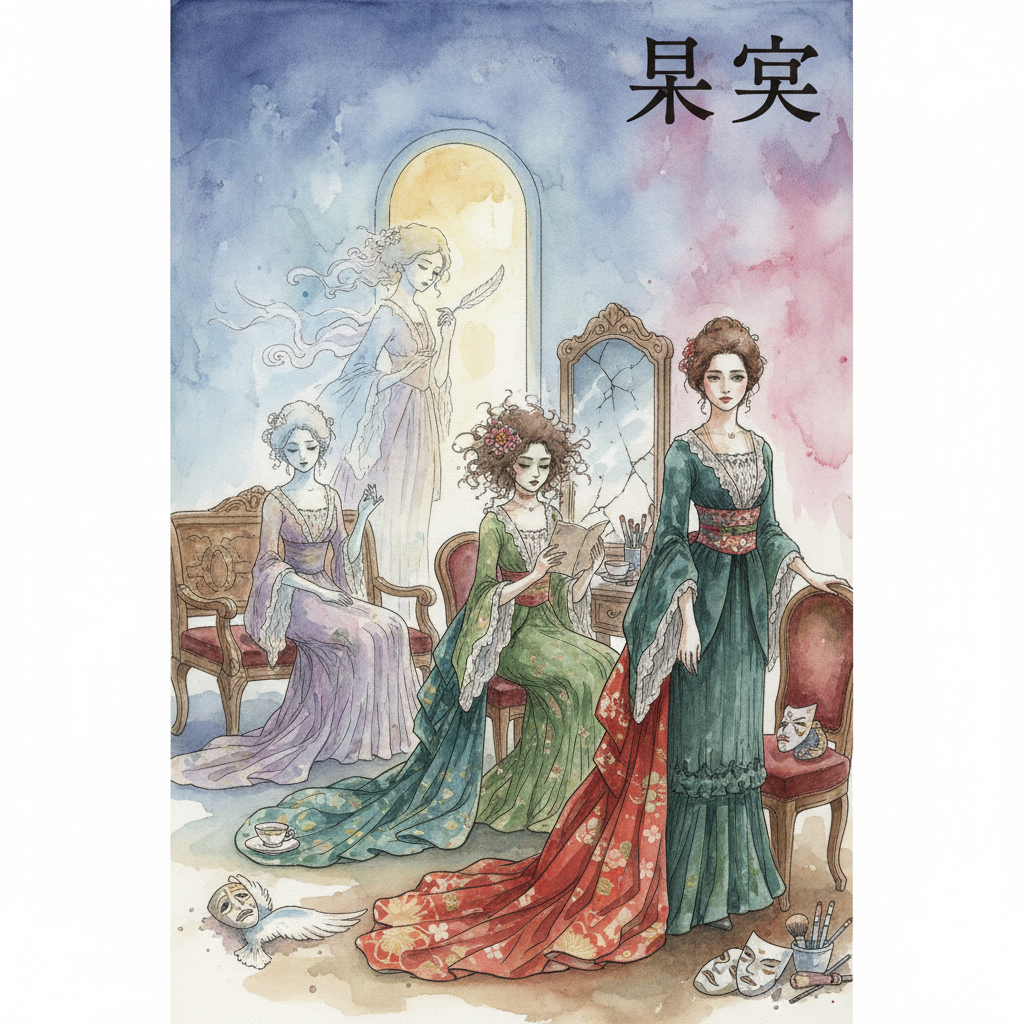
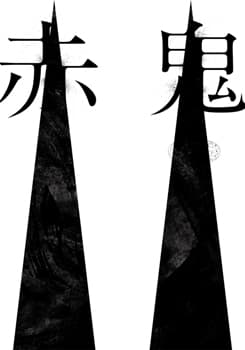
この記事で紹介した戯曲


Written by
戯曲図書館 編集部
演劇経験者が運営する戯曲検索サービス「戯曲図書館」の編集チームです。 脚本選びのノウハウ、演劇業界の最新情報、公演レポートなどを発信しています。
関連記事
If You Like Hedda Gabler (2026 Guide): 4 Japanese Plays About Female Rage, Respectability, and the Need to Burn the Script
Love Hedda Gabler? Read 4 Japanese plays about boredom, control, female rage, and the social cost of living inside the wrong role.
2026-08-14
If You Like Top Girls: 4 Japanese Plays About Ambition, Work, and the Price of Female Success
Love Top Girls? Start with 4 Japanese plays about ambition, women’s work, class pressure, and the costs of survival.
2026-07-31
If You Like Hedda Gabler: 5 Japanese Plays of Social Confinement, Performance, and Controlled Destruction
Love Hedda Gabler? Try 5 Japanese plays about control, performance, social confinement, and destructive desire.
2026-07-17
If You Like True West (2026 Guide): 5 Japanese Plays About Brothers, Masculinity, and the Myth You Can't Outrun
Love Sam Shepard's True West? Read 5 Japanese plays about brothers, inherited violence, failed masculinity, and the self you cannot shake off — from Matsuo Suzuki to Yu Miri.
2026-10-09