
目次12項目開く
- 1.Quick Facts
- 2.Why This Pairing Matters in 2026
- 3.1) Nina as Character vs Nina as Orbit
- 4.2) Space: Country Estate vs Dressing Room
- 5.3) Ambition and the Gendered Cost of Performance
- 6.4) Time: Chekhovian Delay vs Shimizu's Afterlife Loop
- 7.5) Performance Style: Ensemble Realism vs Stylized Haunting
- 8.6) What Each Play Thinks Theater Is For
- 9.7) Which Play Is Better for What Kind of Company?
- 10.8) Internal Reading Pathway on Japanese Play Library
- 11.FAQ
- 12.Sources
Kunio Shimizu's The Dressing Room (Gakuya, 楽屋) and Anton Chekhov's The Seagull are plays about what theater does to people who want recognition more than safety, and what remains when the stage gives them longing instead of fulfillment.
That is the fastest, clearest way to connect them for English-speaking readers in 2026.
At first glance, the pairing may look uneven. Chekhov's The Seagull is one of the central modern classics of Western drama. Shimizu's The Dressing Room is a Japanese backstage ghost-play that many Anglophone readers still discover through translation, festivals, and actor recommendations rather than standard curriculum. But the connection is stronger than it first appears. Shimizu does not merely borrow Chekhov as decoration. He turns The Seagull into a haunted machine for thinking about actresses, waiting, memory, ambition, repetition, and the strange afterlife of performance.
For directors, dramaturgs, teachers, actors, and serious play readers, this comparison is practical. If you already know The Seagull, The Dressing Room becomes much easier to enter. If you start from The Dressing Room, The Seagull begins to look less like a naturalistic country-house drama and more like a play about role hunger, emotional spectatorship, and the costs of wanting a life in art.
Quick Facts
| Item | The Dressing Room (Gakuya, 楽屋) | The Seagull |
|---|---|---|
| Playwright | Kunio Shimizu (清水邦夫) | Anton Chekhov |
| First production era | First staged in 1977 | Written in 1895, first produced in 1896 |
| Core setting | A dressing room during a production of The Seagull | A country estate where artists, family, and lovers orbit one another |
| Typical cast profile | 4 actresses | Medium ensemble, usually 9+ major roles |
| Typical runtime | About 70-90 minutes in many productions | About 120-150 minutes depending on translation and cuts |
| Core dramatic pressure | Waiting, repetition, failed ambition, theatrical afterlife | Desire, artistic frustration, generational conflict, emotional misrecognition |
| Best first production use | Actor-centered chamber piece, reading series, women-led ensemble | Conservatory work, repertory season, literary classic revival |
| Why the pairing matters | Shows how one Japanese play transforms Chekhov into backstage metaphysics | Clarifies the original field of longing, artistic rivalry, and Nina's symbolic power |
Why This Pairing Matters in 2026
Many English-speaking artists now meet meta-theater through contemporary devices: self-aware scripts, rehearsal-room comedies, stories about authorship, or digital-age performance identity. The Dressing Room offers something rarer. It is not only a play about theater. It is a play about what theater leaves behind in bodies and minds after a role, a dream, or a career has already slipped away.
That makes Chekhov the right comparison point.
The National Theatre's synopsis for The Seagull still captures the durable engine of the play: a young woman wants fame and escape, a young man wants artistic recognition and love, a successful writer is exhausted by his own success, and an actress fights the changing of the times. Those pressures do not stay neatly inside one century or one country. They survive because theater keeps producing them.
Shimizu's move is brilliant. Instead of rewriting Chekhov's plot, he relocates its emotional residue backstage. The role of Nina becomes less a character in a Russian estate drama than a gravitational center for actresses who cannot stop circling desire, performance, jealousy, memory, and missed entrance.
For 2026 readers, this comparison helps with at least four practical questions:
- How does a play show ambition after the public performance has ended?
- How do women's theatrical roles become traps as well as opportunities?
- What is the difference between living through art and living inside its leftovers?
- Why does Chekhov remain so productive for modern Japanese theater rather than merely prestigious?
Those are not museum questions. They are current questions for rehearsal culture, acting labor, and contemporary season planning.
1) Nina as Character vs Nina as Orbit
The most useful place to begin is Nina.
In The Seagull, Nina is a living dramatic force. She is young, eager, idealistic, and vulnerable to both romantic and artistic illusion. She wants to become an actress. She attaches herself to Trigorin. She becomes one of the play's clearest emblems of aspiration meeting a world that does not reward innocence. Even when she suffers, she remains moving because she continues to insist on vocation. Her final commitment to endurance is one of the reasons the play survives endless revivals.
In The Dressing Room, Nina is no longer simply a person to be portrayed. She becomes a role that organizes desire. Different actresses are tied to her. Some are alive, some are dead, some are suspended in states between theatrical memory and theatrical labor. The dressing room becomes a place where women wait not only to perform, but to become legible through performance.
That shift matters enormously.
In Chekhov
Nina is the visible young dreamer.
In Shimizu
Nina is the absent center around which disappointed theatrical life keeps moving.
This is one of the deepest reasons the pairing works. Chekhov writes a play in which Nina's dream is still happening. Shimizu writes a play in which that dream has already become history, residue, and rivalry.
For actors, the lesson is immediate:
- The Seagull asks, "How do I play desire while it is still active?"
- The Dressing Room asks, "How do I play desire after it has curdled into repetition?"
That difference in tense changes everything.
2) Space: Country Estate vs Dressing Room
Chekhov's estate is outward-facing. People arrive, leave, perform for one another, gossip, quarrel, flirt, brood, and observe. The setting allows emotional weather to spread through a whole social field. Love triangles, career anxiety, family resentment, and artistic self-consciousness all coexist in a shared environment.
Shimizu's dressing room is much tighter. It is an interior zone. It is offstage and beside the event rather than fully inside it. That gives the play a different pressure:
- less public action,
- more atmospheric recurrence,
- less direct social world-building,
- more ritualized theatrical memory.
The result is not "small" Chekhov. It is a new dramatic logic.
In The Seagull, people suffer because they are in life and cannot manage it.
In The Dressing Room, people suffer because they remain attached to performance even after life, career, and ordinary chronology have thinned out.
Comparison Table: What the space does
| Spatial question | The Dressing Room | The Seagull |
|---|---|---|
| Where are we? | In a backstage threshold between performance and non-performance | In a social landscape where art, family, and desire collide |
| What kind of time dominates? | Looped, ghostly, recursive | Linear but emotionally stalled |
| What do objects mean? | Makeup, costumes, and routines store theatrical memory | The estate, lake, writing, and performance space reveal social and emotional position |
| Main directing risk | Too much vagueness and atmosphere without structure | Overplaying mood and losing the cruel comedy of misrecognition |
For directors, that table matters. If you stage The Dressing Room as ordinary backstage realism, you shrink it. If you stage The Seagull as pure misty nostalgia, you flatten it. Both plays need tension between realism and theatrical awareness, but in different ratios.
3) Ambition and the Gendered Cost of Performance
One of the best reasons to pair these plays in 2026 is that both expose how women pay for theatrical desire inside systems built by others.
In The Seagull, Nina's artistic and emotional trajectory unfolds inside a world structured by male authorship, male prestige, and male attention. Treplev wants artistic revolution. Trigorin represents literary success. Nina is pulled toward both, but the terms of that attraction are never neutral. She wants artistic life, but she is also made into a surface onto which others project meaning.
Shimizu sharpens this problem by moving into a feminized labor space: the dressing room. There, waiting, preparation, self-presentation, and role competition become the whole world. The actresses in The Dressing Room do not simply want fame in the abstract. They want entrance, legibility, the right role, the chance not to disappear.
That is why the play still feels fresh rather than historical. It understands a theater truth that remains painfully familiar:
performance opportunity is never only artistic; it is also tied to age, visibility, hierarchy, and who gets remembered.
This is where Shimizu becomes more than "Chekhov reference plus ghost device." He turns the emotional machinery of The Seagull into a study of theatrical labor itself.
Practical programming lens
If you are building a season around women and performance, this pair gives you two different but mutually illuminating models:
- The Seagull shows aspiration inside a mixed social-artistic ecology.
- The Dressing Room shows aspiration inside the claustrophobic afterimage of theater work.
Chekhov presents the wound while it is forming. Shimizu presents the scar tissue.
4) Time: Chekhovian Delay vs Shimizu's Afterlife Loop
Time is crucial in both plays, but it behaves differently.
Chekhov's time is famous for frustration, delay, and anti-climax. People want change and fail to produce it. They imagine future recognition, future happiness, future artistic truth, future love. The calendar moves. The soul often does not. That is one reason The Seagull still feels modern: the characters are full of intention but weak in transformation.
Shimizu intensifies that quality by breaking ordinary time almost completely. The dressing room is full of return. Theatrical gestures recur. Stories and identities seem to repeat. Some of the women are already dead, but death does not free them from role-consciousness. If anything, it makes role-consciousness permanent.
That is an extraordinary idea and one of the strongest bridges back to Chekhov.
Chekhov asks: What if people cannot become what they imagined?
Shimizu asks: What if they cannot stop performing that failure?
For English-speaking actors, this creates a valuable contrast in rehearsal:
- The Seagull demands inner life that shifts under ordinary conversation.
- The Dressing Room demands rhythmic life inside recurrence and repetition.
The emotional challenge is not the same.
Rehearsal takeaway
Run a scene from each play with the same question:
"What future does this character think is still available?"
In The Seagull, the answer usually remains active and forward-facing, however fragile. In The Dressing Room, the answer is often already damaged, deferred, or ghostly. That one change can help a cast distinguish the plays immediately.
5) Performance Style: Ensemble Realism vs Stylized Haunting
Although The Dressing Room uses Chekhov, it should not be staged as "more Chekhov."
Chekhov's dramaturgy depends on ensemble realism, even when productions stylize it. The actors must feel like they are living inside a fully inhabited social world. The comic cruelty of mismatched desire is central. Everyone wants the wrong thing from the wrong person at the wrong time, and they rarely understand the scale of their own absurdity.
Shimizu works through a more unstable theatricality. The women in The Dressing Room are not simply "characters in believable circumstances." They are also residues, patterns, echoes, and theatrical functions. The play can support humor, melancholy, eeriness, and ritual all at once.
This distinction is why The Dressing Room often does well in actor-centered small-company contexts. It does not need a giant scenic world. It needs tonal precision.
Comparison Table: Performance demands
| Acting axis | The Dressing Room | The Seagull |
|---|---|---|
| Primary energy | Repetition, tonal drift, haunted wit | Suppressed longing, social misfire, painful self-exposure |
| Best ensemble skill | Rhythm and variation inside loops | Listening and emotional misalignment in real time |
| Vocal challenge | Keeping recurrence alive without flattening it | Making everyday speech reveal competing inner agendas |
| Physical challenge | Object memory, ritual action, threshold states | Social placement, casual realism, changes in intimacy |
| Biggest failure mode | Generic "ghost play" atmosphere | Decorative melancholy without comic intelligence |
For teachers and studio leaders, this pairing is a gift because it lets you compare two sophisticated forms of non-melodramatic acting:
- one rooted in modern ensemble realism,
- one rooted in theatrical afterlife and stylized repetition.
6) What Each Play Thinks Theater Is For
The deepest difference between the two plays may be philosophical.
In The Seagull, theater is still a future-facing possibility. Treplev wants new forms. Nina wants a stage life. Arkadina defends a lived profession. Trigorin embodies literary production as career and compulsion. Art may wound them, but it remains connected to becoming.
In The Dressing Room, theater feels more archival. It stores longing. It preserves ego. It lets people remain attached to a self they may no longer possess anywhere else. The stage is not only a place of possibility. It is also a place where unfinished identities remain trapped.
This is why the plays belong together but should not be confused.
The Seagull:
Theater is a live struggle over value, form, recognition, and love.
The Dressing Room:
Theater is a haunted memory system that keeps role-desire circulating past its proper ending.
That makes Shimizu especially relevant right now. In 2026, theater workers live amid archives, revivals, digital traces, backstage documentation, reputational economies, and constant pressure to remain visible. The Dressing Room feels prophetic about what it means to continue existing as a performer through fragments, echoes, and remembered roles.
7) Which Play Is Better for What Kind of Company?
This is often the practical question beneath any comparison article, so it is worth answering directly.
If your company wants:
| Need | Better first choice |
|---|---|
| Canonical ensemble training | The Seagull |
| Compact women-led chamber production | The Dressing Room |
| Conversation about actresses, recognition, and backstage labor | The Dressing Room |
| Broader study of modern realism and artistic frustration | The Seagull |
| A strong staged reading with modest production demands | The Dressing Room |
| A repertory classic that can anchor a season | The Seagull |
The best answer, though, may be not choosing one over the other. A reading series, classroom, or repertory season can profit enormously from using the pair as counterpoint.
Ideal double-bill conversation prompt
What happens to artistic ambition when it moves from the front of the stage to the room where performers wait to enter?
That question will generate stronger discussion than vague comparisons about "both being theatrical."
8) Internal Reading Pathway on Japanese Play Library
If this comparison sends you deeper into Japanese drama, these internal links are the most useful next steps:
Related play pages
Related English guides
- The Dressing Room vs Six Characters in Search of an Author
- If You Like Our Town: 5 Japanese Plays About Ordinary Life, Time, and Fragile Community
This path helps because it moves from actor-centered meta-theater to quiet ensemble drama, outsider allegory, and another time-and-memory play that English-speaking readers often love.
FAQ
Is The Dressing Room basically a Japanese version of The Seagull?
No. It uses The Seagull as an important reference point, especially through the role of Nina, but it becomes a different play with a different dramatic engine. Chekhov gives you a living social field. Shimizu gives you backstage recurrence, theatrical memory, and ghostly role hunger.
Which play is easier for first-time audiences?
Usually The Seagull, because its canon status and visible relationship map make entry easier. The Dressing Room becomes highly accessible when productions clearly shape its rhythm and theatrical rules.
Which is better for small companies?
Usually The Dressing Room. Four actresses, a concentrated setting, and a strong actor-centered structure make it especially attractive for chamber production and reading series.
What is the single best comparison lens?
Use this one: Nina as a person in Chekhov, Nina as an orbit in Shimizu. Once you see that shift, most of the relationship between the two plays becomes clear.
Why does this pairing matter for English-speaking theater-makers in 2026?
Because it opens a practical route into Japanese theater through a familiar classic while also asking urgent questions about theatrical labor, female ambition, memory, and the emotional afterlife of performance.
Sources
- Asia Theatre Education Centre, The Dressing Room production page: https://atecnet.org/en/performances_more/533.html
- The Japan Foundation, STAGE BEYOND BORDERS listing for The Dressing Room: https://www.jpf.go.jp/e/project/culture/perform/online/archive/second_period.html
- National Theatre Live, The Seagull official synopsis: https://theseagull.ntlive.com/synopsis/
- Los Angeles Times review of The Dressing Room in English translation: https://www.latimes.com/archives/la-xpm-1997-nov-25-ca-57381-story.html
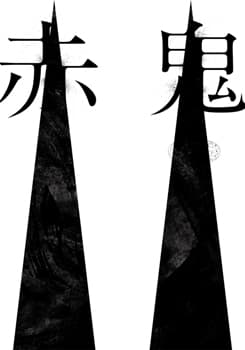
この記事で紹介した戯曲


戯曲図書館 編集部・公開日 2026/07/26
演劇経験者が運営する戯曲検索サービスの編集チームです。脚本選びのノウハウ、演劇の最新情報、公演レポートなどを書いています。
関連記事
- Shintoku-maru vs Oedipus Rex: A 2026 Guide to Fate, Family, and the Body on StageCompare Shuji Terayama's Shintoku-maru (身毒丸) and Sophocles' Oedipus Rex as plays about prophecy, incest, mother-figures, and the suffering body — with staging notes for English-speaking theater-makers.2026/10/04
- Five Days in March vs Angels in America: A 2026 Guide to Political Theater, Sex, and the End of the WorldCompare Toshiki Okada's Five Days in March and Tony Kushner's Angels in America as generational political plays about apocalypse, apathy, and intimacy under history.2026/09/27
- Tomodachi vs No Exit: A 2026 Guide to Friendly Invasion, Hellish Rooms, and the Violence of Other PeopleCompare Tomodachi and No Exit through confinement, coercion, group pressure, and the politics of being trapped with others.2026/08/30
- History of the Rise and Fall of Japanese Literature vs Arcadia: A 2026 Guide to Literature, Time, and National ImaginationCompare Oriza Hirata's History of the Rise and Fall of Japanese Literature with Arcadia through time, authorship, and modernity.2026/08/16