
The best Japanese plays in English are the scripts that already prove they can survive translation, hold a room with actors and text, and still feel unmistakably Japanese rather than flattened for export.
If you are a director, dramaturg, teacher, literary manager, or actor in an English-speaking context, that is the shortlist you actually need.
A lot of advice about “Japanese plays to read” is either too academic or too vague. It gives you important names, but not a practical starting set. What most theater makers really want is simpler:
- Which Japanese plays already have credible English-language life?
- Which ones are worth reading first if I may eventually stage one?
- Which scripts offer both artistic depth and realistic production value?
This 2026 guide answers those questions with 8 plays that already travel well in English-facing theater culture. Some are modern classics. Some are contemporary works with growing international reach. All of them give English-speaking artists a serious way into Japanese drama without starting from scratch.
Names appear in Romanization + Japanese for searchability.
Quick Facts
| Item | Recommendation |
|---|---|
| Best first entry for ensemble realism | Tokyo Notes (東京ノート) |
| Best first entry for compact, high-pressure staging | Red Demon (赤鬼) or The Bee (THE BEE) |
| Best first entry for actor-centered meta-theater | The Dressing Room (楽屋) |
| Best first entry for contemporary speculative drama | The Sun (太陽) |
| Best use case for this list | Reading groups, university courses, staged readings, season planning |
| Safest cast range for a first production | 4–10 actors |
| Best related English guides on Japanese Play Library | How to Choose Japanese Plays for Staged Readings in English, Play Spotlight: Tokyo Notes |
How this list was selected
I used four practical filters:
- English-language visibility — published translation, documented reading history, or clear overseas circulation
- Stage value — the play still works as theater, not just as literature
- Range — not eight versions of the same dramaturgy
- Entry usefulness — a good first map for English-speaking theater makers in 2026
This is not a list of the “greatest” Japanese plays ever written. It is a working repertory list for people who want scripts they can actually study, discuss, teach, and potentially produce.
1) Tokyo Notes (Tōkyō Nōto, 東京ノート) — Oriza Hirata (平田オリザ)
- Japanese Play Library: Tokyo Notes
- Cast: large ensemble in circulation history; Japanese Play Library metadata lists 12
- Runtime: about 100 minutes in Japanese Play Library
- Why start here: It is one of the clearest entry points into contemporary Japanese quiet drama in English.
If you want one play that explains why Oriza Hirata matters internationally, this is it. Set in a museum lobby while war unfolds elsewhere, Tokyo Notes turns ordinary conversation into political and emotional pressure. Aging parents, inheritance, jobs, relationships, and civic indifference all sit in the same room.
For English-speaking artists, its biggest strength is that the premise is easy to enter while the dramaturgy stays subtle. Seinendan’s own English materials note that the play premiered in 1994, won the Kishida Kunio Drama Award in 1995, toured internationally, and has been translated into multiple languages including English. That matters because it means you are not discovering an isolated niche text; you are entering an already proven international conversation.
Best for: universities, ensemble companies, dramaturgy courses, quiet-drama directors.
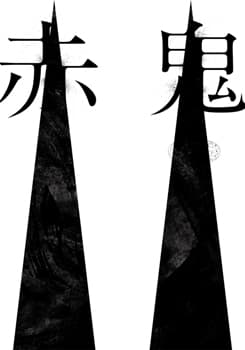
2) Red Demon (Aka Oni, 赤鬼) — Hideki Noda (野田秀樹)
- Japanese Play Library: Red Demon
- Cast: 4
- Runtime: about 80 minutes
- Why start here: It is one of the strongest Japanese plays for companies that want compact scale and big thematic force.
Red Demon works because it is theatrical from the first minute. A stranger arrives. A community reacts with fear, projection, and cruelty. The script can be read as fable, political allegory, intercultural study, or actor-driven physical theater.
For English readers, one practical advantage is that this play has a clearly documented English-language life. Bloomsbury’s edition notes Roger Pulvers as translator and identifies the Young Vic production as Noda’s European English-language premiere. That kind of publication trail lowers the barrier for further research.
It is also just a smart production script. Four actors. Strong roles. Flexible staging. Clear discussion value. If your company wants a Japanese play that can play in a black box without looking “small,” Red Demon is one of the safest and smartest choices.
Best for: black box theaters, intercultural programming, schools, touring ensembles.
3) The Bee (THE BEE, ザ・ビー) — Hideki Noda (野田秀樹)
- Japanese Play Library: The Bee
- Cast: 4 in Japanese Play Library metadata
- Runtime: about 80 minutes
- Why start here: It is one of the clearest examples of a Japanese play built directly for English-language performance conditions.
This is not simply “a Japanese play that was later translated.” Performing Arts Network Japan’s documentation makes the case more specific: The Bee was created with Hideki Noda, Colin Teevan, and British actors, and the resulting script functioned as an original English-language play rather than a literal transfer from Japanese. That is unusually valuable for English-speaking theater makers because the play already solved some of the hardest rhythm and tone problems in the translation process.
Artistically, The Bee is brutal, fast, and darkly funny. It takes hostage-crisis logic and escalates it into a nightmare of social performance, media pressure, masculinity, and revenge. It is not a gentle first read, but it is a thrilling one.
If you are choosing between Red Demon and The Bee, I would put it this way:
- choose Red Demon for moral allegory and flexibility,
- choose The Bee for pressure-cooker intensity and sharper formal violence.
Best for: adventurous directors, actor-driven chamber theater, translation and adaptation study.
4) The Dressing Room (Gakuya, 楽屋~流れ去るものはやがてなつかしき~) — Kunio Shimizu (清水邦夫)
- Japanese Play Library: The Dressing Room
- Cast: 4
- Runtime: about 80 minutes
- Why start here: It is one of the best Japanese actor plays available to English-speaking theater communities.
If your work lives close to rehearsal rooms, acting studios, or theater-loving audiences, The Dressing Room is an excellent entry point. Four actresses wait, repeat, remember, and haunt the space around The Seagull. The play is funny, eerie, sad, and meta-theatrical without becoming smug.
Its English-language life is not theoretical. Reviews and production traces in the United States and the Philippines show the script circulating in translation, and that matters because the play’s appeal is deeply performative. You do not need giant sets or heavy design. You need actors who can hold repetition, longing, ego, and theatrical superstition in the same rhythm.
It is also one of the strongest counterexamples to the idea that Japanese drama for international readers must be historical, epic, or culturally “explained.” The Dressing Room travels because performers understand the psychology of waiting for a role, missing a chance, and trying to live inside theater itself.
Best for: actor training programs, women-led ensembles, repertory sidebars, staged reading series.
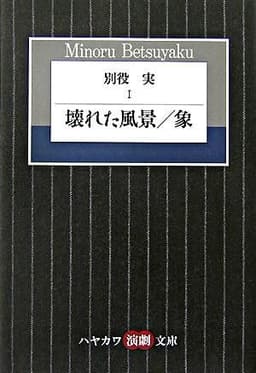
5) The Elephant (Zō, 象) — Minoru Betsuyaku (別役実)
- Japanese Play Library: The Elephant
- Cast: 10 in Japanese Play Library metadata
- Runtime: about 150 minutes
- Why start here: It is a major absurdist reference point and one of the most useful Japanese plays for readers who want more than realism.
Betsuyaku matters because he gives Japanese postwar absurdism a distinct social and tonal shape. The Elephant is often where that becomes most visible to English-speaking readers: a grotesque, unsettling dramatic world where behavior feels ordinary and impossible at the same time.
This is not the most immediately production-friendly script on the list. It is longer, stranger, and less plug-and-play than Noda or Hirata. But it deserves a place here because English-speaking theater culture often jumps from “Japanese realism” to “avant-garde image pieces” without spending enough time on Japanese absurdist writing as writing.
If your artistic interests run toward Beckett, Ionesco, or Mrożek, but you want a Japanese text that develops its own pressure rather than merely echoing Europe, The Elephant is a strong next move.
Best for: literature-and-performance courses, absurdist repertory, serious reading groups, experimental ensembles.
6) The Sun (Taiyō, 太陽) — Tomohiro Maekawa (前川知大)
- Japanese Play Library: The Sun
- Cast: 9
- Runtime: about 105 minutes
- Why start here: It is one of the strongest recent Japanese speculative dramas with documented multilingual publication and overseas life.
Tomohiro Maekawa is especially important in 2026 because his international footprint is no longer hypothetical. The Japan Foundation’s translation and publication project explicitly lists The Sun among the works published in multiple languages, and Performing Arts Network Japan documents how Maekawa’s translated plays have circulated through readings, publications, subtitles, and overseas productions.
That matters because The Sun is exactly the sort of script English-speaking companies often want but struggle to find: contemporary, idea-rich, performable, and not dependent on massive effects. Its speculative frame lets it explore discrimination, class division, survival, and social restructuring without losing human scale.
If you want a Japanese play that feels contemporary in a broad international sense—not just “important in Japan”—The Sun is one of the best current entry points.
Best for: contemporary repertory, universities, new-writing festivals, discussion-heavy audiences.
7) Strolling Invader (Sanpo Suru Shinryakusha, 散歩する侵略者) — Tomohiro Maekawa (前川知大)
- Japanese Play Library: Strolling Invader
- Cast: 10
- Runtime: about 105 minutes
- Why start here: It shows how Japanese speculative drama can stay philosophically sharp and theatrically playable.
If The Sun is Maekawa’s strongest all-purpose entry on this list, Strolling Invader is the better pick for teams who want stranger conceptual machinery. Alien invasion becomes a vehicle for examining language, desire, social breakdown, and what counts as “human” in the first place.
PANJ’s 2024 interview notes that Strolling Invader has been part of Maekawa’s translated staging and publication trajectory abroad, which gives English-speaking theater makers an important signal: this is not just a cult favorite inside Japan. It already has real traction in international circulation.
The reason I like recommending it is simple. It can satisfy both the literary reader and the production-minded director. The concept is bold, but the engine remains actor-and-scene based. That is gold for companies that want contemporary genre intelligence without losing stage practicality.
Best for: speculative theater lovers, university departments, literary managers, companies seeking contemporary global repertoire.
8) Our Planet (Waga Hoshi, わが星) — Yukio Shiba (柴幸男)
- Japanese Play Library: Our Planet
- Cast: 8
- Runtime: about 90 minutes
- Why start here: It is one of the warmest and most teachable contemporary Japanese plays now visible in English-facing culture.
Yukio Shiba’s Our Planet is a rare script: intimate, playful, formally alive, and emotionally generous. Japan Society’s English-language presentation history is useful here because it confirms that the play is not only admired domestically; it has also been framed successfully for New York audiences in translation.
What makes it especially valuable for English-speaking theater makers is the combination of ensemble practicality and formal freshness. The family scale is recognizable. The time structure is more adventurous. The emotional tone is moving without becoming sentimental sludge.
If your company likes Thornton Wilder, Annie Baker, or ensemble theater that can shift between ordinary life and metaphysical scale, Our Planet is a wonderful bridge into contemporary Japanese playwriting.
Best for: schools, ensemble companies, actor training, audiences open to lyrical contemporary drama.
Comparison Table: Which play fits your needs best?
| Play | Cast | Runtime | Best Use | First Reason to Read It |
|---|---|---|---|---|
| Tokyo Notes | 12 | ~100 min | Ensemble realism | Landmark quiet drama with international history |
| Red Demon | 4 | ~80 min | Compact production | Strong allegory and proven English edition |
| The Bee | 4 | ~80 min | High-intensity chamber work | Built with English-language performance in mind |
| The Dressing Room | 4 | ~80 min | Actor-centered meta-theater | Great roles, modest tech, strong theatrical identity |
| The Elephant | 10 | ~150 min | Absurdist reading/study | Major postwar absurdist reference point |
| The Sun | 9 | ~105 min | Contemporary repertory | Multilingual publication and strong social themes |
| Strolling Invader | 10 | ~105 min | Speculative theater | Conceptually bold but stageable |
| Our Planet | 8 | ~90 min | Ensemble lyric drama | Tender, teachable, and internationally legible |
Where should English-speaking readers start first?
If you only want three starting points, I would recommend this sequence:
1) Tokyo Notes
Read this first if you want to understand one major line of contemporary Japanese drama that is neither folkloric nor hyper-spectacular.
2) Red Demon
Read this next if you want something more overtly theatrical, compact, and easy to imagine in production.
3) The Sun
Read this when you want to see how current Japanese playwriting can handle speculative ideas without giving up emotional and social complexity.
Then branch according to taste:
- want more pressure and violence? → The Bee
- want more actorly theatrical self-awareness? → The Dressing Room
- want more cosmic tenderness? → Our Planet
- want more absurdism? → The Elephant
- want more philosophical genre-play? → Strolling Invader
FAQ
What are the best Japanese plays in English right now?
A practical 2026 starting list includes Tokyo Notes, Red Demon, The Bee, The Dressing Room, The Elephant, The Sun, Strolling Invader, and Our Planet.
Which Japanese play is easiest to produce in English?
For many companies, Red Demon and The Dressing Room are the safest starting points because they combine modest cast size with strong theatrical identity.
Which Japanese play is best for a staged reading in English?
Tokyo Notes, The Dressing Room, and The Sun are especially strong reading candidates because text and structure carry so much of the dramatic force.
Are these plays suitable for students and universities?
Yes. Several are especially strong for educational contexts, including Tokyo Notes, Our Planet, Red Demon, and The Sun.
Do I need to know Japanese theater history first?
No. It helps, but these plays can be read and discussed as living theater before they are treated as historical study objects.
Final takeaway
The smartest way into Japanese drama in English is not to chase the biggest reputation first. It is to start with scripts that already prove they can travel, speak, and stage well.
If you want the most balanced first trio, start with Tokyo Notes, Red Demon, and The Sun.
That set gives you three very different doors into Japanese theater: quiet ensemble realism, compact theatrical allegory, and contemporary speculative drama. From there, the rest of the map opens quickly.
Sources
- Seinendan, Tokyo Notes official English page (premiere, translation history, international performance history): https://www.seinendan.org/eng/play/1994/tokyonotes/
- Performing Arts Network Japan, Hideki Noda / Colin Teevan, THE BEE (English-language development and premiere context): https://performingarts.jpf.go.jp/en/article/6283/
- The Japan Foundation, Translation and Publication of Theatrical Plays (multilingual publication context for contemporary Japanese plays including The Sun): https://www.jpf.go.jp/e/project/culture/perform/exchange_perform/2021/11-01.html
- Performing Arts Network Japan, Tomohiro Maekawa and Six Translators (international circulation of Maekawa’s translated plays): https://performingarts.jpf.go.jp/en/article/68062/
- Bloomsbury, Red Demon (English edition and Young Vic production context): https://www.bloomsbury.com/us/red-demon-9781840023572/
- Japan Society, Our Planet event page (English presentation context and translation credit): https://japansociety.org/events/our-planet/
- Los Angeles Times, review of The Dressing Room in translation (English-language production trace): https://www.latimes.com/archives/la-xpm-1997-nov-25-ca-57381-story.html
この記事で紹介した戯曲


Written by
戯曲図書館 編集部
演劇経験者が運営する戯曲検索サービス「戯曲図書館」の編集チームです。 脚本選びのノウハウ、演劇業界の最新情報、公演レポートなどを発信しています。
関連記事
Best Japanese Plays for Staged Readings (2026): 8 Scripts That Sound Alive in the Room
A 2026 guide to 8 Japanese plays for staged readings, with cast size, runtime, and translation-friendly notes for directors and dramaturgs.
2026-09-02
If You Like Long Day's Journey Into Night (2026 Guide): 5 Japanese Plays About Family Secrets, Blame, and the Past That Won't Stay Buried
Love Long Day's Journey Into Night? Read 5 Japanese plays about family secrets, inherited grief, and the quiet violence of a past that refuses to stay buried.
2026-10-02
If You Like The Crucible (2026 Guide): 4 Japanese Plays About Scapegoats, Panic, and Public Obedience
Love The Crucible? Read 4 Japanese plays about fear, scapegoats, conformity, and the cost of refusing the crowd.
2026-08-21
Best Japanese Plays for Low-Budget Productions (2026): 8 Scripts With Minimal Set Demands
A practical 2026 guide to 8 Japanese plays for low-budget productions, with cast size, runtime, and staging notes for small theaters, schools, and readings.
2026-08-19