Angura theater is the postwar Japanese underground stage movement that rejected polite realism and rebuilt theater as something rawer, riskier, more physical, and more confrontational.
If you already know kabuki, noh, or even modern shingeki, angura can feel like a shock. That is part of the point. Angura does not simply tell different stories. It changes the contract between actor, audience, language, and space.
For English-speaking theater readers, directors, dramaturgs, students, and travelers, angura matters because it is one of the clearest entry points into modern Japanese theatrical rebellion. It helps explain why later Japanese theater can feel so visually bold, bodily charged, anti-naturalistic, and suspicious of respectable institutions.
Quick Facts (2026)
| Item | Practical answer |
|---|---|
| What is angura? | A Japanese underground/avant-garde theater movement centered in the 1960s-70s |
| Main contrast | It reacted against the formal realism of shingeki |
| Key names | Terayama Shūji (寺山修司), Kara Jūrō (唐十郎), Satō Makoto (佐藤信), Suzuki Tadashi (鈴木忠志) |
| Typical spaces | Tents, small theaters, outdoor sites, non-traditional venues |
| Typical feeling | Physical, provocative, anti-polite, dreamlike, collage-driven |
| Best first step for readers | Start with one play and one historical overview, not theory alone |
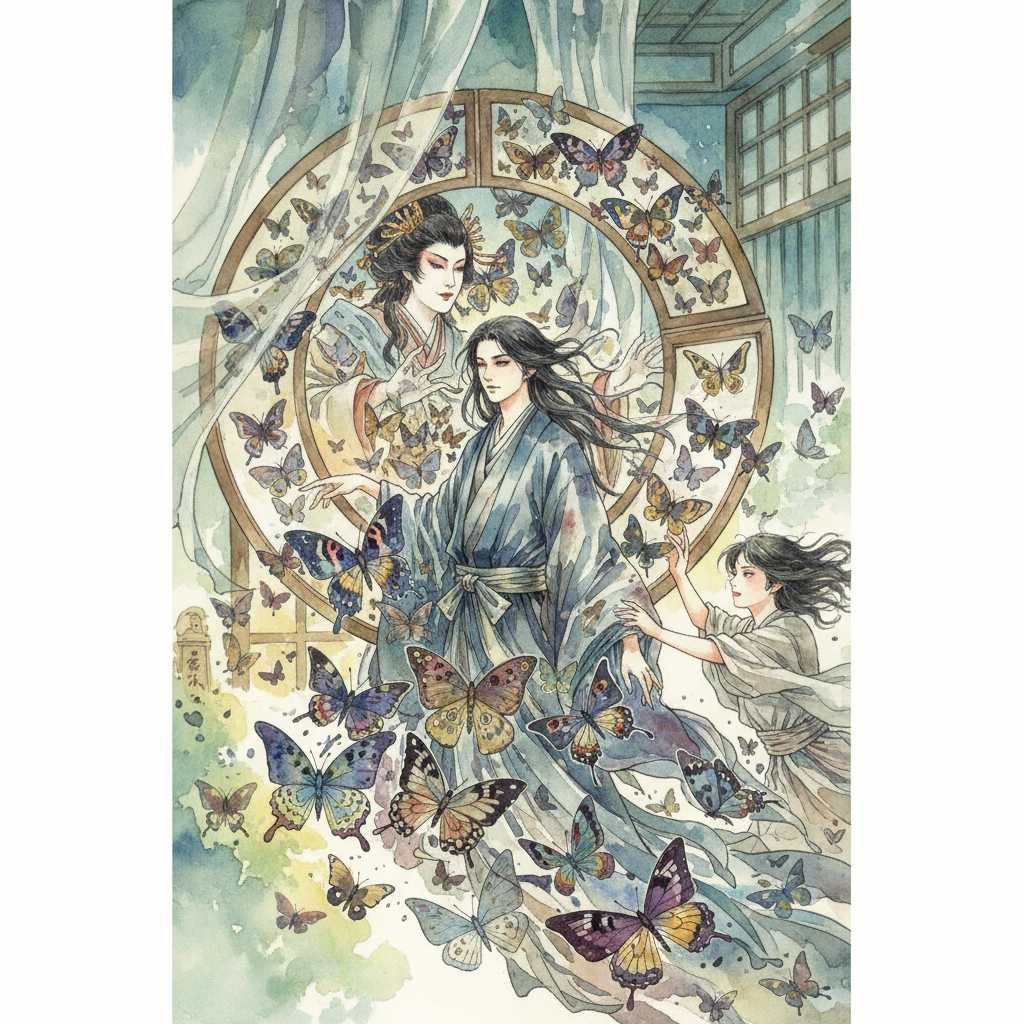
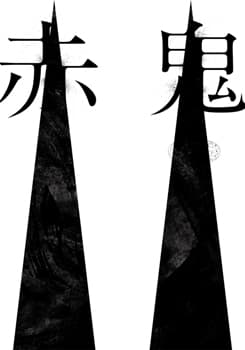
| Best Japanese Play Library entry texts | Shintoku-maru (身毒丸), Kegawa no Marie (毛皮のマリー), Aka Oni / Red Demon (赤鬼) |
Who this guide is for
- Theater artists looking for Japanese plays beyond realism
- Readers who keep hearing the word angura and want a plain-English explanation
- International visitors trying to understand why Japanese small-theater culture feels different
- Teachers and programmers building global modern drama syllabi
1) What does “angura” mean?
Angura (アングラ) is the Japanese shortening of “underground” theater. In practice, it usually refers to the loose Japanese avant-garde theater movement that surged in the 1960s and 1970s.
A helpful baseline from the Routledge Encyclopedia of Modernism is that angura emerged from dissatisfaction with shingeki and became one of the strongest fusions of art and politics in Japan’s protest-heavy postwar decades. A concise glossary at Tokyo Stages describes it as a loose movement led by figures such as Terayama Shūji, Kara Jūrō, Satō Makoto, and Suzuki Tadashi, creating wild productions in theaters, tents, and outdoor spaces.
That definition matters because angura is not just “weird Japanese theater.” It is a historical response.
It responded to:
- the institutional authority of postwar realist theater,
- the pressure of rapid modernization,
- youth counterculture and protest energy,
- and the feeling that respectable stage forms were no longer enough.
So when you hear “angura,” think less genre and more insurgent theatrical attitude.
2) Why angura happened: the short version
After World War II, shingeki became a dominant modern theater language in Japan. It valued literary scripts, realism, Western-influenced dramaturgy, and serious social themes. That tradition matters deeply, and if you need that background, read Understanding Shingeki in 2026 next.
But younger artists increasingly felt that shingeki had become too orderly.
According to American Theatre’s historical overview of Japanese theater, the angura movement grew in the 1960s as a new generation began doubting the assumptions of earlier modern theater. Those artists questioned not only style but also the entire cultural project of postwar modernization. Instead of cleaner realism, they embraced darkness, excess, and unstable spectatorship.
Here is the simplest comparison:
| Question | Shingeki tendency | Angura tendency |
|---|---|---|
| Acting style | Psychological realism | Heightened, ritualized, or explosive physicality |
| Space | Conventional theater architecture | Tents, streets, small rooms, unstable spaces |
| Dramatic logic | Literary coherence | Collage, dream logic, disruption, theatrical attack |
| Audience relationship | Observe the drama | Be unsettled by the event |
| Tone | Serious, structured, modern | Provocative, anarchic, sensual, anti-polite |
Angura did not reject thought. It rejected the idea that thought had to arrive in neat realist packaging.
3) What angura feels like in practice
For non-Japanese readers, angura becomes easier to understand when you focus on experience, not theory.
You are likely in angura territory when a work gives you several of these signals:
A) The body matters as much as dialogue
Speech in angura is important, but bodies often carry equal or greater force. Gesture, group movement, grotesque stillness, costume exaggeration, and physical proximity do real dramaturgical work.
B) The stage is not trying to look polite
Angura often prefers friction over elegance. A tent, an alley, a cramped room, or a visually overloaded set can be a statement in itself.
C) The play resists clean realism
Scenes may feel dreamlike, episodic, ritualistic, sexually charged, or deliberately unstable. The question is not always “Is this realistic?” but “What pressure is this theatrical form creating?”
D) Respectable institutions are under suspicion
Family, nation, gender roles, bourgeois taste, and theatrical decorum often appear not as stable values but as targets.
E) Spectatorship itself feels exposed
Angura frequently makes the audience aware of their own looking. It can seduce, embarrass, implicate, and destabilize.
That is why angura still matters in 2026. It is not only historical. It remains a toolkit for theater that wants to disturb passive consumption.
4) The key artists you should know first
You do not need to memorize the whole movement. Start with four names.
| Artist | Why they matter | Useful beginner image |
|---|---|---|
| Terayama Shūji (寺山修司) | Poet, playwright, director, cross-media visionary; central angura icon | Theater as dream, provocation, erotic ritual, visual shock |
| Kara Jūrō (唐十郎) | Major playwright/director of radical small-theater culture | Red-tent energy, street pressure, feverish language |
| Satō Makoto (佐藤信) | Important angura practitioner and later institutional builder | Underground energy with broader public-theater legacy |
| Suzuki Tadashi (鈴木忠志) | Angura-era force who later shaped global actor training and festivals | Body discipline, theatrical rigor, post-angura international reach |
Terayama Shūji (寺山修司)
Terayama is often the fastest doorway for English-language readers because his name still circulates internationally. Japan Society, for example, introduced him to New York audiences in 2025 as the “father” of Japan’s angura movement when presenting Duke Bluebeard’s Castle.
If you want to feel angura rather than merely define it, start with Terayama-linked works such as:
And if you want deeper English reading on this site:
Kara Jūrō (唐十郎)
Kara is vital if you want the side of angura that feels street-born, urgent, and aggressively theatrical. His name is closely tied to tent theater culture and the sense that performance can erupt in direct proximity to public life.
Suzuki Tadashi (鈴木忠志)
Suzuki is especially useful for international practitioners because his later actor-training method became globally influential. He helps explain how angura was not just rebellion for one decade; it also fed later theater infrastructures, festivals, and training cultures.
5) How angura connects to Japanese Play Library
One mistake international readers make is treating angura as pure history with no reading path.
A better approach is to move from movement → play → comparison.
Best first texts on this site
| If you want… | Start here | Why |
|---|---|---|
| A core Terayama gateway | Shintoku-maru (身毒丸) | Mythic, bodily, anti-naturalistic, emotionally dangerous |
| Camp + cruelty + queer theatricality | Kegawa no Marie (毛皮のマリー) | One of the clearest angura-era aesthetic shocks |
| A later bridge into modern ensemble force | Aka Oni / Red Demon (赤鬼) | Not angura proper, but useful for tracing what survived after it |
| A contrast text from a different lineage | Tokyo Notes (東京ノート) | Helps you feel how far angura is from quiet realism |
This contrast method is powerful. If you read Tokyo Notes after Terayama, you can feel the enormous range inside modern Japanese theater. If you read Red Demon after angura, you can see how later theater inherited pressure, physicality, and anti-naturalist momentum without simply repeating 1960s underground style.
6) How to watch or read angura without getting lost
A lot of first-time readers bounce off angura because they ask the wrong question.
Wrong first question
- “What is the plot, exactly?”
Better first questions
- What kind of pressure is the staging creating?
- What happens to the audience’s position?
- Which forms of politeness or realism are being attacked?
- Where is desire located: in language, bodies, costume, ritual, or violence?
Here is a practical viewing/reading framework:
| First-pass lens | What to notice |
|---|---|
| Space | Is the venue or imagined venue part of the argument? |
| Body | Are performers behaving naturalistically or as theatrical forces? |
| Language | Does speech explain, incant, provoke, or fracture? |
| Audience | Are you invited to empathize, witness, or feel complicit? |
| Politics | What version of “normal society” is being challenged? |
If you use that table, angura becomes much more legible.
7) What angura changed in Japanese theater
Angura is not important only because of a few famous wild productions. It matters because it changed the ecology of Japanese theater.
American Theatre notes that the movement helped push Japanese theater away from inherited assumptions about what stage art should be. Tokyo Stages adds that many major angura practitioners later shaped festivals, public institutions, and arts centers. In other words, the underground did not simply vanish. Parts of it became infrastructure.
That is a paradox worth remembering:
- angura attacked respectable theater,
- but it also helped remake the future conditions of respectable theater.
This is one reason later shōgekijō (small-theater) culture matters. The word often refers to a broader small-theater ecosystem that developed after angura, but the underground movement helped open that path.
So if you like contemporary Japanese theater that is intimate, actor-driven, visually bold, or structurally strange, angura is part of the genealogy whether or not the later work still uses the label.
8) Is angura useful for international theater-makers now?
Yes—very, but not as exotic decoration.
Angura is most useful when it changes how you think about:
- space — theater does not need neutral architecture,
- actor presence — bodies can argue as strongly as text,
- spectatorship — audiences can be unsettled rather than simply guided,
- adaptation — Japanese plays do not need to be “domesticated” into realism to travel.
Good uses of angura in international practice
- comparative directing labs
- university courses on postwar theater
- festival programs about avant-garde legacies
- actor training conversations around physical score and presence
- staging Japanese plays without flattening them into “world literature” realism
Bad uses
- treating it as “crazy Japan” spectacle
- borrowing surface shock without historical pressure
- reducing it to costume weirdness
- ignoring how anti-institutional and anti-bourgeois its stance really was
That last point matters. Angura is not just a style package. It is a critique.
9) Four common mistakes when people first encounter angura
Mistake 1: expecting a neat realist plot summary to unlock everything
A summary helps, but angura often puts its deepest meaning in rhythm, image, collision, and spectator discomfort. If you read only for plot, you will miss the event-like quality of the work.
Mistake 2: assuming “avant-garde” means random
Angura can feel chaotic on first encounter, but the strongest works are not careless. They are usually highly composed. The excess is often disciplined excess.
Mistake 3: flattening all Japanese experimental theater into one category
Angura is historically specific. It is related to later experimental and small-theater scenes, but it is not identical to every non-realist Japanese production that came after it.
Mistake 4: treating shock as the final destination
Provocation matters in angura, but not as empty decoration. Sexual imagery, grotesque humor, bodily extremity, and unstable stage pictures usually point toward deeper anxieties about modernity, authority, memory, and social control.
If you keep those four warnings in mind, angura becomes much easier to approach with respect and clarity.
10) FAQ
What is angura in simple English?
Angura is Japan’s underground avant-garde theater movement of the 1960s and 1970s, known for rejecting polite realism and using more physical, disruptive, and unconventional stage forms.
Is angura the same as shingeki?
No. Angura grew partly as a reaction against shingeki. Shingeki generally emphasizes modern realist drama, while angura often breaks realism and attacks theatrical decorum.
Is angura the same as shōgekijō?
Not exactly. They overlap historically, but they are not perfectly identical. Angura is the sharper underground countercultural movement; shōgekijō often refers more broadly to later small-theater culture.
Which Japanese plays should I read first if I want to understand angura?
Start with Shintoku-maru (身毒丸) and Kegawa no Marie (毛皮のマリー). Then compare them with Tokyo Notes (東京ノート) or Aka Oni / Red Demon (赤鬼).
Can tourists watch angura-style theater in Tokyo today?
Sometimes, but not usually as a pure museum-preserved form. What you are more likely to encounter is later small-theater or experimental work that inherits angura energy rather than repeating the movement exactly.
Why should non-Japanese theater artists care?
Because angura offers a powerful alternative to text-only realism. It expands what theater can do with bodies, space, audience pressure, and political form.
11) A practical reading path after this guide
If this is your first angura article, use this sequence:
- Read this guide for the historical map.
- Read Play Spotlight: Shintoku-maru.
- Read Play Spotlight: Kegawa no Marie.
- Compare with Understanding Shingeki in 2026.
- Then widen out with Japanese Theater Genres for Travelers (2026).
That sequence gives you history, primary examples, contrast, and broader context.
Final takeaway
Angura matters because it turned Japanese theater into a site of pressure rather than presentation.
It refused to stay respectable. It distrusted realism as a default truth-machine. It pushed theater toward tents, streets, unstable bodies, queer imagery, excess, danger, and historical argument.
If you want to understand why modern Japanese drama can feel so unlike a neat Western syllabus—and why it remains so alive for international artists in 2026—angura is one of the most important words to learn.
Sources
- John D. Swain, “Angura,” Routledge Encyclopedia of Modernism — movement definition, relation to shingeki, and key practitioners.
https://www.rem.routledge.com/articles/angura - Tadashi Uchino, “From Noh to Shōgekijō,” American Theatre — historical overview of shingeki, angura, and later small-theater developments.
https://www.americantheatre.org/2019/04/22/from-noh-to-shogekijo/ - Tokyo Stages Glossary of Japanese Modern & Contemporary Theatre — concise working definitions of angura, shōgekijō, and related institutions.
https://tokyostages.wordpress.com/glossary-of-japanese-modern-contemporary-theatre/ - Japan Society: Shuji Terayama’s Duke Bluebeard’s Castle — contemporary international framing of Terayama as a central angura figure.
https://japansociety.org/events/shuji-terayama-duke-bluebeard-castle/
この記事で紹介した戯曲

Written by
戯曲図書館 編集部
演劇経験者が運営する戯曲検索サービス「戯曲図書館」の編集チームです。 脚本選びのノウハウ、演劇業界の最新情報、公演レポートなどを発信しています。
関連記事
Playwright Profile: Shuji Terayama (寺山修司) in 2026 — The Angura Poet Who Turned Theater Into a Weapon
A 2026 English guide to Shuji Terayama's life, Tenjo Sajiki troupe, major plays, and why his angura theater still shapes global performance in 2026.
2026-10-01
Senshuraku Explained (2026): A Cultural Guide to Japan's Theater Closing Nights for International Visitors
A practical English guide to senshuraku (千秋楽)—the final performance of a Japanese theater run. Learn its origin, why closing nights feel special, and how to plan a trip around one.
2026-09-26
2.5D Theater in Japan (2026): A Practical Guide for International Theater Fans
A practical 2026 guide to Japan’s 2.5D theater scene for international fans, from tickets and subtitles to what makes the genre work live.
2026-08-22
Open-Air and Outdoor Theater in Japan in 2026: Where to Go, What to Expect, and How to Plan
A practical 2026 guide to open-air and outdoor theater in Japan, with festival examples, ticketing tips, weather planning, and beginner-friendly play recommendations.
2026-08-15