A Japanese play reading is usually a script-centered performance event—sometimes seated and minimal, sometimes lightly staged—that lets audiences, translators, and theater-makers hear a play’s structure, rhythm, and cultural texture before or instead of a full production.
For English-speaking theater fans, directors, dramaturgs, festival programmers, and travelers, this matters more than it may seem. If you only look at finished productions, you miss one of the most useful layers of Japanese theater culture: the place where scripts travel, translations get tested, actors expose the bones of a play, and international exchange often begins.
In Japan, play readings are not one single format. They can function as development labs, public literary events, translation workshops, festival showcases, or low-cost presentation formats. Sometimes they are almost concert-like. Sometimes they are halfway to staging. Sometimes the reading is the smartest form for the play.
Quick Facts (2026)
| Item | Practical answer |
|---|---|
| What is a Japanese play reading? | A script-forward theater event, often called a drama reading or staged reading, with minimal design and visible scripts |
| Is it always fully seated? | No. Some readings are seated; others use music, basic props, movement, and strong directorial shaping |
| Why does it matter? | It is a key format for translation, international exchange, new-play development, and audience discovery |
| Best for international artists | Testing translations, hearing rhythm, comparing acting styles, and scouting producible scripts |
| Typical audience benefit | You can focus on text, structure, and actor listening without production spectacle getting in the way |
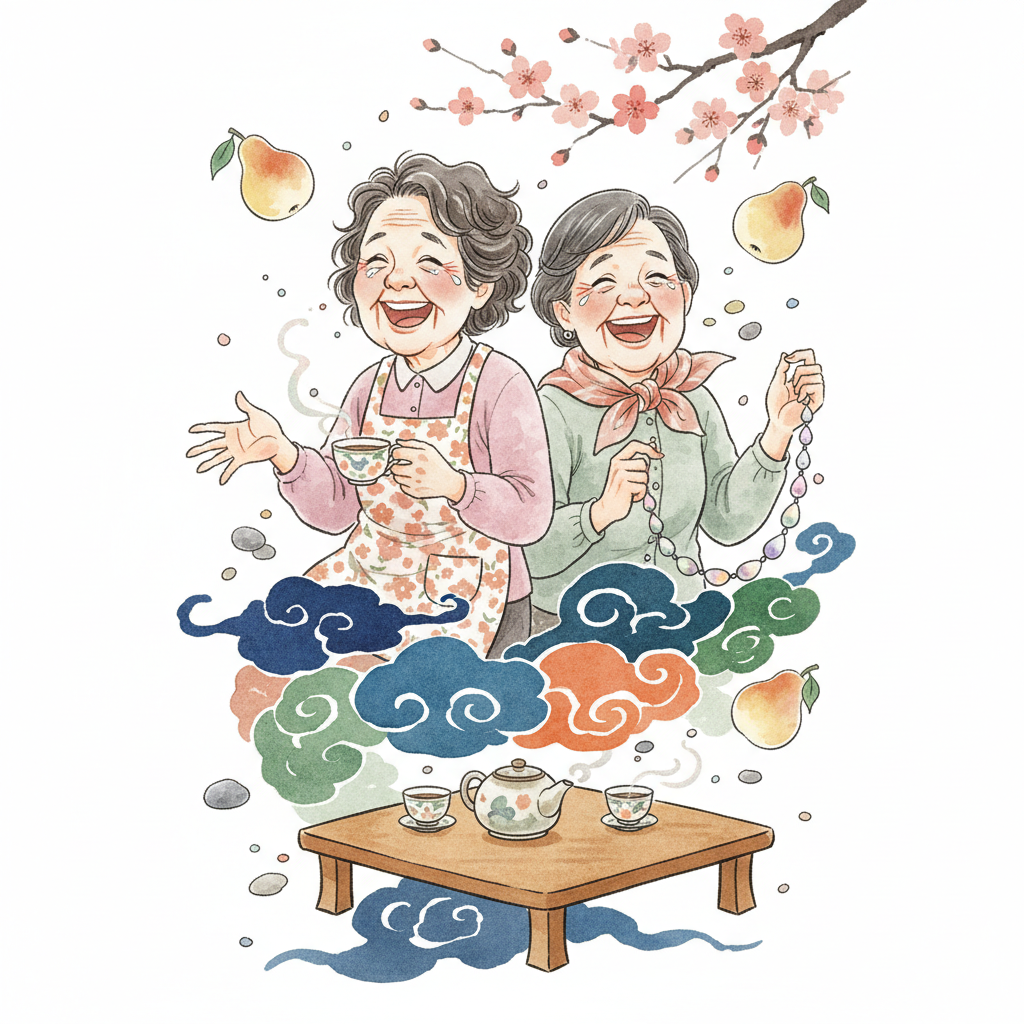
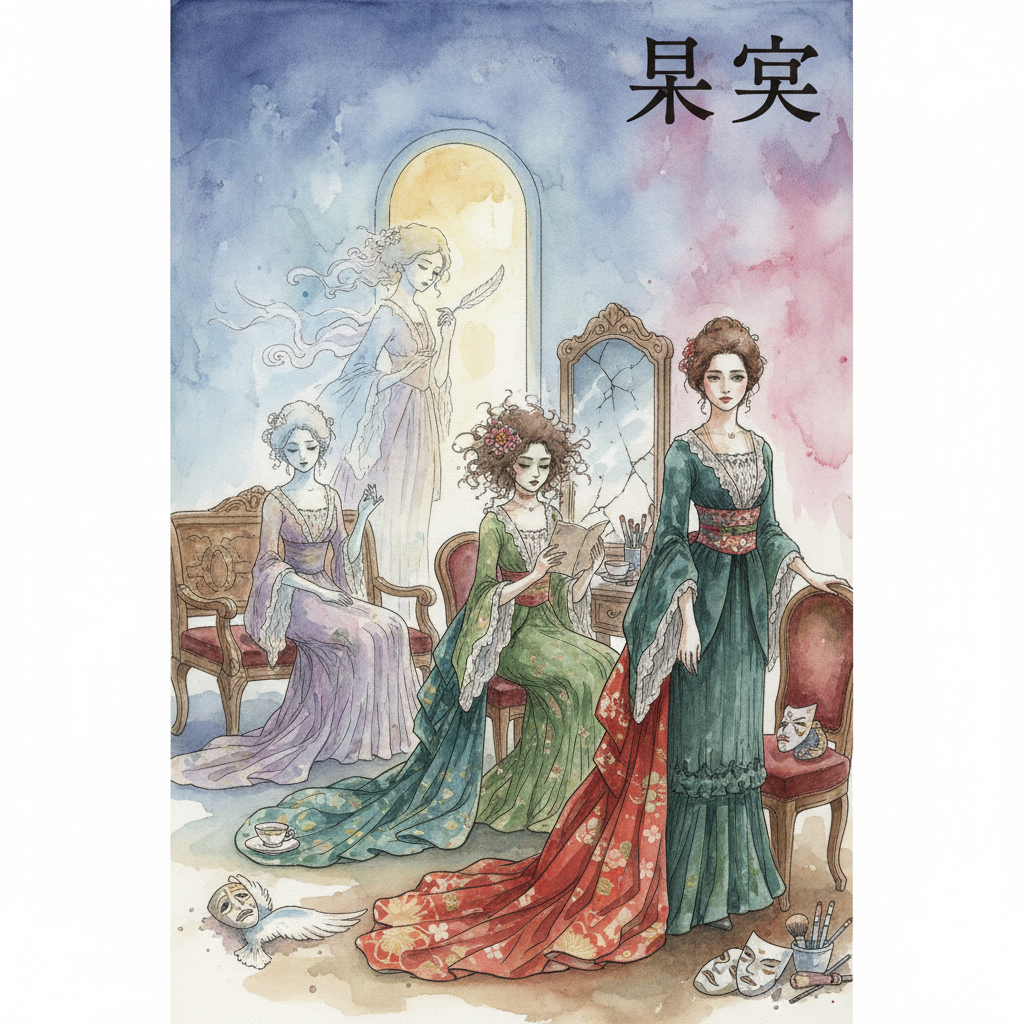
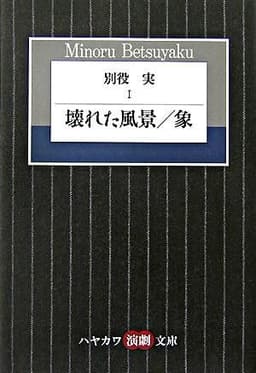
| Good first Japanese Play Library texts for readings | Tokyo Notes (東京ノート), The Men Who Wanted to Sing (歌わせたい男たち), The Dressing Room (楽屋), Zō / The Elephant (象) |
Who this guide is for
- Theater artists outside Japan looking for Japanese plays that travel well
- Travelers who may encounter a reading before they find a fully staged production
- Dramaturgs and translators comparing script cultures
- Teachers building courses on contemporary Japanese drama
- Programmers who want a lower-risk way to introduce Japanese work to new audiences
1) What counts as a play reading in Japan?
The simplest answer is: a performance where the script remains visible as script.
That sounds obvious, but it matters. In many Japanese theater contexts, a reading is not treated as a failed production or a rehearsal accident. It is often a legitimate public form with its own artistic value.
Depending on the venue and purpose, a reading may include:
- actors seated at music stands,
- actors standing with partial blocking,
- a director shaping tempo and transitions,
- selective props or costume hints,
- live or recorded music,
- projected translation or surtitles,
- post-show talkbacks,
- translation or dramaturgy discussion.
So when someone says “reading,” do not imagine only a cold first table read.
A better spectrum looks like this:
| Format | What it feels like | Typical use |
|---|---|---|
| Table-style reading | Most literary and process-visible | Translation checks, workshops, early development |
| Public drama reading | Script-in-hand but audience-facing | Festivals, literary presentation, cultural exchange |
| Light staged reading | Movement, rhythm, some design choices | International showcases, audience testing, touring experiments |
| Reading-performance hybrid | More theatrical shaping than a simple read, but not a full production | Cross-border collaborations, residency work, playwright labs |
That flexibility is one reason readings matter so much in Japanese theater exchange.
2) Why readings matter so much in Japanese theater culture
In some English-speaking theater ecosystems, staged readings are strongly tied to the “new play pipeline.” That exists in Japan too—but not in exactly the same way.
The Japanese value of readings often comes from three overlapping pressures:
- translation and international circulation,
- limited production time and budget,
- the need to test language and structure across different performance cultures.
A useful example comes from the Japan Foundation, which explains that it has supported the translation and publication of Japanese plays in multiple languages with the expectation that these works would go on to be performed in readings and stage productions around the world. That is a crucial clue. Readings are not just local warmups. They are part of the export pathway of Japanese drama.
Another useful example appears in the Playwrights’ Center / Japan-U.S. exchange material published by Performing Arts Network Japan. There, translation development is described as a much more labor-intensive process than ordinary script development because each step has to work across Japanese and English. Readings become practical laboratories where collaborators can hear whether a text is alive or merely accurate.
And in the 2024 Performing Arts Network Japan interview with Tomohiro Maekawa (前川知大), Maekawa describes a London residency process in which an English draft was staged as a reading with local actors, then discussed, then rewritten, and then read again. That loop matters. It shows readings as engines of revision, not mere side events.
In short: readings matter in Japan because they help scripts move.
3) How Japanese readings differ from many Western assumptions
International theater-makers often bring one of two bad assumptions:
- “A reading is just unfinished theater.”
- “A reading is only for industry insiders.”
Both assumptions are too narrow.
A) Readings can be public-facing cultural events
Japanese readings are often used to introduce playwrights, translated texts, or specific dramatic traditions to new audiences. They may be part of festival programming, exchange projects, or educational initiatives. The point is not always “Will this go to Broadway-style production?” Sometimes the point is: Can this play be heard clearly, across languages and contexts?
B) The text is often the event
In a production culture where translation, rhythm, and social nuance matter deeply, hearing the script can be the main attraction. A reading may reveal structure more cleanly than a fully designed staging.
C) A reading can be more honest than a rushed production
Thomas Ostermeier remarked in a Performing Arts Network Japan interview that at Schaubühne’s playwright festival, many works were introduced mainly in drama reading format—and that the readings sometimes went better than the actual performances. That observation travels well. It is especially true when the core strength of a play lies in dialogue architecture, actor listening, or tonal tension.
D) International exchange often starts with readings, not productions
A full foreign-language production is expensive, risky, and slow. A reading is a far more realistic first step. That is why so many Japanese works first appear abroad through readings in London, New York, Cardiff, Seoul, or festival settings before moving into larger staging cycles.
4) What a Japanese play reading usually looks like in practice
If you attend one, expect variation—but also expect certain recurring features.
Common elements
| Element | What you are likely to see | Why it matters |
|---|---|---|
| Visible scripts | Actors hold or place scripts on stands | Keeps attention on language and structure |
| Minimal visual world | Few props, no full set, limited costume signals | Lowers production friction and highlights text |
| Strong vocal shaping | Precise pacing, interruption, silence, tonal control | Japanese contemporary drama often lives in rhythm |
| Light movement | Entrances, spatial relationships, selective blocking | Enough to clarify conflict without full staging |
| Discussion layer | Program notes, post-show talk, translator framing | Useful for international audiences and educators |
What not to expect
- fully built scenery,
- illusionistic realism,
- polished visual spectacle,
- the assumption that the reading is “less serious.”
The performance value often comes from concentration.
For visitors, this can actually be a gift. If you do not speak Japanese fluently, a reading may still help you hear pace, overlap, status shifts, and emotional pressure more clearly than a visually crowded production.
5) Why readings are especially useful for translation
Japanese plays often travel through translation first, production second.
That sounds simple, but theatrical translation is not the same as literary translation. A line may be accurate on the page and dead in the room. A pause may seem empty in print and devastating in performance. A social register may be intelligible to a translator but unplayable for an actor.
This is where readings become indispensable.
In the Playwrights’ Center interview published by Performing Arts Network Japan, Polly Carl explains that the Japan-U.S. exchange process effectively added Japanese playwrights, translators, and dramaturges into the lab system—but required roughly double the time and labor because the work had to function in both languages. That is exactly the kind of environment where readings earn their keep.
Maekawa’s account of hearing English drafts read by local actors in London points to the same thing. A reading tells you:
- which lines survive translation,
- which images stay vivid,
- which scenes drag,
- which jokes die,
- which emotional beats need restructuring,
- and whether the play sounds local enough to live, while still remaining recognizably Japanese.
That is why readings are often the most intelligent first form for Japanese plays abroad.
6) Four Japanese plays that work especially well as readings
If you want to understand the reading culture around Japanese scripts, start with plays whose language and structure remain strong without heavy design.
1. Tokyo Notes (東京ノート)
Oriza Hirata’s Tokyo Notes is almost a masterclass in why readings matter. Because the play relies on delicate conversational drift, understated social vibration, and ensemble listening, a reading can make its architecture easier to hear.
Seinendan’s English page notes that the play has had major international life, including a reading connected to a 1998 World Cup cultural event, plus staged readings in Cardiff and London in 2008. That is a strong case study: a reading was not peripheral to the play’s circulation. It was part of how the play entered foreign theater worlds.
2. The Men Who Wanted to Sing / Utawasetai Otokotachi (歌わせたい男たち)
Ai Nagai’s play is ideal for readings because its pressure sits in argument, timing, and civic comedy. Performing Arts Network Japan notes that Nagai’s works were introduced through readings at venues such as the Bush Theatre and Japan Society, and that this play ecosystem included exchange-project readings in the U.S. and Korea.
If you want a script where political pressure can be heard clearly without elaborate design, this is a strong choice.
3. The Dressing Room (楽屋)
Kunio Shimizu’s The Dressing Room is more theatrical and ghostly than a “plain” reading might suggest, but that is exactly why it is useful. A reading foregrounds repetition, voice, role-play, and meta-theatrical rhythm. It lets you discover whether performers can sustain the script’s haunted tonal loop before you invest in a full design world.
4. Zō / The Elephant (象)
Betsuyaku Minoru’s absurdist precision makes The Elephant a strong reading text for classrooms, labs, and minimalist festivals. When a play’s tension comes from verbal drift, deadpan social logic, and unsettling repetition, a reading can expose its strengths quickly.
7) How to evaluate a Japanese reading if you are a theater-maker
Do not judge it by the wrong metric.
A reading is not a failed production. It is a different instrument. Ask different questions.
| Better question | Why it matters |
|---|---|
| Can I hear the social world clearly? | Japanese plays often carry status and pressure in speech rhythm |
| Does the translation play, not just explain? | Theatrical language must move in the actor’s mouth |
| Does the script hold attention without design rescue? | A strong reading reveals structural strength |
| What kind of staging would deepen this, and what would flatten it? | Good programming starts with form-fit, not generic production ambition |
| What gets sharper when reduced? | Minimal conditions often reveal the real engine of the play |
Three especially useful listening lenses
1. Rhythm
Japanese contemporary drama often depends on interruption, overlap, indirectness, or strange calm. If rhythm collapses, the translation or acting approach may still need work.
2. Register
Who sounds formal? Who sounds evasive? Who sounds socially trapped? Readings make these differences more audible.
3. Silence
In many strong Japanese scripts, silence is not emptiness. It is pressure, embarrassment, resistance, grief, or social negotiation.
8) Are readings useful for ordinary audiences, not just professionals?
Yes—absolutely.
In fact, for some audiences, readings are a better first encounter with Japanese drama than a full production.
Why?
They reduce cultural noise
When you are new to Japanese theater, a full production can overload you with style questions: venue scale, acting code, design symbolism, etiquette, translation devices, and audience behavior. A reading strips that down.
They sharpen the writer
If you care about playwriting, a reading is often the fastest way to understand what a playwright actually does.
They lower the entry barrier
A reading can be easier to produce, easier to tour, easier to subtitle, and easier to program internationally.
They create talk
Because readings often include framing or post-show discussion, they can be unusually good environments for audience learning.
For readers who want a broader language foundation first, pair this article with Understanding Shingeki in 2026 and Japanese Theater Vocabulary for International Visitors (2026).
9) When a reading is better than a full production
This is the part many people resist, but it is worth saying clearly.
Sometimes a reading is the best form available.
That can be true when:
- the translation is still being tested,
- the audience needs framing more than spectacle,
- the budget would force a weak full production,
- the play’s main power is verbal rather than scenic,
- the goal is international discovery rather than commercial finish,
- the artists want to compare multiple versions of a text.
Ostermeier’s blunt comment that readings sometimes land better than performances is useful here. He is not saying productions are unnecessary. He is saying that form honesty matters. A reading that knows what it is can be more satisfying than a production pretending to be more complete than it really is.
That is a lesson many programmers should take seriously in 2026.
10) A practical path for international directors and festivals
If you want to bring a Japanese play into your own ecosystem, here is the smartest progression.
| Step | Best action | Why |
|---|---|---|
| 1 | Read the script in translation | Establish whether the text itself interests you |
| 2 | Hold a script-in-hand studio reading | Test pace, tone, and actor access |
| 3 | Invite a dramaturg or translator discussion | Catch cultural flattening early |
| 4 | Do a public staged reading | Learn how an audience actually receives it |
| 5 | Only then decide on full production | Reduces expensive misfires |
This progression is especially good for Japanese plays because many of them carry tonal and social signals that look modest on paper but become vivid in performance.
If you need discovery texts, Japanese Play Library is useful precisely because it lets you move from overview to individual work quickly. For a compact script path, compare Tokyo Notes, The Men Who Wanted to Sing, The Dressing Room, and Zō / The Elephant.
11) Common mistakes people make with Japanese readings
Mistake 1: treating the reading as a weak substitute
A reading has different goals. Judge it by clarity, rhythm, actor intelligence, and audience contact.
Mistake 2: over-directing too early
If you pile on concept, design metaphor, and heavy movement too soon, you may hide the script’s real needs.
Mistake 3: using a translation that is academically correct but theatrically inert
A reading exposes that problem fast. That is a feature, not a failure.
Mistake 4: assuming “minimal” means “easy”
Readings demand actor precision. Without design support, every tonal error becomes visible.
Mistake 5: skipping the public reading step before a full production abroad
For international work, that is often the most expensive avoidable mistake.
12) FAQ
What is a Japanese play reading in simple English?
A Japanese play reading is a script-centered theater performance, often minimal in staging, used to present, test, translate, or share a play with an audience.
Are Japanese readings the same as rehearsals?
No. Some are developmental, but many are public artistic events in their own right.
Do actors always stay seated?
No. Some readings are fully seated, while others add movement, music, or light staging.
Why are readings important for Japanese plays in translation?
Because they let translators, playwrights, and actors hear whether the play actually works in another language before committing to a full production.
Which Japanese plays are good for readings?
Strong starting points include Tokyo Notes (東京ノート), The Men Who Wanted to Sing (歌わせたい男たち), The Dressing Room (楽屋), and Zō / The Elephant (象).
Are readings only for professionals?
No. They can be excellent for ordinary theater audiences, students, and first-time visitors because they make the script easier to hear.
Final takeaway
Japanese play readings matter because they are where scripts become legible across borders.
They help playwrights revise, translators test language, actors expose rhythm, audiences meet unfamiliar texts, and festivals take smart risks. If you care about Japanese drama in 2026—not just as finished performance, but as living theatrical writing—you should care about readings.
They are not a lesser form.
Very often, they are the form where the play first tells the truth about itself.
Sources
- The Japan Foundation, Translation and Publication of Theatrical Plays — explains multilingual publication efforts and the expectation that translated Japanese plays will circulate through readings and stage productions worldwide.
https://www.jpf.go.jp/e/project/culture/perform/exchange_perform/2021/11-01.html - Performing Arts Network Japan, Polly K. Carl / The Playwrights’ Center of Minneapolis — details the Japan-U.S. playwright exchange and how translation/development labs use readings across Japanese and English.
https://performingarts.jpf.go.jp/en/article/6627/ - Performing Arts Network Japan, Tomohiro Maekawa and Six Translators: How do Maekawa’s Plays Read on the International Stage? — describes readings in London and the rewrite-discussion-reading cycle for international script development.
https://performingarts.jpf.go.jp/en/article/68062/ - Performing Arts Network Japan, Ai Nagai / Utawasetai Otokotachi (Men Who Want Us to Sing) — documents overseas readings of Nagai’s works at venues including Bush Theatre, Japan Society, and exchange-project contexts.
https://performingarts.jpf.go.jp/en/article/6247/ - Seinendan, Tokyo Notes — records international readings and staged readings in Cardiff and London, plus the play’s long translation history.
https://www.seinendan.org/eng/play/1994/tokyonotes/ - Performing Arts Network Japan, Thomas Ostermeier / In pursuit of Theater for the Playwright — discusses international playwright festivals using drama readings and notes that readings sometimes work better than full performances.
https://performingarts.jpf.go.jp/en/article/6569/
この記事で紹介した戯曲

Written by
戯曲図書館 編集部
演劇経験者が運営する戯曲検索サービス「戯曲図書館」の編集チームです。 脚本選びのノウハウ、演劇業界の最新情報、公演レポートなどを発信しています。
関連記事
How to Choose Japanese Plays for Staged Readings in English (2026 Practical Guide)
A practical 2026 guide to choosing Japanese plays for staged readings in English, from cast size and rights to translation fit and audience appeal.
2026-07-21
Senshuraku Explained (2026): A Cultural Guide to Japan's Theater Closing Nights for International Visitors
A practical English guide to senshuraku (千秋楽)—the final performance of a Japanese theater run. Learn its origin, why closing nights feel special, and how to plan a trip around one.
2026-09-26
2.5D Theater in Japan (2026): A Practical Guide for International Theater Fans
A practical 2026 guide to Japan’s 2.5D theater scene for international fans, from tickets and subtitles to what makes the genre work live.
2026-08-22
Open-Air and Outdoor Theater in Japan in 2026: Where to Go, What to Expect, and How to Plan
A practical 2026 guide to open-air and outdoor theater in Japan, with festival examples, ticketing tips, weather planning, and beginner-friendly play recommendations.
2026-08-15