Noh (能) is Japan’s classical masked theater: a highly concentrated performance form in which poetry, chant, music, controlled movement, and silence turn an old story into a present-tense encounter.
If you are visiting Japan and want to see Noh for the first time, you do not need to understand every line of classical Japanese. You do need to know what kind of event you are attending, how a program is organized, where to sit, and what to watch for. With that preparation, Noh becomes much less mysterious. Its slowness is not empty space; its masks are not simple character disguises; and its minimal stage is not a lack of scenery.
This 2026 guide is for international visitors, theater students, directors, actors, and readers who want a practical way into Nōgaku (能楽)—the performance tradition that includes Noh and its comic companion, Kyogen (狂言).
Quick Facts: Noh for First-Time Visitors
| Question | Practical answer |
|---|---|
| Japanese name | Noh / Nō (能); the combined tradition is Nōgaku (能楽) |
| What kind of theater is it? | Masked musical drama using chant, instrumentalists, dance, and stylized movement |
| Historical formation | Its present form developed in the 14th and 15th centuries through Kannami and Zeami |
| Typical length | A Noh play is often about 90 minutes; Kyogen is commonly 15–30 minutes |
| Typical program | One or two Noh plays plus Kyogen, commentary, or other pieces |
| Main Tokyo venue | National Noh Theatre in Sendagaya |
| English support | National Noh Theatre productions use individual subtitle monitors; availability varies by production |
| Best first choice | A beginner-friendly program, ideally one Noh play with Kyogen and an English synopsis or subtitles |
| Audience rule to remember | Arrive early, keep your phone off, do not photograph or record, and save applause for the end |
What You Are Actually Watching
Noh is not best understood as a play in which actors simply deliver dialogue while wearing masks. It is a complete performance system. The actor’s body, the chant, the flute and drums, the chorus, the stage architecture, the costume, and the audience’s attention all contribute to the meaning.
The central performer is the shite (シテ). Depending on the play, the shite may appear first as an ordinary person and later reveal a true identity: a ghost, deity, warrior, woman, demon, or other figure. The waki (ワキ) is often a traveling monk or other witnessing figure who arrives, asks questions, and creates the dramatic situation. A chorus called the jiutai (地謡) sings descriptions, memories, and sometimes the inner voice of a character. The musicians form the hayashi (囃子), usually including a flute and three drums.
The result is closer to a scored composition than to naturalistic conversation. A step may take the place of a paragraph. A turn of the masked head may suggest a change in emotional weather. A repeated phrase may carry the weight of memory rather than advance the plot.
That is why a first-time audience member can enjoy Noh without catching every word. You are not failing if you cannot translate the chant in real time. You are learning to read another theatrical grammar.
A Short History Without the Textbook Overload
The roots of Noh reach back through earlier Japanese performance traditions, but the form recognized today took shape in the Muromachi period. Kannami (観阿弥) and his son Zeami (世阿弥) were crucial performers, playwrights, and theorists. Zeami’s writings, including Fūshi Kaden (風姿花伝), remain among the foundational documents of world theater theory.
Noh was supported by powerful patrons, including warrior governments and regional lords. Its survival was not simply the result of one “ancient art” being frozen in place. Schools, families, teachers, performers, repertories, and institutions maintained a living transmission system. The major schools still matter today, and professional performance remains rooted in training that begins early and continues across generations.
The modern word Nōgaku is useful because it prevents a common misunderstanding. Noh and Kyogen are different genres, but they have historically been performed together. Noh tends toward poetic, musical, and supernatural drama. Kyogen is more direct, comic, and dialogue-driven. In a traditional program, the contrast is not an accidental break between serious acts. Kyogen resets the audience’s relationship to speech, rhythm, and everyday behavior.
For a visitor, this means that a program containing both Noh and Kyogen is often a better introduction than a long sequence of Noh plays. You get to experience the tradition’s range in one visit.
The Noh Stage: Why the Empty Space Matters
A Noh stage is recognizable even before the performance begins. The main stage is traditionally made of cypress, with a painted pine tree on the back wall. A bridge called the hashigakari (橋掛り) connects the backstage area to the main playing space. Performers do not enter through a realistic door. Their arrival along the bridge is already part of the dramatic language.
There are no elaborate room changes in the modern Western sense. A forest, a battlefield, a temple, and a remembered landscape can emerge through text, music, costume, and movement. The stage does not ask you to believe that a literal wall has appeared. It asks you to accept that attention can transform a small number of visible elements.
This is especially important in mugen Noh (夢幻能), or dream-like Noh. A traveler arrives at a location and meets a local figure who tells the story of something that happened there. The local figure later reveals a deeper identity, often connected to a dead or legendary person, and disappears. After an interval, the second half returns as a dream, vision, or re-enactment in dance.
The structure rewards patience. The first half may seem to offer information slowly. That information is not merely exposition. It prepares the emotional and spatial conditions for the second half, where memory becomes visible.
Masks: Do Not Read Them as Static Expressions
The Noh mask is one of the most famous elements of Japanese theater, but it is easy to misunderstand it. A mask does not lock the performer into one emotion. Because of its shape and the angle at which it is held, a small movement can make the face appear brighter, darker, happier, or more sorrowful.
The performer controls this effect through minute changes in posture and head position. Raising the face toward the light can create a sense of openness or joy; lowering it can suggest grief or shadow. The mask is therefore not a substitute for acting. It is an instrument that makes the actor’s physical control more precise.
Not every Noh character wears a mask. Adult male roles may perform bare-faced, while masks are commonly associated with women, young people, supernatural beings, and elderly figures. The mask also changes how you interpret time. A performer may be visibly present but seem to belong to a different layer of reality.
When watching, avoid asking only, “What emotion is the mask showing?” Ask instead:
- What has changed in the actor’s angle or speed?
- Is the performer facing the audience, the chorus, the bridge, or another actor?
- Has the music shifted before the face changed?
- Does the movement make the figure feel human, remembered, or otherworldly?
These questions will take you further than trying to decode the mask as if it were an emoji.
How a Typical Program Is Organized
A full classical Noh day could include several Noh plays, Kyogen pieces between them, and a ritual opening such as Okina (翁). Contemporary public programs are usually shorter. The National Noh Theatre and other venues commonly present one or two Noh works with Kyogen, lectures, demonstrations, or introductory explanations.
A program may include the following elements:
- Okina or another ceremonial piece — a ritualized work associated with blessing and celebration.
- Noh — the central masked musical drama.
- Kyogen — a comic play, often with more ordinary speech and recognizable social behavior.
- Intermission — an important chance to stretch, consult the synopsis, and reset your attention.
- A second Noh or dance piece — depending on the program.
A single Noh play often lasts around 90 minutes, while Kyogen commonly lasts 15 to 30 minutes. Exact timing depends on the work and production. Check the performance page rather than assuming that every “Noh show” has the same duration.
Do not treat the intermission as proof that the first half was incomplete. In many Noh works, the pause is structurally meaningful. The play may move from a worldly encounter toward a dream, revelation, or dance, and the audience needs time to cross that boundary too.
How to Choose Your First Noh Performance
For a first visit, choose the program rather than the famous title alone. The best entry point usually has four features:
- an English synopsis or subtitles;
- a program of manageable length;
- Kyogen or a short explanation alongside the Noh;
- a story with a clear emotional center.
Beginner-focused performances are particularly valuable because they explain the stage, vocal style, instruments, or plot before the formal performance begins. The National Noh Theatre’s international and introductory programs are designed to reduce the barrier for visitors who have never seen Noh or Kyogen.
If you are selecting a play from a schedule, look for titles whose stories you can preview. Atsumori (敦盛), for example, centers on a warrior monk meeting the ghost of a young enemy he killed. Izutsu (井筒) explores memory, love, and identity through the figure of a woman connected to a famous classical poem. Sotoba Komachi (卒塔婆小町) brings an old woman and a poet into a charged encounter shaped by desire, aging, and recollection.
You can also read modern Japanese works that adapt or echo Noh dramaturgy. Our Sotoba Komachi play spotlight explains how Yukio Mishima (三島由紀夫) relocates a Noh-derived encounter to a modern Tokyo park. For a wider reading path, see Best Japanese Plays for First-Time Readers, which places Noh beside bunraku, modern drama, and contemporary conversational theater.
Where to Watch Noh in Tokyo
The most straightforward venue for an international visitor is the National Noh Theatre (国立能楽堂) in Sendagaya. It opened in 1983 to preserve and promote Nōgaku and has 627 seats. National Noh Theatre productions provide an individual subtitle monitor at each seat; depending on the performance, you can select English captions and sometimes other languages. The captions are designed as practical support, often using paraphrase and brief explanations rather than attempting to reproduce every poetic nuance word for word.
The theater is a short walk from JR Sendagaya Station and sits near Shinjuku Gyoen National Garden. Its location makes it possible to combine a performance with a quieter section of central Tokyo, but plan enough time to arrive without rushing.
Other possibilities include school-affiliated Noh theaters and venues such as the Kanze Noh Theatre in Ginza, the Yokohama Noh Theatre, and regional theaters in Kyoto, Osaka, Kanazawa, and elsewhere. Some performances are held outdoors as takigi Noh (薪能), torch-lit performances often staged at temples, shrines, parks, or dedicated outdoor stages. The atmosphere can be extraordinary, but an outdoor performance is not always the easiest first encounter: weather, distance, lighting, and limited interpretation can add difficulty.
The official English ticket page is the safest place to confirm the date, venue, language support, seat availability, and collection method. Noh programs may not repeat in the same way as commercial theater runs, so do not assume you can decide after arriving in Japan.
Tickets, Seats, and What to Expect at the Venue
Buy in advance whenever possible. The National Noh Theatre sells tickets online through the National Theatre Ticket Centre, by phone, and at the box office when applicable. Same-day tickets may exist if seats remain, but a specific title or beginner-friendly program can sell out.
Noh seating is often described using three words:
| Seat area | What you see |
|---|---|
| Shomen (正面) | The front-facing view of the main stage; the most conventional perspective |
| Waki-shomen (脇正面) | A side view along the hashigakari; useful for watching entrances and exits |
| Naka-shomen (中正面) | A diagonal view between the front and side sections |
There is no universally correct seat. Shomen is the safest choice if you want to see the composition as a whole. Waki-shomen can make the bridge and entrances especially vivid. If a seat map is available, inspect the sightline and choose according to what you want to study.
Arrive 20 to 30 minutes early, even if the formal advice says the doors open later. You may need time to collect a ticket, find the subtitle settings, read the program, and locate your seat. The National Noh Theatre’s own visitor guidance recommends arriving with time to spare, and its seat-back monitors are part of the experience rather than a last-minute translation emergency.
Etiquette for International Visitors
Noh etiquette is not difficult, but the quietness of the room makes small disturbances noticeable.
- Turn your phone completely off, not merely to silent.
- Do not photograph or record once seated unless the venue explicitly permits it.
- Avoid noisy jewelry, plastic wrappers, and rustling coats.
- Applause normally waits until the end of the piece or program.
- Do not leave during the performance if you can avoid it.
- Follow staff instructions about late seating and re-entry.
- During Kyogen, laughter is welcome; it is part of the performance’s social energy.
There is generally no formal dress code. Smart casual clothing is perfectly acceptable. The practical goal is to be comfortable, quiet, and respectful of the people around you.
A major difference from some Western theater traditions is that applause may not mark every beautiful moment. The absence of applause does not mean the audience is bored. Viewers may be listening to a sustained musical or vocal structure that should not be interrupted.
What to Watch for During the Performance
Do not try to understand everything at once. Choose one layer for each section.
First: Follow the spatial journey
Notice when someone enters from the bridge, where they stop, and how the relationship between the main stage and bridge changes. A location can become emotionally charged simply because a figure crosses it with a particular rhythm.
Second: Listen for the relationship between voice and instruments
The flute and drums do not merely decorate the action. They create pressure, punctuation, atmosphere, and transitions. The chorus can describe action that the shite does not physically perform. Sometimes the voice gives you the character’s interior world while the body remains nearly still.
Third: Watch the feet
Noh movement is often legible from the feet before it becomes legible from the face. Sliding steps, turns, pauses, and controlled changes of direction establish the performer’s relation to the stage. A movement that looks “small” may be technically demanding and dramatically exact.
Fourth: Notice repetition
Noh may repeat an image, phrase, or event from a different angle. This is not simply redundancy. Repetition can turn information into memory. The second appearance of a scene may reveal what the first appearance could not.
Fifth: Let the ending remain open
Many Noh plays do not end by resolving every psychological question. A spirit may dance, disappear, or return to a state of unresolved attachment. The conclusion may feel less like a modern plot solution and more like a ritual completion.
Reading Noh Before You Go
A short synopsis is not a spoiler that ruins Noh. It is a map. Because the language, structure, and movement are unfamiliar to many first-time visitors, knowing the basic story frees your attention for performance details.
Read three things if possible:
- the plot in five to ten sentences;
- the names and roles of the main figures;
- one paragraph about the source text, poem, legend, or historical event.
The English-language Noh resource the-noh.com provides beginner explanations, play summaries, stage information, and a searchable Noh play database. Its guidance also recommends preparing with a story outline or highlights before attending. The National Noh Theatre provides official performance information and subtitle support, while the Japan Cultural Expo beginner’s guide offers practical advice on tickets, seats, etiquette, and the building itself.
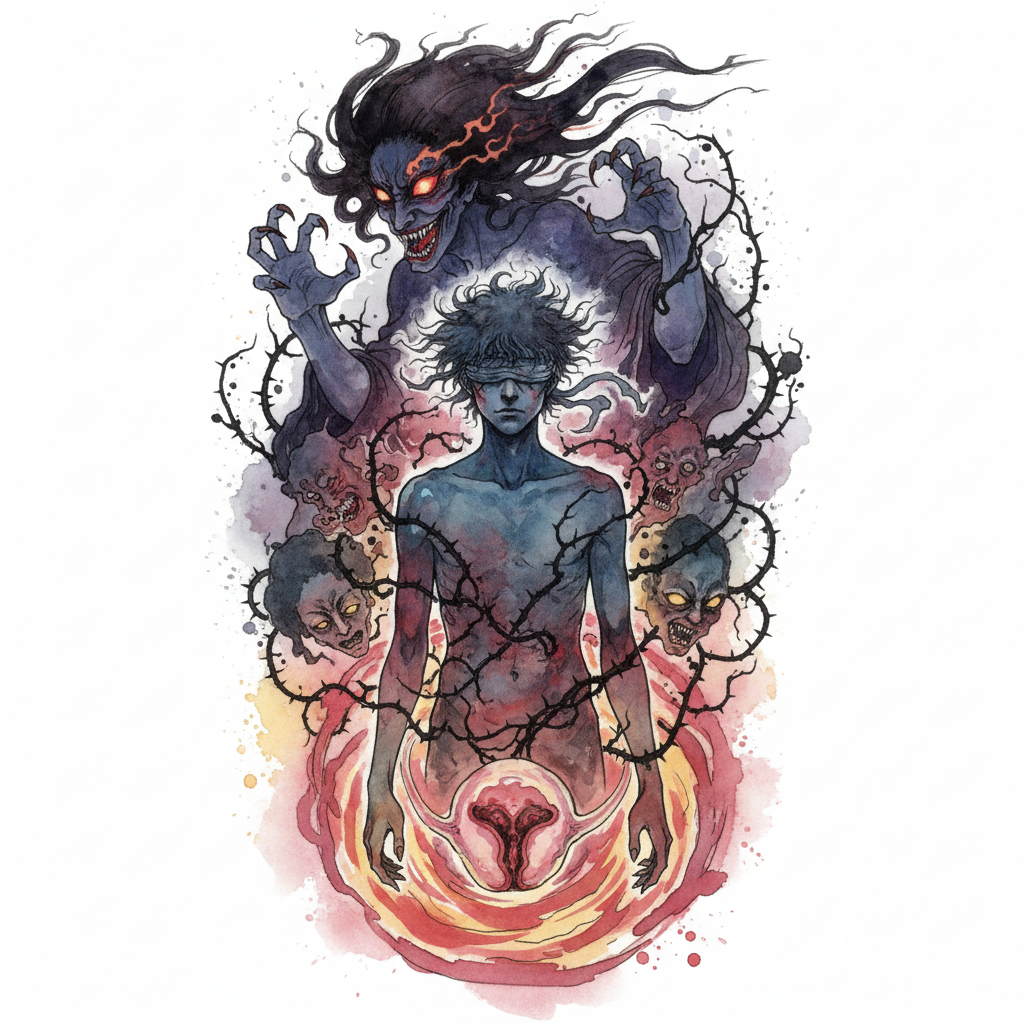
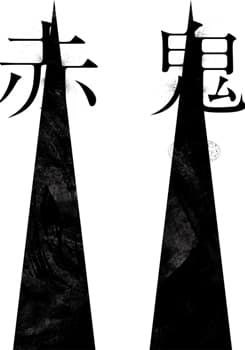
For a modern bridge, read a play such as Mishima’s Sotoba Komachi after attending a classical performance. It can help you recognize what happens when a modern playwright preserves the pressure of Noh—memory, revelation, poetic speech, transformation—while changing the setting and social language. You can also compare Shintoku-maru (身毒丸), which carries medieval legend into angura’s physical and visual intensity, and Red Demon / Aka Oni (赤鬼), a later contemporary work that shows how Japanese playwrights continue to make myth, ritual, and estrangement playable for modern audiences.
Common First-Time Mistakes
Mistake 1: Expecting a realistic story immediately
Noh does not always introduce character and conflict in the fastest possible way. The opening may be establishing a ritual, place, season, or mode of attention. Give the play time to declare its rules.
Mistake 2: Treating the mask as the whole performance
The mask is important, but it is one part of a larger score. Watch the body, voice, costume, chorus, and music together.
Mistake 3: Assuming “slow” means “inactive”
Noh compresses movement. A still body can contain a large change in status, memory, or emotional direction. Slowness makes tiny differences visible.
Mistake 4: Choosing the longest possible program for your first visit
A full-day program may be rewarding for experienced audiences, but it is not automatically the best introduction. A shorter program with English support lets you build confidence.
Mistake 5: Comparing Noh to Kabuki as if one were the “real” Japanese theater
Kabuki, Noh, Kyogen, bunraku, shingeki, and small-theater work belong to different performance ecologies. Noh is not a more authentic version of Kabuki, and Kabuki is not a popularized Noh. Let each form define its own relationship between actor, text, music, and audience.
FAQ: Seeing Noh in Japan
Can I enjoy Noh if I do not speak Japanese?
Yes. English subtitles, synopses, lectures, and beginner programs can make the narrative accessible. You will still encounter poetic and musical details that do not translate completely, but that is also true of opera, dance, and many classical performance forms.
Is Noh the same as Kyogen?
No. Noh is generally more lyrical, musical, and supernatural, while Kyogen is comic and more heavily based on spoken dialogue. They are often performed together as Nōgaku.
How long is a Noh performance?
A single Noh play is often around 90 minutes. Kyogen commonly lasts 15 to 30 minutes. A complete public program may be longer, especially when it includes demonstrations, lectures, or more than one Noh play.
Should I see a Noh play or a beginner workshop first?
If you are nervous about the form, choose a beginner-focused performance or workshop. If you already attend theater comfortably, a standard program with an English synopsis can be a satisfying first step.
Can I buy tickets on the day?
Sometimes, if seats remain. However, public Noh programs can be specific one-time events, and the title you want may not be repeated. Advance booking is safer.
Where should I sit?
Shomen is the conventional front view. Waki-shomen is useful if you want to watch the hashigakari and performer entrances. Naka-shomen offers a diagonal perspective. Choose based on the seat map and availability.
Is there a dress code?
Usually not. Wear quiet, comfortable clothing and avoid accessories or materials that make noise.
A Simple First-Visit Plan
If you have one free evening in Tokyo, use this sequence:
- Find a program at the National Noh Theatre or another established Noh venue.
- Confirm whether the performance has English subtitles, a synopsis, or an introductory explanation.
- Read a short plot summary before the day.
- Arrive at least 20 minutes early and explore the lobby or exhibition material if available.
- Settle on one thing to watch: the bridge, the chorus, the feet, or the relationship between mask and light.
- Stay through the curtain call and save your questions for the interval or after the performance.
- Read a modern Noh-influenced play afterward to compare inherited form with contemporary adaptation.
Noh does not require you to become an expert before you enter the theater. It asks for a different kind of preparation: enough context to recognize the structure, and enough patience to let the performance work at its own speed.
For international visitors, that is the real opportunity. You are not merely observing an old Japanese art from the outside. You are entering a theater system that has spent centuries refining how a voice, a body, a mask, a musical phrase, and an apparently empty space can make time visible.
Sources and Further Reading
- Japan Cultural Expo, “An Introduction to the Classical Stage Arts of Noh & Kyogen: A Beginner’s Guide” — venue information, ticketing, subtitle monitors, seating, and etiquette: https://japanculturalexpo.ntj.jac.go.jp/en/article/howto/202507_1/
- Japan Arts Council, “Invitation to Nohgaku: Where do I watch?” — National Noh Theatre, ticketing, seat types, and outdoor Noh: https://www2.ntj.jac.go.jp/unesco/noh/en/theatre/theatre1.html
- Japan Arts Council, “Invitation to Nohgaku: What will I watch?” — program composition, typical durations, and beginner performances: https://www2.ntj.jac.go.jp/unesco/noh/en/theatre/theatre2.html
- the-noh.com, “For Noh Beginners” — preparation advice, play summaries, performance locations, and the Noh database: https://www.the-noh.com/en/world/howto.html
- Japan National Tourism Organization, “Theater in Japan” — overview of Noh, Kyogen, Kabuki, Bunraku, and traditional theater for travelers: https://www.japan.travel/en/guide/theater/
この記事で紹介した戯曲
Written by
戯曲図書館 編集部
演劇経験者が運営する戯曲検索サービス「戯曲図書館」の編集チームです。 脚本選びのノウハウ、演劇業界の最新情報、公演レポートなどを発信しています。
関連記事
Senshuraku Explained (2026): A Cultural Guide to Japan's Theater Closing Nights for International Visitors
A practical English guide to senshuraku (千秋楽)—the final performance of a Japanese theater run. Learn its origin, why closing nights feel special, and how to plan a trip around one.
2026-09-26
2.5D Theater in Japan (2026): A Practical Guide for International Theater Fans
A practical 2026 guide to Japan’s 2.5D theater scene for international fans, from tickets and subtitles to what makes the genre work live.
2026-08-22
Open-Air and Outdoor Theater in Japan in 2026: Where to Go, What to Expect, and How to Plan
A practical 2026 guide to open-air and outdoor theater in Japan, with festival examples, ticketing tips, weather planning, and beginner-friendly play recommendations.
2026-08-15
How Japanese Play Readings Work in 2026: A Practical Culture Guide for Theater Fans and Directors
A practical 2026 guide to Japanese play readings: what they are, how they differ from full productions, and why they matter for translation, festivals, and new-play development.
2026-07-18