Open-air and outdoor theater in Japan means live performance staged in parks, castle grounds, plazas, tent spaces, and regional festival sites where weather, landscape, and audience movement shape the experience as much as the script does.
If you are curious about Japanese theater but want something less intimidating than a formal proscenium night, outdoor performance is one of the best entry points. It often feels more social, more place-specific, and more legible for travelers because the environment tells you what kind of event you are attending before the first line is spoken.
It is also more varied than many international visitors expect. In Japan, “outdoor theater” can mean:
- a large spring festival performance in a castle park,
- a contemporary work in a dedicated open-air amphitheater,
- a roaming street-theater event through downtown blocks,
- a public-plaza program tied to a major urban festival,
- or a regional festival where indoor and outdoor performances are mixed across an entire town.
As of Saturday, August 15, 2026, this is one of the clearest practical ways to understand how Japanese theater connects to travel, public space, and local culture.
Quick Facts
| Item | Practical answer |
|---|---|
| What counts as outdoor theater in Japan? | Performances in parks, plazas, castle grounds, streets, tents, and dedicated open-air venues |
| Best seasons | Spring and autumn are easiest; summer works if you plan for heat, insects, and long travel days |
| Good 2026 entry points | World Theatre Festival Shizuoka, Toyooka Theater Festival, and Autumn Meteorite Tokyo |
| Seating style | Mixed: reserved, non-reserved, promenade, and roaming formats all exist |
| Main planning risk | Weather, transport timing, and venue-specific ticket rules |
| Best for first-time visitors | Large festivals with English information pages and clear access guidance |
| Good starter plays to read first | Tokyo Notes (東京ノート), The Men Who Wanted to Sing / Utawasetai Otokotachi (歌わせたい男たち), The Dressing Room (楽屋), Zō / The Elephant (象) |
Why outdoor theater matters in Japan
Indoor theater is only one part of the Japanese performance ecosystem. Some of the country’s most memorable theater experiences happen in spaces where the venue is inseparable from the event itself: a forest-edge park, a public square, a castle site, a hot-spring town, or a temporary outdoor structure that changes how audiences move and listen.
For international visitors and English-speaking theater-makers, that matters for three reasons.
1. It makes Japanese theater feel less abstract
A lot of people first encounter Japanese theater through names, movements, and genres they do not yet understand. Outdoor work lowers that barrier. You are not just decoding a script tradition; you are entering a visible event culture.
2. It connects theater to travel in a practical way
Many of Japan’s strongest outdoor events are destination-based. That means your theater night is also a transport plan, a neighborhood walk, a meal decision, and sometimes an overnight stay. In good cases, that is a feature rather than a burden.
3. It reveals how public space changes performance
Japanese theater outdoors is not merely “the same show but outside.” Tempo, crowd behavior, sightlines, sound, and even silence work differently. A castle park performance does not land like a black-box production. A downtown roaming event does not behave like a seated drama reading.
What outdoor theater in Japan actually looks like
The easiest mistake is to imagine one single format. In reality, outdoor theater in Japan sits on a spectrum.
| Format | What it feels like | Best for |
|---|---|---|
| Open-air festival production | Large-scale, scenic, event-like | Travelers who want one memorable “main event” |
| Park or castle-ground performance | Atmospheric and visual | People who enjoy place-specific theater and photography-friendly settings |
| Street theater / roving program | Mobile, unpredictable, playful | Visitors who like discovery more than strict formality |
| Plaza performance | Easy to access, urban, social | First-timers staying in Tokyo or other major cities |
| Mixed regional festival | Theater plus tourism, transport, food, local culture | Travelers building a multi-day trip around performance |
This variety is one reason outdoor theater works so well for non-Japanese speakers. Even when language access is imperfect, the spatial logic is often easier to follow than in a fully conventional indoor production.
Three strong 2026 models to know
If you only want three reference points for planning, start here.
1. World Theatre Festival Shizuoka 2026
The clearest spring example in 2026 was World Theatre Festival Shizuoka, which ran from April 25 to May 6, 2026. The official festival outline listed venues including Shizuoka Arts Theatre, Shizuoka Performing Arts Park, and Sumpu Castle Park, which already tells you something important: this is not a single-building festival.
For outdoor-theater planning, two details matter especially:
- the festival included work at Open Air Theatre “UDO” in Shizuoka Performing Arts Park,
- and it also programmed activity in Sumpu Castle Park, including street-theater and event spaces.
That combination is useful for first-time visitors because it shows two different outdoor logics at once. One is venue-based and theatrical. The other is city-facing and festival-like.
The program page for Eel Migration listed the venue as Open Air Theatre “UDO”, a 90-minute performance with non-reserved seating, in Japanese and Brazilian Portuguese with Japanese, English, and Brazilian Portuguese surtitles. For international visitors, that is exactly the sort of detail you should learn to scan for: seating type, duration, and language support can matter more outdoors than cast fame.
Shizuoka is especially good if you want:
- spring weather rather than late-summer heat,
- a curated international festival atmosphere,
- a mix of indoor and outdoor options,
- and a setting where the park itself is part of the theatrical experience.
2. Toyooka Theater Festival 2026
If Shizuoka is the spring model, Toyooka Theater Festival 2026 is the regional late-summer and early-autumn model. The English program page describes the festival as presenting performances and events in both indoor and outdoor venues across the wider Tajima region.
That is not just marketing language. The access page makes clear that the festival spreads across multiple areas including Toyooka, Kinosaki, Takeno, Tanto, Yabu, Kami, Asago, and Shinonsen, with travel support built into the festival infrastructure. This is outdoor theater as regional circulation rather than one-site convenience.
The most practical ticket detail for English-speaking visitors is that Toyooka’s English ticket page states:
- tickets can be purchased online, at ticket counters, or by phone,
- online sales include CloudJoi (EN) for some single tickets,
- and the festival also offers official tour packages that combine performance tickets with accommodation and transport.
That makes Toyooka one of the smartest choices if you want outdoor theater without improvising every logistics step yourself.
It is especially good if you want:
- a trip built around theater rather than a single evening,
- a mix of formal festival works and discovery-oriented fringe activity,
- easier integration with local tourism,
- and the feeling that the town itself is hosting the performance ecology.
3. Autumn Meteorite Tokyo 2026
For travelers who want an outdoor theater experience without leaving Tokyo, Autumn Meteorite Tokyo 2026 is one of the clearest 2026 cases. The festival runs from October 9 to November 3, 2026 and uses Tokyo Metropolitan Theatre plus GLOBAL RING THEATRE, the outdoor theater in Ikebukuro West Exit Park.
This is a different kind of outdoor experience from Shizuoka or Toyooka. It is not “nature-forward.” It is urban, public, and embedded in pedestrian flow. That matters if you want:
- easy station access,
- the option to mix indoor and outdoor programs in one day,
- nearby cafés, restrooms, and city infrastructure,
- and an outdoor event that still feels highly accessible for a first visit.
The festival’s attendee-support page is unusually practical. It specifically notes a universal-access restroom near GLOBAL RING THEATRE in the building housing Global Ring Café. Small details like that matter more than people expect when a performance is outside and your wait time may be longer than in a standard indoor lobby.
How to choose the right outdoor-theater trip for you
If you are unsure where to start, use this filter instead of chasing the “best” festival in the abstract.
Choose Shizuoka if:
- you want the strongest spring timing,
- you like scenic outdoor venues,
- you care about surtitles and international programming,
- you want one festival with a serious curatorial identity.
Choose Toyooka if:
- you want theater as part of a regional journey,
- you do not mind moving between venues and towns,
- you enjoy discovery, fringe energy, and local context,
- you are happy to plan transport and accommodation together.
Choose Autumn Meteorite Tokyo if:
- you want the easiest logistics,
- you are staying in Tokyo anyway,
- you want outdoor theater without committing to a regional trip,
- you prefer a city-plaza atmosphere to a rural or park-based one.
Ticketing works differently outdoors, so read the page carefully
Many outdoor-theater disappointments come from assuming the ticketing logic will be the same as an indoor repertory house. Often it is not.
Here is the planning mindset that works best.
| What to check first | Why it matters |
|---|---|
| Reserved vs non-reserved seating | Your arrival time matters much more for non-reserved outdoor events |
| Rain policy | Outdoor performances may continue, delay, relocate, or change terms depending on the event |
| Language access | Surtitles, multilingual performance, or no support at all can change your choice |
| Venue access | A park venue and a downtown plaza venue require different timing assumptions |
| Last train / return route | Outdoor festivals often encourage lingering, but your transport may not |
A few 2026 examples
- Shizuoka’s Eel Migration page explicitly listed non-reserved seating and a 90-minute duration.
- Toyooka’s English ticket page explicitly listed online purchase, ticket counter / phone purchase, and CloudJoi (EN) for single tickets.
- Toyooka also listed official tour packages, which is a major practical advantage if you are building a destination trip.
- Autumn Meteorite’s site makes it clear that GLOBAL RING THEATRE is part of the venue mix, which should immediately tell you to plan for public-space conditions rather than standard auditorium habits.
If you do only one thing right, do this: read the individual performance page, not just the festival top page.
What to bring, and what not to romanticize
Outdoor theater sounds dreamy until you are sweaty, underdressed, late, and sitting at a bad angle.
Bring:
- a light layer even in warm months,
- water in seasons with heat exposure,
- a fully charged phone,
- cash or an accepted card for festival food or transit contingencies,
- a compact hand towel,
- and a weather-aware bag rather than a delicate one.
Think twice before bringing:
- a giant umbrella if rules are unclear,
- bulky luggage on a regional festival day,
- strong perfume in closely packed seating,
- or a rigid dinner reservation immediately after the show.
In Japan, the most useful outdoor-theater habit is not “pack more.” It is leave margin.
Leave margin for:
- weather changes,
- longer-than-expected walks,
- food lines,
- subtitles setup,
- and post-show transport.
That one choice will improve your night more than any gear list.
Outdoor-theater etiquette: similar to indoor theater, but not identical
Japanese audiences are generally considerate and spatially aware. Outdoors, that same culture remains, but the pressure points change.
Expect tighter attention around:
- phone brightness,
- talking during transitions,
- blocking sightlines,
- late arrival in non-reserved formats,
- and noisy food packaging.
Be more flexible about:
- ambient city noise,
- wind,
- bird or traffic sound,
- less formal audience flow,
- and pre-show milling around.
The key is simple: you may be outside, but it is still theater first.
If you are unsure, follow the lead of the audience around you. Japanese outdoor audiences are usually good at broadcasting the correct behavioral tone without saying much.
Useful Japanese phrases for outdoor-theater days
You do not need much Japanese to manage an outdoor performance night, but these help.
| Japanese | Romaji | Meaning |
|---|---|---|
| 屋外劇場はどこですか。 | Okugai gekijo wa doko desu ka? | Where is the outdoor theater? |
| 当日券はありますか。 | Tojitsuken wa arimasu ka? | Are there same-day tickets? |
| 自由席ですか。 | Jiyuseki desu ka? | Is it non-reserved seating? |
| 雨の場合はどうなりますか。 | Ame no baai wa do narimasu ka? | What happens if it rains? |
| 開場は何時ですか。 | Kaijo wa nanji desu ka? | What time does the venue open? |
If you can memorize only one, make it Ame no baai wa do narimasu ka? Outdoor-theater planning gets easier the moment you ask the rain question directly.
Four Japanese plays to read before your first outdoor-theater trip
Outdoor performance is about space, attention, and social atmosphere. These four plays are useful starting points because they sharpen your ear for those things even if they were not written specifically for outdoor production.
1. Tokyo Notes (東京ノート)
Oriza Hirata’s quiet conversational architecture trains you to notice stillness, spacing, and how public behavior shapes meaning. It is an excellent reset if you are expecting outdoor theater to be only loud or spectacular.
2. The Men Who Wanted to Sing / Utawasetai Otokotachi (歌わせたい男たち)
Ai Nagai’s dramatic tension depends on speech, power, and civic pressure. That makes it a strong pre-trip read for understanding how Japanese theater can carry social stakes even without visual excess.
3. The Dressing Room (楽屋)
Kunio Shimizu’s play heightens your awareness of performance layers, theatrical ritual, and the line between event and illusion. That sensitivity helps when you move into less conventional outdoor formats.
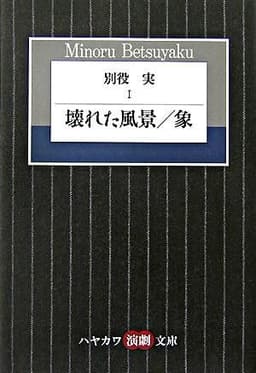
4. Zō / The Elephant (象)
Betsuyaku Minoru is useful because absurdist pressure often reads very clearly when the surrounding space is simple. Outdoor theater can produce that same sharpened feeling: environment stripped back, attention pushed onto rhythm and relation.
FAQ
Is outdoor theater in Japan only a summer thing?
No. In 2026, one of the strongest outdoor-facing reference points, World Theatre Festival Shizuoka, ran from April 25 to May 6, 2026, while Autumn Meteorite Tokyo runs from October 9 to November 3, 2026. Spring and autumn are often easier than peak summer.
Do I need Japanese to enjoy it?
Not always. Some major festivals provide English information pages, and some performances include English surtitles or multilingual elements. Even when language support is limited, outdoor formats can still be rewarding because atmosphere and spatial logic are more visible.
Is outdoor theater cheaper than indoor theater?
Not automatically. Some outdoor programs are premium festival events, while others are easier-entry public-space performances. Think of outdoor theater as a format, not a price category.
Should I prioritize Tokyo or a regional festival?
If logistics are your main concern, start with Tokyo. If theater is a major reason for your trip, a regional festival like Toyooka can offer the richer experience.
What is the biggest mistake first-timers make?
Treating outdoor theater like ordinary indoor theater with prettier scenery. It is better to think of it as a different kind of event that requires more timing margin, more weather awareness, and more curiosity about the venue itself.
Final planning advice
If you want the most reliable first outdoor-theater experience in Japan, choose the format before you choose the title.
- Want the strongest festival identity? Choose Shizuoka.
- Want a regional journey with many venue types? Choose Toyooka.
- Want the easiest urban access? Choose Autumn Meteorite Tokyo.
Then work backward:
- Check the exact performance page.
- Confirm seating and rain policy.
- Confirm transport timing.
- Leave more buffer than you think you need.
That is the practical rhythm of outdoor theater in Japan.
Further Reading
この記事で紹介した戯曲

Written by
戯曲図書館 編集部
演劇経験者が運営する戯曲検索サービス「戯曲図書館」の編集チームです。 脚本選びのノウハウ、演劇業界の最新情報、公演レポートなどを発信しています。
関連記事
2.5D Theater in Japan (2026): A Practical Guide for International Theater Fans
A practical 2026 guide to Japan’s 2.5D theater scene for international fans, from tickets and subtitles to what makes the genre work live.
2026-08-22
Senshuraku Explained (2026): A Cultural Guide to Japan's Theater Closing Nights for International Visitors
A practical English guide to senshuraku (千秋楽)—the final performance of a Japanese theater run. Learn its origin, why closing nights feel special, and how to plan a trip around one.
2026-09-26
How to Read a Japanese Theater Flyer and Ticket in 2026: A Practical Guide for International Visitors
A practical 2026 guide to reading Japanese theater flyers and tickets, from kaijo and kaien to reserved seats, day tickets, and pickup rules.
2026-08-11
How Japanese Play Readings Work in 2026: A Practical Culture Guide for Theater Fans and Directors
A practical 2026 guide to Japanese play readings: what they are, how they differ from full productions, and why they matter for translation, festivals, and new-play development.
2026-07-18