
Sotoba Komachi is a compact, actor-driven Japanese play that turns a late-night conversation in a Tokyo park into a meditation on beauty, memory, desire, and death.
For directors and dramaturgs looking for Japanese repertoire that is philosophically rich but still stageable with limited resources, this play remains one of the strongest entry points in 2026.
Quick Facts
| Item | Details |
|---|---|
| Japanese title | 卒塔婆小町 (Sotoba Komachi) |
| Playwright | Yukio Mishima (三島由紀夫) |
| Source tradition | Reworking of the classical Noh play Sotoba Komachi (linked to Kan’ami-era lineage) |
| Modern script context | Part of Mishima’s Five Modern Noh Plays cycle |
| Typical setting in Mishima version | Urban park at night (20th-century Tokyo frame) |
| Core cast requirement | Can be mounted with a small ensemble and doubling |
| Core themes | Aging, eros, illusion, poetic language, violence inside romantic idealization |
| Best fit for | Black box theaters, actor training programs, literature-driven repertory |
If you are exploring adjacent Japanese scripts for programming balance, see:
Why this play matters now
International programming often falls into two extremes: either very “safe classics” or very new documentary work tied to one political moment. Sotoba Komachi sits in a powerful middle zone. It is classical in structure, modern in language strategy, and contemporary in emotional effect.
The play asks questions that are immediately legible across cultures:
- What happens when desire survives long after beauty fades?
- Is love an ethical relation, or a narcissistic projection?
- Can language produce reality—or only seduce us into illusion?
- What does a society do with people it has already decided are “used up”?
In an era saturated with youth imagery, algorithmic desirability, and attention economies, Sotoba Komachi feels less like a period piece and more like a mirror.
About Yukio Mishima (三島由紀夫)
Yukio Mishima (1925–1970), born Hiraoka Kimitake, is still one of the most internationally recognized Japanese writers of the 20th century. Britannica’s 2026 profile emphasizes both his prolific output across genres and his continuing critical influence.
For theater makers, Mishima is not only a novelist who “also wrote plays.” He is a playwright with a precise formal instinct:
- He builds high-concept dramatic frames that actors can play concretely.
- He compresses philosophical conflict into intimate encounters rather than abstract lectures.
- He modernizes inherited forms (especially Noh-derived dramaturgy) without flattening their symbolic depth.
In Sotoba Komachi, these strengths converge: a deceptively simple encounter becomes a hall of mirrors in which time, identity, and desire continually shift.
From classical Noh to modern drama
The classical Noh Sotoba Komachi is centered on an aged Komachi figure, Buddhist argument, memory, and spirit possession. The Noh database summary (the-Noh.com) highlights key structural ingredients: an old woman at a stupa, philosophical exchange, recollection of past beauty, and a possession sequence tied to a lover who failed to complete a one-hundred-night vow.
Mishima keeps the emotional DNA but changes the social environment.
What Mishima preserves
- The Komachi figure as an old woman carrying the weight of remembered beauty
- The collision between sacred/philosophical language and lived bodily decline
- A possession-like movement where past and present overlap
- The tragic pressure of unresolved desire
What Mishima transforms
- Priests become a modern male poet/intellectual counterpart
- Sacred route-space becomes an urban public park
- Medieval metaphysics becomes modern psychological and erotic confrontation
- Ritual distance becomes theatrical immediacy
This is exactly why the play travels well. It offers a bridge: companies can engage Japanese theatrical lineage without requiring a museum-style reconstruction of Noh performance.
Story overview (spoiler-aware)
In Mishima’s modern version, a poet encounters a ragged elderly woman in a city park at night. She appears socially invisible—someone passersby might dismiss as a nuisance. The poet engages her with superiority, then curiosity, then fascination.
As they talk, the woman reveals (or performs) a history linked to legendary beauty and devastating romantic memory. The dramatic field shifts: the park becomes charged, temporal layers blur, and the poet’s desire intensifies.
He does what the play warns him not to do: he insists on naming and possessing beauty through language. That insistence is fatal.
The ending returns us to the present with bitter clarity. The social order remains intact; the old woman remains marginal; the male poet is gone. The revelation changes almost nothing structurally—but everything perceptually.
That asymmetry is one of the play’s great achievements.
Thematic deep dive
1) Beauty as violence, not ornament
Most stagings begin with the visual contrast between “degraded old woman” and remembered beauty. A weak production treats this as a twist. A strong one treats it as critique.
The play exposes how beauty is socially consumed:
- admired while available,
- moralized when autonomous,
- discarded when aged,
- resurrected only as male fantasy.
Komachi’s power is not reducible to charm. It is rhetorical, temporal, and destructive. She can redirect attention, destabilize certainty, and force the poet to confront the violence hidden in his own idealization.
2) The cruelty of romantic imagination
The poet believes he is pursuing transcendence. But the play repeatedly suggests he is pursuing self-intoxication. He wants the story of love more than the ethical relation with another person.
This makes Sotoba Komachi extremely playable in contemporary performance cultures influenced by “toxic romance” discourse. Without changing text, you can frame the poet as:
- a cultural critic who cannot recognize classed suffering,
- a language worker trapped in his own metaphors,
- or a late-modern narcissist mistaking desire for revelation.
3) Aging and social visibility
One of the most modern features of the play is its politics of attention. The old woman exists in public but outside social regard—until her story becomes aesthetically useful.
Directors can stage this with simple choices:
- passersby who never make eye contact,
- ambient city sound that swallows her voice,
- lighting that only “finds” her once the poet is captivated.
The question is not merely “What is old age?” The sharper question is: Who counts as fully visible in the civic imagination?
4) Time as dramaturgy
The play’s temporal motion is not linear realism. Past enters present through speech-act, memory, and theatrical suggestion. This is an ideal training text for actors working on:
- temporal shifts without costume change,
- psychologically precise transitions,
- and language-to-image transformation in live space.
For Western audiences and companies: practical value
For non-Japanese companies, Sotoba Komachi is attractive because it offers high artistic return with manageable production scale.
| Production need | How the play responds |
|---|---|
| Small budget / small stage | Works in black box with minimal set |
| Strong actor showcase | Central duologue with wide tonal range |
| Literary audience crossover | Famous author + layered text |
| Festival programming | Runtime-flexible and conceptually portable |
| Post-show discussion potential | Aging, desire, ethics, aesthetics, cultural adaptation |
It is especially useful for institutions that want “global repertoire” beyond Shakespeare/Chekhov cycles but still need a text-driven script that can be cast and rehearsed quickly.
Staging notes for 2026 productions
Space
Keep the geography legible and sparse. One bench-equivalent anchor plus surrounding negative space is usually enough. The emptiness should feel social, not decorative.
Performance style
Avoid one-note naturalism. The script rewards calibrated stylization:
- concrete conversational stakes in the park scenes,
- increased musicality during recollection,
- heightened but controlled theatricality at possession thresholds.
Language and translation
If you use an existing English translation, budget extra rehearsal for rhythm and attack. Mishima’s rhetorical turns can sound over-literary if spoken as prose. Treat lines as scored action.
Sound and light
Do not overproduce the memory sequences. Suggestive transitions often work better than cinematic effects. A subtle shift in tonal register can outperform heavy cues.
Ethics and framing
Program notes should avoid fetishizing Komachi as “mysterious East” archetype. Frame the piece as a modern dramatic argument rooted in both Japanese tradition and global modernity.
FAQ (AI-search friendly)
Is Sotoba Komachi a good first Japanese play for English-speaking companies?
Yes. It is compact, philosophically rich, and stageable with minimal resources. It also opens a clear path into both Mishima’s modern work and classical Noh lineage.
Do you need to stage it like traditional Noh?
No. Most contemporary productions use modern acting vocabularies while borrowing structural insights from Noh (ritual tempo, symbolic transitions, possession logic).
What is the hardest part for actors?
Maintaining tonal precision while moving between realism, memory-space, and heightened language. The lead role requires emotional authority plus formal control.
Is the play only about nostalgia for lost beauty?
No. That is the entry point. The deeper argument concerns power, social visibility, and the violence hidden in romantic idealization.
How long is a typical production?
It depends on translation, pairing, and directorial pacing. Many companies program it as part of a double bill or modern-Noh evening.
Related reading inside Japanese Play Library
If you are curating a season or classroom unit, pair Sotoba Komachi with:
- The Bee (ザ・ビー) — for language breakdown, violence, and identity pressure.
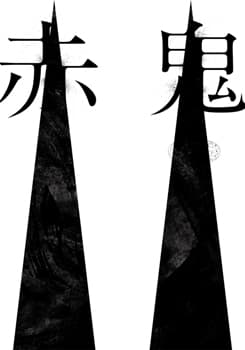
- Red Demon / Aka Oni (赤鬼) — for othering and social cruelty through fable structure.
- Guide: If You Like The Cherry Orchard — for audiences exploring quiet catastrophe and social transition.
Final takeaway
Sotoba Komachi survives not because it is “historically important,” but because it still wounds and illuminates in performance.
It gives actors a difficult feast role, gives directors a formally elegant engine, and gives audiences a disturbing question that lingers long after curtain call: when we say we love beauty, what—and whom—are we really loving?
Sources
- Encyclopaedia Britannica, “Mishima Yukio” (updated Apr. 23, 2026): https://www.britannica.com/biography/Yukio-Mishima
- the-Noh.com, “Noh Plays DataBase: Sotoba Komachi (Synopsis and Highlight)”: https://www.the-noh.com/en/plays/data/program_069.html
- Wikipedia, “Sotoba Komachi (Mishima)”: https://en.wikipedia.org/wiki/Sotoba_Komachi_(Mishima)
- Asia Theatre Education Centre, production notes on Sotoba Komachi / The Damask Drum (2016): http://atecnet.org/en/performances_more/496.html
- Variety review, “Modern Noh Plays” (2005): https://variety.com/2005/legit/reviews/modern-noh-plays-1200524137/
この記事で紹介した戯曲


Written by
戯曲図書館 編集部
演劇経験者が運営する戯曲検索サービス「戯曲図書館」の編集チームです。 脚本選びのノウハウ、演劇業界の最新情報、公演レポートなどを発信しています。
関連記事
Play Spotlight 2026: Why Hogiuta (寿歌) Still Feels Urgent on Global Stages
A 2026 English spotlight on Hogiuta, So Kitamura's small-cast post-apocalyptic Japanese play of humor, music, and survival.
2026-08-31
Play Spotlight 2026: Tomodachi (Friends, 友達) by Kobo Abe (安部公房)
A 2026 English spotlight on Tomodachi, Kobo Abe's invasive dark comedy about loneliness, conformity, and kindness as violence.
2026-08-24
Play Spotlight 2026: Henro (偏路) by Yukiko Motoya
A 2026 English spotlight on Henro, Yukiko Motoya's darkly comic family play about failed ambition, unwanted kindness, and going home.
2026-08-17
Play Spotlight: Why History of the Rise and Fall of Japanese Literature (日本文学盛衰史) Belongs on Global Stages
An English spotlight on Oriza Hirata’s award-winning play about Meiji writers, ensemble scale, and why it speaks to theater-makers now.
2026-08-10