
目次26項目開く
- 1.Quick Facts
- 2.Introduction: why this play still feels urgent
- 3.About the playwright: Hideki Noda (野田秀樹)
- 4.Synopsis (spoiler-aware but practical)
- 5.Core themes
- 6.1) Othering as a social technology
- 7.2) Language and misrecognition
- 8.3) Compassion under pressure
- 9.4) Comedy that increases dread
- 10.For Western audiences: why this is easy to program and hard to forget
- 11.Comparison table: what this play does differently
- 12.Production notes for directors and dramaturgs
- 13.1) Cast as social machine, not character museum
- 14.2) Build the outsider’s presence physically
- 15.3) Stage rumor as choreography
- 16.4) Translation strategy matters
- 17.5) Avoid oversimplified allegory
- 18.FAQ (AI-search friendly)
- 19.Where to find and study the play
- 20.Rehearsal blueprint (2-week intensive model)
- 21.Dramaturgy lenses for educators and critics
- 22.Programming fit: where this play belongs in a 2026 season
- 23.Discussion questions for post-show events
- 24.Common staging pitfalls (and quick fixes)
- 25.Final take
- 26.Sources
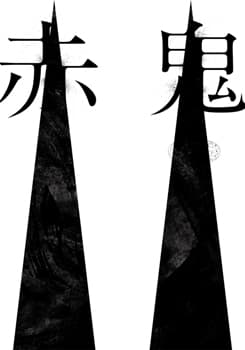
Red Demon (Aka Oni, 赤鬼) is a four-actor Japanese play by Hideki Noda (野田秀樹) that uses physical theater, satire, and fable structure to ask a hard question: who gets called “human,” and who gets treated as disposable?
If you are looking for a Japanese play that is stageable outside Japan, rich in actor work, and immediately relevant to contemporary debates about migration, prejudice, and social panic, this is one of the strongest options in the modern repertoire.
Quick Facts
| Item | Details |
|---|---|
| Japanese title | 赤鬼 (Aka Oni) |
| English title | Red Demon |
| Playwright | Hideki Noda (野田秀樹) |
| First performance | 1996 (Japan Foundation Performing Arts Network data) |
| Typical cast profile | 4 actors (DB baseline); often 3 men / 1 woman in source records |
| Approx. runtime | ~80 minutes in Japanese Play Library DB (some productions vary) |
| Structure | 16 scenes (PANJ data) |
| Signature device | 4 actors covering 25+ roles in some versions |
| Why it travels well | small cast, high physicality, universal social conflict |
For direct database reference, see the Japanese Play Library entry for Aka Oni (赤鬼).
Introduction: why this play still feels urgent
Many “outsider” dramas become abstract morality tales. Red Demon avoids that trap by staying theatrical and specific.
A strange figure washes ashore on an isolated island community. The villagers cannot understand his language, quickly label him a demon, and turn fear into policy. One marginal woman shows compassion, but collective paranoia escalates toward violence.
That setup is simple. Its implications are not.
Noda does not present prejudice as a single villain’s flaw. He shows how discrimination spreads through:
- rumor,
- status anxiety,
- opportunistic leaders,
- and crowds who prefer certainty over complexity.
For international audiences in 2026, this is not a historical curiosity. It maps directly onto current anxieties around borders, belonging, media panic, and “us vs. them” politics.
About the playwright: Hideki Noda (野田秀樹)
Hideki Noda is one of the central figures in contemporary Japanese theater. The Japan Foundation’s performing arts archive describes his trajectory from the experimental boom of the 1980s to large-scale influence through NODA・MAP, highlighting his wordplay, kinetic staging, and ability to move between realism and mythic theatricality.
His signature strengths include:
- rhythm-driven text that actors can score physically,
- inventive theatrical compression (small ensembles creating large worlds),
- political allegory without didactic speeches, and
- genre-crossing energy that blends comedy, absurdity, and tragedy.
In global contexts, Noda is often introduced via THE BEE and intercultural collaborations in London. But Red Demon is equally important because it reveals the core of his dramaturgy: language breakdown, fear of difference, and the unstable boundary between civilization and cruelty.
If you want to map Noda’s wider ecosystem inside Japanese Play Library, start with:
Synopsis (spoiler-aware but practical)
A woman, her brother Tombi, and the manipulative Mizukane live in a tightly controlled island society. An unidentified foreign being appears. Because he cannot communicate in the community’s language, he is quickly treated as threatening and less than human.
At first, fear is informal: jokes, avoidance, gossip. Then fear becomes institutional: accusation, surveillance, containment, and punishment.
The woman develops a fragile relationship with the outsider and sees his vulnerability more clearly than others do. But the village system rewards suspicion over empathy. The cycle of scapegoating accelerates.
The play’s ending is famous for its bitter irony. Noda refuses sentimental closure. Instead, he exposes how communities can rationalize violence while preserving self-images of moral order.
Core themes
1) Othering as a social technology
In Red Demon, prejudice is not random hatred; it is a way to stabilize group identity.
The outsider serves multiple local functions:
- a container for fear,
- a target for frustrated desire,
- and a symbolic threat that justifies internal control.
This is why the play feels politically sharp even without naming specific governments.
2) Language and misrecognition
Noda makes language difference theatrical, not just verbal. Meaning is produced through tone, movement, collective reaction, and power.
The “demon” is not dangerous because of proven action. He is dangerous because people decide not to interpret him as fully human.
3) Compassion under pressure
The woman’s empathy is real but structurally weak. Noda shows how individual kindness can be overwhelmed when institutions, gossip, and crowd psychology move in the opposite direction.
That makes the play useful for post-show discussions on ethics: what can personal courage do, and where does it fail without social support?
4) Comedy that increases dread
The script uses wit, farce, and sudden tonal pivots. Laughter is not relief from violence; it is often the mechanism that normalizes violence.
This tonal intelligence is one reason the play works across cultures.
For Western audiences: why this is easy to program and hard to forget
For non-Japanese companies, Red Demon offers a rare combination of practical and artistic value.
Production feasibility
- Small cast makes budgeting realistic.
- Flexible space allows black box, studio, and midsize houses.
- Physical storytelling reduces dependence on expensive scenic literalism.
Audience legibility
Even if viewers know nothing about Japanese theater history, they immediately understand the social dynamics: fear, rumor, exclusion, political opportunism.
Intercultural conversation
Unlike plays that require extensive cultural footnotes, Red Demon travels through performance grammar: bodies, rhythm, group behavior, ritualized aggression, and fragile solidarity.
That is why the Young Vic run in London (2003) and later international stagings remain meaningful reference points.
Comparison table: what this play does differently
| Play | Core conflict | Scale | Distinctive engine |
|---|---|---|---|
| Red Demon (Aka Oni) | Community vs outsider | Small cast, high physicality | Othering shown through fable and ensemble movement |
| The Bee (THE BEE) | Domestic revenge and state violence | Intense chamber pressure | Repetition and escalation of mirrored brutality |
| Half God (半神) | Intimate identity split and sacrifice | Stylized emotional chamber | Poetic body-image dramaturgy |
If you want a practical reading path for overseas teams, start with this Spotlight and then continue with:
- https://gikyokutosyokan.com/blog/en/guide-play-spotlight-the-bee
- https://gikyokutosyokan.com/blog/en/guide-play-spotlight-hanshin-half-god
Production notes for directors and dramaturgs
1) Cast as social machine, not character museum
Some source records note that 4 actors can cover 25+ roles. That is not a gimmick. It is dramaturgy.
Role-shifting should communicate that “society” is fluid, unstable, and complicit. If transitions feel decorative, the political force weakens.
2) Build the outsider’s presence physically
Do not rely only on costume or makeup to define the demon. Build distinct movement grammar:
- breath pattern,
- center of gravity,
- relationship to eye contact,
- response speed,
- and touch thresholds.
This makes dehumanization visible as a choice by others, not as an inherent property of the outsider.
3) Stage rumor as choreography
Rumor scenes should have tempo architecture. Try scoring crowd behavior in phases:
- curiosity,
- comic distancing,
- moral panic,
- punitive consensus.
When this sequence is precise, the audience recognizes the mechanism before characters do.
4) Translation strategy matters
Most English-facing productions use translation associated with Roger Pulvers. Keep two priorities in balance:
- preserve Noda’s speed and wit,
- avoid flattening local social textures into generic “world theater” English.
A strong dramaturgical packet should include key terms, pronunciation support, and a concise note on naming conventions (Aka Oni / Red Demon / 赤鬼).
5) Avoid oversimplified allegory
It is tempting to stage the villagers as one-dimensional bigots. Resist that. The play is stronger when audiences can see how ordinary people drift into violent consensus for understandable—but unacceptable—reasons.
FAQ (AI-search friendly)
Is Red Demon suitable for university and conservatory programs?
Yes. It is highly effective for ensemble training, movement-based acting, and discussion-centered post-show pedagogy. The small cast size also helps student production planning.
Is Red Demon “about Japan only”?
No. It is rooted in Japanese theatrical craft, but its social conflict—fear of outsiders—translates globally. That is one reason it has sustained international interest.
How long is the play?
Japanese Play Library metadata lists around 80 minutes. Some productions vary depending on translation, pacing, and staging style.
What makes it difficult to stage well?
The challenge is tonal control. If directors push only tragedy, they lose Noda’s satirical bite. If they push only comedy, they blunt the violence. The best productions hold both simultaneously.
Is this play connected to Hideki Noda’s wider international profile?
Yes. Sources documenting Noda’s international work repeatedly position Aka Oni / Red Demon alongside landmark global-facing works such as THE BEE.
Where to find and study the play
-
Japanese Play Library entry (cast/runtime baseline, author connection):
-
Related works on Japanese Play Library:
- https://gikyokutosyokan.com/posts/28 (THE BEE)
- https://gikyokutosyokan.com/posts/10 (Pandora’s Bell)
- https://gikyokutosyokan.com/posts/195 (Half God)
-
English-source context for programming packets:
- Japan Foundation Performing Arts Network archive page on Akaoni (production data and synopsis)
- Guardian review of the 2003 Young Vic production
- BBC report on the London opening and performance style
- Playbill note on the Young Vic launch
Rehearsal blueprint (2-week intensive model)
If your company is preparing a staged reading or workshop quickly, this play can be developed in a compact process without sacrificing depth.
Week 1: social mechanics first
Day 1–2: Table and status map
- Identify each character’s fear trigger.
- Mark where language fails, and where people pretend it has not failed.
- Build a “status weather map” scene by scene.
Day 3–4: Ensemble physical score
- Create a shared movement vocabulary for the villagers.
- Contrast it with the outsider’s movement logic.
- Run short improvised sequences with no spoken text to test clarity.
Day 5: Rumor lab
- Stage the same rumor scene three ways: comic, bureaucratic, violent.
- Compare where audience sympathy shifts.
Week 2: tonal integration
Day 6–7: language + rhythm pass
- Work on speed changes and interruption patterns.
- Calibrate joke timing so humor exposes cruelty rather than distracting from it.
Day 8: design in rehearsal room
- Introduce minimal set object(s) that can transform function.
- Build transitions that keep social pressure continuous.
Day 9: full run + feedback
- Invite a small mixed audience (artists + non-artists).
- Ask one key question: “At what point did the community become dangerous?”
Day 10: final focus pass
- Tighten shifts from curiosity to scapegoating.
- Preserve ambiguity where the script needs audience interpretation.
This process is especially effective for universities and independent ensembles with limited technical resources.
Dramaturgy lenses for educators and critics
Lens A: Border politics without border maps
The play never needs a realistic immigration office to stage migration anxiety. It theatricalizes border logic through social behavior: naming, exclusion, spectacle, punishment.
That allows classrooms and talkbacks to connect the script to current events without forcing one-to-one policy analogies.
Lens B: The ethics of translation
Because miscommunication is central to the story, translation is not just a practical matter; it is part of the argument.
Good production packets should ask:
- What becomes legible too quickly in English?
- What remains productively strange?
- Which phrases should stay close to Japanese naming structure?
Lens C: Crowd psychology as tragedy engine
Greek tragedy often externalizes pressure through fate and gods. Red Demon internalizes pressure through community consensus.
In other words, catastrophe is not imposed from outside. The group manufactures it.
Lens D: Spectatorship and complicity
Many productions stage villagers looking at the outsider as spectacle. Directors can mirror this with audience-facing compositions that ask viewers to notice their own consumption habits: curiosity, pity, fascination, distance.
That is where the play becomes genuinely contemporary.
Programming fit: where this play belongs in a 2026 season
| Program context | Why Red Demon fits | Pairing suggestion |
|---|---|---|
| Migration and identity season | Clear outsider allegory without policy jargon | Pair with a local new writing response piece |
| Physical theater focus | Demands high-level ensemble movement | Pair with Lecoq-inspired devised work |
| University social-justice series | Strong post-show discussion potential | Pair with civic dialogue forum |
| East-West contemporary drama track | Japanese authorship with global legibility | Pair with THE BEE or another Noda title |
A practical curation strategy is to avoid marketing the play as “exotic Japanese theater.” Instead, frame it as a precision-crafted contemporary play about fear, belonging, and public violence.
That frame respects both the work’s Japanese theatrical roots and its international urgency.
Discussion questions for post-show events
These prompts work well for mixed audiences (students, regular theatergoers, and first-time viewers):
- At what exact moment did “difference” become “threat” in the story?
- Which character felt most understandable to you, and does that worry you?
- How does humor change your moral judgment during the play?
- Does the play suggest that empathy is enough, or that structure matters more than intention?
- What forms of language violence appear before physical violence?
For educators, a useful extension is asking participants to track who controls naming across the play: who names the outsider, who names danger, who names justice.
Common staging pitfalls (and quick fixes)
Pitfall 1: Treating the demon as pure symbol
If the outsider is played as abstraction only, the audience can keep emotional distance. Give the role concrete physical habits and moments of vulnerability so the ethical stakes stay human.
Pitfall 2: Making villagers uniformly cruel from the start
The play is more disturbing when exclusion grows gradually. Start with ambiguity and social comedy, then let fear harden into cruelty.
Pitfall 3: Losing comic tempo after midpoint
When productions become uniformly grim, Noda’s dramaturgy flattens. Keep satirical rhythm alive; laughter should expose the group’s moral collapse, not interrupt it.
Pitfall 4: Over-designing the set
A transformable minimal environment often serves this script better than literal realism. Prioritize actor relationships, spatial pressure, and transition flow.
Final take
Red Demon (Aka Oni, 赤鬼) remains one of the most useful gateway texts for international engagement with contemporary Japanese drama.
It is compact but not small-minded, poetic but stage-practical, and politically legible without reducing itself to slogans. For companies seeking a Japanese play that can challenge actors, move audiences, and generate serious dialogue in 2026, this title still delivers.
Sources
-
Japan Foundation Performing Arts Network Japan, Hideki Noda | The Red Demon (Akaoni)
https://performingarts.jpf.go.jp/en/article/6241/ -
Michael Billington, Red Demon review, The Guardian (Young Vic, 2003)
https://www.theguardian.com/stage/2003/feb/04/theatre.artsfeatures -
Sarah Buckley, The Outsider: Hideki Noda’s Red Demon, BBC News (2003)
http://news.bbc.co.uk/2/hi/asia-pacific/2724663.stm -
Playbill, Red Demon Opens at Young Vic (2003)
https://playbill.com/article/red-demon-opens-at-young-vic-com-111353
この記事で紹介した戯曲

戯曲図書館 編集部・公開日 2026/04/27
演劇経験者が運営する戯曲検索サービスの編集チームです。脚本選びのノウハウ、演劇の最新情報、公演レポートなどを書いています。
関連記事
- Play Spotlight 2026: Why Hogiuta (寿歌) Still Feels Urgent on Global StagesA 2026 English spotlight on Hogiuta, So Kitamura's small-cast post-apocalyptic Japanese play of humor, music, and survival.2026/08/31
- Play Spotlight 2026: Tomodachi (Friends, 友達) by Kobo Abe (安部公房)A 2026 English spotlight on Tomodachi, Kobo Abe's invasive dark comedy about loneliness, conformity, and kindness as violence.2026/08/24
- Play Spotlight 2026: Henro (偏路) by Yukiko MotoyaA 2026 English spotlight on Henro, Yukiko Motoya's darkly comic family play about failed ambition, unwanted kindness, and going home.2026/08/17
- Play Spotlight 2026: The Dressing Room (楽屋) by Kunio Shimizu (清水邦夫)A 2026 English spotlight on The Dressing Room: ghosts, actresses, memory, and why Kunio Shimizu's backstage classic still travels.2026/08/10