
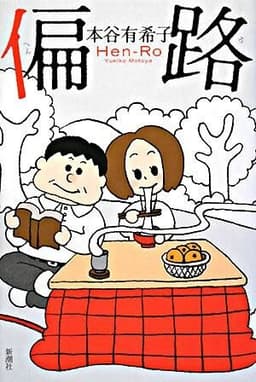
Henro (Henro, 偏路) is a contemporary Japanese family play in which a failed Tokyo dream collides with provincial intimacy, turning a New Year visit into a darkly funny crisis about ambition, shame, and the violence of "kindness."
For English-speaking theater readers in 2026, that is the clearest reason to care: Henro is one of those Japanese plays that feels culturally specific and instantly legible at the same time. It is rooted in modern Japan, but its emotional machinery is familiar to theater-makers anywhere. A daughter returns home after failing to become the person she imagined. A father refuses to behave like a stable parent. Relatives keep offering warmth that feels, to the protagonist, almost unbearable. The result is a chamber-sized family comedy with real bite.
Quick Facts
| Item | Details |
|---|---|
| Japanese title | 偏路 |
| Romanization | Henro |
| Playwright | Yukiko Motoya (本谷有希子) |
| First stage production | December 2007 |
| Published script | September 29, 2008 |
| Cast size in Japanese Play Library | 6 actors |
| Cast profile in Japanese Play Library | 2 men, 4 women |
| Runtime in Japanese Play Library | About 130 minutes |
| Recorded stage runtime | 123 minutes on DVD release |
| Setting | A relative's house in Shikoku during the New Year holiday |
| Best fit for | Mid-size ensembles, actor-driven companies, contemporary family drama lovers |
| Main themes | Failed ambition, family pressure, self-consciousness, city vs. hometown, kindness as control |
Read the original catalog entry here:
Related reading on Japanese Play Library:
- Best Japanese Plays For First-Time Readers
- Japanese Plays for 6-10 Actors
- Amae (甘え)
- Rairairairairai (来来来来)
- I'm Happy, It's Fantastic, Thank You, Really! (幸せ最高ありがとうマジで!)
Why Henro matters in 2026
Some Japanese plays travel well because they are minimal. Some travel because they are canonical. Henro matters because it travels through psychological accuracy. You do not need to know every social code in contemporary Japan to recognize what Motoya is doing here. The pain of returning home after failure is not obscure. Neither is the experience of being loved in ways that feel invasive, humiliating, or impossible to repay.
That is what makes the play useful for English-speaking readers right now. Many companies looking for Japanese scripts in translation or adaptation are not only searching for "important" works. They want plays that actors can enter through situation, tempo, embarrassment, and contradiction. Henro offers exactly that. It is a family drama, but never a bland naturalistic one. It keeps slipping into discomfort, absurdity, and emotional overexposure.
It also speaks to a very current international problem: what happens when the story you told yourself about success collapses? Wakatsuki, the protagonist, has spent years in Tokyo chasing an acting dream. By the time the play begins, she is not simply returning home. She is returning home as evidence against her own self-mythology.
That gives the play unusual force. It is not a nostalgic homecoming narrative. It is a play about how humiliating "return" can feel when the self was built against return in the first place.
About Yukiko Motoya (本谷有希子)
Yukiko Motoya was born in Ishikawa Prefecture in 1979 and launched her own theater company in September 2000. The Japan Foundation's Performing Arts Network Japan describes her as a playwright-director who emerged from acting and quickly drew attention for her writing as well. That background matters because Motoya writes with a strong sense of performable tension. Her scripts are literary, but they are never inert onstage.
By the time Henro appeared, she was already a rising figure in Japanese theater. Shinchosha's author profile places her across both drama and fiction, noting later major awards in both fields, while the Henro publication page frames the play as a script by a dramatist whose work was already carrying a distinct authorial identity. In other words, Henro belongs to the phase of Motoya's career when her voice was consolidating: sharp about self-consciousness, unsentimental about family, and precise about the grotesque side of ordinary relationships.
For international readers, Motoya is often introduced through fiction in English, especially The Lonesome Bodybuilder. That path is understandable, but it can hide how theatrical her sensibility is. Her stage work often thrives on collision:
- public politeness versus private disgust,
- comic rhythm versus emotional damage,
- intimacy versus repulsion,
- and self-dramatization versus helpless exposure.
Henro is a particularly strong gateway into that world because it is both actor-centered and structurally clear. You do not need elaborate stage mechanics to make it work. You need performers who can handle shifting tones without flattening them.
Story overview
The basic setup is deceptively simple. Wakatsuki has spent nine years in Tokyo trying to become an actress after defying her family to leave home. Now she wants to give up and come back. During the New Year holiday, she travels with her father Muneo on a visit to relatives in Shikoku, intending to confess that her Tokyo life has failed and that she wants to return.
But confession does not produce relief. The relatives' home is full of exactly the kind of warm, thick, intimate atmosphere she cannot stand. Everything feels too close. Too attentive. Too "homey." The family members are trying to welcome her, but their welcome only sharpens her alienation. Meanwhile her father, rather than stabilizing the situation, becomes its engine of chaos. Instead of accepting Wakatsuki's decision, he erupts with his own counter-move: if she comes back, he says, then he will go to Tokyo.
That is the point at which the play stops being merely a story of disappointed ambition and becomes a broader exposure of family fantasy. Everyone in the room is carrying some mixture of resentment, need, theatricality, and badly disguised disappointment. Motoya gradually strips away the family's sentimental surface until more vicious emotions spill out.
What makes the play memorable is that this exposure is not staged as grim realism. It is comic, nervous, embarrassing, and unstable. Motoya keeps the audience laughing while also making them feel the cost of each laugh.
A quick production profile
| If your company needs... | Henro offers... |
|---|---|
| A Japanese play with a manageable ensemble | 6 actors and one main domestic environment |
| A script centered on performance rather than spectacle | Character conflict, tonal shifts, and verbal rhythm |
| A family drama that avoids sentimentality | Warmth contaminated by shame, control, and disgust |
| A play for actors in their 20s to 50s | Strong generational tension without requiring a huge cast |
| A culturally specific but internationally playable script | Concrete Japanese setting, universal emotional stakes |
The play's central themes
1) Failed ambition as social exposure
Many plays are about failure. Fewer understand that failure is often hardest not in solitude, but in front of people who remember your departure.
That is the wound inside Henro. Wakatsuki did not just dream privately. She left publicly. She defined herself against the place she came from. So when she tries to return, she cannot simply come home as a tired person. She returns as a damaged narrative.
Motoya is excellent on this kind of self-consciousness. Wakatsuki does not only suffer because her career failed. She suffers because she must now inhabit other people's understanding of that failure. Pity feels unbearable. Affection feels condescending. Domestic normalcy feels like annihilation.
This is one reason the play is so rich for performers. Wakatsuki is not a noble victim. She is prickly, judgmental, difficult, and often cruel in her perceptions. But that is exactly what makes her human. Her disgust is defensive. Her arrogance is a mask worn over collapse.
2) Kindness can become a form of violence
One of the most useful phrases attached to Henro in Japanese promotional material is the pairing of "kindness" and "family." Motoya clearly treats that pairing with suspicion.
The relatives are not villains because they are cold. They are unsettling because they are warm in ways that cannot be cleanly refused. Their hospitality creates pressure. Their familiarity creates obligation. Their closeness threatens to absorb Wakatsuki into a life she associates with defeat.
This is an important distinction. In many family plays, cruelty is obvious. In Henro, the emotional trap often comes disguised as care. That makes the play more uncomfortable and more interesting.
For Western audiences, this can be one of the play's most surprising features. The conflict does not emerge from a simple rebellion against openly abusive authority. It emerges from the suffocating force of relational expectation. Motoya asks a brutal question: what if the problem is not that people fail to love you, but that they love you in forms you cannot bear?
3) The hometown is not a refuge
The promotional and review materials around the play repeatedly stress the collision between Tokyo aspiration and provincial return. This is not incidental background. It is a structural force.
Wakatsuki has built her adult identity around not being the kind of person who stays. The hometown, for her, is not merely a place. It is a verdict. It represents flattening, predictability, forced intimacy, and the death of self-invention.
Motoya does not romanticize either side of the divide. Tokyo is not shown as a true land of artistic liberation, because it has already failed Wakatsuki. But the hometown is not offered as moral correction either. It is thick with stagnation, surveillance, and unresolved family patterning.
That balance is one of the play's major strengths. It resists the easy story in which urban striving is false and home is authentic. In Henro, both spaces are compromised. The protagonist is trapped not between falsehood and truth, but between two versions of disappointment.
4) Family comedy as a method of excavation
Motoya reportedly framed the piece as an unexpected "home drama," and that description is useful as long as we hear the irony inside it.
Yes, Henro uses the grammar of domestic comedy: visits, awkward meals, overfamiliar relatives, escalating misunderstandings, the unstable father, the embarrassed daughter, the room full of people who cannot stop talking. But the function of comedy here is not comfort. It is excavation.
Laughter keeps lowering the audience's defenses. Then Motoya reveals pettiness, humiliation, dependence, and emotional ugliness beneath the supposedly wholesome family surface. The comedy is not decoration. It is the tool that breaks the room open.
Why Western audiences may connect with it
If you are introducing Japanese drama to an English-speaking company, Henro has several advantages.
First, its emotional legibility is high. Ambition, shame, family pressure, and resentment do not need heavy cultural footnotes.
Second, the play does not depend on exoticized Japan. There are no lazy entry points here through samurai nostalgia, ritual spectacle, or touristic "tradition." Instead, the play invites audiences into contemporary domestic tension, which is exactly where many international readers still know too little about Japanese theater.
Third, it gives actors something substantial to do. The strongest argument for Henro is not just that it is interesting to read. It is that it can generate excellent performances. Wakatsuki and Muneo, especially, offer the kind of contradictory roles actors love: funny and humiliating, selfish and wounded, theatrical and painfully exposed.
Fourth, the play works well in conversation with other contemporary family scripts from outside Japan. If your company already responds to writers who treat family as a site of absurdity, damage, and performance, Henro can sit productively beside work by Annie Baker, Simon Stephens, Lucy Kirkwood, or even some of the darker comic family writing associated with Caryl Churchill's descendants rather than Churchill herself.
Not because Motoya sounds like any of them. She does not. But because she shares an interest in what happens when ordinary speech becomes an instrument of exposure.
Production notes for programmers, directors, and dramaturgs
Here is the practical case for Henro.
Casting
The Japanese Play Library entry lists the play for 6 performers, and that cast size is one of its selling points. It is large enough to create a real family ecosystem, but small enough for independent companies, festivals, and actor-centered ensembles.
Space
The action is concentrated around a relative's house, which makes the play more accessible for production than many people expect from "international" repertoire. You do not need expensive visual transformation. You need an inhabited domestic space with emotional pressure built into it.
Tone
The biggest challenge is tonal accuracy. If played too heavily, the play can become dreary and moralizing. If played too lightly, it loses its danger. The sweet spot is brittle comic realism with periodic eruptions into emotional grotesque.
Translation and adaptation
I have not found clear evidence of a widely circulating English-language script edition of Henro as of August 17, 2026, so companies interested in production should treat the play as a dramaturgical discovery project rather than a plug-and-play title. That is a real obstacle, but not a reason to ignore it. In fact, it is often how new international repertoire enters English-language ecosystems.
Where to start if this play interests you
Start with the play's core situation, not abstract theory. The cleanest pitch is:
"A woman who failed to become an actress in Tokyo tries to come home, only to discover that family kindness can feel more intolerable than outright hostility."
Then branch outward through Motoya's related work:
- Henro (偏路) if you want the direct starting point
- Amae (甘え) if you want more of Motoya's interest in dependency and emotional imbalance
- Rairairairairai (来来来来) if you want her verbal rhythm pushed harder
- I'm Happy, It's Fantastic, Thank You, Really! (幸せ最高ありがとうマジで!) if you want the later Kishida Prize-winning extension of her theatrical world
If you are exploring English-language context more broadly, these two guides also help:
FAQ
Is Henro a good first Japanese play for English-speaking readers?
Yes, especially for readers who prefer contemporary realism, family drama, and actor-centered writing over classical forms. It is less ideal if your first goal is to understand traditional Japanese theater history.
Is Henro a tragedy or a comedy?
Both, but not in equal layers. It is best understood as a dark family comedy that keeps exposing more painful material underneath its comic rhythm.
What makes Henro stand out among contemporary Japanese plays?
Its combination of emotional precision and performable messiness. The play understands shame, failed ambition, and relational disgust at a very high resolution.
Is it useful for production outside Japan?
Yes, in principle. The cast size and domestic setting are practical advantages. The main challenge is access to script materials in English, not the play's dramatic viability.
Who is the ideal audience for this play?
Directors looking for contemporary Japanese repertoire, actors who like contradictory comic-dramatic roles, dramaturgs interested in family and class tension, and readers who want a Japanese play that does not depend on cultural exoticism.
Final takeaway
Henro deserves more attention from English-speaking theater people because it demonstrates something essential about contemporary Japanese drama: a play can be deeply local in setting and still travel through the precision of its human embarrassment.
That is Motoya's real strength here. She does not ask the audience to admire Japan from a distance. She traps them in a room with people who love each other badly, need each other too much, and cannot stop turning intimacy into theater.
If you want one sentence to carry forward, use this one:
Henro is a Japanese family play about the humiliation of coming home when home still knows exactly how to make you smaller.
Sources
- Shinchosha, Henro book page: https://www.shinchosha.co.jp/book/301773/
- e+ O-Shibai, Henro DVD page: https://www.e-oshibai.com/Form/Product/ProductDetail.aspx?cat=100200200&pid=ECDV007_01&shop=0
- The Japan Foundation Performing Arts Network Japan, Yukiko Motoya profile: https://performingarts.jpf.go.jp/en/article/6267/
- Japanese Play Library, Henro entry: https://gikyokutosyokan.com/posts/4
この記事で紹介した戯曲



Written by
戯曲図書館 編集部
演劇経験者が運営する戯曲検索サービス「戯曲図書館」の編集チームです。 脚本選びのノウハウ、演劇業界の最新情報、公演レポートなどを発信しています。
関連記事
Play Spotlight 2026: Why Hogiuta (寿歌) Still Feels Urgent on Global Stages
A 2026 English spotlight on Hogiuta, So Kitamura's small-cast post-apocalyptic Japanese play of humor, music, and survival.
2026-08-31
Play Spotlight 2026: Tomodachi (Friends, 友達) by Kobo Abe (安部公房)
A 2026 English spotlight on Tomodachi, Kobo Abe's invasive dark comedy about loneliness, conformity, and kindness as violence.
2026-08-24
Play Spotlight: Why History of the Rise and Fall of Japanese Literature (日本文学盛衰史) Belongs on Global Stages
An English spotlight on Oriza Hirata’s award-winning play about Meiji writers, ensemble scale, and why it speaks to theater-makers now.
2026-08-10
Play Spotlight 2026: The Dressing Room (楽屋) by Kunio Shimizu (清水邦夫)
A 2026 English spotlight on The Dressing Room: ghosts, actresses, memory, and why Kunio Shimizu's backstage classic still travels.
2026-08-10