
目次17項目開く
- 1.Quick Facts
- 2.The four festivals at a glance
- 3.1) Tokyo Festival 2026: the best first Japanese festival for most international visitors
- 4.2) Toyooka Theater Festival 2026: the best festival if you want the trip and the theater to become one thing
- 5.3) Kyoto Experiment 2026: the right choice if you want risk, curiosity, and contemporary performance that does not behave politely
- 6.4) World Theatre Festival Shizuoka: the spring festival to remember even though the 2026 edition has already passed
- 7.Which festival fits you best?
- 8.What to read before you go: four plays that sharpen your festival eye
- 9.A practical 2026 booking strategy
- 10.FAQ
- 11.Which is the easiest Japanese theater festival for non-Japanese speakers?
- 12.Which festival feels the most “special trip” worthy?
- 13.Which festival is best for experimental performance?
- 14.Is World Theatre Festival Shizuoka still relevant if its 2026 edition already ended?
- 15.If I can attend only one in 2026, which should I choose?
- 16.Final recommendation
- 17.Sources
The best Japanese theater festivals for international visitors are the ones that match your travel style, language comfort, and appetite for either city convenience or destination-level immersion.
That sounds obvious, but it is the difference between a memorable festival trip and a stressful one. “Best” does not mean the same thing for everyone. Some travelers want a large city with many backup options. Some want a deep, place-specific encounter where theater is inseparable from landscape, food, and local rhythm. Some want global contemporary performance. Others want a softer entry point with multilingual support and low logistical friction.
As of Tuesday, July 28, 2026, three major 2026 festivals are still ahead of us in Tokyo, Toyooka, and Kyoto, while World Theatre Festival Shizuoka 2026 already ran from April 25 to May 6, 2026 and is best treated as a strong annual spring festival to plan for in its next cycle. This guide is built around that reality.
If you are an English-speaking theater fan, director, producer, student, journalist, or curious traveler, these are the four Japanese theater festivals most worth understanding first.
Quick Facts
| Item | Practical answer |
|---|---|
| Best city festival for first-time visitors | Tokyo Festival 2026 |
| Best destination festival for total immersion | Toyooka Theater Festival 2026 |
| Best festival for experimental work | Kyoto Experiment 2026 |
| Best spring festival to remember for next year | World Theatre Festival Shizuoka |
| Best for multilingual / accessibility filtering | Tokyo Festival |
| Best for pairing theater with hot springs and regional travel | Toyooka |
| Best festival month among the 2026 events still ahead | September and October 2026 |
| Best follow-up reading on this site | Beyond Tokyo: Regional Theater in Japan That’s Absolutely Worth the Trip |
The four festivals at a glance
| Festival | 2026 dates | Base area | Best for | Main planning challenge |
|---|---|---|---|---|
| Tokyo Festival 2026 | September 1 to November 3, 2026 | Tokyo | First-timers, broad choice, city convenience, mixed genres | Too many options unless you filter carefully |
| Toyooka Theater Festival 2026 | September 18 to September 27, 2026 | Toyooka / Tajima, Hyogo | Destination travel, regional culture, outdoor work, festival atmosphere | Travel between venues and lodging strategy |
| Kyoto Experiment 2026 | October 3 to October 25, 2026 | Kyoto | Experimental and cross-genre work, intellectually adventurous audiences | Tickets and schedules can require more advance planning |
| World Theatre Festival Shizuoka 2026 | April 25 to May 6, 2026 | Shizuoka | Spring planning, international curation, outdoor and city-park programming | Its 2026 edition is already over, so this is for next-cycle planning |
If you only need one sentence of advice, use this:
- Choose Tokyo Festival if you want the easiest first entry.
- Choose Toyooka if you want a trip built around the festival itself.
- Choose Kyoto Experiment if you want the most adventurous contemporary work.
- Keep Shizuoka on your annual radar if spring travel is easier for you than autumn.
1) Tokyo Festival 2026: the best first Japanese festival for most international visitors
Tokyo Festival is the most forgiving starting point because it gives you scale without forcing you into a single venue culture. The official overview describes it as a citywide celebration based primarily at Tokyo Metropolitan Theatre in Ikebukuro, while also spreading across venues including GLOBAL RING THEATRE, Tokyo International Forum, MoN Takanawa, and other sites across Tokyo. The official 2026 event period is Tuesday, September 1 through Tuesday, November 3, 2026.
That date span matters. It means you do not have to bet your whole Japan trip on one crowded weekend. Tokyo Festival is long enough that you can often fit it into a wider Tokyo itinerary built around museums, food neighborhoods, shopping, or other performances.
Why Tokyo Festival is especially practical
The festival’s official program search is unusually useful for international visitors because it lets you filter by:
- area
- genre
- family-friendly
- discounts available
- accessibility support available
- multilingual support available
- re-entry allowed
That last set of filters is not just a nice extra. It is one of the most traveler-friendly features any Japanese festival currently offers online in English.
If your Japanese is limited, or if you are traveling with someone who is not a hardcore theatergoer, Tokyo Festival gives you the best chance of building a smart shortlist without guessing.
Who should choose Tokyo Festival
- Travelers making their first theater-focused trip to Japan
- Visitors who want to combine festival-going with regular Tokyo sightseeing
- People who prefer to sleep in the same hotel for several nights
- Travelers who want a mix of theater, dance, street performance, workshops, and traditional performing arts
- Anyone who values backup options if one program sells out or feels too demanding
What the challenge really is
Tokyo Festival’s problem is not scarcity. It is excess.
Because the program is citywide and includes more than 100 performances, many first-time visitors make one of two mistakes:
- They book too little and drift.
- They book too much and spend the week commuting between neighborhoods instead of actually enjoying the work.
The better strategy is to choose one anchor program and one flexible discovery slot.
For example:
- One major evening performance near Ikebukuro or central Tokyo
- One open-call or street-performance style event in an area you already plan to visit
That creates structure without turning the festival into a logistics exam.
Best Tokyo Festival trip style
The strongest Tokyo Festival plan for most overseas visitors looks like this:
- Stay in Ikebukuro, Ueno, or central Tokyo.
- Use the official filters to prioritize multilingual support or accessibility support if needed.
- Keep one day open for a lower-pressure event such as a free or public-space program.
- Pair the trip with practical guides like How to Buy Theater Tickets in Tokyo (2026) and Language Access in Japanese Theater.
If your goal is “I want to experience a Japanese theater festival without rebuilding my whole trip around it,” Tokyo Festival is the obvious answer.
2) Toyooka Theater Festival 2026: the best festival if you want the trip and the theater to become one thing
Toyooka Theater Festival is not just a schedule of performances. It is a regional journey. The official English site describes the festival as unfolding across the entire Tajima region, with programs in both indoor and outdoor venues, and the official 2026 materials frame it as a “stroll-style” festival connected to tourism and community life. The 2026 edition runs September 18 to September 27, 2026.
This is the festival to choose if you want theater to change the texture of your travel day, not just occupy two hours at night.
Why Toyooka is different
The festival is spread across multiple areas including:
- Toyooka
- Kinosaki
- Takeno
- Ebara
- Tanto
- Yabu
- Kami
- Asago
- Shinonsen
That geographic spread is not a bug. It is the point.
The festival’s own English materials highlight:
- accommodation information by area
- access guidance
- transportation between venues
- an official ticket page
- a festival center for information and breaks
- a festival passport
The official “About” page also makes the tourism logic explicit. It presents the festival as deeply connected with community development, local movement, and regional discovery. In plain English, that means your theater choices affect where you sleep, what train or bus you catch, and what kind of day you have between performances.
Who should choose Toyooka
- Travelers who enjoy destination festivals, not just city events
- People happy to build an itinerary around regional movement
- Visitors who want theater plus hot springs, local food, coast, mountains, and smaller-town atmosphere
- Theater professionals interested in how a festival can shape a whole region rather than only a single arts complex
What the practical risk is
Toyooka is the easiest festival on this list to romanticize and the easiest to under-plan.
The main questions are not aesthetic. They are logistical:
- Which area should I stay in?
- How far apart are my selected venues?
- Can I do two shows in one day without rushing?
- Do I want a festival passport or individual tickets?
- Is my accommodation near the works I care about most, or only near a scenic zone?
This is why Toyooka rewards slower travelers more than hyper-efficient ones. The official director’s message for 2026 emphasizes taking your time and letting performances mix with local experience. That is not just branding copy. It is genuinely how this festival works best.
Best Toyooka trip style
The smartest Toyooka plan for an international visitor is usually:
- Pick one main base first, often connected to the venues or atmosphere you want.
- Treat Kinosaki as a strong option if you like the idea of pairing theater with a well-known hot-spring stay.
- Limit yourself to a manageable daily load.
- Use the official area, accommodation, and transportation pages before buying too many separated tickets.
If Tokyo Festival is the easiest festival to sample, Toyooka is the easiest festival to fall in love with.
3) Kyoto Experiment 2026: the right choice if you want risk, curiosity, and contemporary performance that does not behave politely
Kyoto Experiment is for people who do not want the safest introduction. The official English site describes it as a performing arts festival that has run in Kyoto since 2010 and presents work that crosses theater, dance, music, and visual art. The officially announced 2026 dates are Saturday, October 3 to Sunday, October 25, 2026.
Its structure matters too. The festival describes three main strands:
- Kansai Studies
- Shows
- Super Knowledge for the Future [SKF]
That already tells you something about tone. This is not only a showcase. It is also a thinking space.
Why Kyoto Experiment matters
For international audiences, Kyoto Experiment is one of the clearest gateways into the contemporary Japanese and global performing-arts conversation that is not limited by genre labels.
If Tokyo Festival is broad and user-friendly, Kyoto Experiment is more sharply curated. It is the festival on this list most likely to produce the sentence:
“I did not fully know what I was walking into, but I am still thinking about it two days later.”
That is not always comfortable, and that is part of its value.
Who should choose Kyoto Experiment
- Audiences already comfortable with experimental or hybrid performance
- Critics, scholars, artists, and curators
- Travelers who like Kyoto as a cultural base but do not want only heritage tourism
- People who value the mix of talks, research framing, and cross-disciplinary work
What the planning challenge is
Kyoto Experiment is easier to underestimate than Tokyo Festival and easier to oversimplify than Toyooka.
The challenge is not transport. Kyoto itself is already familiar to many travelers. The challenge is fit:
- Is this performance likely to be text-heavy?
- Is it more visual or physical?
- How much context will help me before I go in?
- Does this event reward pre-reading?
That means Kyoto Experiment works best when you make fewer, more intentional choices.
Best Kyoto Experiment trip style
Use a two-part strategy:
- Choose one work that feels slightly beyond your comfort zone.
- Balance it with one easier-entry event, talk, or adjacent cultural plan.
Kyoto is forgiving because even if a performance is difficult, the city still gives you a rich day around it. But the strongest use of the festival is not to consume as much as possible. It is to pick the right kind of challenge.
For many English-speaking visitors, Kyoto Experiment is the festival that changes their idea of what “Japanese theater travel” can mean.
4) World Theatre Festival Shizuoka: the spring festival to remember even though the 2026 edition has already passed
World Theatre Festival Shizuoka 2026 ran from April 25 to May 6, 2026 at Shizuoka Arts Theatre, Shizuoka Performing Arts Park, and Sumpu Castle Park. Since today is July 28, 2026, that edition is already over, so I am including it here not as a “go next week” recommendation, but as an annual festival you should learn now if spring travel fits your schedule better than autumn.
That distinction matters. I do not want to pretend it is still upcoming.
Why Shizuoka still belongs on this list
The official 2026 site shows a valuable mix:
- indoor theater
- open-air work
- dance and theater
- international productions
- public-space programming
- festival cafés, symposiums, and side events
It also sits in a useful planning slot. Not everyone wants to travel for theater in September or October. If your Japan trips tend to happen during spring holidays or Golden Week-adjacent periods, Shizuoka is one of the most important festivals to remember for future planning.
Who should keep Shizuoka on their radar
- Travelers interested in spring Japan
- Audiences who like the mix of city access and festival atmosphere
- People who enjoy outdoor / public-space performance
- Visitors who want something more focused than Tokyo but easier to route than Toyooka
Why it is useful even now
Festival literacy works better when you plan early.
By understanding Shizuoka’s pattern now, you can make a smarter decision later:
- Should next year’s spring trip include Tokyo plus a Shizuoka detour?
- Would you rather build around one concentrated festival than a broad city schedule?
- Do you respond more to curation in parks, castle grounds, and arts-center settings than to a giant citywide platform?
For many visitors, Shizuoka is the annual festival they wish they had known about one season earlier.
Which festival fits you best?
Here is the blunt version.
Choose Tokyo Festival if:
- you want the lowest-friction first experience
- you need multilingual or accessibility filters
- your trip is already centered on Tokyo
- you want several backup options
Choose Toyooka if:
- you want your festival trip to feel like travel, not just attendance
- you enjoy moving through towns, landscapes, and regional culture
- you are happy to plan accommodation around the work
- you like the idea of a festival passport and multi-area discovery
Choose Kyoto Experiment if:
- you are actively looking for experimental contemporary work
- you like events that include thought, dialogue, and formal risk
- you are comfortable not always getting an immediate or easy payoff
Choose Shizuoka next cycle if:
- spring is your best Japan travel window
- you want a strong international festival without a huge metropolitan sprawl
- you like the blend of formal venues and outdoor settings
What to read before you go: four plays that sharpen your festival eye
Even when a festival is not built around one playwright or one canon, reading a few Japanese plays beforehand changes how you watch. You start to notice rhythm, silence, ensemble pressure, and social framing more clearly.
These four database pages are especially good pre-festival reading:
- Tokyo Notes (東京ノート) if you want to tune your ear to modern Japanese conversational theater
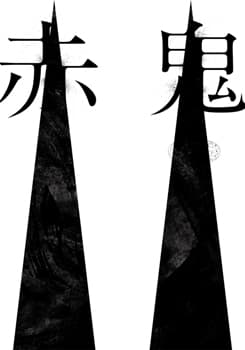
- Aka Oni / Red Demon (赤鬼) if you want a forceful example of compact, internationally legible modern Japanese drama
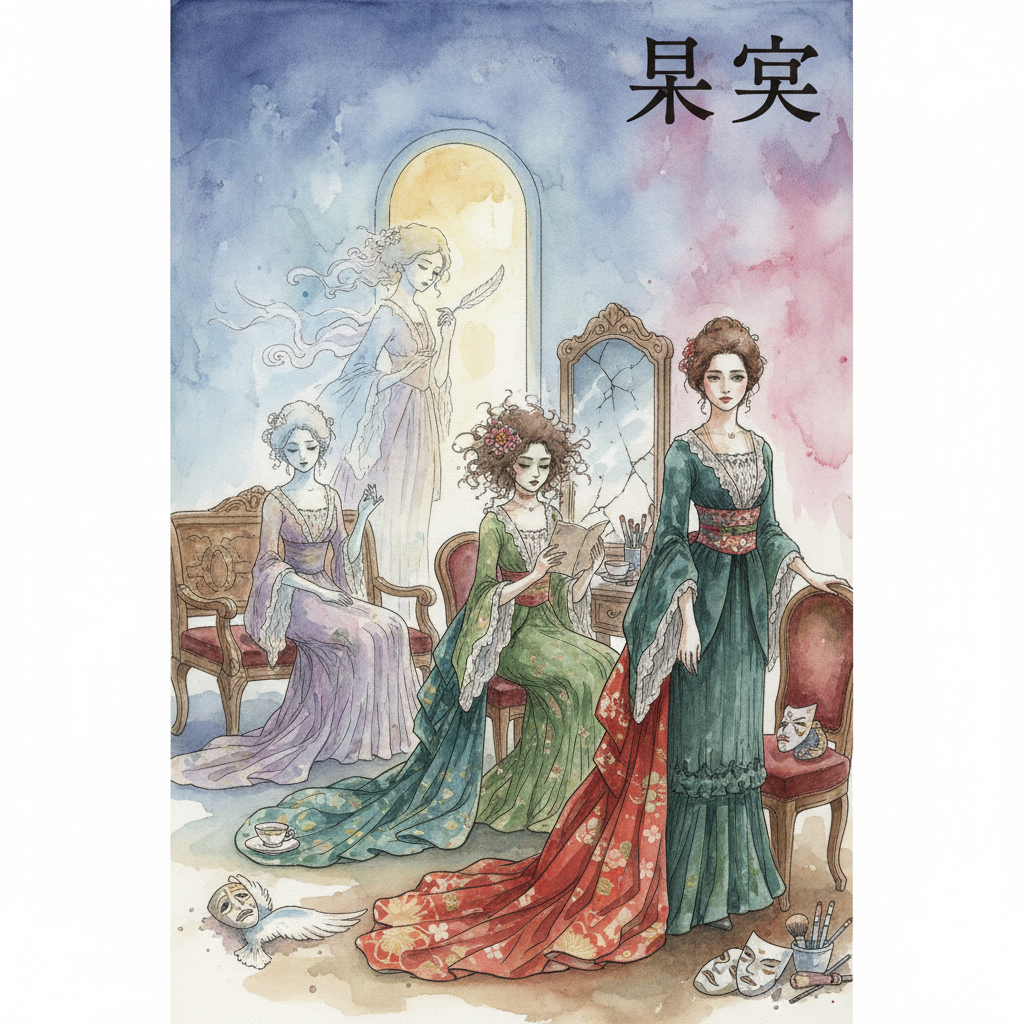
- The Dressing Room (楽屋) if you are drawn to theatricality, ghosts, repetition, and actor-conscious writing
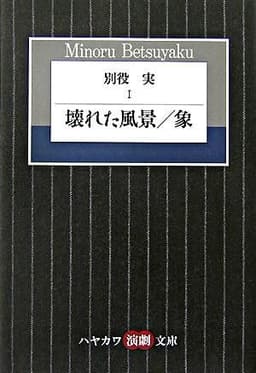
- Zō / The Elephant (象) if you want absurdist precision before entering more experimental programming
These are not “festival texts” in a narrow sense. They are useful lenses.
A practical 2026 booking strategy
If you are deciding right now, on July 28, 2026, here is the sensible order:
- If you will be in Japan in September or October 2026, prioritize Tokyo Festival, Toyooka, and Kyoto Experiment.
- If you are not traveling until spring 2027, put World Theatre Festival Shizuoka on your early-watch list.
- For Tokyo, book around your hotel and train convenience.
- For Toyooka, book around your base area and transport between venues.
- For Kyoto, book around artistic fit, not quantity.
The most common mistake is treating all festivals as if they ask for the same traveler behavior. They do not.
Tokyo asks for smart filtering.
Toyooka asks for regional planning.
Kyoto asks for artistic selectivity.
Shizuoka asks for earlier seasonal memory.
FAQ
Which is the easiest Japanese theater festival for non-Japanese speakers?
Tokyo Festival 2026 is the easiest first choice because its official program search includes filters for multilingual support and accessibility support, and because the event is spread across a city with familiar infrastructure.
Which festival feels the most “special trip” worthy?
Toyooka Theater Festival 2026. It is the festival on this list where the region itself becomes part of the performance logic.
Which festival is best for experimental performance?
Kyoto Experiment 2026 is the strongest fit if you want formally adventurous work crossing theater, dance, music, and visual art.
Is World Theatre Festival Shizuoka still relevant if its 2026 edition already ended?
Yes. It is relevant as an annual spring planning target. Since World Theatre Festival Shizuoka 2026 ran from April 25 to May 6, 2026, it is already past as of July 28, 2026, but it remains one of the most useful Japanese festivals to know for future trips.
If I can attend only one in 2026, which should I choose?
For most first-time international visitors, choose Tokyo Festival 2026. For a more destination-driven and memorable festival journey, choose Toyooka Theater Festival 2026.
Final recommendation
If you want the most practical answer rather than the most romantic one, start with Tokyo Festival.
If you want the answer you may remember longest, choose Toyooka.
If you want the answer most likely to challenge your taste, choose Kyoto Experiment.
And if you tend to travel in spring, remember Shizuoka now, before next year’s planning window sneaks up on you.
Sources
- Tokyo Festival official overview: https://tokyofestival.jp/en/about
- Tokyo Festival official programs page: https://tokyofestival.jp/en/2026/program
- Toyooka Theater Festival official homepage: https://toyooka-theaterfestival.jp/en/
- Toyooka Theater Festival official about page: https://toyooka-theaterfestival.jp/en/about/
- Toyooka Theater Festival official program page: https://toyooka-theaterfestival.jp/en/program/
- Kyoto Experiment official site: https://kyoto-ex.jp/en/
- Kyoto Experiment 2026 dates announcement: https://kyoto-ex.jp/en/news/kyoto-experiment-2026-dates-announced/
- World Theatre Festival Shizuoka official site: https://festival-shizuoka.jp/en/
この記事で紹介した戯曲
戯曲図書館 編集部・公開日 2026/07/28
演劇経験者が運営する戯曲検索サービスの編集チームです。脚本選びのノウハウ、演劇の最新情報、公演レポートなどを書いています。
関連記事
- 2.5D Theater in Japan (2026): A Practical Guide for International Theater FansA practical 2026 guide to Japan’s 2.5D theater scene for international fans, from tickets and subtitles to what makes the genre work live.2026/08/22
- Open-Air and Outdoor Theater in Japan in 2026: Where to Go, What to Expect, and How to PlanA practical 2026 guide to open-air and outdoor theater in Japan, with festival examples, ticketing tips, weather planning, and beginner-friendly play recommendations.2026/08/15
- How to Read a Japanese Theater Flyer and Ticket in 2026: A Practical Guide for International VisitorsA practical 2026 guide to reading Japanese theater flyers and tickets, from kaijo and kaien to reserved seats, day tickets, and pickup rules.2026/08/11
- How to See Theater in Tokyo on a Budget (2026): A Practical Guide for International VisitorsA practical 2026 guide to seeing theater in Tokyo on a budget, with same-day discounts, kabuki single-act seats, youth deals, and smart planning.2026/07/14