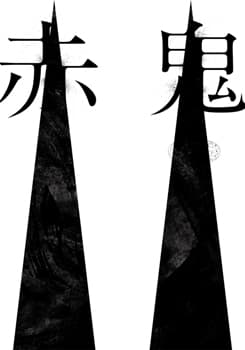
Hideki Noda’s Red Demon (Aka Oni, 赤鬼) and William Shakespeare’s The Tempest are island plays about what a community does when it meets someone it cannot fully understand.
That is the clearest reason to pair them in 2026. Both dramas place fear, language, hospitality, and power on a shoreline. Both ask who gets called civilized and who gets labeled dangerous. But they reach very different conclusions. Shakespeare builds toward reconciliation controlled by a powerful ruler. Noda builds toward a much harsher recognition: communities often protect themselves by inventing monsters.
For English-speaking directors, dramaturgs, teachers, and theater readers, this comparison is practical because it connects a familiar Western classic with one of the most internationally stageable modern Japanese plays. If you already know The Tempest, Red Demon becomes easier to place. If you know Red Demon, The Tempest starts to look less like a magical romance and more like a study of who gets to define humanity on an island.
Quick Facts
| Item | Red Demon (Aka Oni, 赤鬼) | The Tempest |
|---|---|---|
| Playwright | Hideki Noda (野田秀樹) | William Shakespeare |
| First performance / composition | First performed 1996 | Written and first performed around 1611 |
| Structure | 16 scenes | 5 acts |
| Typical cast profile | 4 actors in source data, with role doubling in some versions | Medium ensemble, often 10-14+ actors depending on cuts |
| Core setting | Isolated island community facing the arrival of an outsider | Island ruled by the exiled Prospero through magic and surveillance |
| Main dramatic pressure | Xenophobia, rumor, language barrier, scapegoating | Usurpation, colonial power, servitude, forgiveness, dynastic repair |
| Best production fit | Black box, physical ensemble, politically sharp repertory | Classical rep, adaptation projects, school and festival programming |
| Why it matters now | Speaks directly to migration panic and dehumanization | Still central for debates on power, empire, and control |
Why This Pairing Works So Well
At first glance, the two plays seem unevenly matched. The Tempest is one of the most canonical plays in English. Red Demon is a modern Japanese play that many English-speaking readers still discover through festival circuits, translation, or theater libraries.
But the pairing is stronger than it first appears because the plays share a precise structural engine:
- an island cut off from normal civic life,
- an outsider figure treated as a problem to manage,
- a struggle over language and interpretation,
- and a final revelation about the ethics of power.
The difference is where each play places authority.
- In The Tempest, power is centralized in Prospero.
- In Red Demon, power is dispersed across rumor, crowd behavior, and village consensus.
That shift matters. Shakespeare asks what a ruler should do with power once he has absolute control. Noda asks what ordinary people do when fear gives them permission to become cruel.
For 2026 audiences, Noda’s framework often feels closer to political reality. Most people do not live under a magician-duke. They live inside social systems driven by gossip, media panic, majority pressure, and strategic dehumanization.
1) The Island as Moral Laboratory
Shakespeare: the island as a theater of control
In The Tempest, the island is not neutral wilderness. It is an environment reordered by Prospero’s will. He commands storms, directs movement, sets tests, and stages emotional encounters. The island becomes a machine for producing a desired ending: restored status, dynastic marriage, and ritual closure.
Even when the play feels dreamlike, the structure is highly controlled. Prospero decides who sees what, when, and why.
Noda: the island as fear machine
In Red Demon, the island is much less stable. It is not controlled by one genius strategist. Instead, it is a social ecosystem where insecurity spreads quickly. The outsider’s arrival does not reveal a master plan. It reveals how fragile the community already is.
The villagers respond to the unknown through:
- superstition,
- opportunism,
- erotic anxiety,
- moral panic,
- and spectacle.
This makes Noda’s island feel intensely modern. It behaves like a closed information system. People repeat the version of reality that makes them feel safest, even when that version produces obvious injustice.
Practical staging takeaway
| Spatial question | Red Demon | The Tempest |
|---|---|---|
| Who controls the island? | No single person; power moves through the group | Prospero, through magic and planning |
| What does the island reveal? | Communal fear and scapegoating | Political injury, mastery, and reconciliation |
| Best scenic logic | Flexible, actor-built, unstable social world | Designed zones of control, illusion, and revelation |
| Main directing risk | Overgeneralized allegory | Decorative magic without political tension |
If you are programming a season on islands in drama, this pairing helps audiences see two different models: the island as sovereign laboratory and the island as collective panic chamber.
2) Outsiders and the Politics of Naming
One of the most useful comparison points is not plot but vocabulary.
In Red Demon, the stranger is named into monstrosity. The community cannot understand him, so it labels him “demon.” That naming is not description. It is policy. Once the label sticks, violence becomes thinkable, then acceptable, then normal.
In The Tempest, naming also organizes power. Caliban is repeatedly framed through the language of deformity, savagery, and servitude. He is native to the island, yet Prospero and Miranda position him as morally and politically inferior. The famous contradiction at the center of the play is that Caliban is both necessary and denied full dignity.
This is where the plays converge sharply:
- each builds hierarchy through language,
- each turns the “other” into a function of community self-definition,
- and each asks whether recognition is possible across fear.
But the emotional direction differs.
In The Tempest
Caliban is already inside a colonial relation. The system is established before the audience arrives.
In Red Demon
The audience watches the process of dehumanization form in real time.
That makes Red Demon especially useful in rehearsal rooms and classrooms. It shows the manufacture of otherness rather than presenting otherness as a settled condition.
3) Language Failure: Translation, Mishearing, and Power
Both plays care about language, but they use it differently.
Shakespeare’s language problem
In The Tempest, language is tied to rule. Prospero’s knowledge, books, and verbal authority are extensions of power. Caliban’s famous complaint—often paraphrased in criticism through the line about learning language only to know how to curse—makes the play central to postcolonial readings. Language is not merely communication. It is a disciplinary tool.
Noda’s language problem
In Red Demon, the outsider’s incomprehensibility is more immediate and theatrical. The community cannot decode him and does not try very hard. Instead, misunderstanding becomes proof of threat.
That is one reason the play travels well internationally. Even when audiences do not share the exact linguistic experience onstage, they immediately understand the social logic: failure to interpret becomes an excuse to dominate.
The Woman’s compassion matters because she briefly chooses interpretation over fear. She does not magically solve the system, but she interrupts its certainty.
Why this matters in 2026
For contemporary international audiences, language anxiety is everywhere: migration debates, algorithmic mistranslation, political slogans, online misinformation, and suspicion toward accents or imperfect fluency. Pairing these plays opens a sharp question:
When people say “we cannot understand them,” are they describing a difficulty—or choosing a hierarchy?
That is a powerful post-show discussion prompt, and it is one of the best reasons to produce these texts together.
4) Power Structures: Prospero’s Rule vs Village Consensus
A major difference between the plays is the shape of authority.
Prospero: charismatic, intellectual, paternal, coercive
Prospero is one of Shakespeare’s most discussed power figures because he combines victimhood and domination. He was wronged, but he also enslaves, manipulates, surveils, and scripts the experiences of others. Many productions now emphasize that his mercy arrives only after an extraordinary display of control.
For directors, this creates a productive ambiguity: is Prospero a wise reconciler, a colonizer, a traumatized father, a theatrical director figure, or all of these at once?
The village in Red Demon: decentralized cruelty
Noda’s play is less interested in one grand controller. Its terror comes from shared participation. People reinforce each other’s fear. Leaders exploit panic, but they do not invent it alone. The community becomes an engine that rewards conformity and punishes ethical hesitation.
This is a darker diagnosis of social life than The Tempest offers. In Shakespeare, changing the ruler might change the world. In Noda, cruelty is not fixed in one villain. It is a crowd capability.
Side-by-side comparison
| Power question | Red Demon | The Tempest |
|---|---|---|
| Main authority model | Group psychology and rumor | Singular orchestrated authority |
| Violence emerges through | Scapegoating and collective panic | Discipline, magic, and hierarchical command |
| Ethical center | Fragile empathy under pressure | Ambiguous mercy after domination |
| Best classroom frame | How communities invent enemies | How rulers justify control |
For 2026 readers, this distinction is huge. The Tempest remains essential for thinking about empire. Red Demon is unusually strong for thinking about populist fear.
5) Sympathy, Hospitality, and the Limits of Compassion
Both plays include figures who interrupt brutality, but the structure of that interruption differs.
In The Tempest, Gonzalo represents humane possibility, while Miranda offers forms of wonder and tenderness not yet hardened into rule. Yet the play ultimately remains organized by Prospero’s design. Compassion exists, but under the shadow of power.
In Red Demon, The Woman occupies a far more precarious position. She is not backed by magic, class rank, or institutional authority. Her ethical recognition of the outsider remains moving precisely because it is politically weak.
That weakness is not a flaw in the writing. It is the point.
Noda is not interested in easy liberal consolation. He understands that individual decency does not automatically defeat organized prejudice. The Woman can see the stranger’s humanity, but seeing is not the same as changing a society.
This makes Red Demon especially effective in a double bill or repertory conversation with The Tempest.
- Shakespeare shows how mercy can be staged from above.
- Noda shows how compassion from below can be crushed.
A company producing both plays could build a rich audience dialogue around hospitality:
- Who has the power to welcome?
- Who bears the risk of welcoming?
- When does “tolerance” become spectacle rather than solidarity?
6) Theatrical Style: Enchantment vs Physical Fable
The Tempest: illusion, masque, music, hierarchy of wonder
Productions of The Tempest often work through atmosphere, music, visual transformation, and symbolic spectacle. The text invites theatrical enchantment. But strong productions use magic not as decoration, but as the visible form of political control.
Red Demon: ensemble compression and physical storytelling
Noda’s play often lands best when staged with agility rather than naturalism. A small cast can create an entire island society. Bodies become systems. Repetition becomes ideology. Shifts in rhythm can turn comedy into menace almost instantly.
That physical density is one reason the play remains attractive for touring companies, schools, and international ensembles. It is portable but not small-minded.
For directors choosing between them
| Production need | Better first choice |
|---|---|
| Actor training in ensemble physicality | Red Demon |
| Classical text and adaptation study | The Tempest |
| Postcolonial discussion anchored in canon | The Tempest |
| Contemporary xenophobia and rumor politics | Red Demon |
| Small-cast international programming | Red Demon |
| Visual spectacle with philosophical reach | The Tempest |
The strongest season planning choice in 2026 may not be choosing one over the other, but using them as counterpoint.
7) Colonial Readings and Their Limits
Any serious comparison must name colonial discourse directly.
The Tempest has long been central to debates about colonization because Prospero occupies, renames, disciplines, and extracts service from an island he did not originate. Caliban becomes the focal point for arguments about indigeneity, enslavement, and resistance.
Red Demon is not a colonial text in the same historical sense. Its structure is different. The outsider arrives to a closed island community and becomes the object of projection. The play is less about territorial conquest and more about xenophobic mythmaking.
Still, the plays speak to each other because both ask how communities justify domination by presenting the dominated as naturally suspect.
The useful caution for critics and teachers is this:
- do not flatten Red Demon into a simple Japanese rewrite of The Tempest,
- and do not treat The Tempest as only a magical fairy-tale romance.
The pairing works best when differences stay visible.
A concise way to explain the distinction
- The Tempest dramatizes rule over others.
- Red Demon dramatizes fear of others.
Those are related but not identical political structures.
8) How to Use This Pairing in Programming, Teaching, and Rehearsal
Model A: University course on world drama and otherness
Teach The Tempest first for shared reference, then move to Red Demon as a modern Japanese response to island politics, outsider labeling, and the ethics of interpretation.
Model B: Small theater repertory pairing
Open with Red Demon in a black-box configuration. Follow with a lean, politically sharp Tempest that foregrounds Caliban, labor, and surveillance. Audience conversations will immediately become more specific.
Model C: Actor-training lab
- Use The Tempest for status, rhetoric, and verse/heightened text work.
- Use Red Demon for ensemble score, group panic, and rapid tonal pivot.
This is a valuable combination because the plays develop different muscles while centering related ethical questions.
Japanese Play Library Reading Pathway
If you want to move from this comparison into Japanese repertoire discovery, start here:
Related English guides on Japanese Play Library:
FAQ
Is Red Demon basically Japan’s Tempest?
No. The comparison is useful because both are island dramas about outsiders and power, but Noda’s play is not a simple adaptation or equivalent. The Tempest is organized by Prospero’s controlled project; Red Demon is organized by communal panic and scapegoating.
Which play is better for discussing xenophobia?
Red Demon is usually sharper for direct conversation about xenophobia, rumor, and dehumanization. The Tempest is stronger for discussing colonial power, hierarchy, and the ethics of rule.
Which play is easier for international small companies to stage?
Red Demon is often more practical because of its compact cast, physical style, and flexible space requirements.
Why compare a modern Japanese play with Shakespeare at all?
Because comparison gives audiences a bridge. A familiar classic helps frame a less familiar Japanese work, while the Japanese work can expose assumptions people bring to the classic.
What is the biggest directing mistake with this pairing?
Treating either play as abstract morality. Both need concrete social behavior. In The Tempest, magic must reveal politics. In Red Demon, allegory must remain embodied in crowd behavior, desire, and fear.
Final Take
If you want one sentence to carry into rehearsal, use this one:
Both Red Demon and The Tempest ask what happens when an island meets the unfamiliar, but Shakespeare tests the conscience of the ruler while Noda tests the conscience of the crowd.
That difference is exactly why the pairing feels alive in 2026. The Tempest remains indispensable. But Red Demon gives international theater-makers a more contemporary social pressure point: how quickly people invent monsters when they no longer trust their own ability to understand a stranger.
For many English-speaking readers, The Tempest is the doorway. Red Demon is the shock that waits on the other side.
Sources
- Performing Arts Network Japan, “Hideki Noda | The Red Demon (Akaoni)” — production data, synopsis, and international context.
https://performingarts.jpf.go.jp/en/article/6241/ - Michael Billington, “Red Demon,” The Guardian (Young Vic review, Feb. 4, 2003) — notes on outsider fear and explicit comparison to The Tempest.
https://www.theguardian.com/stage/2003/feb/04/theatre.artsfeatures - Encyclopaedia Britannica, “The Tempest” — composition date, plot, and major character context.
https://www.britannica.com/topic/The-Tempest - Folger Shakespeare Library, “The Tempest – Entire Play” — act-by-act framing and concise synopsis.
https://www.folger.edu/explore/shakespeares-works/the-tempest/read/
この記事で紹介した戯曲

Written by
戯曲図書館 編集部
演劇経験者が運営する戯曲検索サービス「戯曲図書館」の編集チームです。 脚本選びのノウハウ、演劇業界の最新情報、公演レポートなどを発信しています。
関連記事
Shintoku-maru vs Oedipus Rex: A 2026 Guide to Fate, Family, and the Body on Stage
Compare Shuji Terayama's Shintoku-maru (身毒丸) and Sophocles' Oedipus Rex as plays about prophecy, incest, mother-figures, and the suffering body — with staging notes for English-speaking theater-makers.
2026-10-04
Five Days in March vs Angels in America: A 2026 Guide to Political Theater, Sex, and the End of the World
Compare Toshiki Okada's Five Days in March and Tony Kushner's Angels in America as generational political plays about apocalypse, apathy, and intimacy under history.
2026-09-27
Tomodachi vs No Exit: A 2026 Guide to Friendly Invasion, Hellish Rooms, and the Violence of Other People
Compare Tomodachi and No Exit through confinement, coercion, group pressure, and the politics of being trapped with others.
2026-08-30
History of the Rise and Fall of Japanese Literature vs Arcadia: A 2026 Guide to Literature, Time, and National Imagination
Compare Oriza Hirata's History of the Rise and Fall of Japanese Literature with Arcadia through time, authorship, and modernity.
2026-08-16